
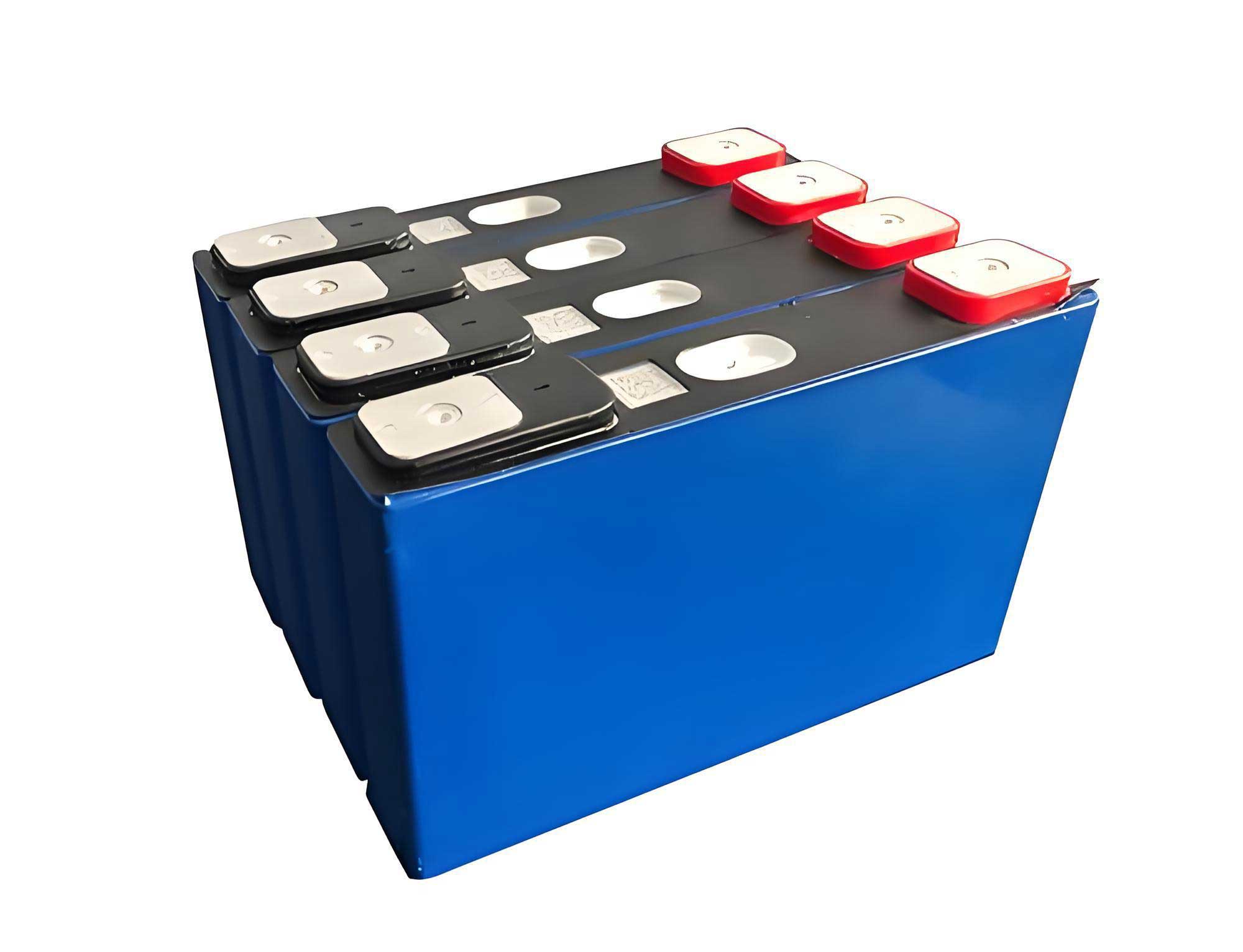
Lithium-ion batteries are pivotal to modern energy systems, powering everything from portable electronics to electric vehicles and grid-scale storage. However, their widespread adoption is shadowed by significant safety concerns. Under abusive conditions, these batteries can undergo rapid self-heating, leading to thermal runaway—a catastrophic event characterized by fire, explosion, and the release of toxic gases. Among the various cathode chemistries, Lithium Iron Phosphate (LiFePO4 or LFP) has emerged as a prominent candidate due to its intrinsic safety advantages, including superior thermal stability, long cycle life, flat discharge voltage, and lower cost. The robust P–O covalent bonds within the (PO4)3– polyanions and the stable olivine crystal structure contribute to this enhanced safety profile, making the LiFePO4 battery a preferred choice for high-power and large-scale applications. Despite this reputation, incidents involving thermal runaway in LiFePO4 battery systems have been reported, underscoring the need for a comprehensive understanding of their failure mechanisms. This article synthesizes current research on the thermal runaway mechanisms of LiFePO4 battery systems under various abuse conditions, the thermal stability of LiFePO4 cathode material, and the associated thermal behaviors, concluding with perspectives on improving the safety of LiFePO4 battery technology.
1. Thermal Runaway Mechanisms in LiFePO4 Batteries
Thermal runaway is a complex, self-accelerating exothermic process initiated when the heat generation rate within a LiFePO4 battery surpasses its heat dissipation rate. The triggering pathways are broadly categorized into three abuse scenarios: thermal, electrical, and mechanical abuse.
| Abuse Type | Primary Trigger | Key Characteristics in LiFePO4 Battery | Typical Experimental Methods |
|---|---|---|---|
| Thermal Abuse | External heating or overheating. | High onset temperature; milder gas generation. | Accelerating Rate Calorimetry (ARC), Oven Test. |
| Electrical Abuse | Overcharge, Over-discharge, Internal Short Circuit (ISC). | Low tolerance to overcharge; potential Al current collector reaction. | Forced Overcharge/Discharge, Nail Penetration. |
| Mechanical Abuse | Crush, Penetration, Deformation. | Can lead to violent ejection of electrolyte; fire risk increases with SOC and capacity. | Crush Test, Nail Penetration Test. |
1.1 Thermal Abuse
Thermal abuse involves exposing the LiFePO4 battery to an elevated external temperature. Standard assessment tools include the Accelerating Rate Calorimeter (ARC), which provides adiabatic conditions to track self-heating, and oven tests, which apply a constant ambient heat. Under thermal abuse, a series of sequential exothermic reactions are triggered as temperature rises:
$$ \text{SEI Decomposition} \rightarrow \text{Anode-Electrolyte Reaction} \rightarrow \text{Electrolyte Decomposition} \rightarrow \text{Cathode Decomposition} \rightarrow \text{Separator Melt} \rightarrow \text{Large-scale ISC}.$$
Research consistently ranks the LiFePO4 battery as having the lowest hazard severity among common lithium-ion chemistries (e.g., NCA, NCM, LCO) in thermal abuse tests. Key parameters from ARC studies, such as the onset temperature ($T_{\text{onset}}$), thermal runaway trigger temperature ($T_{\text{tr}}$), maximum temperature ($T_{\text{max}}$), and maximum self-heating rate ($(dT/dt)_{\text{max}}$), are significantly higher or lower (in the case of heating rate) for LiFePO4 battery cells. For instance, a heating rate of 10 °C/min under adiabatic conditions is often defined as the thermal runaway criterion for a LiFePO4 battery.
The gas generated during thermal runaway of a LiFePO4 battery is notably less voluminous and less flammable compared to other chemistries. Typical gas compositions are dominated by CO2 and CO, with minimal amounts of H2 and hydrocarbons. This results in a higher Lower Flammability Limit (LFL) and lower maximum explosion overpressure for the vent gases from a LiFePO4 battery. Post-mortem analysis, such as using a liquid nitrogen quenching technique on large-format LiFePO4 battery cells, reveals that the LiFePO4 cathode particles remain largely intact and crystalline even after thermal runaway, confirming that cathode decomposition is not the primary heat source. The critical oven temperature to induce thermal runaway in a LiFePO4 battery is relatively high (~260°C). Furthermore, the state-of-charge (SOC) plays a crucial role; LiFePO4 battery cells at low or zero SOC exhibit dramatically higher stability, often without venting or thermal runaway, suggesting safer conditions for storage and transportation.
1.2 Electrical Abuse
Electrical abuse encompasses overcharge, over-discharge, and internal short circuits (ISC). The general heat generation ($Q$) during charge/discharge from irreversible Joule heating is given by:
$$Q = I^2R t$$
where $I$ is the current, $R$ is the internal resistance, and $t$ is time. High-current operations can thus generate substantial heat.
Overcharge: The LiFePO4 battery shows a paradoxically low tolerance to overcharge energy input but exhibits a relatively mild subsequent thermal runaway. During overcharge, lithium plating, electrolyte oxidation, and current collector reactions occur. Notably, research indicates that under overcharge conditions, the decomposed LiFePO4 (forming Fe2O3) may react with the aluminum current collector via a thermite reaction, releasing intense heat. This is a distinctive hazard in overcharged LiFePO4 battery cells. Despite this, the peak temperatures and temperature rise rates during overcharge-induced thermal runaway are generally lower for LiFePO4 battery systems than for layered oxide cathodes.
Over-discharge: While often considered less dangerous, over-discharging a LiFePO4 battery can cause copper dissolution from the anode current collector. Upon subsequent charging, copper can redeposit on the cathode, forming dendrites that may pierce the separator, leading to a severe internal short circuit and potential thermal runaway.
Internal Short Circuit (ISC): ISC, induced by defects or lithium dendrites, generates localized Joule heat. Studies suggest that a localized ISC in a LiFePO4 battery may not by itself generate enough heat to trigger full thermal runaway, highlighting the critical role of subsequent chemical reactions. Importantly, it has been demonstrated that thermal runaway can occur even without a short circuit if the chemical heat generation is sufficient.
1.3 Mechanical Abuse
Mechanical abuse like crushing or nail penetration causes immediate separator failure, leading to a large-area internal short circuit and introducing oxygen into the cell. For the LiFePO4 battery, penetration tests can result in high local temperatures (exceeding 400°C), venting, and smoke, but often without sustained flame, especially for smaller cells. However, the hazard escalates with increasing cell capacity and SOC. The violence of the response during nail penetration of a LiFePO4 battery can be stochastic, depending on the random contact interface between the penetrator and the internal electrodes.
2. Thermal Behavior and Stability of LiFePO4 Cathode Material
The safety of the LiFePO4 battery is fundamentally linked to the thermal properties of its cathode material. The stability can be analyzed in isolation, in contact with electrolyte, and within the full cell context.
2.1 Intrinsic Thermal Stability of LiFePO4
In an inert atmosphere, delithiated LixFePO4 (FePO4 at x=0) undergoes decomposition at high temperatures (>400°C) to form more stable iron phosphates (e.g., Fe2P2O7) with the release of oxygen:
$$2\text{FePO}_4 \rightarrow \text{Fe}_2\text{P}_2\text{O}_7 + \frac{1}{2}\text{O}_2$$
Thermogravimetric Analysis (TGA) shows minimal mass loss (~1.3%) up to 400°C, with significant changes occurring above 500-600°C. Differential Scanning Calorimetry (DSC) curves of pristine LiFePO4 material typically show no significant exothermic peaks below 350°C. The amount of oxygen released is relatively low and increases with the SOC of the material, though even at SOC=0, trace amounts may be released.
2.2 Reactivity of LiFePO4 with Electrolyte
The commercial electrolyte, typically a mixture of organic carbonates (EC, DMC, DEC) with LiPF6 salt, is thermally unstable. LiPF6 decomposition starts around 200°C:
$$\text{LiPF}_6 \rightarrow \text{LiF} + \text{PF}_5$$
The Lewis acid PF5 then vigorously catalyzes exothermic reactions with the organic solvents.
When LiFePO4 is mixed with electrolyte, its behavior is complex and unique compared to other cathodes like NCM or LCO:
- Catalytic Effect: LiFePO4, particularly in its delithiated state, can catalyze the decomposition of LiPF6, leading to an earlier onset of exothermic reactions.
- Heat Suppression Effect: Paradoxically, despite lowering the onset temperature, the presence of LiFePO4 material often reduces the total heat released from the electrolyte decomposition reaction. One proposed mechanism is that surface groups on LiFePO4 (like unsaturated PO43-) scavenge PF5, moderating its violent reaction with the solvent. Another is that oxygen released from LiFePO4 at elevated temperatures consumes reactive species.
- Surface Area Dependency: The initial self-heating rate of LiFePO4 with electrolyte is positively correlated with the specific surface area of the cathode material, indicating the importance of interfacial reactions.
The net effect is that the exothermic reaction between the LiFePO4 cathode and electrolyte, while present, generates significantly less heat than the corresponding reaction between the graphite anode and electrolyte. This is a key reason for the superior safety of the LiFePO4 battery.
2.3 Heat Source Attribution in Full Cell Thermal Runaway
By comparing the heat flow from individual component reactions (via DSC) with the self-heating profile of a full LiFePO4 battery (via ARC), researchers can deconvolute the main heat sources. A representative comparison is conceptualized below:
| Stage | Temperature Range | Dominant Heat Source in LiFePO4 Battery | Remarks |
|---|---|---|---|
| Initial Self-heating | ~90-150°C | SEI layer decomposition. | Minor heat release. |
| Major Exothermic Stage | ~150-250°C | Reaction between intercalated lithium (graphite anode) and electrolyte. | Primary heat source leading to thermal runaway. |
| Thermal Runaway & Post | >250°C | Large-scale ISC (Joule heat), electrolyte combustion, possible cathode-related reactions. | Cathode-electrolyte reaction contributes, but anode-driven heat dominates onset. |
The mathematical expression for the self-heating rate can be modeled as a sum of Arrhenius terms:
$$\frac{dT}{dt} = \sum_i A_i \exp\left(-\frac{E_{a,i}}{RT}\right)$$
where for a LiFePO4 battery, the pre-exponential factor $A_i$ and activation energy $E_{a,i}$ for the anode-electrolyte reaction term are the most significant in the critical temperature window.
3. Summary and Safety Improvement Outlook for LiFePO4 Battery
In summary, the LiFePO4 battery presents a favorable safety profile due to the inherent stability of its cathode material and the relatively lower heat release from its dominant anode-electrolyte exothermic reaction. Its thermal runaway is generally milder, with lower gas generation and flame propensity. However, it is not immune to failure. Key vulnerabilities include a low tolerance to overcharge energy (potentially triggering aluminum current collector reactions) and the escalating hazard of mechanical abuse in large-format, high-SOC LiFePO4 battery packs.
Future research and development efforts to further enhance the safety of LiFePO4 battery technology should focus on the following avenues:
- Electrolyte Engineering: Developing non-flammable, thermally stable electrolytes (e.g., using ionic liquids, high-concentration salts, or solid-state electrolytes) is the most direct way to eliminate the primary fuel and heat source inside a LiFePO4 battery.
- Anode and Separator Advancements: Improving the thermal stability of the SEI layer and the anode material itself can raise the onset temperature of the main exothermic reaction. Employing ceramic-coated or inherently non-shrink separators (e.g., polyimide) with higher melt integrity can delay or prevent internal short circuits in a LiFePO4 battery.
- Cathode Material Modification:
- Surface Coating: Applying stable oxide (Al2O3, ZrO2) or phosphate coatings on LiFePO4 particles can reduce direct contact with the electrolyte, mitigating unwanted interfacial reactions and potentially improving cycle life.
- Doping: Incorporating elements like Mn into the LiFePO4 structure (forming LiFe1-xMnxPO4) can increase the operating voltage and energy density while largely preserving the thermal stability of the LiFePO4 battery.
- Additives: Integrating positive temperature coefficient (PTC) materials or other flame-retardant additives into the electrode or separator can provide additional intrinsic safety mechanisms.
- System-Level Battery Management: Robust Battery Management Systems (BMS) with accurate state estimation, early fault detection algorithms for conditions like soft internal short circuits, and precise thermal management are critical for preventing the LiFePO4 battery from entering abusive states.
The continuous investigation into the fundamental reaction kinetics, gas evolution, and material transformations during the failure of a LiFePO4 battery, especially through advanced in-situ characterization techniques, remains vital. This knowledge drives the innovation needed to fully leverage the advantages of the LiFePO4 battery while pushing its safety boundaries to meet the ever-growing demands of energy storage and electric mobility.