
In recent years, the rapid advancement of electrochemical energy storage technology has been driven by the decreasing cost of electrode materials and the maturation of battery systems. Among various options, lithium iron phosphate (LiFePO4) lithium-ion batteries have emerged as a dominant choice for energy storage applications due to their advantages in cost, cycle life, and safety performance. As a result, projects utilizing LiFePO4 lithium-ion batteries for large-scale energy storage have proliferated globally. However, this expansion has been accompanied by an increasing number of thermal runaway incidents involving energy storage systems, leading to significant economic losses and safety concerns. Thermal runaway in lithium-ion batteries is a critical failure mode where the battery undergoes uncontrolled self-heating, often triggered by external abuses such as overcharging, short circuits, or thermal overload, ultimately resulting in fire or explosion. Understanding the thermal runaway characteristics of LiFePO4 lithium-ion batteries under thermal overload conditions is therefore paramount for enhancing safety designs and developing early warning systems. This study aims to provide a comprehensive analysis of the thermal runaway behavior of LiFePO4 lithium-ion batteries, focusing on single cells and battery modules subjected to continuous overcharging, with an emphasis on temperature evolution and gas emission profiles. The insights gained are intended to inform safety protocols and mitigation strategies for energy storage systems employing lithium-ion battery technology.
The safety of lithium-ion batteries, particularly in energy storage contexts, has been a subject of extensive research. Previous studies have highlighted that thermal runaway is a complex process involving multiple exothermic reactions within the battery, including electrolyte decomposition, cathode material breakdown, and anode reactions. For LiFePO4 lithium-ion batteries, the olivine structure of the cathode material is known to offer better thermal stability compared to other chemistries like lithium cobalt oxide, but it is not immune to thermal runaway under extreme conditions. Researchers have investigated various aspects, such as the impact of battery packaging—where soft-pack batteries tend to reach higher temperatures than hard-case ones during thermal runaway—and the effects of adiabatic environments on accelerating thermal runaway progression. However, there remains a gap in comparative analyses between single cells and modules under realistic operational scenarios, especially in simulated energy storage cabin settings where protection systems may fail. This study addresses that gap by conducting experiments on both single LiFePO4 lithium-ion batteries and battery modules under thermal overload induced by overcharging, monitoring key parameters like temperature and gas concentrations to elucidate the underlying mechanisms.
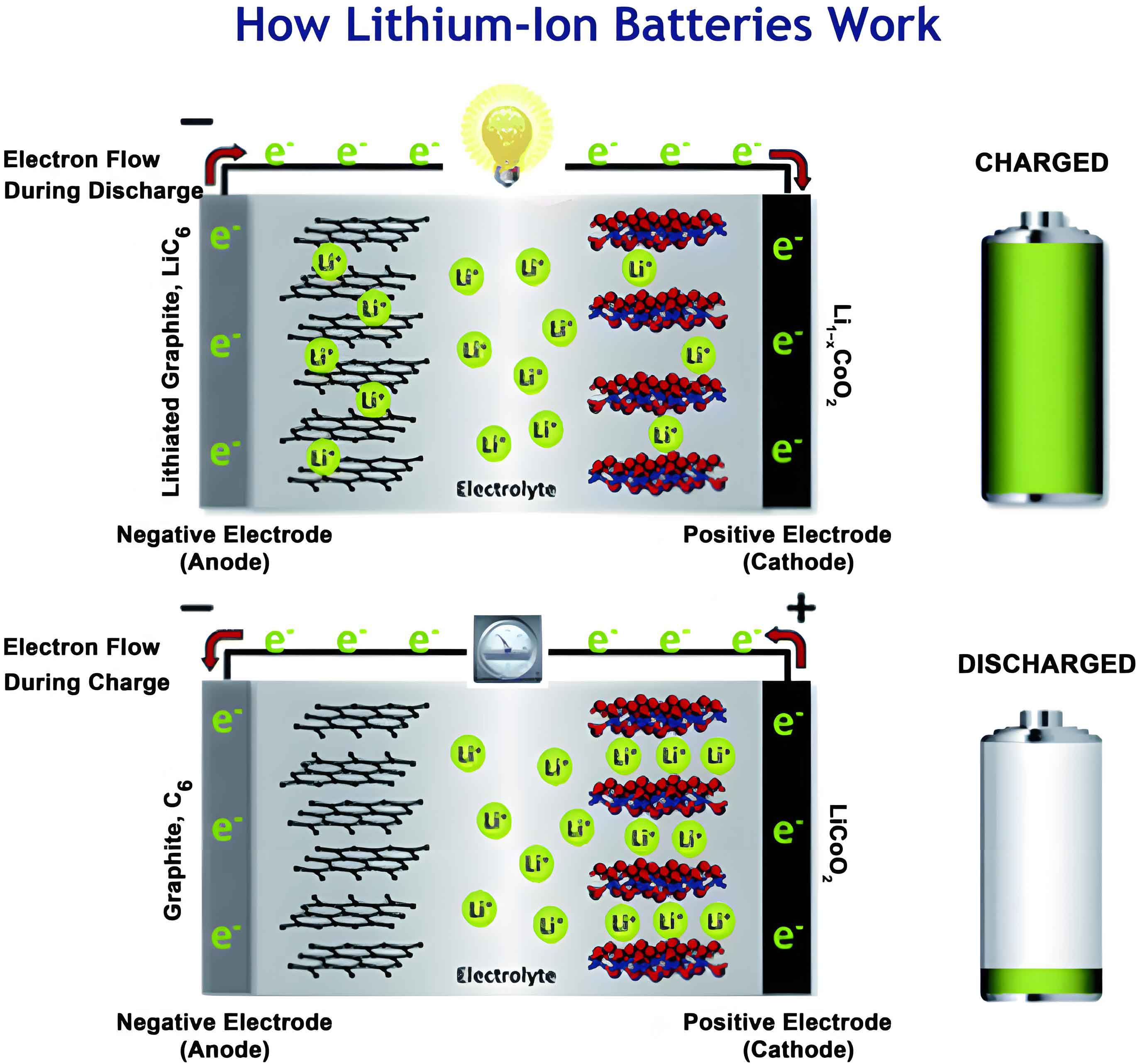
To investigate the thermal runaway characteristics, experiments were conducted using 280 Ah LiFePO4 lithium-ion batteries designed for energy storage applications. Both single-cell and module configurations were tested under thermal overload conditions achieved through continuous overcharging at a rate of 0.5 C. The experimental setup was designed to simulate real-world energy storage cabin environments, incorporating safety measures such as ventilation systems and fire suppression equipment. For single-cell tests, a dedicated thermal runaway sample was prepared, consisting of one genuine LiFePO4 lithium-ion battery cell alongside dummy cells with identical thermal conductivity properties to mimic the thermal mass of a full module. The dummy cells were filled with a mixture of 25% thermal adhesive and 75% silicone grease to achieve a thermal conductivity of approximately 0.25 W/(m·K), simulating the heat transfer characteristics without participating in electrochemical reactions. This approach allowed for focused analysis on the target lithium-ion battery cell while accounting for thermal interactions. The single-cell assembly was placed in a sealed experimental chamber equipped with temperature sensors, visible-light cameras for real-time observation, and gas detectors for hydrogen (H₂) and hydrogen sulfide (H₂S) monitoring. The chamber featured safety exhaust designs to vent hazardous gases and dissipate heat, reducing explosion risks. For module tests, a battery module comprising four series-connected LiFePO4 lithium-ion batteries was constructed and installed in an energy storage cabin replica. The module was subjected to constant-current overcharging at 172 A (approximately 0.61 C relative to the 280 Ah capacity), with temperature sensors attached to monitor surface temperatures. Gas detectors were similarly deployed to track H₂ and H₂S concentrations. All experiments were conducted under controlled environmental conditions, with temperatures maintained at around 75°C to simulate typical operational warmth, and data acquisition systems recorded parameters at high frequencies to capture transient behaviors.
| Parameter | Single-Cell Test | Module Test |
|---|---|---|
| Battery Type | LiFePO4 lithium-ion battery | LiFePO4 lithium-ion battery module |
| Capacity | 280 Ah | 280 Ah per cell (4 cells in series) |
| Overcharge Rate | 0.5 C (140 A) | 0.5 C (172 A module current) |
| Thermal Conductivity of Dummy Cells | 0.25 W/(m·K) | Not applicable |
| Gas Monitored | H₂, H₂S | H₂, H₂S |
| Temperature Sensors | K-type thermocouples | K-type thermocouples |
| Data Sampling Rate | 1 second intervals | 1 second intervals |
The thermal runaway process in lithium-ion batteries can be described through kinetic models that account for heat generation and gas evolution. The overall heat balance equation is fundamental:
$$ \frac{dT}{dt} = \frac{Q_{gen} – Q_{loss}}{C_p} $$
where \( T \) is the battery temperature, \( t \) is time, \( Q_{gen} \) is the rate of heat generation from internal reactions, \( Q_{loss} \) is the rate of heat loss to the surroundings, and \( C_p \) is the heat capacity of the battery. For a LiFePO4 lithium-ion battery under overcharge, \( Q_{gen} \) includes contributions from side reactions such as electrolyte decomposition, SEI layer breakdown, and cathode-anode interactions. The heat generation rate can be modeled using Arrhenius-type equations:
$$ Q_{gen} = \sum_i A_i e^{-E_{a,i}/RT} $$
where \( A_i \) are pre-exponential factors, \( E_{a,i} \) are activation energies for different reactions, \( R \) is the universal gas constant, and \( T \) is absolute temperature. Similarly, gas production during thermal runaway, particularly for hydrogen and hydrogen sulfide, follows reaction kinetics that depend on temperature and material composition. The concentration change of a gas species \( C \) over time can be expressed as:
$$ \frac{dC}{dt} = k e^{-E_a/RT} – \beta C $$
where \( k \) is a rate constant, \( E_a \) is the activation energy for gas formation, and \( \beta \) represents gas dissipation or consumption terms. These formulas provide a theoretical framework for analyzing the experimental data, linking observed temperature rises and gas releases to underlying chemical processes in the lithium-ion battery.
In the single-cell tests, the LiFePO4 lithium-ion battery exhibited distinct stages during thermal runaway. Upon initiating overcharging at 0.5 C, the battery temperature began to rise gradually, with the upper tab area heating faster due to current concentration. The safety valve opened at approximately 204 seconds, corresponding to a temperature peak of 365°C, after which the temperature momentarily dropped as gases vented. Subsequently, ignition occurred around 270 seconds, with flame temperatures exceeding 750°C, marking the onset of vigorous combustion. The battery fully entered thermal runaway by 450 seconds, with temperatures soaring to 770°C and voltage collapsing to zero. Combustion intensified further, reaching a maximum temperature of 853°C at 508 seconds, accompanied by dense smoke emission, before gradually subsiding after 842 seconds. Throughout this process, gas monitoring revealed that hydrogen concentration started to increase rapidly at about 300 seconds, peaking at 0.072% by volume, while hydrogen sulfide began rising earlier at 203 seconds and reached a maximum of 0.056%. The temporal profiles of these gases suggest that hydrogen sulfide release may serve as an earlier indicator of thermal initiation, whereas hydrogen surges correlate with full-scale thermal runaway. This behavior aligns with the decomposition pathways of LiFePO4 lithium-ion battery components: hydrogen sulfide likely stems from sulfur-containing additives or electrolyte breakdown, while hydrogen is generated from solvent reduction and metal-catalyzed reactions at elevated temperatures.
| Time (s) | Temperature (°C) | Event | H₂ Concentration (%) | H₂S Concentration (%) |
|---|---|---|---|---|
| 0 | Ambient | Overcharging initiated | 0.000 | 0.000 |
| 204 | 365 | Safety valve opens | 0.005 | 0.010 |
| 270 | >750 | Ignition and combustion starts | 0.020 | 0.025 |
| 450 | 770 | Full thermal runaway, voltage drop | 0.060 | 0.040 |
| 508 | 853 | Peak combustion intensity | 0.072 | 0.050 |
| 842 | >800 | Combustion subsides | 0.065 | 0.056 |
For the battery module tests, the thermal runaway progression was notably accelerated compared to the single cell, underscoring the impact of module geometry and thermal interactions among cells. The module, consisting of four LiFePO4 lithium-ion batteries in series, entered thermal runaway more swiftly, with initial signs appearing within 100 seconds of overcharging. By 220 seconds, intense exothermic reactions and gas releases were observed, leading to flame temperatures above 500°C. Complete thermal runaway was achieved at 303 seconds, characterized by violent combustion, explosions, and copious black smoke. Temperature measurements showed a stark difference between the top and bottom of the module: the top thermocouple recorded temperatures exceeding 1000°C, while the bottom one peaked around 800°C, indicating uneven heat distribution likely due to buoyancy-driven flame spread and gas accumulation. Gas monitoring data revealed that hydrogen concentration began its rapid ascent at 192 seconds, reaching a peak of 0.074%, whereas hydrogen sulfide started rising at 203 seconds and peaked at 0.058%. The earlier and more pronounced gas releases in the module, compared to the single cell, suggest that thermal coupling between cells amplifies reaction kinetics, possibly through heat transfer that preheats adjacent cells or through shared gas environments that enhance reaction rates. This has critical implications for safety design in energy storage systems, where module-level protections must account for synergistic effects that accelerate lithium-ion battery failure.
The comparative analysis between single-cell and module behaviors highlights several key factors influencing thermal runaway in LiFePO4 lithium-ion batteries. First, structural differences play a pivotal role: the module’s larger size and cell interconnections create thermal mass and heat transfer pathways that alter the runaway timeline. The heat balance equation can be extended to modules by considering inter-cell heat exchange:
$$ \frac{dT_j}{dt} = \frac{Q_{gen,j} + \sum_{i \neq j} \kappa_{ij}(T_i – T_j) – Q_{loss,j}}{C_{p,j}} $$
where \( T_j \) is the temperature of cell \( j \), \( \kappa_{ij} \) is the thermal coupling coefficient between cells \( i \) and \( j \), and other terms are as previously defined. This coupling accelerates temperature rise in modules, as observed in the experiments. Second, gas evolution patterns differ due to cumulative effects: in modules, gas concentrations build up more rapidly because multiple cells contribute to emissions, and confined spaces may limit dissipation. The gas dynamics equation can be modified to include source terms from multiple cells:
$$ \frac{dC}{dt} = \sum_{j=1}^{N} k_j e^{-E_{a,j}/RT_j} – \beta C $$
where \( N \) is the number of cells in the module, and \( k_j \) and \( E_{a,j} \) are cell-specific parameters. This explains why hydrogen and hydrogen sulfide peaks were higher in the module tests. Third, safety mechanisms like venting valves operate differently: in single cells, valve opening provides temporary relief, but in modules, cascading valve failures can lead to sudden pressure buildups and explosive events. These insights emphasize that lithium-ion battery safety must be evaluated at both cell and system levels, with gas monitoring serving as a viable early warning tool. The consistent rise in hydrogen and hydrogen sulfide concentrations prior to full thermal runaway, across both configurations, validates their utility as precursors for safety interventions in energy storage systems.
| Aspect | Single LiFePO4 Lithium-ion Battery | LiFePO4 Lithium-ion Battery Module |
|---|---|---|
| Time to Full Thermal Runaway | 450 seconds | 303 seconds |
| Peak Temperature | 853°C | >1000°C (top), 800°C (bottom) |
| H₂ Peak Concentration | 0.072% | 0.074% |
| H₂S Peak Concentration | 0.056% | 0.058% |
| Initial Gas Rise Time | H₂: ~300 s, H₂S: 203 s | H₂: 192 s, H₂S: 203 s |
| Combustion Duration | ~572 seconds (270–842 s) | ~500 seconds (100–600 s estimated) |
Beyond experimental observations, theoretical modeling of thermal runaway in LiFePO4 lithium-ion batteries can provide predictive capabilities for safety design. One approach is to integrate the heat and gas equations into a finite-element model that simulates temperature distribution and gas diffusion within a battery pack. For instance, the heat conduction equation in three dimensions can be written as:
$$ \rho C_p \frac{\partial T}{\partial t} = \nabla \cdot (k \nabla T) + Q_{gen} $$
where \( \rho \) is density, \( k \) is thermal conductivity, and \( Q_{gen} \) is spatially dependent. Coupling this with gas transport equations:
$$ \frac{\partial C}{\partial t} = D \nabla^2 C + S(T) $$
where \( D \) is diffusion coefficient and \( S(T) \) is a temperature-dependent source term from battery reactions, allows for simulation of hazardous gas accumulation. Such models can identify critical hotspots in lithium-ion battery arrays and optimize sensor placements for early detection. Additionally, the role of overcharging in triggering thermal runaway can be quantified through electrical-thermal coupling. The overcharge current leads to joule heating and accelerated side reactions; the heat generation from overcharging can be approximated as:
$$ Q_{elec} = I^2 R_{int} + I(V – U_{eq}) $$
where \( I \) is overcharge current, \( R_{int} \) is internal resistance, \( V \) is terminal voltage, and \( U_{eq} \) is equilibrium voltage. This term feeds into \( Q_{gen} \), exacerbating temperature rise. For LiFePO4 lithium-ion batteries, the relatively flat voltage plateau may delay voltage-based warnings during overcharge, making temperature and gas monitoring even more crucial. Empirical data from this study can calibrate such models, enhancing their accuracy for lithium-ion battery safety assessments.
In practical terms, the findings have direct implications for energy storage system design and operation. First, gas detection systems should be integrated into lithium-ion battery enclosures, with thresholds set based on observed concentration trends—for example, hydrogen sulfide levels above 0.01% or hydrogen above 0.02% could trigger alarms before temperatures reach critical points. Second, thermal management systems must account for module-level heat propagation; active cooling or phase-change materials might be needed to decouple cells and slow runaway spread. Third, safety valve design could be improved to ensure timely venting without causing cascading failures in modules. Moreover, operational protocols for lithium-ion battery energy storage should include regular monitoring of gas emissions as a preventive measure, especially in systems prone to overloading or thermal stress. The reproducibility of gas release patterns across single-cell and module tests suggests that these indicators are robust across scales, though module-specific amplifications must be factored in.
Looking forward, further research is needed to deepen our understanding of thermal runaway in LiFePO4 lithium-ion batteries. Areas for investigation include the effects of different overcharge rates, state-of-charge variations, and aging on gas emission profiles. Long-term studies could explore how cycle life impacts the propensity for thermal runaway, potentially linking gas evolution to degradation mechanisms. Additionally, advanced sensing technologies, such as optical gas sensors or distributed temperature sensing, could be evaluated for integration into lithium-ion battery management systems. Computational models should be expanded to incorporate multi-physics interactions, including electrochemical-thermal-gaseous couplings, to predict runaway scenarios under diverse abuse conditions. Collaborative efforts between academia and industry will be essential to translate these insights into safer lithium-ion battery designs for the growing energy storage market.
In conclusion, this study comprehensively characterizes the thermal runaway behavior of LiFePO4 lithium-ion batteries under thermal overload conditions induced by overcharging. Through experiments on single cells and modules, it was demonstrated that thermal runaway progresses through distinct stages marked by temperature surges and gas releases, with hydrogen and hydrogen sulfide serving as early warning indicators. The module configuration exhibited accelerated runaway due to thermal coupling and cumulative gas effects, highlighting the need for system-level safety strategies. The integration of experimental data with theoretical models provides a foundation for enhancing safety protocols in energy storage applications. As lithium-ion battery technology continues to evolve, prioritizing safety through such detailed analyses will be crucial for sustainable and secure energy storage solutions. The insights from this work contribute to the broader goal of mitigating risks associated with lithium-ion batteries, ensuring their reliable deployment in global energy infrastructures.