
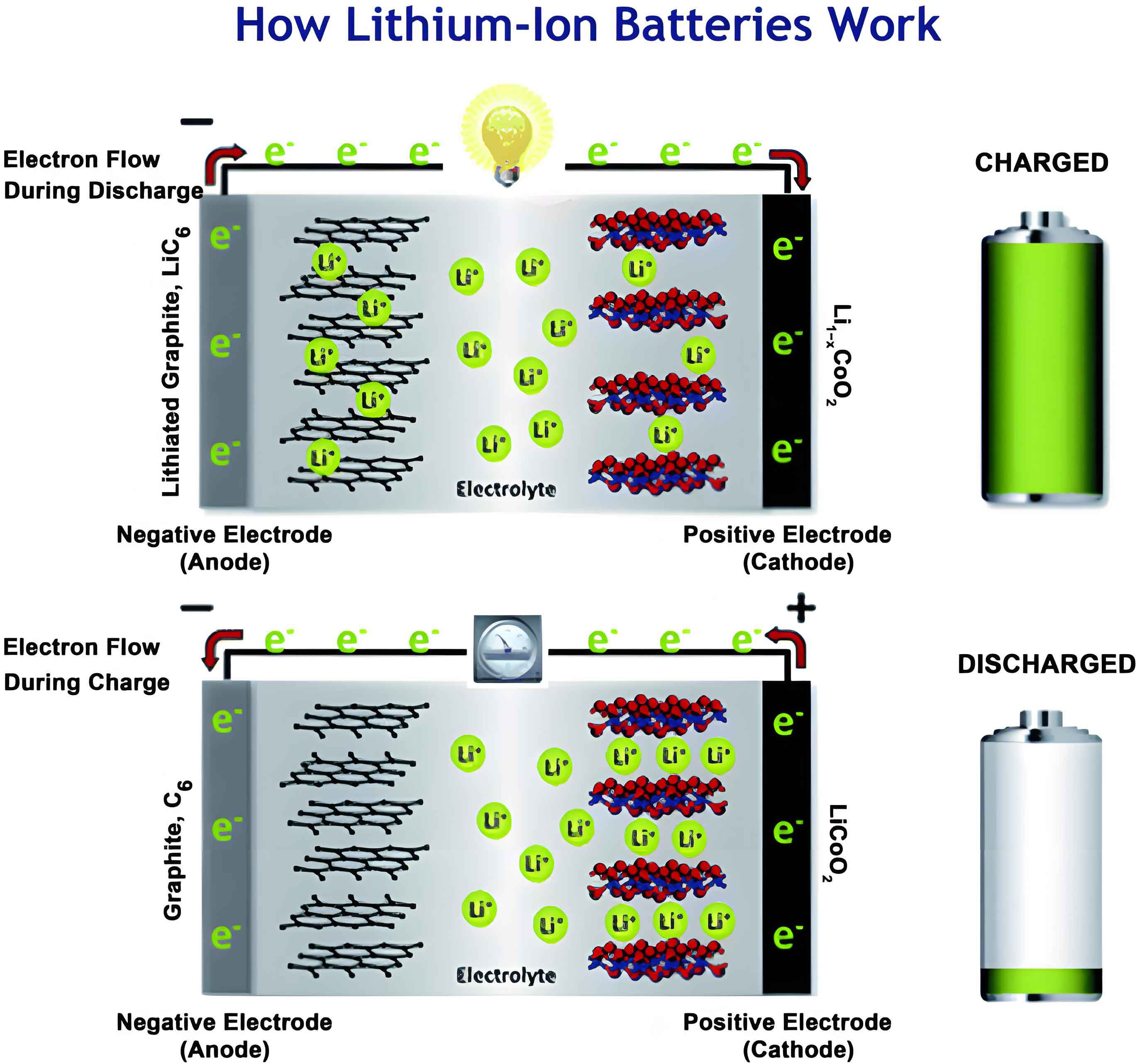
The escalating global energy demand, coupled with the urgent need to transition from fossil fuels to sustainable sources, has placed electrochemical energy storage at the forefront of modern technology. Renewable energy sources like wind and solar, while clean, suffer from intermittency, requiring efficient storage solutions for grid stability. In this context, the lithium-ion battery reigns supreme due to its high energy density, mature manufacturing base, and improving cost-effectiveness. Continuous innovation in electrode materials is critical to pushing the boundaries of lithium-ion battery performance, particularly in terms of energy density, rate capability, and long-term cycle life for applications ranging from electric vehicles to grid storage.
Our research focuses on the development of advanced anode materials. While graphite is the commercial standard, its limited theoretical capacity and safety concerns at high rates drive the search for alternatives. Niobium-based oxides have emerged as promising candidates due to their excellent rate capability and structural stability, often stemming from pseudocapacitive charge storage mechanisms. Within this family, perovskite-type oxides with the general formula ABO3 offer a versatile platform. Traditional perovskites with fully occupied A-sites provide limited lithium storage. However, introducing controlled vacancies at the A-site creates a defective structure, Ln(1-x)/3NbO3 (where Ln is a lanthanide), which can host additional lithium ions. The concentration of lithium and vacancies in these A-site deficient perovskites, formulated as LixLa(1-x)/3NbO3, is a crucial yet underexplored parameter that dictates their electrochemical properties in a lithium-ion battery.
In this work, we target a specific composition with a low lithium content, Li0.08La0.64Nb2O6 (which corresponds to x = 0.08 in the general formula), to investigate its potential as a high-performance anode. We hypothesize that its unique crystal structure, featuring ordered A-site vacancies, will facilitate rapid lithium-ion transport and provide stable host sites for reversible storage, leading to superior rate performance and cycling stability in a lithium-ion battery.
The material was synthesized via a conventional high-temperature solid-state reaction, a reliable and scalable method. Stoichiometric amounts of Li2CO3 (with a 10 wt% excess to compensate for lithium volatility at high temperatures), La2O3, and Nb2O5 were thoroughly mixed by ball milling. The mixed powder was first calcined at 800°C for 6 hours, then reground, and finally sintered at 1250°C for 6 hours to obtain the final crystalline product.
Structural and Microstructural Characterization
The phase purity and crystal structure of the synthesized powder were determined by X-ray diffraction (XRD). The diffraction pattern showed sharp, distinct peaks with no detectable impurity phases. Rietveld refinement was performed to obtain precise lattice parameters and confirm the structural model. The results unequivocally proved that Li0.08La0.64Nb2O6 crystallizes in an orthorhombic system with the space group Pmmm. The refined lattice parameters are presented in the table below:
| Lattice Parameter | Value (Å) |
|---|---|
| a | 3.91097 |
| b | 3.91978 |
| c | 7.90746 |
| Volume (V) | 121.223 Å3 |
The crystal structure, as illustrated in the refinement, is a classic A-site deficient perovskite. The A-sites are co-occupied by Li+ and La3+ ions in an ordered manner, creating alternating layers rich in cations and vacancies. The Nb5+ ions reside at the B-sites, each coordinated by six oxygen atoms to form rigid [NbO6] octahedra. These octahedra share corners, creating a robust three-dimensional framework. The key feature is the presence of ordered vacancies at the A-site, which are not defects in the traditional sense but an integral part of the structure. These vacancies create interconnected, low-energy pathways for lithium-ion migration throughout the crystal lattice, which is a fundamental requirement for a good electrode material in a lithium-ion battery.
Microstructural analysis via scanning electron microscopy (SEM) revealed that the solid-state synthesis yielded irregularly shaped particles with sizes predominantly in the range of 0.5 to 2 micrometers. Transmission electron microscopy (TEM) and high-resolution TEM (HR-TEM) confirmed the high crystallinity of the material. The observed lattice fringes corresponded well to the (100) and (012) planes of the orthorhombic structure. Selected-area electron diffraction (SAED) produced a clear pattern of sharp spots, characteristic of a single-crystalline domain, and was indexed to the [021] zone axis, consistent with the XRD results. Energy-dispersive X-ray spectroscopy (EDX) elemental mapping showed a homogeneous distribution of La, Nb, and O throughout the particles, confirming the phase purity at the microscopic level.
Electrochemical Performance in a Lithium-Ion Battery Half-Cell
The electrochemical properties of Li0.08La0.64Nb2O6 were evaluated by assembling CR2032 coin-type half-cells with lithium metal as the counter/reference electrode. The working electrode consisted of the active material, conductive carbon, and a sodium carboxymethyl cellulose (CMC) binder. All testing was performed within a voltage window of 0.01–3.0 V (vs. Li+/Li).
The initial three cyclic voltammetry (CV) cycles at a scan rate of 0.2 mV/s provided insight into the electrochemical reactions. The first cathodic scan showed a broad, intense reduction peak around 0.2 V, attributed to irreversible processes like solid electrolyte interphase (SEI) formation. A prominent redox couple near 1.3 V, which shifted slightly to about 1.0 V in subsequent cycles, was observed and is associated with the reversible Nb5+/Nb4+ redox reaction. The overlapping CV curves from the second cycle onward indicated good reversibility.
Galvanostatic charge-discharge profiling further quantified the performance. The initial discharge and charge capacities were 411.35 and 376.75 mAh g-1, respectively, yielding a high first-cycle Coulombic efficiency of 91.6%. The voltage profiles exhibited sloping curves, typical of materials undergoing single-phase or solid-solution type lithium insertion/extraction reactions, rather than distinct plateaus indicative of two-phase reactions. This is beneficial for maintaining a stable voltage output in a lithium-ion battery.
The rate capability of the electrode was tested at progressively increasing current densities from 0.05 A g-1 to 3 A g-1. The electrode delivered specific capacities of 321.73, 233.08, 163.08, 113.12, 99.19, 57.24, and 38.43 mAh g-1 at these respective rates. Remarkably, when the current density was returned to 0.05 A g-1, the capacity recovered to 293.21 mAh g-1 and even increased slightly in subsequent cycles, demonstrating excellent structural resilience and kinetics. The long-term cycling stability was outstanding. At a low rate of 0.05 A g-1, the electrode retained a discharge capacity of 355.57 mAh g-1 after 100 cycles, corresponding to a capacity retention of 94.4%. More impressively, at a high rate of 1 A g-1, the electrode sustained 3000 cycles with a capacity retention of 84.9%, showcasing its potential for long-life, high-power lithium-ion battery applications. A comparison with other reported perovskite anodes highlights the competitive performance of our material.
| Material | Voltage Window (V) | Specific Capacity (Test Condition) | Cycle Life Performance |
|---|---|---|---|
| La0.5Li0.5TiO3 | 0.01–3.0 | 229 mAh g-1 (0.1C) | 79% retention after 3000 cycles at 10C |
| Li0.1La0.3NbO3 | 0.8–3.0 | 186 mAh g-1 (0.5C) | 99.8% retention after 2000 cycles at 5C |
| CeNb3O9 | 0.8–3.0 | 186 mAh g-1 (0.2C) | 98% retention after 1000 cycles at 5C |
| Li0.08La0.64Nb2O6 (This Work) | 0.01–3.0 | 322 mAh g-1 (0.05 A g-1) | 84.9% retention after 3000 cycles at 1 A g-1 |
Kinetic Analysis and Charge Storage Mechanism
To understand the origins of the excellent rate performance, we conducted a detailed kinetic analysis. The charge storage mechanism was probed using CV at various scan rates (ν). The current response (i) obeys a power-law relationship with the scan rate:
$$ i = a\nu^b $$
where a and b are adjustable parameters. The b-value, obtained from the slope of log(i) vs. log(ν) plots, indicates the storage mechanism: b = 0.5 suggests diffusion-controlled (battery-like) behavior, while b = 1.0 indicates surface-controlled capacitive behavior. For the Li0.08La0.64Nb2O6 electrode, the b-values for the primary redox peaks were calculated to be between 0.771 and 0.895, signifying that the electrochemical process is predominantly governed by surface-controlled or pseudocapacitive kinetics.
We further quantified the capacitive contribution to the total stored charge. The current at a fixed potential can be deconvoluted into capacitive (k1ν) and diffusion-controlled (k2ν1/2) parts using the equation:
$$ i(\nu) = k_1\nu + k_2\nu^{1/2} $$
The capacitive contribution ratio increases with scan rate, reaching 88% at 1 mV/s. This dominant pseudocapacitive behavior explains the material’s exceptional rate capability, as surface-driven processes are not limited by solid-state diffusion and can occur very rapidly. This is a highly desirable attribute for high-power lithium-ion battery anodes.
The lithium-ion diffusion coefficient (DLi+) is a critical parameter for assessing ionic transport within the electrode material. We employed the galvanostatic intermittent titration technique (GITT) to determine DLi+. The technique involves applying a constant current pulse for a short duration (30 min) to insert/extract a small amount of lithium, followed by a long relaxation period (120 min) to reach equilibrium. The diffusion coefficient is calculated from the voltage transient using the following formula (for short pulse times):
$$ D_{Li^+} = \frac{4}{\pi\tau} \left( \frac{m_B V_m}{M_B S} \right)^2 \left( \frac{\Delta E_s}{\Delta E_\tau} \right)^2 $$
where τ is the pulse duration, mB, MB, and Vm are the mass, molar mass, and molar volume of the active material, S is the electrode/electrolyte contact area, ΔEs is the steady-state voltage change, and ΔEτ is the voltage change during the constant current pulse. The GITT-derived DLi+ values for Li0.08La0.64Nb2O6 were in the range of 4.93 × 10⁻¹¹ to 6.39 × 10⁻¹¹ cm2 s-1, with an average of 5.79 × 10⁻¹¹ cm2 s-1. This value is notably high for a micron-sized oxide material and directly corroborates the structural advantage provided by the ordered A-site vacancy channels, enabling efficient ionic transport within the lithium-ion battery electrode.
Conclusion
In summary, we have successfully synthesized an A-site deficient perovskite oxide, Li0.08La0.64Nb2O6, via a solid-state route and comprehensively evaluated its performance as an anode material for lithium-ion batteries. The material crystallizes in an orthorhombic structure (Pmmm) where ordered Li/La/vacancy layers create intrinsic, three-dimensional pathways for lithium-ion conduction. When tested in a lithium-ion battery half-cell, this material demonstrated a compelling combination of properties: a high reversible capacity (~355 mAh g-1 at 0.05 A g-1), exceptional long-term cycling stability (84.9% capacity retention after 3000 cycles at 1 A g-1), and superior rate capability. Detailed kinetic analysis revealed that its charge storage is predominantly surface-controlled pseudocapacitance, which accounts for the fast reaction kinetics. Furthermore, GITT measurements confirmed a high lithium-ion diffusion coefficient, validating the efficient transport network inherent to its crystal structure.
This study underscores the significant potential of carefully designed A-site deficient perovskites as high-performance, durable anode materials for advanced lithium-ion batteries. The specific composition, Li0.08La0.64Nb2O6, with its optimal balance of lithium content and vacancy concentration, offers a promising blueprint for further material optimization. Future work will focus on tailoring the Li/La ratio to fine-tune the defect chemistry, exploring nanostructuring to enhance surface area further, and evaluating its performance in full-cell configurations against high-voltage cathodes. The insights gained here contribute to the broader quest for developing robust, high-energy, and fast-charging electrode materials for the next generation of lithium-ion batteries.