
Perovskite solar cells have emerged as a promising photovoltaic technology due to their high power conversion efficiency, tunable bandgap, low-cost fabrication, and solution-processability. In recent years, self-assembled monolayers (SAMs) have been widely adopted as hole-transport layers in inverted perovskite solar cells, owing to their excellent charge extraction capabilities, simple processing, and minimal parasitic resistance. However, challenges such as poor interfacial contact between SAMs and the perovskite buried interface, aggregation of SAM molecules, and inadequate wetting properties often lead to increased defect density and carrier recombination, limiting device performance and stability. To address these issues, we introduce a small-molecule additive, 5,6-dichloropyrazine-2,3-dicarbonitrile (DCP), into the SAM matrix of [2-(3,6-dimethoxy-9H-carbazol-9-yl)ethyl]phosphonic acid (MeO-2PACz). This study systematically investigates the role of DCP in optimizing the SAM/perovskite interface, enhancing film morphology, passivating defects, and improving charge carrier dynamics, ultimately leading to high-performance perovskite solar cells.
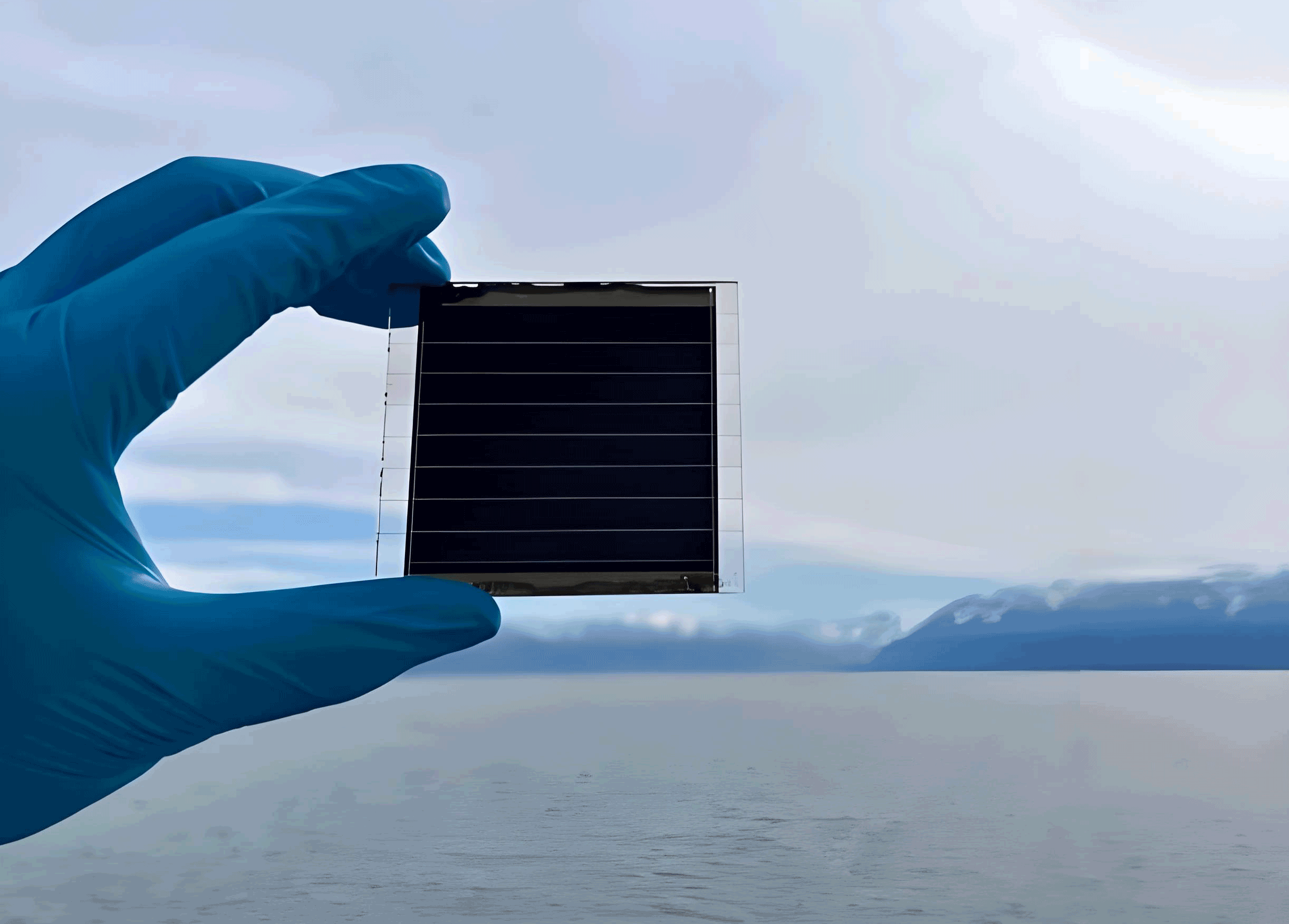
The fabrication of inverted perovskite solar cells began with cleaning ITO substrates using detergents, deionized water, acetone, and isopropanol sequentially. After UV-ozone treatment, a NiOx layer was spin-coated and annealed at 150°C. The SAM solutions, including pure MeO-2PACz and MeO-2PACz blended with DCP additive (1%, 3%, and 5% by weight), were deposited on NiOx and annealed at 100°C. The perovskite active layer with a composition of (FA0.95MA0.05)0.95Cs0.05Pb(I0.95Br0.05)3 was prepared from precursor solutions in DMF:DMSO (4:1 v/v) and spin-coated with chlorobenzene anti-solvent treatment, followed by annealing at 110°C. Electron transport layers of PCBM and BCP were sequentially applied, and a 100 nm Ag electrode was thermally evaporated to complete the device structure: ITO/NiOx/SAM/Perovskite/PCBM/BCP/Ag. Characterization techniques included atomic force microscopy (AFM), scanning electron microscopy (SEM), X-ray diffraction (XRD), X-ray photoelectron spectroscopy (XPS), Fourier-transform infrared spectroscopy (FTIR), photoluminescence (PL), time-resolved photoluminescence (TRPL), and current density-voltage (J-V) measurements under AM 1.5G illumination.
The photovoltaic performance of perovskite solar cells was evaluated to determine the optimal DCP concentration. Devices with pure MeO-2PACz exhibited a power conversion efficiency (PCE) of 23.58%, with an open-circuit voltage (Voc) of 1.19 V, short-circuit current density (Jsc) of 24.34 mA/cm2, and fill factor (FF) of 83.00%. Introducing DCP additives led to a significant improvement in PCE, peaking at 24.64% for the 3% DCP formulation, attributed to enhanced Jsc and FF. The performance parameters are summarized in Table 1, demonstrating that DCP incorporation optimizes charge extraction and reduces recombination losses. The J-V curves in Figure 2 illustrate the superior performance of DCP-modified devices, with minimal hysteresis and improved stability. The enhancement in perovskite solar cell efficiency underscores the critical role of SAM additives in interfacial engineering.
| Device | Voc (V) | Jsc (mA/cm2) | FF (%) | PCE (%) |
|---|---|---|---|---|
| MeO-2PACz | 1.19 ± 0.01 | 23.86 ± 0.35 | 81.48 ± 1.19 | 23.05 ± 0.37 |
| MeO-2PACz +1% DCP | 1.19 ± 0.01 | 24.27 ± 0.28 | 82.22 ± 0.96 | 23.70 ± 0.24 |
| MeO-2PACz +3% DCP | 1.19 ± 0.01 | 24.31 ± 0.26 | 83.33 ± 0.79 | 24.10 ± 0.36 |
| MeO-2PACz +5% DCP | 1.19 ± 0.01 | 24.22 ± 0.27 | 82.10 ± 1.17 | 23.61 ± 0.24 |
The impact of DCP on SAM film formation and perovskite morphology was investigated using AFM and SEM. AFM images revealed that the surface roughness of MeO-2PACz films remained nearly unchanged upon DCP addition (4.38 nm vs. 4.34 nm), indicating no adverse effects on SAM uniformity. SEM analysis of perovskite films deposited on DCP-modified SAMs showed larger and more compact grains, with average grain size increasing from approximately 270 nm to 320 nm. This improvement in film quality is attributed to the optimized nucleation and growth processes facilitated by DCP, which enhances crystallinity and reduces pinhole density. XRD patterns further confirmed the enhanced crystallinity, with intensified (100) and (200) diffraction peaks for DCP-containing films. The full width at half maximum (FWHM) of the (100) peak decreased from 0.15° to 0.12°, indicating reduced microstrain and improved crystal quality. The crystallite size (D) can be estimated using the Scherrer equation:
$$D = \frac{K \lambda}{\beta \cos \theta}$$
where K is the shape factor (0.9), λ is the X-ray wavelength (1.5406 Å), β is the FWHM in radians, and θ is the Bragg angle. For the (100) peak, D increased from 56 nm to 70 nm with DCP addition, corroborating the SEM observations. These morphological enhancements contribute to the superior performance of perovskite solar cells by minimizing non-radiative recombination pathways.
To elucidate the passivation mechanism, XPS and FTIR analyses were conducted. XPS spectra of Pb 4f core levels showed a shift to lower binding energies for perovskite films on DCP-modified SAMs (Pb 4f7/2 from 138.2 eV to 137.9 eV), suggesting electron donation from DCP to Pb2+ ions. This interaction passivates undercoordinated Pb defects at the buried interface, reducing trap states. FTIR spectra of DCP alone exhibited a characteristic -C≡N stretching vibration at 2250 cm−1, which shifted to 2229 cm−1 upon mixing with PbI2, confirming strong coordination between cyano groups and Pb2+. The passivation efficacy can be quantified by the defect density (Nt), which is related to the Urbach energy (Eu) as:
$$N_t \propto \exp\left(\frac{E_u}{k_B T}\right)$$
where kB is Boltzmann’s constant and T is temperature. Eu decreased from 25 meV to 20 meV with DCP addition, indicating a reduction in disorder and defect density. This passivation effect is crucial for enhancing the open-circuit voltage and overall efficiency of perovskite solar cells.
Charge carrier dynamics were probed using PL and TRPL spectroscopy. Steady-state PL measurements showed a significant quenching of emission intensity at 795 nm for perovskite films on DCP-modified SAMs, suggesting improved charge extraction. TRPL decay curves were fitted with a bi-exponential function:
$$I(t) = A_1 \exp\left(-\frac{t}{\tau_1}\right) + A_2 \exp\left(-\frac{t}{\tau_2}\right)$$
where τ1 and τ2 represent fast and slow decay components, respectively. The average carrier lifetime (τavg) is given by:
$$\tau_{avg} = \frac{A_1 \tau_1^2 + A_2 \tau_2^2}{A_1 \tau_1 + A_2 \tau_2}$$
For MeO-2PACz-based films, τavg was 160.68 ns, which decreased to 136.23 ns with DCP incorporation. This reduction in lifetime indicates accelerated charge transfer across the SAM/perovskite interface, reducing recombination losses. The enhanced charge extraction efficiency (ηext) can be expressed as:
$$\eta_{ext} = 1 – \frac{\tau_{SAM}}{\tau_{ref}}$$
where τSAM and τref are lifetimes with and without SAM, respectively. ηext increased from 75% to 82% with DCP, highlighting its role in facilitating hole transport. These findings align with the improved Jsc and FF in perovskite solar cells.
Long-term stability tests were conducted on unencapsulated devices stored in a N2 atmosphere. As shown in Table 2, devices with pure MeO-2PACz retained 81% of their initial PCE after 1000 hours, while DCP-modified devices maintained 85%, demonstrating enhanced operational stability. The degradation rate (k) can be modeled using first-order kinetics:
$$\frac{PCE(t)}{PCE(0)} = \exp(-k t)$$
where k decreased from 2.1 × 10⁻³ h−1 to 1.6 × 10⁻³ h−1 with DCP addition, indicating slower performance decay. This improvement is attributed to the robust interfacial passivation and reduced ion migration afforded by DCP, which mitigates phase segregation and degradation.
| Device | Initial PCE (%) | PCE after 1000 h (%) | Retention (%) | Degradation Rate (h−1) |
|---|---|---|---|---|
| MeO-2PACz | 23.58 | 19.10 | 81 | 2.1 × 10⁻³ |
| MeO-2PACz +3% DCP | 24.64 | 20.94 | 85 | 1.6 × 10⁻³ |
In conclusion, the incorporation of DCP as a SAM additive significantly enhances the performance and stability of inverted perovskite solar cells. By optimizing the buried interface through Pb2+ passivation, improving perovskite crystallinity, and accelerating charge carrier extraction, DCP addresses key limitations of SAM-based devices. This strategy achieves a champion PCE of 24.64% and superior long-term stability, underscoring the potential of multifunctional additives in advancing perovskite solar cell technology. Future work will focus on exploring other small-molecule additives and their applications in large-area modules and tandem configurations.