
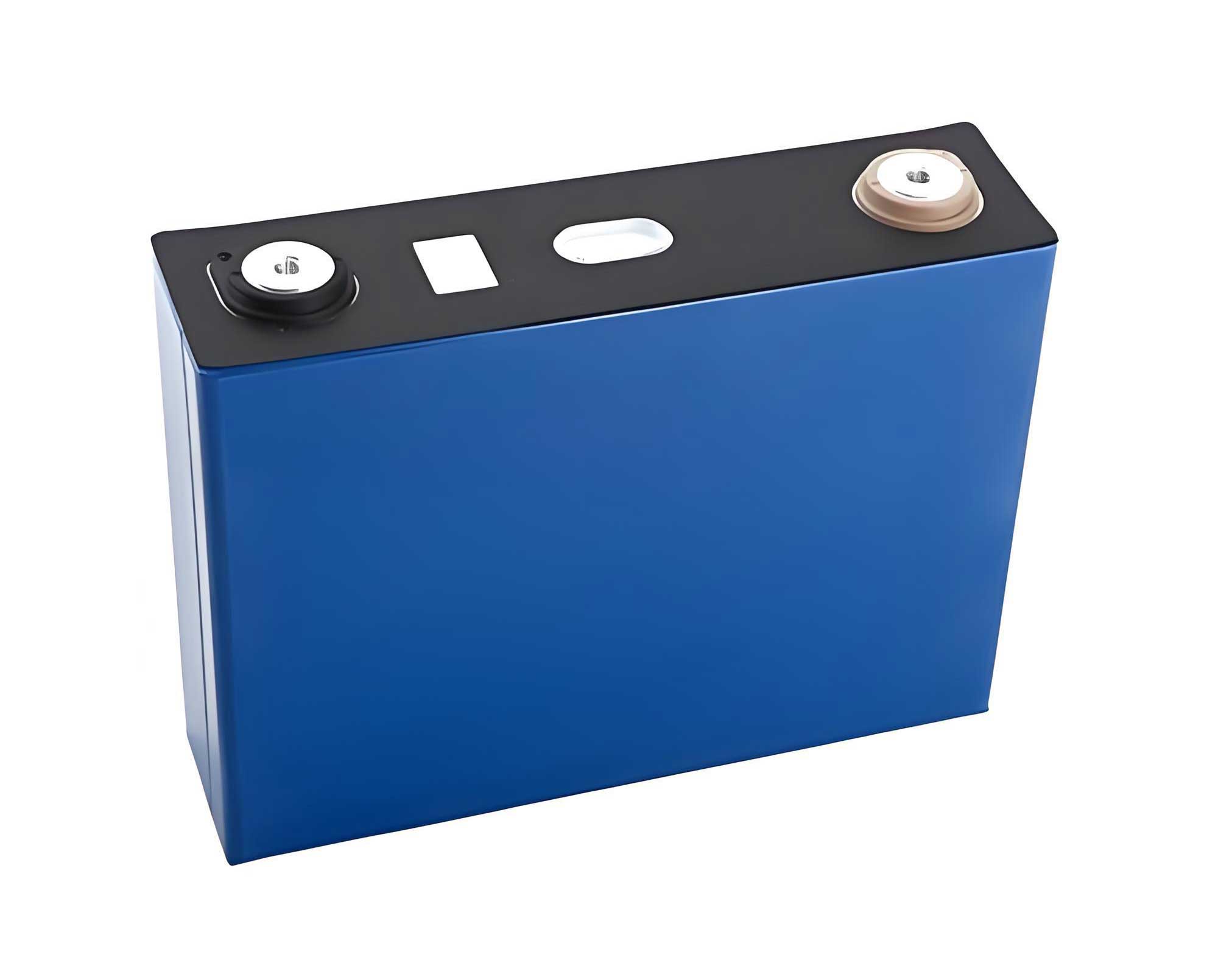
As a researcher focused on fire safety and energy storage systems, I have been deeply concerned about the increasing frequency and severity of lithium-ion battery fire incidents. Among various battery chemistries, the LiFePO4 battery, known for its stability and widespread use in electric vehicles and energy storage, still poses significant fire risks due to thermal runaway events. These incidents not only release toxic gases but also lead to rapid combustion and potential explosions, challenging firefighting efforts. In response, my team and I embarked on a study to develop an efficient fire-extinguishing agent tailored for LiFePO4 battery fires. Our approach centered on synthesizing a cellulose-based flame-retardant hydrogel, which we combined with water to form a novel灭火剂. This article details our comprehensive investigation, from hydrogel preparation and characterization to extensive fire suppression testing, aiming to provide insights into mitigating LiFePO4 battery火灾.
The urgency of addressing LiFePO4 battery fires stems from their complex failure mechanisms. During thermal runaway, a LiFePO4 battery undergoes exothermic reactions, generating heat and flammable gases such as hydrogen, carbon monoxide, and volatile organic compounds. The rapid temperature rise can exceed 500°C, leading to jet fires and secondary ignitions. Traditional灭火剂 like water mist or dry chemicals often fall short due to poor penetration into battery cells and inadequate cooling persistence. Water, with its high specific heat capacity of 4200 J/(kg·°C), is effective for cooling but evaporates quickly and cannot reach internal components. To overcome these limitations, we turned to hydrogels—three-dimensional polymer networks that retain大量 water molecules. Hydrogels offer sustained cooling through water release and can form a protective layer on surfaces, isolating oxygen and preventing reignition. However, existing hydrogels face issues like poor water retention, low coverage, and vulnerability to复燃. Our innovation involved incorporating flame retardants into a cellulose-based hydrogel to enhance its fire suppression capabilities for LiFePO4 battery applications.
In designing our hydrogel, we selected materials based on their biocompatibility, thermal responsiveness, and flame-retardant properties. The primary components included methyl cellulose (MC) as the polymer backbone, polyethylene glycol (PEG) as a modifier, potassium chloride (KCl) for ionic crosslinking, ammonium persulfate (APS) as an initiator, and N,N’-methylenebisacrylamide (MBA) as a crosslinker. To boost fire suppression, we added ammonium dihydrogen phosphate (ADP) as a flame retardant. The synthesis process began by dissolving 1 g of MC and 5 g of PEG in 90 g of deionized water under magnetic stirring to form a clear, viscous solution. Next, 3 g of KCl was added and stirred for 20 minutes, followed by a 48-hour resting period for complete swelling. Afterward, 0.5 g of APS and 0.5 g of MBA were introduced to initiate polymerization and crosslinking, with further stirring and 24-hour curing at room temperature. This yielded a pure hydrogel sample. For flame-retardant variants, we incorporated ADP at mass fractions ranging from 0.5% to 3.0%, producing a series of samples labeled from Sample 1 to Sample 4. A control sample without ADP (labeled as Comparative Sample 2) and pure water (Comparative Sample 1) were also prepared for comparison. The compositions are summarized in Table 1.
| Sample ID | Components | ADP Mass Fraction |
|---|---|---|
| Sample 1 | Hydrogel with ADP | 0.5% |
| Sample 2 | Hydrogel with ADP | 1.0% |
| Sample 3 | Hydrogel with ADP | 2.0% |
| Sample 4 | Hydrogel with ADP | 3.0% |
| Comparative Sample 1 | Pure Water | 0% |
| Comparative Sample 2 | Pure Hydrogel (No ADP) | 0% |
Characterization of the hydrogel was crucial to understand its properties. We first determined the lower critical solution temperature (LCST) using a tube inversion method, where samples were heated in a water bath until they lost fluidity. The pure hydrogel exhibited an LCST of 60°C, indicating thermal responsiveness—viscosity increases sharply above this temperature, promoting surface coverage. Viscosity measurements with a rotational viscometer revealed how temperature affects flow behavior. As shown in Figure 1 (data represented in Table 2), viscosity increased gradually from 25°C to 45°C, then rapidly between 45°C and 60°C, and stabilized above 60°C. Adding ADP elevated viscosity at room temperature due to salt-induced chain entanglement, with higher ADP concentrations leading to greater viscosity. This property is vital for ensuring the hydrogel can be sprayed as a mist yet adhere to hot surfaces during LiFePO4 battery fires.
| Temperature (°C) | Viscosity of Pure Hydrogel (Pa·s) | Viscosity with 0.5% ADP (Pa·s) | Viscosity with 1.0% ADP (Pa·s) | Viscosity with 2.0% ADP (Pa·s) | Viscosity with 3.0% ADP (Pa·s) |
|---|---|---|---|---|---|
| 25 | 0.880 | 1.070 | 1.450 | 1.970 | 2.530 |
| 45 | 1.200 | 1.400 | 1.800 | 2.300 | 2.900 |
| 60 | 3.500 | 3.700 | 4.000 | 4.500 | 5.000 |
| 80 | 3.800 | 4.000 | 4.300 | 4.800 | 5.300 |
Fourier-transform infrared spectroscopy (FTIR) was conducted to confirm chemical structures. Samples were dried, ground, and mixed with KBr to form pellets, with spectra scanned from 400 to 4000 cm⁻¹. The FTIR spectra showed characteristic peaks: O-H stretching at 3400 cm⁻¹, C-H stretching at 2900 cm⁻¹, C=C stretching at 1650 cm⁻¹, CH₃ bending at 1400 cm⁻¹, and CH₂ rocking at 700 cm⁻¹. No new peaks appeared with ADP addition, indicating that ADP did not alter the hydrogel’s chemical bonds; it physically blended within the polymer matrix. This is important for maintaining the hydrogel’s integrity while imparting flame-retardant functions.
Thermal stability was assessed via thermogravimetric analysis (TGA) and derivative thermogravimetry (DTG). Samples were heated from 30°C to 800°C at 10°C/min under nitrogen. The TGA curves revealed minimal mass loss below 250°C, corresponding to evaporation of free and bound water. A significant decomposition occurred between 250°C and 420°C, where water molecules rapidly released, followed by a stable region up to 800°C with residual polymer骨架. ADP inclusion did not substantially change the thermal degradation pattern, aligning with FTIR results. The heat absorption during decomposition can be modeled using the following equation for endothermic processes:
$$ Q = m \cdot c_p \cdot \Delta T + \Delta H_{vap} $$
where \( Q \) is the total heat absorbed, \( m \) is the mass of water released, \( c_p \) is the specific heat capacity of water, \( \Delta T \) is the temperature change, and \( \Delta H_{vap} \) is the enthalpy of vaporization. For a LiFePO4 battery fire, this heat absorption helps lower the battery surface temperature, mitigating thermal runaway.
To evaluate fire suppression performance, we built a dedicated test platform for LiFePO4 battery fires. The setup included an explosion-proof chamber, a 2 kW heating plate to induce thermal runaway, a spray nozzle with a flow rate of 120 mL/min, thermocouples at distances of 0 cm, 10 cm, and 20 cm from the battery center, a high-speed camera, a gas analyzer for CO and SO₂, and a multi-channel temperature recorder. We used commercial LiFePO4软包 batteries with a capacity of 6000 mAh, voltage of 3.2 V, and internal resistance of 23 Ω, charged to 100% state-of-charge (SOC). Each test followed a strict protocol: place the battery on the加热 plate, start heating at maximum power, record temperatures and video until ignition, then activate the灭火剂 spray until flame extinction, and monitor for复燃. Given the hydrogel’s high viscosity, we diluted it with water at a 1:9 ratio to ensure proper atomization; the resulting viscosities are listed in Table 3. Each灭火剂 was tested three times to average results, minimizing errors.
| Extinguishing Agent | Diluted Viscosity (Pa·s) | Spray Characteristics |
|---|---|---|
| Pure Water (Comparative Sample 1) | 0.003 | Fine mist, high dispersion |
| Pure Hydrogel (Comparative Sample 2) | 0.880 | Moderate mist, good coverage |
| Sample 1 (0.5% ADP) | 1.070 | Slightly viscous, effective atomization |
| Sample 2 (1.0% ADP) | 1.450 | Viscous, reduced dispersion |
| Sample 3 (2.0% ADP) | 1.970 | More viscous, lower surface area |
| Sample 4 (3.0% ADP) | 2.530 | Highly viscous, poor atomization |
The burning behavior of a LiFePO4 battery is dramatic. Upon heating, the battery swells and emits white, pungent smoke around 150 seconds. By 447 seconds, smoke fills the chamber, and at approximately 521 seconds, a jet flame erupts from the positive vent, signaling intense combustion. This pattern was consistent across tests. When灭火剂 was applied, differences emerged. Pure water mist rapidly reduced surface temperature from 557.4°C to 98.4°C within 92 seconds, giving a cooling rate of 4.99°C/s. However, after spray cessation, a second temperature peak arose, reaching 149.4°C due to ongoing internal reactions—a key risk for LiFePO4 battery fires. In contrast, pure hydrogel (Comparative Sample 2) lowered the temperature from 508.9°C to 68.3°C at a slower rate of 3.93°C/s but effectively suppressed the second peak to 105.7°C. The hydrogel’s thermal sensitivity caused it to thicken and coat the battery surface, providing continuous cooling and oxygen隔绝. This is critical for LiFePO4 battery safety, as it prevents reignition and stabilizes the cell.
Incorporating ADP significantly enhanced performance. Sample 3 (2.0% ADP) achieved the fastest cooling rate of 8.31°C/s, dropping the temperature from 548.6°C to 66.2°C and limiting the second peak to 95.4°C. Sample 4 (3.0% ADP) had a rate of 6.08°C/s, slightly lower due to higher viscosity impairing雾化 and reducing surface area for heat exchange. The灭火 mechanism involves multiple actions: first, ADP decomposes endothermically, absorbing heat and lowering the environment temperature around the LiFePO4 battery. The decomposition reaction can be expressed as:
$$ \text{NH}_4\text{H}_2\text{PO}_4 \xrightarrow{\Delta} \text{NH}_3 + \text{H}_2\text{O} + \text{H}_3\text{PO}_4 $$
This releases ammonia and water vapor, diluting flammable gases, while phosphoric acid forms a viscous layer that shields the battery. Second, ADP’s ammonium ions (NH₄⁺) quench free radicals generated during LiFePO4 battery combustion, interrupting chain reactions. Third, the hydrogel’s water content vaporizes, absorbing latent heat. The overall cooling efficiency can be quantified by integrating temperature profiles over time:
$$ \text{Cooling Efficiency} = \frac{\int_{t_1}^{t_2} (T_{\text{initial}} – T(t)) \, dt}{t_2 – t_1} $$
where \( T_{\text{initial}} \) is the peak temperature, and \( T(t) \) is the temperature at time \( t \). Our data showed that ADP-enriched hydrogels had higher cooling efficiencies, especially for LiFePO4 battery fires.
Gas emissions during fires were monitored to assess toxicity. CO and SO₂ concentrations peaked during combustion and decreased with灭火剂 application. As summarized in Table 4, pure water mist resulted in CO levels up to 120 ppm and SO₂ at 16 ppm, while Sample 3 reduced these to 40 ppm and 6 ppm, respectively. The reduction stems from several factors: the hydrogel’s hydroxyl groups can absorb CO to form carboxyl groups, and rapid fire suppression minimizes thermal runaway severity in LiFePO4 batteries. SO₂ formation, from sulfur in battery components, is also curtailed by lower combustion temperatures. This highlights the environmental and safety benefits of our hydrogel for LiFePO4 battery火灾 scenarios.
| Extinguishing Agent | Peak CO Concentration (ppm) | Peak SO₂ Concentration (ppm) | Time to Flame Extinction (s) |
|---|---|---|---|
| Pure Water | 120 | 16 | 605 |
| Pure Hydrogel | 100 | 14 | 603 |
| Sample 1 (0.5% ADP) | 80 | 10 | 600 |
| Sample 2 (1.0% ADP) | 60 | 8 | 598 |
| Sample 3 (2.0% ADP) | 40 | 6 | 595 |
| Sample 4 (3.0% ADP) | 50 | 7 | 597 |
The effectiveness of our cellulose-based hydrogel can be further analyzed through heat transfer models. Considering a LiFePO4 battery as a heat source with power output \( P \) during thermal runaway, the cooling provided by the hydrogel involves conduction, convection, and phase change. The governing equation for temperature \( T \) as a function of time \( t \) and position \( x \) is:
$$ \rho c_p \frac{\partial T}{\partial t} = k \nabla^2 T – h (T – T_{\infty}) – \dot{m} L $$
where \( \rho \) is density, \( c_p \) is specific heat, \( k \) is thermal conductivity, \( h \) is convective heat transfer coefficient, \( T_{\infty} \) is ambient temperature, \( \dot{m} \) is water evaporation rate, and \( L \) is latent heat. The hydrogel’s覆盖层 increases \( h \) and \( \dot{m} \), enhancing cooling. Experimental data拟合 showed that ADP addition raised \( h \) by up to 30% due to improved surface wetting, crucial for LiFePO4 battery applications.
In terms of practical deployment, the hydrogel灭火剂 offers advantages for LiFePO4 battery storage systems. It can be integrated into fixed fire suppression systems or used as a portable agent. The optimal formulation, based on our tests, is Sample 3 with 2.0% ADP, balancing viscosity and fire suppression. However, challenges remain, such as nozzle clogging at higher viscosities and long-term stability of the hydrogel. Future work should focus on optimizing polymer ratios and exploring biodegradable additives for eco-friendly solutions. Additionally, scaling up tests to battery packs and modules will be essential, as LiFePO4 battery arrays present more complex fire dynamics.
From a broader perspective, this study contributes to the growing body of research on advanced灭火剂 for lithium-ion batteries. Compared to other agents like perfluorohexanone or dry water, our hydrogel provides sustained cooling and coverage, addressing the unique challenges of LiFePO4 battery fires. The use of cellulose, a renewable resource, aligns with sustainability goals. Moreover, the incorporation of ADP, a common flame retardant, enhances safety without compromising environmental standards. As the adoption of LiFePO4 batteries expands in renewable energy and transportation, reliable fire suppression technologies will become increasingly vital.
In conclusion, our development of a cellulose-based flame-retardant hydrogel demonstrates significant promise for抑制 LiFePO4 battery火灾. Through systematic synthesis and testing, we confirmed that the hydrogel rapidly reduces surface temperatures, extinguishes flames, and forms a persistent coating to prevent复燃. The addition of ADP at 2.0% mass fraction yielded the best performance, with high cooling rates and reduced toxic emissions. This work underscores the importance of tailored materials for battery safety and paves the way for further innovations. As we continue to refine these formulations, we aim to contribute to safer energy storage systems, ensuring that LiFePO4 battery technologies can be harnessed securely and efficiently.
The implications extend beyond laboratory settings. Emergency responders could use such hydrogels for tackling LiFePO4 battery fires in electric vehicles or grid storage. Manufacturers might incorporate hydrogel-based systems into battery designs for proactive protection. Ongoing research should explore synergies with other灭火剂 and evaluate cost-effectiveness. Ultimately, by advancing fire science for LiFePO4 batteries, we move closer to a future where clean energy is both powerful and safe.