
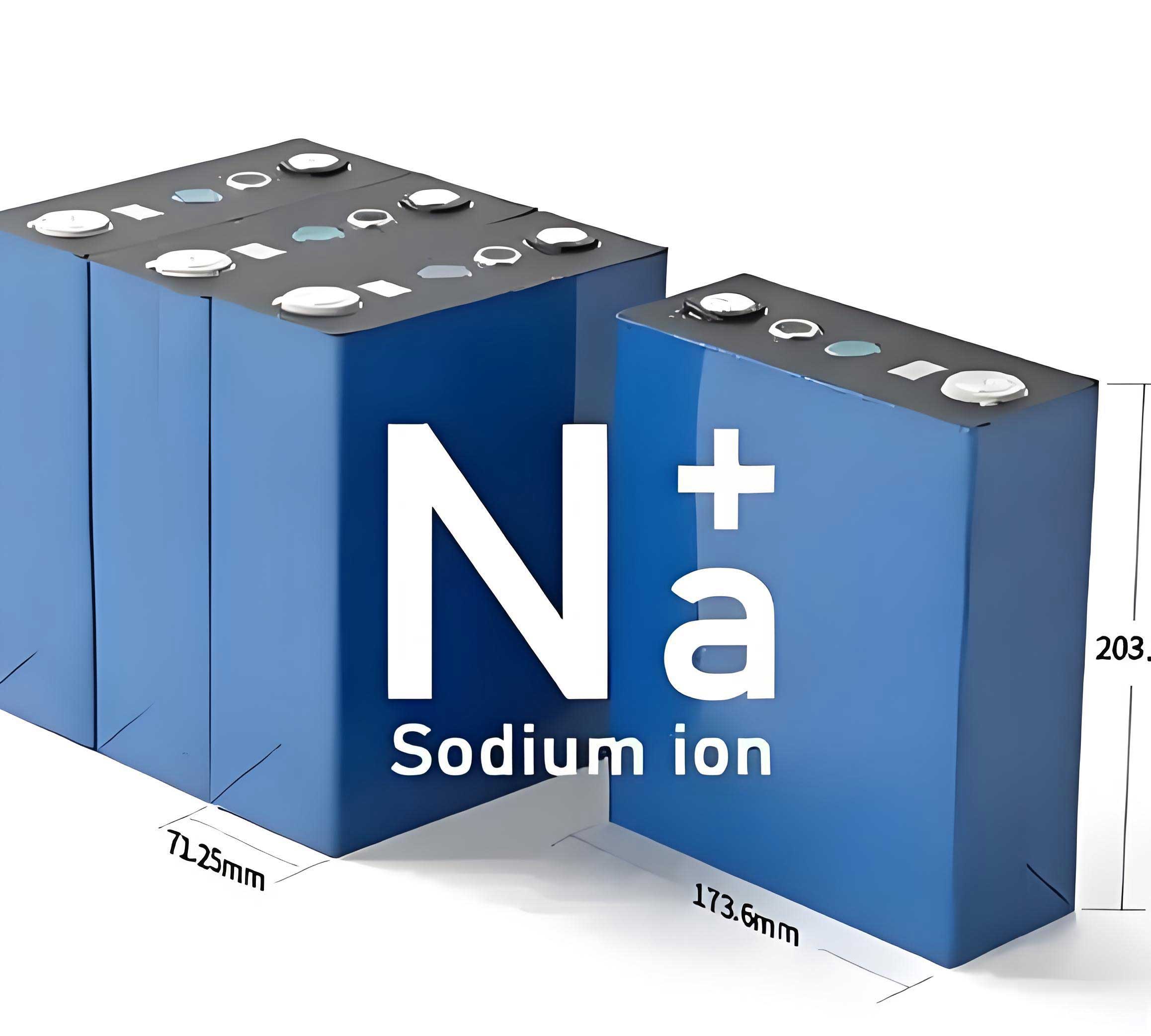
The escalating demand for sustainable and large-scale energy storage systems has propelled the development of advanced battery technologies beyond lithium-ion systems. In this landscape, the sodium-ion battery (SIB) has emerged as a highly promising candidate due to the natural abundance and low cost of sodium resources. However, the practical deployment of sodium-ion battery technology is significantly hampered by the challenge of identifying suitable anode materials that can accommodate the larger ionic radius of Na+ (1.02 Å) compared to Li+ (0.76 Å). This size disparity leads to sluggish reaction kinetics, substantial volume expansion during charge/discharge cycles, and rapid capacity degradation, posing major hurdles for long-term cycling stability.
Among various anode contenders, transition metal selenides (TMSs), particularly iron diselenide (FeSe2), have attracted considerable attention for sodium-ion battery applications. FeSe2 offers a compelling combination of a high theoretical specific capacity (approximately 501.5 mAh g-1), good chemical stability, and environmental benignity. The storage mechanism in a sodium-ion battery typically involves a combination of conversion and alloying reactions:
$$ \text{FeSe}_2 + x\text{Na}^+ + x e^- \leftrightarrow \text{Na}_x\text{FeSe}_2 \quad \text{(Intercalation)} $$
$$ \text{Na}_x\text{FeSe}_2 + (4-x)\text{Na}^+ + (4-x)e^- \leftrightarrow \text{Fe} + 2\text{Na}_2\text{Se} \quad \text{(Conversion)} $$
Despite these advantages, the innate drawbacks of FeSe2—namely its poor intrinsic electronic conductivity and the massive volume fluctuations associated with the sodiation/desodiation processes—severely limit its rate capability and cycle life in sodium-ion battery configurations. The repeated expansion and contraction pulverize the active material, disrupt electrical contact, and lead to continuous reformation of the solid-electrolyte interphase (SEI), ultimately causing catastrophic failure.
To address these intrinsic limitations, a prevalent and effective strategy is the construction of composite architectures, where the active FeSe2 is intimately integrated with a conductive carbonaceous matrix. This work details a rational design and synthesis of a spherical FeSe2@N-doped Carbon (FeSe2@NC) composite, engineered specifically to overcome these barriers for high-performance sodium-ion battery anodes.
Synthesis and Structural Design Philosophy
The synthesis of the FeSe2@NC composite is a multi-step process designed to achieve precise structural control. It begins with the hydrothermal synthesis of a spherical Fe3O4 precursor. This morphology is chosen as a template because micro-sized spheres can help mitigate excessive side reactions with the electrolyte while providing a robust scaffold. The subsequent step involves an in-situ polymerization process, where dopamine hydrochloride is polymerized on the surface of the Fe3O4 spheres in a Tris-buffer solution, forming a uniform and conformal polydopamine (PDA) coating. This polymer layer serves a dual purpose: as a nitrogen source and as a carbon precursor.
The final and critical step is a gas-phase selenization treatment. The Fe3O4@PDA composite is annealed in a reducing atmosphere (Ar/H2) in the presence of selenium powder. During this high-temperature process, two simultaneous transformations occur: (1) the Fe3O4 core is reduced and selenized to form crystalline FeSe2, and (2) the outer PDA shell is carbonized into a nitrogen-doped carbon (NC) layer. For comparison, bare FeSe2 is also prepared by directly selenizing the Fe3O4 precursor without the PDA coating step. The entire synthesis strategy is summarized in the schematic below and is focused on creating an optimal structure for sodium-ion battery electrodes.
The successful synthesis and crystallinity of the materials are confirmed through X-ray diffraction (XRD). The diffraction patterns for both FeSe2 and FeSe2@NC show distinct peaks that can be perfectly indexed to the orthorhombic phase of FeSe2 (PDF#89-4075). No impurity peaks are detected, indicating high phase purity. The carbon coating in the FeSe2@NC composite is amorphous, as evidenced by the broad hump in the XRD pattern in the lower angle region (20-30°), and does not interfere with the crystallization of the FeSe2 core.
Morphological Evolution and Composite Structure
The morphological evolution from precursor to final product is crucial for understanding the composite’s advantages. The initial Fe3O4 precursor exhibits a well-defined spherical morphology with a smooth surface. After the PDA coating, the spherical shape is preserved, but the surface becomes uniformly coated with a polymer layer, indicating successful encapsulation. Post-selenization, dramatic differences are observed between the two final products.
The bare FeSe2 sample suffers from severe structural degradation and particle aggregation due to the lack of a constraining matrix during the high-temperature phase transformation and the inherent stress from volume changes. In stark contrast, the FeSe2@NC composite largely retains its spherical integrity. The FeSe2 nanoparticles are effectively encapsulated within a continuous, web-like nitrogen-doped carbon matrix. This core-shell structure is pivotal for the enhanced performance in sodium-ion batteries, as it provides multiple benefits:
- Mechanical Buffering: The carbon shell acts as a physical barrier, confining the volume expansion of FeSe2 nanoparticles during sodiation and preventing their pulverization and aggregation.
- Conductive Network: The highly conductive carbon matrix establishes a three-dimensional electron highway, drastically improving the overall electronic conductivity of the electrode.
- SEI Stabilization: The carbon coating helps in forming a more stable and uniform SEI layer on its outer surface, rather than on each individual FeSe2 nanoparticle, minimizing irreversible sodium consumption.
- Enhanced Kinetics: The porous nature of the carbon network facilitates electrolyte infiltration and shortens the diffusion path for Na+ ions.
Electrochemical Performance in Sodium-Ion Battery Cells
The electrochemical properties of the FeSe2@NC composite were systematically evaluated as an anode for sodium-ion batteries using half-cell configurations (vs. Na/Na+). Cyclic voltammetry (CV) profiles during the initial cycles provide insight into the electrochemical reactions. In the first cathodic scan, peaks appear at ~1.85 V and ~0.72 V, corresponding to the intercalation of Na+ into FeSe2 to form NaxFeSe2 and the subsequent conversion reaction to form metallic Fe and Na2Se, respectively. The broad peak around 1.30 V is attributed to electrolyte decomposition and SEI formation. In the anodic scan, peaks at ~1.46 V and ~2.28 V are associated with the stepwise re-conversion of Fe/Na2Se back to FeSe2. From the second cycle onward, the CV curves exhibit excellent overlap, indicating highly reversible redox reactions and stable electrochemical behavior for the FeSe2@NC electrode in the sodium-ion battery.
The galvanostatic charge-discharge cycling performance starkly highlights the superiority of the composite design. The following table summarizes and compares the key electrochemical metrics of bare FeSe2 and the FeSe2@NC composite:
| Material | Current Density (A g-1) | Specific Capacity (mAh g-1) | Capacity Retention / Cycle Number | Key Advantage |
|---|---|---|---|---|
| Bare FeSe2 | 0.2 | ~272.6 | Rapid decay observed | N/A |
| 0.5 | ~247.3 | |||
| 5.0 | ~195.7 | |||
| FeSe2@NC Composite | 0.2 | ~512.9 | Stable over 50 cycles | High capacity at low rate |
| 0.5 | ~508.9 | |||
| 1.0 | ~510.3 | |||
| 2.0 | ~506.7 | Excellent rate capability | ||
| 5.0 | ~487.5 | |||
| FeSe2@NC Composite | 5.0 (Long-term) | ~392.2 | Stable over 500 cycles | Outstanding long-term cyclability |
The rate capability test further demonstrates the exceptional performance of the FeSe2@NC anode. When the current density is increased stepwise from 0.2 to 5.0 A g-1, the composite delivers remarkably high and stable capacities at each rate. Even at an ultra-high current density of 5.0 A g-1, a capacity of 487.5 mAh g-1 is retained. Most importantly, when the current density is returned to 0.2 A g-1, the capacity recovers to nearly its original value, underscoring the structural robustness and excellent electrochemical reversibility of the composite. This is in sharp contrast to the bare FeSe2, which shows much lower capacities and poor rate performance.
The most compelling evidence for the effectiveness of the carbon hybridization strategy is the long-term cycling stability at a high current density of 5.0 A g-1. The FeSe2@NC composite anode maintains a stable specific capacity of 392.2 mAh g-1 after 500 cycles, with a high capacity retention and nearly 100% Coulombic efficiency throughout the test. This outstanding cyclability is rarely achieved for conversion-type anode materials in sodium-ion batteries and is a direct consequence of the protective carbon matrix mitigating mechanical degradation and maintaining electrical integrity.
Electrochemical impedance spectroscopy (EIS) analysis provides quantitative support for the enhanced kinetics. The Nyquist plot for the FeSe2@NC electrode shows a much smaller semicircle in the high-to-medium frequency region compared to the bare FeSe2 electrode. This semicircle corresponds to the charge-transfer resistance (Rct) at the electrode/electrolyte interface. The significantly lower Rct value for the composite confirms that the nitrogen-doped carbon coating greatly facilitates faster charge transfer kinetics, which is essential for the high-rate performance of the sodium-ion battery.
Mechanistic Insights and Synergistic Effects
The dramatic improvement in the sodium-ion battery performance of the FeSe2@NC composite can be attributed to a powerful synergy between the spherical FeSe2 core and the nitrogen-doped carbon shell. The enhancement mechanisms are multifaceted and can be described by several interconnected principles:
1. Stress Dissipation and Volume Change Accommodation:
The fundamental issue of volume expansion (ΔV) during the conversion reaction can be conceptually modeled. The carbon shell applies a constraining pressure, modifying the effective stress state on the active material. The improved cyclic stability can be linked to the mitigation of strain energy (Ustrain) accumulated per cycle:
$$ U_{\text{strain, composite}} \propto \int \sigma_{\text{eff}} : d\epsilon \ll U_{\text{strain, bare}} $$
where $\sigma_{\text{eff}}$ is the effective stress tensor experienced by the FeSe2 core within the compliant carbon matrix, and $\epsilon$ is the strain tensor. The carbon shell effectively redistributes and absorbs the mechanical stress, preventing crack propagation and particle isolation.
2. Enhanced Charge Transport:
The nitrogen-doped carbon matrix drastically improves the electronic conductivity (σ) of the entire electrode. This can be understood in the context of percolation theory, where the conductive carbon forms an interconnected network ensuring all active particles are electrically wired. The effective electronic conductivity of the composite ($\sigma_{\text{comp}}$) is significantly higher than that of the pure FeSe2 phase ($\sigma_{\text{FeSe2}}$), reducing overall polarization ($\eta$):
$$ \sigma_{\text{comp}} \approx \phi_{\text{C}} \cdot \sigma_{\text{C}} \gg \sigma_{\text{FeSe2}} $$
$$ \eta = \frac{I \cdot L}{A \cdot \sigma_{\text{comp}}} \quad \text{(reduced)} $$
where $\phi_{\text{C}}$ is the volume fraction of carbon, $\sigma_{\text{C}}$ is its conductivity, I is current, L is thickness, and A is area.
3. Favorable Interfacial Kinetics and Pseudocapacitive Contribution:
The nanostructuring of FeSe2 within the porous carbon and the nitrogen doping create abundant active sites and defects at the FeSe2/NC interface. This interface not only promotes charge transfer but also can induce surface-induced pseudocapacitive Na+ storage. This contribution, which is highly reversible and fast, becomes significant and can be described by the current response in CV:
$$ i(V) = k_1 v + k_2 v^{1/2} $$
where $i$ is current, $v$ is scan rate, $k_1 v$ represents the surface-controlled pseudocapacitive contribution, and $k_2 v^{1/2}$ represents the diffusion-controlled bulk contribution. For the FeSe2@NC composite, the $k_1$ value is substantially larger, indicating a greater role of fast surface processes, which is crucial for high-rate performance in sodium-ion batteries.
Conclusion and Perspective
In summary, a spherical FeSe2@nitrogen-doped carbon composite was successfully engineered through a combined hydrothermal, in-situ polymerization, and gas-phase selenization strategy. This rationally designed architecture directly addresses the critical challenges of volume expansion and poor conductivity that plague FeSe2 as an anode material for sodium-ion batteries. The nitrogen-doped carbon matrix serves as a multifunctional component: a mechanical buffer to accommodate volume changes, a conductive network to enable fast electron transport, and a stabilizing layer for a robust SEI.
The resultant FeSe2@NC composite exhibits exceptional electrochemical performance in sodium-ion battery testing, including high specific capacity, remarkable rate capability (retaining ~487.5 mAh g-1 at 5.0 A g-1), and outstanding long-term cycling stability (392.2 mAh g-1 after 500 cycles at 5.0 A g-1). These results underscore the effectiveness of the core-shell and carbon hybridization strategy in unlocking the full potential of conversion-type materials like FeSe2 for practical sodium-ion battery applications.
Looking forward, the principles demonstrated here—morphological control, stress engineering through carbon confinement, and interfacial design—provide a generalizable blueprint for developing other high-capacity but volume-varying electrode materials. Future work may focus on further optimizing the thickness and porosity of the carbon shell, exploring different nitrogen-doping configurations to enhance surface affinity for sodium ions, and scaling up the synthesis process. Integrating this high-performance FeSe2@NC anode with suitable cathode materials to construct full sodium-ion battery cells will be the critical next step toward evaluating its real-world applicability in energy storage systems.