
As the global energy landscape shifts towards renewable sources, hydropower remains a cornerstone of clean electricity generation. However, the intermittent and random nature of water flow poses significant challenges to grid stability and energy utilization efficiency. In this context, energy storage systems have emerged as a critical solution to balance supply and demand, store excess energy during peak generation, and release it during high-demand periods. Among various storage technologies, sodium-ion batteries have garnered attention due to their cost-effectiveness, safety, and abundant raw materials. This article explores the application of sodium-ion battery energy storage devices in hydropower stations, drawing from a case study of an aging facility to analyze performance, practicality, and future potential. We will delve into technical details, economic simulations, and integration strategies, emphasizing the transformative role of sodium-ion battery systems in modernizing small to medium-sized hydropower plants.
Hydropower generation is inherently variable, influenced by seasonal rainfall, irrigation demands, and flood control requirements. Traditional hydropower plants, especially those built decades ago, often suffer from low efficiency, outdated equipment, and suboptimal operational schedules. For instance, consider a hydropower station constructed in the 1960s with an initial installed capacity of 5.4 MW and an average annual generation of 11.039 million kWh. Over time, issues such as generator insulation aging, turbine cavitation, and mechanical wear have reduced its performance. While efficiency improvements through retrofitting—such as replacing turbines and upgrading control systems—can boost output, the lack of energy storage limits the ability to capitalize on peak electricity prices and manage water resources effectively. This plant, for example, experiences substantial water spillage during heavy rains due to grid constraints and generates about 20% of its electricity during off-peak hours for irrigation purposes, leading to reduced revenue. These challenges underscore the need for scalable energy storage solutions that can enhance flexibility and profitability.
Energy storage technologies, including pumped hydro, compressed air, and electrochemical systems, offer pathways to mitigate intermittency. In recent years, sodium-ion batteries have risen as a promising candidate for large-scale storage due to their unique advantages. The working principle of sodium-ion batteries parallels that of lithium-ion batteries, involving the reversible intercalation and deintercalation of sodium ions between electrodes. Typically, in a sodium-ion battery with a layered oxide cathode (e.g., NaxMO2) and a hard carbon anode, the charging process can be represented by the following reactions:
At the cathode: $$ \text{Na}_x\text{MO}_2 \rightarrow \text{Na}_{x-1}\text{MO}_2 + \text{Na}^+ + e^- $$
At the anode: $$ \text{C} + \text{Na}^+ + e^- \rightarrow \text{NaC} $$
During discharge, the reverse reactions occur, with sodium ions moving back to the cathode. This “rocking-chair” mechanism enables efficient energy storage and release. The abundance of sodium resources—constituting approximately 2.36% of the Earth’s crust compared to 0.002% for lithium—translates to lower material costs and reduced supply chain risks. Moreover, sodium compounds like sodium carbonate are readily available from seawater or mineral deposits, further driving down expenses. Estimates suggest that sodium-ion battery systems can be 30-50% cheaper than lithium-ion counterparts, with a target cost of around $1.2 per Wh for large-scale deployments. Beyond economics, sodium-ion batteries exhibit enhanced safety profiles; they are less prone to thermal runaway, with higher onset temperatures for exothermic reactions, and demonstrate stability in abuse tests such as overcharge, short-circuit, and nail penetration. This makes them suitable for installations in remote or sensitive environments like hydropower plants.
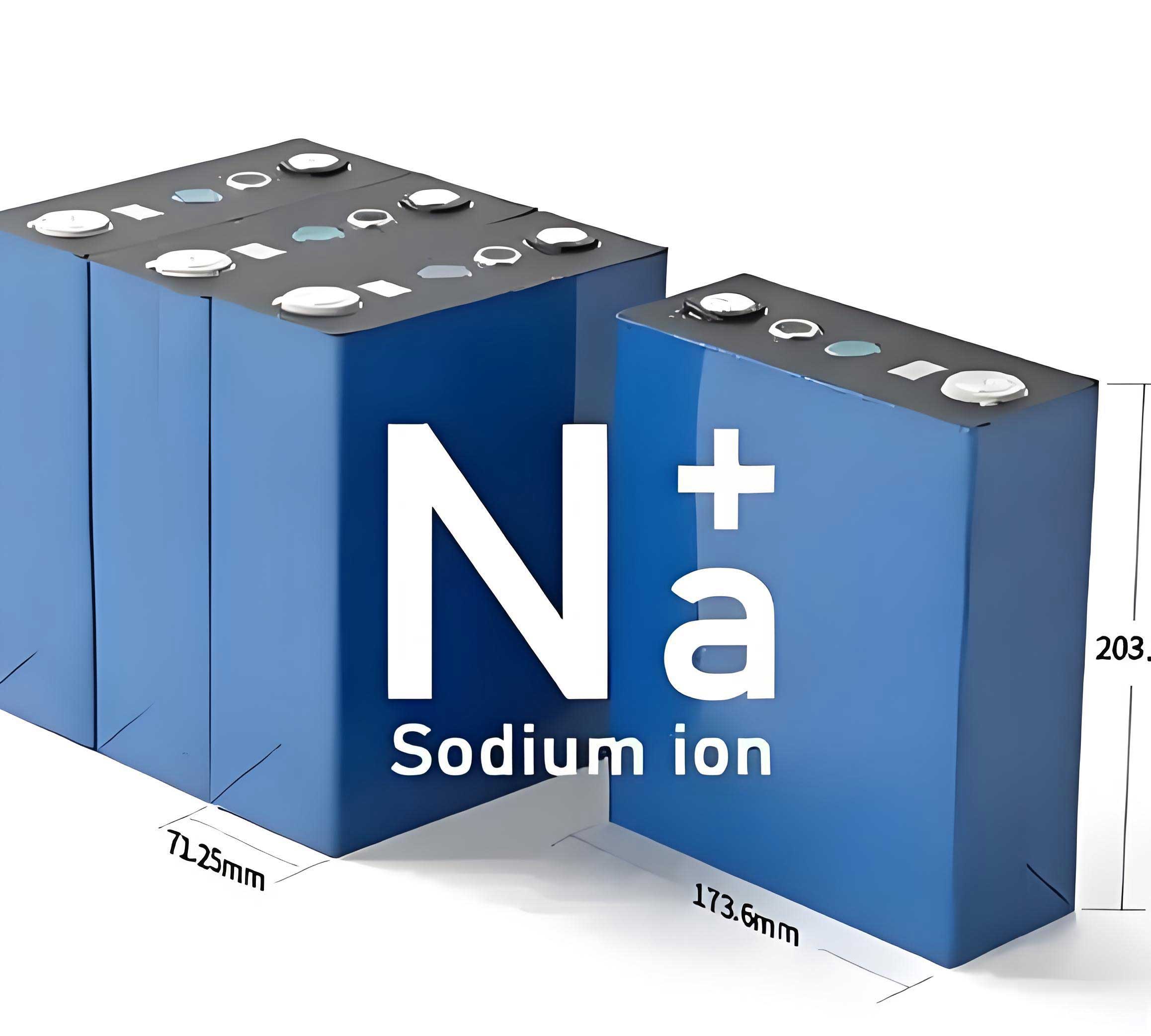
The performance metrics of sodium-ion batteries are compelling for hydropower integration. Key parameters include energy density, cycle life, and efficiency. Modern sodium-ion batteries achieve energy densities of up to 240 Wh/kg, which, while slightly lower than advanced lithium-ion cells, surpass traditional lead-acid batteries (typically 30-50 Wh/kg). This allows for compact storage systems that can be deployed on-site without extensive land use—a benefit for hydropower stations with limited space. Cycle life exceeds 5,000 cycles at 80% depth of discharge, translating to over 10 years of operation under daily cycling conditions. Round-trip efficiency ranges from 85% to 95%, minimizing energy losses during charge-discharge processes. To illustrate, Table 1 compares sodium-ion batteries with other common storage technologies relevant to hydropower applications.
| Technology | Energy Density (Wh/kg) | Cycle Life (cycles) | Cost ($/Wh) | Safety |
|---|---|---|---|---|
| Sodium-Ion Battery | 180-240 | >5,000 | 0.8-1.2 | High |
| Lithium-Ion Battery | 250-300 | 3,000-5,000 | 1.5-2.5 | Moderate |
| Lead-Acid Battery | 30-50 | 500-1,000 | 0.3-0.5 | Low |
| Pumped Hydro | 0.5-1.5 (volumetric) | >20,000 | 0.1-0.2 | High |
The integration of sodium-ion battery storage with hydropower involves both technical and economic considerations. From a technical perspective, the system must accommodate fluctuating power inputs from turbines and provide stable output to the grid. Power conversion systems (PCS) and battery management systems (BMS) are essential to regulate charging/discharging rates, monitor cell health, and ensure safety. For the hypothetical hydropower plant mentioned earlier, a sodium-ion battery storage system could be sized based on excess energy availability and peak shaving requirements. Assume the plant loses approximately 2 million kWh annually due to off-peak generation and spillage. Installing a 1 MWh sodium-ion battery storage unit would allow capturing a portion of this energy. The storage capacity can be determined using the formula:
$$ C = \frac{E_{\text{loss}} \times \eta_{\text{rt}}}{DOD \times N_{\text{cycles}}} $$
where \( C \) is the required capacity in kWh, \( E_{\text{loss}} \) is the annual energy loss in kWh, \( \eta_{\text{rt}} \) is round-trip efficiency (assume 0.9), \( DOD \) is depth of discharge (0.8), and \( N_{\text{cycles}} \) is annual cycles (365 for daily use). Plugging in values: $$ C = \frac{2 \times 10^6 \times 0.9}{0.8 \times 365} \approx 6,164 \text{ kWh} $$. Thus, a system around 6 MWh could theoretically store all lost energy, though practical sizing may be smaller due to cost constraints.
Economically, the viability of sodium-ion battery storage hinges on capital expenditure, operational savings, and revenue enhancement. Based on current projections, the installed cost for a sodium-ion battery system is estimated at $1.2 per Wh, including balance of plant components. For a 1 MWh (1,000 kWh) system, this translates to $1.2 million. Additional costs for site preparation, grid connection, and maintenance might add 20-30%, bringing the total investment to about $1.5 million. The benefits arise from arbitraging electricity prices—charging the sodium-ion battery during low-price periods (e.g., at night or during excess generation) and discharging during high-price peaks. If the price differential is 3:1 between peak and off-peak, and the system operates daily with 80% DOD, the annual revenue can be approximated as:
$$ R = C \times DOD \times \Delta p \times N_{\text{cycles}} $$
where \( \Delta p \) is the price difference per kWh. Assuming \( \Delta p = \$0.2 \) (e.g., peak at $0.3/kWh, off-peak at $0.1/kWh), and \( N_{\text{cycles}} = 365 \): $$ R = 1,000 \times 0.8 \times 0.2 \times 365 = \$58,400 $$. However, for larger systems or higher utilization, revenues increase proportionally. Moreover, the sodium-ion battery storage can reduce water spillage by storing excess hydropower, effectively increasing annual generation by up to 20%. In our case study, this could add around 400,000 kWh annually, valued at approximately $120,000 (assuming an average price of $0.3/kWh). Combined, the total annual financial benefit might reach $180,000, leading to a simple payback period of 8-10 years, which aligns with the battery’s lifespan. Table 2 summarizes a detailed cost-benefit analysis for varying storage capacities.
| Storage Capacity (MWh) | Capital Cost ($ million) | Annual Revenue from Arbitrage ($) | Annual Value of Increased Generation ($) | Total Annual Benefit ($) | Payback Period (years) |
|---|---|---|---|---|---|
| 1 | 1.5 | 58,400 | 120,000 | 178,400 | 8.4 |
| 2 | 3.0 | 116,800 | 240,000 | 356,800 | 8.4 |
| 5 | 7.5 | 292,000 | 600,000 | 892,000 | 8.4 |
| 10 | 15.0 | 584,000 | 1,200,000 | 1,784,000 | 8.4 |
The technical implementation of sodium-ion battery storage at hydropower stations requires careful system design. Key components include the battery racks, thermal management systems, and grid interfaces. Sodium-ion batteries typically operate within a voltage range of 2.5-3.5 V per cell, and modules are configured in series-parallel arrays to meet required voltage and capacity levels. For a 1 MWh system at 400 V DC, the approximate number of cells can be calculated as:
$$ N_{\text{cells}} = \frac{C_{\text{system}}}{E_{\text{cell}} \times \eta_{\text{pack}}} $$
where \( C_{\text{system}} \) is system capacity in Wh (1e6 Wh), \( E_{\text{cell}} \) is energy per cell (e.g., 10 Wh for a typical 3 V, 3.3 Ah cell), and \( \eta_{\text{pack}} \) is packing efficiency (0.8). Thus, $$ N_{\text{cells}} \approx \frac{1,000,000}{10 \times 0.8} = 125,000 \text{ cells} $$. This highlights the modular nature of sodium-ion battery systems, allowing scalable deployments. Thermal management is crucial to maintain performance and longevity; sodium-ion batteries have optimal operating temperatures between 15°C and 35°C, necessitating active cooling or heating in extreme climates. Integration with existing hydropower infrastructure involves coupling the storage system to the plant’s switchyard via bi-directional inverters. The control logic can be programmed to prioritize charging during irrigation-driven generation or flood releases, thereby optimizing water use. Furthermore, sodium-ion battery storage can provide ancillary services such as frequency regulation and voltage support, adding another revenue stream. The dynamic response time of sodium-ion batteries is on the order of milliseconds, making them suitable for grid stabilization tasks.
Looking beyond individual plants, sodium-ion battery storage can facilitate the development of hybrid renewable systems. For instance, hydropower stations with reservoir surfaces can integrate floating photovoltaic (PV) panels, and the combined output can be stored in sodium-ion battery banks. This creates a multi-source generation portfolio that smooths out variability—solar power during the day and hydropower at night, with storage balancing mismatches. The synergy between hydropower and sodium-ion batteries is particularly evident in regions with seasonal water flow variations. During dry seasons, stored energy from previous wet periods can be dispatched, ensuring continuous power supply. Conversely, in wet seasons, excess generation is stored rather than curtailed. This aligns with global trends towards smart grids and distributed energy resources. Policies like China’s “14th Five-Year Plan” for energy storage and the U.S. Department of Energy’s Long Duration Storage Shot initiative are accelerating adoption, with sodium-ion batteries poised to play a pivotal role due to their sustainability and scalability.
In conclusion, sodium-ion battery energy storage devices offer a transformative solution for enhancing the efficiency and profitability of hydropower stations. By addressing intermittency, enabling price arbitrage, and reducing water waste, these systems can extend the operational life of aging plants and support the integration of renewable energy. The cost advantages of sodium-ion batteries, coupled with their safety and performance, make them a compelling choice for both retrofits and new installations. As technology matures and economies of scale drive costs down, we anticipate widespread deployment of sodium-ion battery storage in hydropower contexts, contributing to a more resilient and sustainable energy grid. Future research should focus on improving energy density and cycle life further, as well as standardizing integration protocols. For hydropower operators, investing in sodium-ion battery storage is not just an upgrade—it’s a strategic move towards modernization and environmental stewardship.