
The reliable and safe operation of modern power systems, particularly those integrating renewable energy sources, is heavily dependent on robust energy storage solutions. Among these, the Lithium Iron Phosphate (LiFePO4) battery has emerged as a cornerstone technology. Its superior safety profile stemming from stable olivine structure, long cycle life, high power density, and environmental friendliness make it exceptionally suitable for demanding power applications such as grid ancillary services, uninterruptible power supplies (UPS), and large-scale photovoltaic (PV) energy storage. However, the integration of lifepo4 battery packs into these systems presents unique monitoring challenges. A critical parameter demanding continuous, high-precision supervision is the output current. Anomalous output current states—whether overcurrent, undercurrent, or irregular fluctuations—can signal internal faults, imbalanced cells within a pack, or external circuit issues. Unchecked, these anomalies can accelerate degradation, pose safety risks, and compromise the stability of the entire power network. Therefore, achieving high-fidelity, real-time monitoring of the output current state is not merely beneficial but essential. This article presents a comprehensive methodological framework for the monitoring and identification of abnormal output current states in lifepo4 battery systems deployed in power applications.
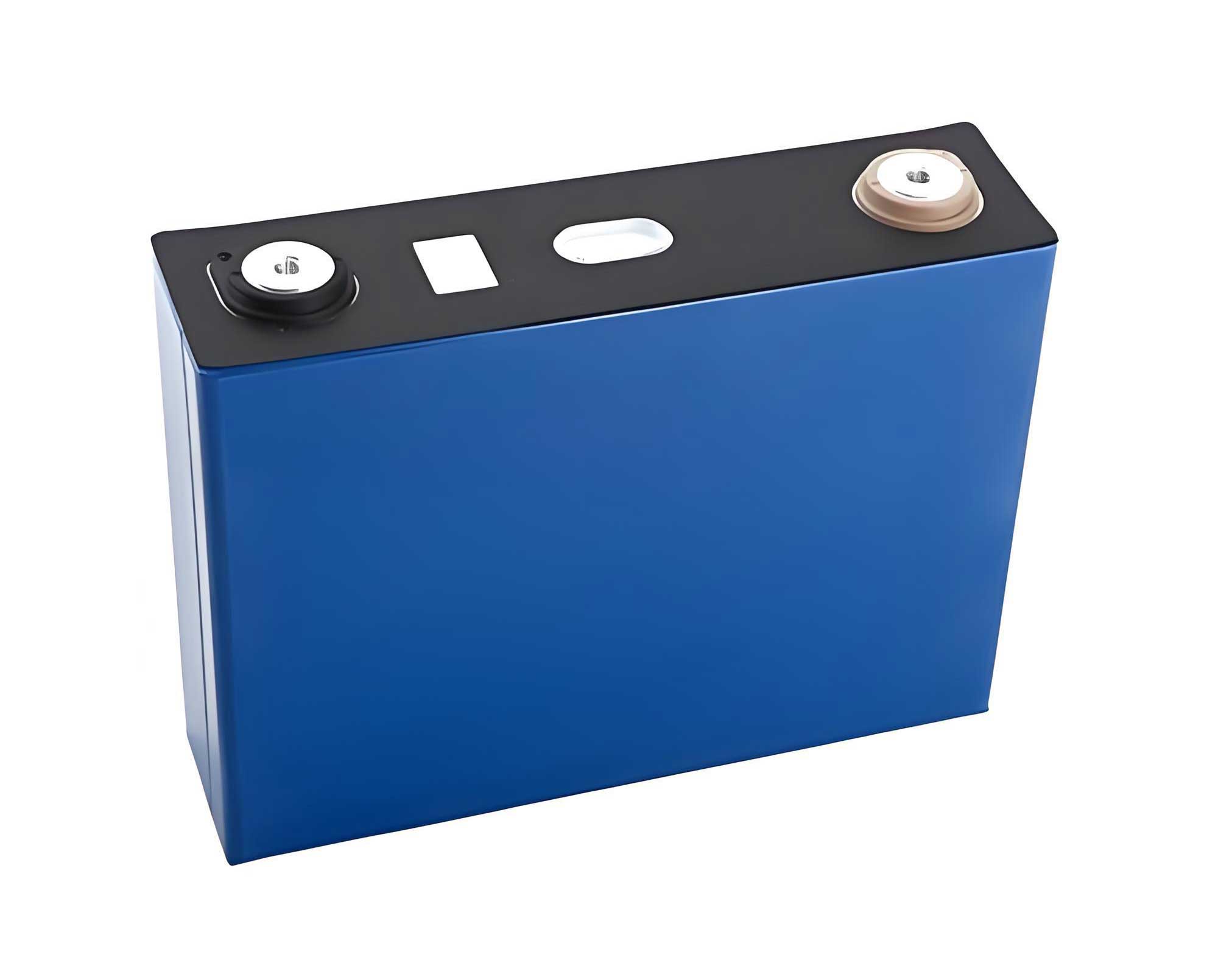
The core objective of this monitoring methodology is to transform raw, noisy sensor data into a clear, reliable signal from which definitive state classifications (normal vs. abnormal) can be made with minimal error. The process is sequential, involving signal acquisition, sophisticated preprocessing, precise feature extraction, and intelligent state recognition.
1. Acquisition and Primary Processing of LiFePO4 Battery Output Current Signal
The first step in monitoring the lifepo4 battery involves capturing the physical output current. This is typically achieved using non-invasive or semi-invasive current sensors, such as Hall-effect sensors or current transformers, which generate an analog voltage signal proportional to the measured current. This analog signal must be conditioned and digitized for digital processing. The fundamental conversion can be represented as:
$$ I_{digital}[n] = \frac{V_{sensor}[n] \cdot G_{amp}}{R_{burden} \cdot S_{sens}} $$
Here, \( I_{digital}[n] \) is the digitized current value at sample index \( n \), \( V_{sensor}[n] \) is the sampled sensor voltage, \( G_{amp} \) is the gain of the signal conditioning amplifier, \( R_{burden} \) is the burden resistor (if applicable), and \( S_{sens} \) is the sensitivity of the current sensor (e.g., mV/A). For a system calibrated to a specific range, this is often simplified in practice to a linear scaling operation. The collected discrete-time signal \( I[n] \) serves as the primary data stream for all subsequent analysis. In a typical lifepo4 battery power system, this signal may exhibit complex dynamics due to load changes, switching events, and Pulse-Width Modulation (PWM) from connected inverters.
2. Signal Preprocessing: Denoising and Error Correction via Extended Kalman Filter and Normalization
Raw current measurements from a lifepo4 battery in a real-world power environment are invariably contaminated with noise. Sources include electromagnetic interference from switching power electronics, thermal noise in sensor circuits, and communication artifacts. To extract meaningful features, this noise must be suppressed. Furthermore, in applications like PV storage, the inherent current output of the lifepo4 battery is influenced by external, non-fault factors that must be accounted for to avoid false anomaly detection.
2.1 Dynamic State Estimation with Extended Kalman Filter (EKF)
The Extended Kalman Filter is employed due to its capability to estimate the state of a nonlinear dynamic system in the presence of noise. We model the lifepo4 battery output current system. Let the true state of the system (the ideal, noiseless current) be \( x_k \). The evolution of this state and the measurement process can be described by nonlinear equations:
$$
\begin{aligned}
\text{State (Process) Equation:} & \quad x_{k} = f(x_{k-1}, u_{k-1}) + w_{k-1} \\
\text{Measurement Equation:} & \quad z_{k} = h(x_{k}) + v_{k}
\end{aligned}
$$
For a lifepo4 battery pack, \( x_k \) could represent not just the current but also related states like the state-of-charge (SoC) or internal temperature, with \( u_k \) being the load demand. \( z_k \) is our actual measured current \( I[k] \). The functions \( f(\cdot) \) and \( h(\cdot) \) are nonlinear. \( w_k \) and \( v_k \) are process and measurement noise, assumed to be zero-mean Gaussian with covariances \( Q_k \) and \( R_k \) respectively.
The EKF linearizes these functions around the current state estimate using a first-order Taylor expansion. The Jacobian matrices are computed:
$$
F_k = \left. \frac{\partial f}{\partial x} \right|_{\hat{x}_{k-1|k-1}}, \quad H_k = \left. \frac{\partial h}{\partial x} \right|_{\hat{x}_{k|k-1}}
$$
The standard Kalman filter recursive equations are then applied using these Jacobians:
1. Prediction Step:
$$ \hat{x}_{k|k-1} = f(\hat{x}_{k-1|k-1}, u_{k-1}) $$
$$ P_{k|k-1} = F_k P_{k-1|k-1} F_k^T + Q_{k-1} $$
2. Update Step:
$$ \tilde{y}_k = z_k – h(\hat{x}_{k|k-1}) \quad \text{(Innovation)} $$
$$ S_k = H_k P_{k|k-1} H_k^T + R_k $$
$$ K_k = P_{k|k-1} H_k^T S_k^{-1} \quad \text{(Kalman Gain)} $$
$$ \hat{x}_{k|k} = \hat{x}_{k|k-1} + K_k \tilde{y}_k $$
$$ P_{k|k} = (I – K_k H_k) P_{k|k-1} $$
The output \( \hat{x}_{k|k} \) provides a statistically optimal estimate of the true system state, effectively filtering out the noise \( v_k \). The estimated current component, which we denote as \( I_{filtered}[k] \), is a significantly cleaner signal for feature analysis.
2.2 Multi-Factor Normalization for Context-Aware Correction
In applications like solar power smoothing, the expected current from the lifepo4 battery is not constant but varies with external conditions. A current deviation might be normal (due to changing irradiance) or abnormal (due to a fault). Normalization corrects for known external influences, isolating the component indicative of the battery’s health or connection integrity. We apply a sequence of normalization factors to the filtered signal \( I_{filtered}[k] \).
| Normalization Factor | Purpose | Corrected Signal | Description |
|---|---|---|---|
| Solar Incidence Angle (α) | Accounts for reduced PV panel output, which alters the charge/discharge current of the coupled lifepo4 battery. | $$ I_{corr1}[k] = \frac{I_{filtered}[k]}{\cos(\alpha[k])} $$ | \( \alpha[k] \) is the time-dependent solar zenith angle. When the PV source is inactive, this factor is set to 1. |
| Ambient/Battery Temperature (T) | Compensates for the known temperature dependence of LiFePO4 cell internal resistance and capacity. | $$ I_{corr2}[k] = I_{corr1}[k] \cdot \Gamma(T[k]) $$ | \( \Gamma(T) \) is a temperature compensation factor, often derived from the battery’s electrochemical model or datasheet (e.g., a polynomial fit). |
| System Efficiency & Aging (η, A) | Adjusts for overall system efficiency losses and capacity fade of the lifepo4 battery over time. | $$ I_{norm}[k] = \frac{I_{corr2}[k]}{\eta[k] \cdot A(t)} $$ | \( \eta[k] \) is the instantaneous efficiency of converters. \( A(t) \) is an aging factor (≤1) representing retained capacity. |
The final output, \( I_{norm}[k] \), represents the normalized current characteristic of the lifepo4 battery system. It is the primary signal from which abnormal features are extracted.
3. Extraction of Abnormal Current Features and State Recognition
With a clean, context-normalized current signal, we define features that quantify deviation from normal operation. Time-domain analysis is both intuitive and computationally efficient for real-time monitoring.
3.1 Feature Definition
Key features include:
1. Instantaneous Error (ε_inst): Deviation from an expected current setpoint or range.
$$ \epsilon_{inst}[k] = I_{norm}[k] – I_{expected}[k] $$
Where \( I_{expected}[k] \) can be a reference from a digital twin or a moving average.
2. Short-Term Rate-of-Change (dI/dt): Detects sudden spikes or drops indicative of shorts or disconnections.
$$ \frac{dI}{dt}[k] \approx \frac{I_{norm}[k] – I_{norm}[k-N]}{N \cdot \Delta t} $$
where \( \Delta t \) is the sampling period and \( N \) defines the short-term window.
3. Waveform Distortion Metrics: In AC-coupled systems, metrics like Total Harmonic Distortion (THD) of the current can be calculated via a sliding-window FFT.
3.2 State Recognition via Thresholding and Logic
The most direct method for state recognition is adaptive thresholding on the extracted features. Limits are defined based on the lifepo4 battery specifications and system design. For example, the instantaneous current error bound is defined by safe operating limits:
$$ \text{Current Boundary Condition: } I_{min}^{safe} \leq I_{norm}[k] \leq I_{max}^{safe} $$
A violation is detected if:
$$ I_{norm}[k] > I_{max}^{safe} \quad \text{OR} \quad I_{norm}[k] < I_{min}^{safe} $$
Similarly, thresholds are set for \( |dI/dt| \) and other features. A composite anomaly flag \( F_{anomaly}[k] \) is raised if any threshold is breached for a consecutive number of samples (to ignore transients):
$$
F_{anomaly}[k] =
\begin{cases}
1 & \text{if } \left( \sum_{i=k-M}^{k} \mathbb{1}(I_{norm}[i] \notin [I_{min}, I_{max}]) \right) \geq M_{thresh} \\
1 & \text{else if } \left( \sum_{i=k-M}^{k} \mathbb{1}\left(\left|\frac{dI}{dt}[i]\right| > \gamma\right) \right) \geq M_{thresh} \\
0 & \text{otherwise}
\end{cases}
$$
Where \( \mathbb{1}(\cdot) \) is the indicator function, \( M \) is the persistence window, and \( M_{thresh} \) is the count threshold for persistence.
4. Experimental Validation and Performance Analysis
To validate the proposed methodology, a test bench emulating a grid-connected PV storage system with a 20 kWh lifepo4 battery pack was established. A total of 10,000 monitoring samples were collected under various operational scenarios, including normal cycling, simulated step load changes, and intentionally induced fault conditions such as a high-resistance connection and a simulated internal cell short. The proposed method (Method A) was compared against two conventional approaches: a simple moving average threshold method (Method B) and a frequency-domain analysis method focusing on ripple content (Method C).
The primary metric for evaluation was the Undetected Rate (UDR) or miss rate, defined as:
$$ UDR = \frac{\text{Number of actual anomalies NOT detected}}{\text{Total number of actual anomalies}} \times 100\% $$
A secondary metric was the False Positive Rate (FPR), the rate at which normal states are incorrectly flagged as abnormal. The results are summarized in the table below:
| Monitoring Method | Description | Average UDR (%) | Average FPR (%) | Remarks |
|---|---|---|---|---|
| Proposed Method (A) | EKF + Multi-Factor Normalization + Adaptive Thresholding | 0.55 | 0.20 | Demonstrated robust performance across all test scenarios, effectively distinguishing between external variability and internal faults in the lifepo4 battery. |
| Method B | Moving Average with Static Thresholds | 6.87 | 1.85 | High UDR due to inability to filter noise effectively, leading to missed subtle faults. FPR increased during periods of legitimate high current. |
| Method C | Frequency-Domain Ripple Analysis | 10.45 | 5.30 | Effective for specific switching noise faults but poor at detecting slow drift or DC overcurrent in the lifepo4 battery output, resulting in the highest UDR. High FPR from misinterpretation of normal load harmonics. |
The performance of the proposed method was consistent across different sample batch sizes, with the UDR consistently below 1%, validating its reliability. The EKF stage was crucial in reducing the noise floor, allowing the normalized features to accurately reflect the true state of the lifepo4 battery. The multi-factor normalization proved vital in a simulated cloudy day scenario, where Methods B and C generated numerous false positives due to natural current variations, while Method A correctly identified the system as operating normally within adjusted bounds.
5. Conclusion
This article has detailed a sophisticated, multi-stage methodology for monitoring the output current of lifepo4 battery systems in power applications. By integrating dynamic state estimation through the Extended Kalman Filter for denoising, context-aware multi-factor normalization for signal correction, and logic-based recognition on extracted time-domain features, the method achieves a high degree of accuracy and robustness. The experimental validation confirms its superiority over conventional techniques, exhibiting an exceptionally low undetected rate of less than 1%. This approach provides a powerful theoretical and practical framework for enhancing the safety, reliability, and longevity of energy storage systems built upon Lithium Iron Phosphate technology, ensuring their stable integration into modern and future power grids.