
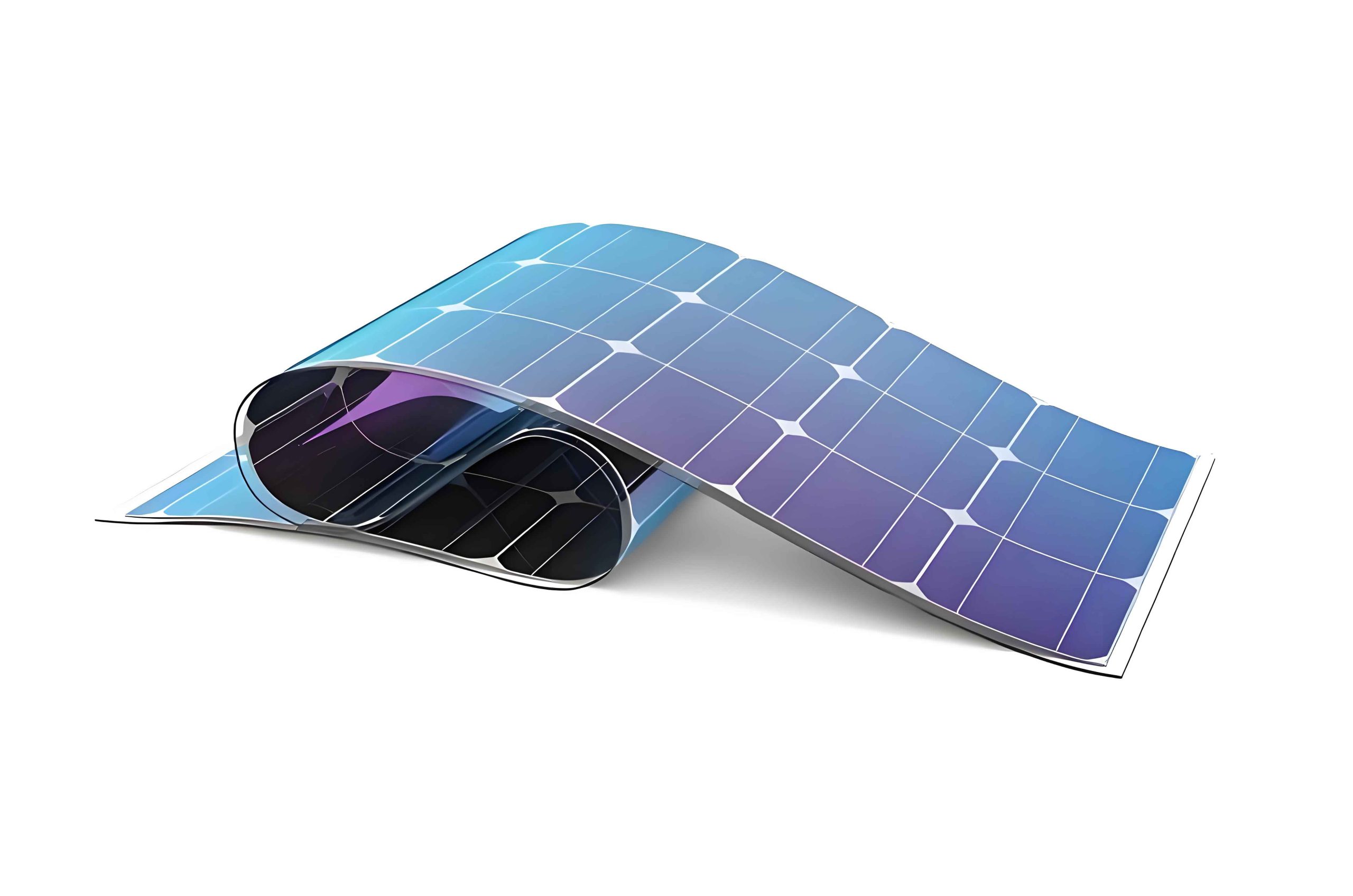
As I delve into the dynamic world of renewable energy, I am struck by the rapid advancements in thin film solar panel technology. Over the past few years, the industry has witnessed groundbreaking innovations that promise to reshape how we harness solar power. In this article, I will explore the major progress in domestic thin film solar panels, focusing on key developments, technological breakthroughs, and future prospects. Thin film solar panels, with their lightweight, flexible, and cost-effective attributes, are poised to challenge the dominance of traditional silicon-based photovoltaics. I will use tables and formulas to summarize critical data and principles, ensuring a comprehensive understanding of this transformative field.
The journey of thin film solar panels began decades ago, but recent years have seen accelerated commercialization and performance enhancements. Unlike conventional silicon panels, thin film solar panels are made by depositing one or more thin layers of photovoltaic material onto a substrate, such as glass, plastic, or metal. This process allows for greater design flexibility and integration into various applications. Key materials include copper indium gallium selenide (CIGS), cadmium telluride (CdTe), and amorphous silicon (a-Si), each with unique advantages. For instance, the efficiency of a thin film solar panel can be expressed using the photovoltaic conversion efficiency formula:
$$ \eta = \frac{P_{\text{max}}}{P_{\text{in}}} \times 100\% $$
where $\eta$ is the efficiency, $P_{\text{max}}$ is the maximum power output, and $P_{\text{in}}$ is the incident solar power. Recent breakthroughs have pushed the efficiency of thin film solar panels beyond 20% in lab settings, with commercial products achieving over 15%. This progress is driven by innovations in material science, manufacturing processes, and device architecture.
One of the most notable advancements comes from companies leveraging CIGS technology. In early 2018, a series of new products were launched, showcasing the versatility of thin film solar panels. These products include solar tiles, umbrellas, power papers, backpacks, and even solar-powered vehicles. I will detail these innovations later, but first, let me emphasize the core appeal of thin film solar panels: their ability to be integrated into everyday objects, enabling mobile energy solutions. This aligns with the global shift towards decentralized power generation and the Internet of Things (IoT).
To provide a clear overview, I have compiled a table comparing the key types of thin film solar panels based on material, efficiency, and applications:
| Material | Typical Efficiency (%) | Advantages | Common Applications |
|---|---|---|---|
| CIGS | 15-22 | High efficiency, flexible, lightweight | Building-integrated photovoltaics (BIPV), mobile devices |
| CdTe | 12-18 | Low cost, good stability, easy production | Utility-scale plants, large glass panels |
| GaAs | 25-30 | Very high efficiency, radiation-resistant | Space satellites, high-performance vehicles |
| Organic/Graphene | 5-10 | Low-light performance, colorful, flexible | Indoor electronics, wearable tech |
From this table, it is evident that thin film solar panels cater to diverse needs, from large-scale power generation to personalized energy solutions. The efficiency values are approximate and based on recent commercial data; research continues to push these boundaries. For example, the Shockley-Queisser limit provides a theoretical maximum efficiency for single-junction solar cells, but multi-junction thin film solar panels can surpass this through tandem structures. The limit is given by:
$$ \eta_{\text{max}} = \frac{0.44}{E_g} \int_{E_g}^{\infty} \frac{E^2}{e^{E/kT} – 1} dE $$
where $E_g$ is the bandgap energy, $k$ is Boltzmann’s constant, and $T$ is temperature. Thin film solar panels with tunable bandgaps, such as CIGS, offer pathways to approach this limit.
Now, let me delve into specific product innovations. In April 2018, a company released CIGS-based solar tiles, which are designed to replace traditional roofing materials. These tiles are lightweight, thin, and durable, making them ideal for building integration. Each tile weighs only about 5.2 kg and is 6.5 mm thick, yet it can withstand harsh weather conditions. The power output per tile depends on sunlight exposure, but on average, a roof covered with such thin film solar panels can generate 80-100 kWh per square meter annually. This aligns with the trend towards zero-energy buildings, where thin film solar panels play a crucial role.
Following this, solar umbrellas were introduced, integrating thin film solar panels into canopy structures. These umbrellas not only provide shade but also harvest solar energy to power LED lights and USB charging ports. The embedded batteries store excess energy for night use, enabling off-grid functionality. I estimate that under typical sunlight, a single umbrella can generate 50-100 Wh per day, enough to charge smartphones or tablets. This exemplifies how thin film solar panels can transform everyday items into power sources.
Moreover, portable power papers and backpacks equipped with thin film solar panels have emerged. The power paper, with a 12W capacity, uses intelligent light recognition to optimize charging, even in low-light conditions. It supports fast charging at 2.0A, making it a reliable solar charger. The backpack features dual solar panels and USB ports, allowing users to recharge devices on the go. These products leverage the flexibility of thin film solar panels, as they can be folded or stretched without damage. The underlying technology involves advanced CIGS cells from global partnerships, ensuring high performance.
A particularly ambitious application is the solar-powered vehicle, which uses flexible GaAs thin film solar panels covering 3.5 to 7.5 square meters of the car’s surface. With 5-6 hours of sunlight, these thin film solar panels can generate 8-10 kWh daily, enabling a range of 80 km without plug-in charging. This addresses the range anxiety associated with electric vehicles and promotes sustainable transportation. The energy yield can be modeled using the solar irradiance formula:
$$ E = A \times I \times \eta \times t $$
where $E$ is energy output, $A$ is area of thin film solar panels, $I$ is solar irradiance (around 1000 W/m² under standard conditions), $\eta$ is efficiency, and $t$ is time. For the vehicle, assuming $A = 5 \text{ m}^2$, $I = 800 \text{ W/m}^2$ (average), $\eta = 0.25$, and $t = 5 \text{ hours}$, we get $E = 5 \times 800 \times 0.25 \times 5 = 5000 \text{ Wh} = 5 \text{ kWh}$, close to reported values. This demonstrates the practical potential of thin film solar panels in mobility.
In parallel, graphene-based organic solar cells represent a leap forward. In March 2018, the first fully automated production line for graphene organic photonic devices commenced operation. These thin film solar panels can generate electricity under weak light, including indoor lighting, thanks to their broad absorption spectrum. They are thin, lightweight, and can be produced in various colors, opening doors for aesthetic integration into consumer electronics. The power conversion efficiency under indoor light (e.g., 500 lux) can reach 5-10%, sufficient to replace disposable batteries in remote controls, sensors, and wearables. The lifetime exceeds 10 years, reducing electronic waste. The operation principle involves exciton generation and charge separation, described by the diode equation:
$$ I = I_0 \left( e^{qV/nkT} – 1 \right) – I_{\text{ph}} $$
where $I$ is net current, $I_0$ is dark saturation current, $q$ is electron charge, $V$ is voltage, $n$ is ideality factor, and $I_{\text{ph}}$ is photocurrent. Graphene enhances charge transport, boosting $I_{\text{ph}}$ in thin film solar panels.
Another significant development is the mass production of large glass CdTe thin film solar panels. These panels are ideal for utility-scale installations due to their low cost and good stability. The production process involves depositing CdTe layers on glass substrates using techniques like close-space sublimation. The efficiency of commercial modules has reached 18%, with a levelized cost of energy (LCOE) below $0.03 per kWh in sunny regions. The LCOE can be calculated as:
$$ \text{LCOE} = \frac{\sum_{t=1}^{n} \frac{I_t + M_t}{(1+r)^t}}{\sum_{t=1}^{n} \frac{E_t}{(1+r)^t}} $$
where $I_t$ is investment cost, $M_t$ is maintenance cost, $E_t$ is energy output, $r$ is discount rate, and $n$ is lifetime. For thin film solar panels, the low material usage and scalable manufacturing reduce $I_t$, making them competitive.
To illustrate the market impact, I have prepared a table summarizing the key products and their specifications:
| Product | Technology | Power Output | Key Features | Applications |
|---|---|---|---|---|
| Solar Tiles | CIGS thin film solar panels | 15-20 W per tile | Lightweight, durable, aesthetic | Roofing, BIPV |
| Solar Umbrella | CIGS thin film solar panels | 10-15 W peak | Integrated battery, USB ports | Outdoor furniture, emergency power |
| Power Paper | CIGS thin film solar panels | 12 W | Fast charging, light recognition | Portable chargers, camping |
| Solar Backpack | CIGS thin film solar panels | 10.6 W | Multiple USB ports, foldable | Daily commute, travel |
| Solar Vehicle | GaAs thin film solar panels | 8-10 kWh daily | Flexible, high efficiency | Transportation, off-grid mobility |
| Graphene Organic Cell | Organic thin film solar panels | 5-10 mW per cm² (indoor) | Weak-light operation, colorful | Indoor electronics, IoT devices |
The proliferation of thin film solar panels is also influenced by policy changes. In 2018, a regulatory shift in the solar industry, often referred to as the “531 policy,” reduced subsidies for large-scale photovoltaic projects. This initially cooled market enthusiasm but inadvertently spurred innovation in distributed and mobile energy solutions. Thin film solar panels, with their adaptability, are at the forefront of this transition. Companies are collaborating with logistics firms, bike-sharing services, and tech giants to integrate thin film solar panels into logistics networks, smart cities, and consumer products. For example, thin film solar panels on delivery trucks can power refrigeration units, while those on shared bikes can enable GPS tracking without external charging.
From a technical perspective, the performance of thin film solar panels depends on factors like spectral response, temperature coefficient, and degradation rate. The spectral response $SR(\lambda)$ indicates how well a cell converts photons of wavelength $\lambda$ into current, and it varies with material. For CIGS thin film solar panels, $SR(\lambda)$ peaks in the visible to near-infrared range, matching the solar spectrum. The temperature coefficient $\beta$ describes efficiency loss with rising temperature, typically -0.2% to -0.5% per °C for thin film solar panels, better than silicon’s -0.3% to -0.5%. This is crucial for hot climates. Degradation follows a logarithmic trend, with thin film solar panels often showing slower degradation than crystalline silicon due to better humidity resistance.
To quantify these aspects, consider the energy yield over time. For a thin film solar panel system with initial efficiency $\eta_0$, degradation rate $d$ per year, and annual solar insolation $H$, the energy output in year $t$ is:
$$ E_t = A \times H \times \eta_0 \times (1 – d)^t $$
Assuming $A = 1 \text{ m}^2$, $H = 1500 \text{ kWh/m}^2/\text{year}$, $\eta_0 = 0.18$, and $d = 0.005$, after 10 years, $E_{10} = 1 \times 1500 \times 0.18 \times (0.995)^{10} \approx 267 \text{ kWh}$, demonstrating reliability. This math underscores why thin film solar panels are gaining traction in long-term installations.
Looking ahead, research is focused on perovskite thin film solar panels, which have achieved lab efficiencies over 25%. These cells use hybrid organic-inorganic lead halide materials and can be fabricated via low-cost solution processes. However, stability issues remain, and efforts are underway to encapsulate them for commercial use. The efficiency potential is captured by the detailed balance limit, but perovskite thin film solar panels could soon complement existing technologies. Another avenue is tandem cells, stacking multiple thin film layers to capture a broader spectrum. The theoretical efficiency of a dual-junction cell is:
$$ \eta_{\text{tandem}} = \frac{J_{sc1} V_{oc1} + J_{sc2} V_{oc2}}{P_{\text{in}}} $$
where $J_{sc}$ and $V_{oc}$ are short-circuit current and open-circuit voltage for each junction. With thin film solar panels, such designs are feasible due to their thinness and transparency.
In conclusion, the advancements in thin film solar panels are revolutionizing the energy landscape. From building materials to portable gadgets, these panels offer unparalleled integration possibilities. The progress in CIGS, CdTe, GaAs, and organic technologies has translated into real-world products that enhance energy independence and sustainability. As I reflect on the industry’s trajectory, I am optimistic that thin film solar panels will play a pivotal role in the global transition to clean energy. The move towards mobile energy, driven by innovation and policy adaptation, ensures that thin film solar panels will continue to thrive, powering everything from homes to vehicles with seamless efficiency. The future is bright for thin film solar panels, and I eagerly anticipate further breakthroughs that will make renewable energy accessible to all.