
I see the solid electrolyte cell as the most consequential next-generation energy-storage platform of this decade, not merely because it promises higher energy density, but because it can reorganize an entire industrial system around safer, denser, and more durable power. I write from a first-person planning perspective: I evaluate the opportunity, I test the bottlenecks, I map the resources, and I propose an actionable path. My central argument is simple. A region with strong mineral endowments, existing cathode and precursor capacity, emerging electrolyte chemistry, and a digital-industrial base can convert those assets into a competitive solid electrolyte cell cluster only if it treats the solid electrolyte cell as a system-level problem rather than a single battery product. That means simultaneous progress in materials, interfaces, manufacturing, recycling, standards, finance, and talent.
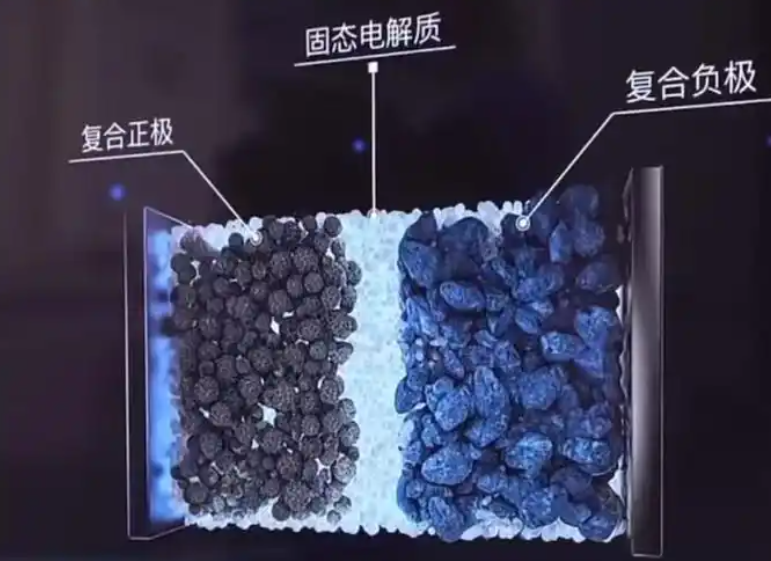
I begin with market timing. The global solid electrolyte cell market is expected to exceed 200 billion CNY by 2030, with a recent five-year compound annual growth rate near 68 percent. I treat that estimate as a boundary condition, not a guarantee. If the solid electrolyte cell market follows such a trajectory, the implied starting scale is small relative to the terminal prize, which means early industrial positioning matters more than immediate volume. I express this as:
$$ S_{2030}=S_0(1+g)^t,\quad g=0.68,\ t=5 $$
$$ S_0=\frac{200}{(1.68)^5}\approx 14.94\ \text{billion CNY} $$
I interpret the result carefully. A 68 percent CAGR is extraordinary, and it implies that the solid electrolyte cell sector will move through several distinct phases: laboratory validation, pilot manufacturing, early commercialization, and scale-up. Each phase has different capital needs, different risk profiles, and different policy requirements. I cannot manage all phases with one instrument. I need a staged portfolio.
My opportunity architecture for the solid electrolyte cell. I organize the opportunity into five drivers. First, national policy places the solid electrolyte cell among priority攻关 directions, creating legitimacy and funding channels. Second, provincial planning can connect the solid electrolyte cell to existing materials strengths. Third, mineral endowments provide a rare starting point. Fourth, existing cathode, precursor, and electrolyte capacity can be redirected toward the solid electrolyte cell. Fifth, digital infrastructure can reduce manufacturing learning costs. I summarize this architecture in Table 1.
| Driver | Current signal I observe | My interpretation for the solid electrolyte cell | Action I would take |
|---|---|---|---|
| Policy support | National plans list the solid electrolyte cell as a priority; provincial plans connect it to industrial upgrading | The solid electrolyte cell has strategic legitimacy and can attract long-horizon capital | Create a dedicated solid electrolyte cell program with milestone-based funding |
| Resource endowment | Manganese, phosphate, bauxite, and associated lithium and gallium resources are available | The region can anchor upstream materials for the solid electrolyte cell | Link mining rights to local processing and solid electrolyte cell material contracts |
| Industrial base | Cathode, ternary precursor, and fluoride-based electrolyte chains already exist | The solid electrolyte cell can be grafted onto existing chemical and materials capabilities | Upgrade selected lines to solid electrolyte cell grade materials |
| Innovation system | Industry-university alliances, pilot lines, and new energy materials platforms are forming | The solid electrolyte cell needs shared pilot infrastructure and interface science | Fund open pilot lines and pre-competitive solid electrolyte cell research |
| Digital capability | Large-scale data resources and industrial digitalization experience | The solid electrolyte cell can use digital twins to shorten process learning | Build a solid electrolyte cell process data platform and virtual validation loop |
I now examine resource endowment. The region I assess has manganese reserves ranked first domestically, phosphate and bauxite ranked third, and associated lithium and gallium resources that are beginning to be documented and extracted. I do not treat these as automatic advantages. A resource becomes an industrial advantage only when it is matched to a chemical route, a customer specification, and a cost curve. For the solid electrolyte cell, manganese is critical for manganese-based cathodes and some oxide electrolytes, phosphate is central to phosphate-based cathodes and electrolyte precursors, aluminum supports lightweight current collectors and pack structures, and fluorine chemistry enables lithium salts and sulfide or halide electrolyte routes. Table 2 maps these relationships.
| Resource | Endowment signal | Role in the solid electrolyte cell | Dependency or constraint | My recommended move |
|---|---|---|---|---|
| Manganese | Leading domestic reserves; large reported resource base | Manganese-based cathode, doped oxide electrolyte, precursor stabilization | Low-grade ore upgrading and impurity control | Build manganese-based solid electrolyte cell material demonstration zone |
| Phosphate | Top-three domestic reserves | Phosphate cathode, phosphate-based solid electrolyte cell interface coatings | Competition with fertilizer and LFP supply chains | Reserve high-purity phosphate streams for solid electrolyte cell materials |
| Bauxite | Top-three domestic reserves | Aluminum current collectors, lightweight housings, gallium association | Energy-intensive refining | Integrate low-carbon aluminum with solid electrolyte cell pack design |
| Fluorine | Existing fluoride chemical chain | Lithium salts, sulfide electrolyte precursors, interface additives | Environmental and safety controls | Develop solid electrolyte cell grade lithium salts and fluorinated interfaces |
| Associated lithium | Documented associated lithium in mineral deposits | Lithium metal anode, lithium salts, solid electrolyte cell electrolyte | Scale-up and economic recovery remain uncertain | Pilot associated lithium recovery and link it to solid electrolyte cell demand |
| Gallium | Scaled extraction from bauxite associates | Doping, interface engineering, specialized alloys | Small market relative to bulk materials | Use gallium as a high-value differentiator in solid electrolyte cell interfaces |
I emphasize that the solid electrolyte cell is not a single chemistry. It is a family of architectures. Oxide, sulfide, halide, polymer, and composite electrolytes each impose different requirements on raw materials, manufacturing environments, and cell design. I therefore avoid betting on one solid electrolyte cell route too early. Instead, I would build a portfolio with shared upstream purification, shared pilot infrastructure, and differentiated downstream cell designs.
My reading of the existing industrial base. The region already has a concentration pattern that accounts for more than 80 percent of relevant industrial output. Cathode materials, ternary precursors, and fluoride-based electrolyte chains are present. In the solid electrolyte cell context, these are not legacy assets; they are transition assets. A precursor line can be adapted for solid electrolyte cell cathodes. A fluoride line can be extended toward solid electrolyte cell lithium salts. A materials research center can become a solid electrolyte cell interface center. I summarize the base and the gaps in Table 3.
| Segment | Current position I observe | Link to solid electrolyte cell | Gap I must close |
|---|---|---|---|
| Phosphate cathode | Large annual capacity | Manganese iron phosphate and coated cathodes for solid electrolyte cell | High-voltage stability and solid electrolyte cell interface control |
| Ternary cathode | Substantial annual capacity | High-nickel cathodes for high-energy solid electrolyte cell | Cost, cycling, and supply-chain resilience |
| Ternary precursor | Leading global share | Precursor engineering for solid electrolyte cell cathodes | Customization for solid electrolyte cell interfaces |
| Electrolyte salts | Fluoride-based chain established | Lithium salts and sulfide electrolyte precursors | Moisture control and solid electrolyte cell purity |
| Solid electrolyte | Early research and pilot activity | Core differentiator of the solid electrolyte cell | Scalable synthesis and thin-film manufacturing |
| Cell manufacturing | Limited midstream presence | Direct value capture in the solid electrolyte cell | Pilot line, yield, and equipment ecosystem |
| Battery management | Weak local base | Solid electrolyte cell safety and state estimation | Software, sensing, and control algorithms |
| Recycling | Emerging capacity | Closed-loop solid electrolyte cell materials | Separation of ceramic, polymer, and metal fractions |
Market demand and the need for diversification. I do not rely only on electric vehicles. The conventional electric-vehicle market is entering a slower, more competitive phase. Capacity utilization near 76 percent and market penetration above 50 percent mean that growth becomes replacement-driven and export-driven. The solid electrolyte cell cannot depend solely on that demand curve. I would diversify into stationary storage, low-altitude aviation, drones, electric tools, premium consumer electronics, and specialty defense-adjacent applications. Table 4 presents my scenario logic.
| Application | Why the solid electrolyte cell fits | Performance priority | My entry sequence |
|---|---|---|---|
| Electric vehicles | Higher energy density and safety | Energy density, cycle life, cost | Premium models first, then mass market |
| Stationary storage | Safety and long calendar life | Cost per cycle, safety, durability | Demonstration projects and grid pilots |
| Low-altitude aviation | High specific energy and power | Gravimetric density, thermal stability | Specialized cells for unmanned systems |
| Consumer electronics | Thin form factor and safety | Volumetric density, fast charge | Premium devices and wearables |
| Electric tools | High power and abuse tolerance | Power, cycle life, cost | Professional-grade tools |
| Backup power | Safety in enclosed spaces | Reliability, low maintenance | Critical infrastructure niches |
I use a simple demand decomposition to avoid overconfidence:
$$ D_{SEC,t}=D_{EV,t}+D_{ESS,t}+D_{LEA,t}+D_{CE,t}+D_{OTH,t} $$
$$ D_{EV,t}=V_t \cdot p_{SEC,EV,t} \cdot \rho_{kWh,t} $$
$$ D_{ESS,t}=E_{new,t} \cdot p_{SEC,ESS,t} $$
I recommend that the region track each term separately. A solid electrolyte cell policy that only monitors electric vehicles will miss the faster-growing niches where safety and energy density create willingness to pay.
Technical bottlenecks I must confront. The solid electrolyte cell faces three hard problems. First, solid-solid contact between electrolyte and electrode creates high interfacial resistance and poor low-temperature performance. Second, cycle life in laboratory cells often remains below 1,000 cycles, whereas liquid-electrolyte cells commonly exceed 2,000 cycles. Third, lithium-metal anodes can form dendrites during fast charging, creating short-circuit risk. I express the interfacial problem as a resistance stack:
$$ R_{total}=R_{bulk}+R_{gb}+R_{contact}+R_{ct} $$
$$ \eta_{interface}=J \cdot R_{contact} $$
Ionic conductivity is fundamental:
$$ \sigma=\frac{L}{R A} $$
$$ \sigma=\frac{n q^2 D}{k_B T} $$
Dendrite risk can be approximated through Sand’s time:
$$ t_{Sand}=\frac{\pi e C_0 D}{4 J^2}\left(\frac{\mu_a+\mu_c}{\mu_a}\right)^2 $$
I interpret these equations operationally. To improve the solid electrolyte cell, I must increase ionic conductivity, reduce contact resistance, homogenize current density, and suppress dendrite nucleation. Table 5 converts the science into engineering targets.
| Bottleneck | Mechanism | Current indicator I observe | Target for the solid electrolyte cell | My priority |
|---|---|---|---|---|
| Solid-solid contact | Point contacts and voids increase resistance | High interfacial resistance; poor rate capability | Low area-specific resistance and stable contact | Interface coatings and stack pressure control |
| Cycle life | Volume change, cracking, and contact loss | Often below 1,000 cycles in laboratory cells | Greater than 2,000 cycles at usable depth | Composite electrodes and compliant interfaces |
| Lithium dendrites | Nonuniform plating at high current density | Short-circuit risk during fast charge | Stable lithium-metal anode at practical current | Surface engineering and pressure management |
| Moisture sensitivity | Sulfide electrolytes react with water | Dry-room cost and handling complexity | Robust manufacturing in scalable conditions | Dry-process equipment and protective coatings |
| Manufacturing yield | Thin electrolyte films and stacked cells are defect-sensitive | Pilot yield below commercial requirement | High yield at gigawatt-hour scale | Inline metrology and digital twin control |
| Cost | Materials, equipment, and low volume | Higher cost than liquid-electrolyte cells | Cost parity in premium applications first | Learning curve and scale-up |
| Testing standards | Different protocols and cell formats | Difficult comparison across solid electrolyte cell designs | Common test matrix and safety protocols | Standards participation |
I do not expect a single breakthrough to solve the solid electrolyte cell. I expect a chain of improvements: electrolyte synthesis, interface coating, electrode architecture, stack pressure, formation protocol, and pack thermal control. Each step contributes a few percent, and together they move the solid electrolyte cell from laboratory promise to commercial product.
Resource dependency and supply security. Even with strong manganese, phosphate, and aluminum resources, the solid electrolyte cell remains exposed to lithium, cobalt, nickel, zirconium, and lanthanum supply chains. Domestic lithium import dependence exceeds 70 percent, cobalt and nickel import dependence exceeds 90 percent, and zirconium reserves are limited. I treat this as a design constraint. The solid electrolyte cell should be developed in chemistries that reduce reliance on the most constrained elements, while simultaneously building recovery, recycling, and substitution capabilities. Table 6 summarizes my dependency logic.
| Material | Import dependence I observe | Role in the solid electrolyte cell | Risk level | My mitigation |
|---|---|---|---|---|
| Lithium | Above 70 percent | Lithium salts, lithium-metal anode, electrolyte | High | Associated lithium recovery, recycling, sodium alternatives |
| Cobalt | Above 90 percent | Stabilizing cathode chemistry | Very high | Low-cobalt and cobalt-free cathodes |
| Nickel | Above 90 percent | High-energy cathodes | Very high | Manganese-rich and phosphate-based cathodes |
| Zirconium | Very high import reliance | Oxide electrolyte and coatings | Medium to high | Thrifting, substitution, and recovery |
| Lanthanum | High import reliance | Some oxide electrolytes | Medium | Alternative oxide compositions |
| Manganese | Strong domestic base | Cathode and electrolyte doping | Low | Upgrade low-grade ore and high-purity processing |
| Phosphate | Strong domestic base | Cathode and interface chemistry | Low to medium | Reserve high-purity streams for the solid electrolyte cell |
| Aluminum | Strong domestic base | Current collectors and lightweight structures | Low | Low-carbon aluminum and integrated pack design |
I also use a supply-risk index to rank materials:
$$ Risk_i=w_1 \cdot ImportDependence_i + w_2 \cdot Concentration_i + w_3 \cdot Substitutability_i^{-1} + w_4 \cdot PriceVolatility_i $$
I would assign higher weights to import dependence and concentration for the solid electrolyte cell. This prevents the region from building a solid electrolyte cell strategy that is vulnerable at the very beginning of the value chain.
My preferred industrial layout. I propose a system I call one core and two belts. The core is a solid electrolyte cell innovation and manufacturing core, focused on cell design, pilot production, system integration, and standards. The first belt is a manganese-based materials belt, focused on manganese cathodes, manganese-based solid electrolyte cell materials, and precursor upgrading. The second belt is a phosphate and electrolyte belt, focused on phosphate cathodes, lithium salts, and solid electrolyte cell electrolyte production. I would also create distributed nodes for recycling, equipment, and battery management. Table 7 presents this layout.
| Layer | Node type | Primary focus in the solid electrolyte cell | Key output | My KPI |
|---|---|---|---|---|
| Core | Innovation and manufacturing core | Solid electrolyte cell cell design, pilot line, system integration | Demonstration cells and packs | Energy density, yield, cycle life |
| Belt one | Manganese materials belt | Manganese-based cathodes and electrolyte additives | High-purity manganese materials | Impurity level, cost per ton |
| Belt two | Phosphate and electrolyte belt | Phosphate cathodes, lithium salts, solid electrolyte | Solid electrolyte cell electrolyte and salts | Ionic conductivity, moisture control |
| Node | Recycling node | Recovery of lithium, cobalt, nickel, manganese | Secondary raw materials | Recovery rate, closed-loop share |
| Node | Equipment and metrology node | Dry-room equipment, stacking, inspection | Manufacturing tools | Yield improvement, cycle time |
| Node | Software and BMS node | State estimation, thermal control, safety algorithms | Solid electrolyte cell management systems | Estimation error, safety events |
I would not spread resources evenly. I would concentrate the first wave of capital in the core and in the two material belts, because those are where the region has the strongest existing capabilities. I would use competitive grants and off-take agreements to connect the solid electrolyte cell pilot line to material suppliers. This creates a pull signal for upstream purification and a learning loop for downstream cell design.
Technology attack and innovation system. I would establish a provincial solid electrolyte cell technology program with three missions. Mission one is electrolyte synthesis and scale-up. Mission two is interface engineering and dendrite suppression. Mission three is manufacturing science and yield. I would fund pre-competitive research through universities and research institutes, and I would fund near-commercial development through industry-led consortia. Table 8 gives my roadmap.
| Phase | Time horizon | Solid electrolyte cell focus | Industrial action | My success marker |
|---|---|---|---|---|
| Phase I | Short term | Electrolyte synthesis, interface coatings, coin-cell and single-layer validation | Upgrade existing pilot lines | Repeatable ionic conductivity and cycle data |
| Phase II | Medium term | Multi-layer solid electrolyte cell, stack pressure, dry-room process | Build pilot manufacturing and metrology | Pilot yield and energy density targets |
| Phase III | Long term | Scale-up, pack integration, recycling, standards | Commercial demonstration and customer qualification | Cost, safety, and cycle life at pack level |
I would also create a shared solid electrolyte cell data platform. Every pilot batch should generate structured data on slurry, coating, stacking, pressure, formation, and cycling. I can then use machine learning to identify process windows. A simple learning model is:
$$ Y=f(X;\theta)+\epsilon $$
$$ \hat{\theta}=\arg\min_\theta \sum_{i=1}^{n}(Y_i-f(X_i;\theta))^2 $$
I do not need perfect data to start. I need consistent data. The solid electrolyte cell is process-sensitive, and process knowledge is often more valuable than a single patent.
Industrial chain coordination. I map the solid electrolyte cell chain into upstream materials, midstream cell manufacturing, downstream systems, and circular recovery. The region is strong upstream and weak midstream. I would therefore use upstream strength as a bargaining chip to attract midstream partners. I would offer land, utilities, and long-term material supply to solid electrolyte cell cell makers. In return, I would require local pilot activity, joint research, and supplier development. Table 9 shows my chain coordination plan.
| Chain stage | Current strength | Weakness | My coordination instrument | Expected outcome |
|---|---|---|---|---|
| Mining and refining | Manganese, phosphate, aluminum, fluorine | Purity and consistent grade | Resource-to-material contracts | Stable solid electrolyte cell feedstock |
| Precursor and cathode | Large capacity and global share | Solid electrolyte cell-specific grades | Joint development agreements | Qualified solid electrolyte cell cathodes |
| Electrolyte | Fluoride chemistry and lithium salts | Scalable solid electrolyte films | Pilot line co-investment | Local solid electrolyte cell electrolyte supply |
| Cell manufacturing | Limited | No large-scale solid electrolyte cell line | Targeted incentives and procurement | Demonstration and commercial cells |
| Pack and BMS | Weak | Software and sensing | Talent recruitment and software grants | Integrated solid electrolyte cell systems |
| Recycling | Emerging | Separation complexity | Extended producer responsibility | Closed-loop solid electrolyte cell materials |
I would also build a supplier development program. A solid electrolyte cell pilot line cannot wait for perfect suppliers. It must train suppliers on cleanliness, particle size, moisture, and batch consistency. I would place engineers from the pilot line into supplier factories. This is slow but necessary.
Policy and safeguard system. I recommend a dedicated solid electrolyte cell policy package. It should include land, tax, financing, talent, and procurement instruments. I would avoid broad subsidies. Instead, I would use milestone payments tied to technical and commercial targets. Table 10 presents my policy design.
| Instrument | Objective | Design for the solid electrolyte cell | KPI I would monitor |
|---|---|---|---|
| Dedicated program | Coordinate research and industry | Competitive calls with industry matching | Prototype performance, patents, jobs |
| Tax incentive | Reduce early-stage cost | Sunset clause linked to volume and yield | Investment, output, local sourcing |
| Land and utilities | Attract pilot and scale-up | Ready-built dry-room and clean utilities | Time to first batch, utilization |
| Financial products | Share risk | Patient capital, green bonds, lease financing | Cost of capital, leverage ratio |
| Public procurement | Create early demand | Storage, backup, and specialty applications | Deployed capacity, safety records |
| Talent program | Build skills | New majors, fellowships, industrial PhDs | Graduates retained, patents |
| Recycling mandate | Secure materials | Collection targets and recovery standards | Recovery rate, secondary material share |
I also use a resource coordination formula to connect mining permits with local processing:
$$ LocalProcessingShare_i=\frac{Q_{local,i}}{Q_{total,i}} $$
$$ ValueCapture_i=LocalProcessingShare_i \times ValueAdded_i $$
I would set minimum local processing shares for strategic solid electrolyte cell materials, not to restrict trade, but to ensure that resource extraction funds industrial learning. The goal is not autarky. The goal is to move up the value curve.
Finance and investment logic. The solid electrolyte cell requires long-horizon capital because pilot lines, dry rooms, and testing equipment are expensive and revenue arrives late. I would structure finance in layers. Layer one is public research funding. Layer two is public-private co-investment in pilot infrastructure. Layer three is private equity and strategic investment in scale-up. Layer four is debt and leasing for commercial plants. I summarize this in Table 11.
| Layer | Source | Use in the solid electrolyte cell | Risk appetite | My condition |
|---|---|---|---|---|
| Research | Public grants | Electrolyte, interface, modeling | High | Open publication and data sharing |
| Pilot | Public-private funds | Pilot line, dry room, metrology | Medium-high | Milestone-based disbursement |
| Scale-up | Strategic investors | Cell manufacturing and pack integration | Medium | Off-take and technical validation |
| Commercial | Debt and leasing | Gigawatt-scale solid electrolyte cell plants | Medium-low | Contracted demand and insurance |
| Circular | Green finance | Recycling and recovery | Medium | Recovery yield and environmental compliance |
I use a simple net present value rule for solid electrolyte cell projects:
$$ NPV=\sum_{t=0}^{T}\frac{CF_t}{(1+r)^t}-I_0 $$
$$ IRR:\sum_{t=0}^{T}\frac{CF_t}{(1+IRR)^t}=I_0 $$
I would not apply the same discount rate to research, pilot, and commercial stages. The solid electrolyte cell has different risk at each stage. A single hurdle rate would either starve research or overfund scale-up.
Recycling and circular economy. I see recycling as a strategic material source for the solid electrolyte cell, not just an environmental obligation. The region already has a reported recycling capacity of 300,000 tons. I would expand it toward solid electrolyte cell-specific fractions: ceramic electrolytes, polymer composites, lithium metal, and coated cathodes. I would set recovery targets for lithium, cobalt, nickel, and manganese. Table 12 gives my circularity plan.
| Material | Recovery challenge in the solid electrolyte cell | Technology route | My target |
|---|---|---|---|
| Lithium | Lithium metal and salts are reactive | Controlled atmosphere and hydrometallurgy | High recovery with safety controls |
| Cobalt | Low concentration in some cathodes | Selective leaching | Economic recovery where present |
| Nickel | Alloy and cathode fractions | Pyro-hydrometallurgical combination | High-purity nickel salts |
| Manganese | High volume, lower value | Purification and reuse in cathodes | Closed-loop manganese |
| Ceramic electrolyte | Chemically stable and mixed | Mechanical separation and re-sintering | Reuse in lower-grade applications |
| Polymer electrolyte | Thermal sensitivity | Dissolution and reprecipitation | Material recovery and energy recovery |
I would also link recycling policy to product design. The solid electrolyte cell should be designed for disassembly. That means standardized cell formats, fewer mixed-material bonds, and digital material passports. A circular solid electrolyte cell is more resilient and more competitive.
Regional cooperation and standards. I cannot build a solid electrolyte cell cluster in isolation. I would connect with leading regions in the Yangtze River Delta, Pearl River Delta, and other advanced manufacturing areas. I would seek technology cooperation, joint ventures, and capacity transfer. I would also participate in national and international standard-setting for the solid electrolyte cell. Standards are not administrative overhead. They are market access. Table 13 shows my cooperation logic.
| Partner type | Mechanism | Solid electrolyte cell focus | My deliverable |
|---|---|---|---|
| Advanced manufacturing regions | Joint ventures and capacity cooperation | Cell manufacturing, equipment, BMS | Pilot line and qualified suppliers |
| Research universities | Joint labs and student exchange | Electrolyte, interface, modeling | Patents and trained engineers |
| Equipment makers | Co-development agreements | Dry-room, stacking, inspection | Local equipment ecosystem |
| Standards bodies | Technical committees | Test methods, safety, recycling | Influence and early compliance |
| International partners | Technical conferences and licensing | Solid electrolyte cell certification | Global market access |
KPI dashboard. I would manage the solid electrolyte cell program with a small set of hard indicators. I would avoid vanity metrics. I would track energy density, cycle life, yield, cost, ionic conductivity, interface resistance, dendrite threshold, local content, recycling rate, and safety incidents. Table 14 presents my dashboard.
| KPI | Formula or definition | Target direction | Why it matters for the solid electrolyte cell |
|---|---|---|---|
| Energy density | $$\rho_E=\frac{V\cdot Q}{m}$$ | Increase | Enables premium applications |
| Cycle life | $$N_{cyc}=N_{80\%}$$ | Increase | Determines lifetime cost |
| Ionic conductivity | $$\sigma=\frac{L}{R A}$$ | Increase | Controls rate capability |
| Interfacial resistance | $$R_{int}=R_{contact}+R_{ct}$$ | Decrease | Controls efficiency and heat |
| Dendrite threshold | $$J_{crit}$$ | Increase | Controls fast-charge safety |
| Manufacturing yield | $$Y=\frac{N_{good}}{N_{total}}$$ | Increase | Controls cost and scale |
| Cost per kWh | $$C_{kWh}=\frac{C_{total}}{E_{total}}$$ | Decrease | Controls commercialization |
| Local content | $$L=\frac{Input_{local}}{Input_{total}}$$ | Increase | Builds regional resilience |
| Recycling rate | $$R_{rec}=\frac{M_{recovered}}{M_{collected}}$$ | Increase | Secures materials |
| Safety incidents | $$S=\frac{N_{incidents}}{N_{deployed}}$$ | Decrease | Protects public trust |
I would review these indicators quarterly. If a pilot line cannot meet yield and cycle-life targets, I would not scale it. If a material supplier cannot meet purity and moisture targets, I would not qualify it for the solid electrolyte cell. If a recycling route cannot recover lithium safely, I would not count it as circular.
Risk register. I see six major risks. First, technical risk: the solid electrolyte cell may remain too expensive for mass markets. Second, market risk: demand may shift to alternative chemistries. Third, supply risk: lithium, cobalt, nickel, zirconium, and lanthanum may be constrained. Fourth, execution risk: pilot lines may not translate into commercial yield. Fifth, policy risk: subsidies may distort investment. Sixth, environmental risk: mining and chemical processing may create local burdens. Table 15 summarizes my mitigation.
| Risk | Probability | Impact | My mitigation for the solid electrolyte cell |
|---|---|---|---|
| Technical underperformance | Medium | High | Stage-gate funding and parallel chemistry tracks |
| Demand shift | Medium | High | Diversify into storage, aviation, tools, electronics |
| Material shortage | High | High | Recycling, substitution, associated resource recovery |
| Pilot-to-commercial gap | High | High | Shared pilot line, equipment consortium, process data |
| Policy distortion | Medium | Medium | Milestone payments and sunset clauses |
| Environmental burden | Medium | High | Green processing, water recycling, emissions control |
| Talent shortage | High | Medium | New curricula, industrial fellowships, retention incentives |
| Standards fragmentation | Medium | Medium | Early participation in test and safety standards |
My implementation sequence. I would sequence the work in three waves. Wave one builds knowledge and materials. Wave two builds pilot manufacturing and cell integration. Wave three builds commercial scale and circularity. Table 16 presents the sequence.
| Wave | Primary objective | Solid electrolyte cell actions | Institutional actions | Exit criteria |
|---|---|---|---|---|
| Wave one | Validate materials and interfaces | Electrolyte synthesis, coatings, coin cells | Fund joint labs and data platform | Repeatable performance and safety data |
| Wave two | Validate manufacturing | Multi-layer cells, dry room, stacking, formation | Build pilot line and supplier program | Yield, energy density, cycle life |
| Wave three | Validate market and circularity | Pack integration, recycling, customer pilots | Standards, procurement, finance | Contracted demand and recovery targets |
I would also use a stage-gate formula for resource allocation:
$$ Funding_{stage}=B_{base}\cdot \prod_{k=1}^{m} M_k $$
where \(M_k\) is a milestone score between 0 and 1. If a solid electrolyte cell project fails a milestone, funding does not automatically continue. This protects public capital and forces learning.
My final assessment. I am optimistic about the solid electrolyte cell, but I am not naive. The solid electrolyte cell is a demanding technology. It requires new electrolytes, new interfaces, new manufacturing environments, new testing standards, and new supply chains. A region cannot will a solid electrolyte cell industry into existence simply by owning minerals. It must combine resources with chemistry, engineering, capital, and customers. I would focus on the following priorities: first, use manganese, phosphate, aluminum, and fluorine strengths to anchor upstream solid electrolyte cell materials; second, build shared pilot and metrology infrastructure so that many teams can learn faster; third, fund interface science and dendrite suppression as core solid electrolyte cell missions; fourth, attract and develop midstream cell manufacturing; fifth, diversify demand beyond electric vehicles; sixth, treat recycling as a strategic source of materials; seventh, participate in standards and international cooperation; and eighth, manage the program with transparent KPIs and stage gates.
I believe the solid electrolyte cell can become a platform for industrial upgrading if the region treats it as a long-term system. The solid electrolyte cell is not just a battery. It is a materials challenge, a manufacturing challenge, a systems challenge, and a policy challenge. My proposed path is therefore deliberately integrated. I would not separate mining policy from materials policy, nor materials policy from cell manufacturing, nor cell manufacturing from recycling and standards. I would connect them through contracts, data, talent, and capital. In that way, the solid electrolyte cell becomes more than a new product line. It becomes a new industrial capability. I would measure success not by the number of announcements, but by the number of qualified solid electrolyte cell materials, the yield of pilot lines, the cycle life of demonstration cells, the cost per kilowatt-hour, the share of local content, and the recovery rate of critical materials. Those are the indicators that turn resource endowment into industrial advantage, and industrial advantage into durable economic strength.