
In recent years, the rapid development of the electric vehicle industry has significantly increased the demand for high-energy-density lithium-ion batteries. Cathode materials are key to enhancing the energy density of lithium-ion batteries, and developing cathodes with high specific capacity and long cycle life is crucial for the large-scale adoption of electric vehicles. Among various cathode materials, ternary layered materials such as LiNi1-x-yCoxMnyO2 (NCM) and LiNi1-x-yCoxAlyO2 (NCA) are considered promising due to their high capacity and wide operating voltage. However, commercially used polycrystalline ternary cathodes, composed of agglomerated nano-sized primary particles, often suffer from intergranular cracks and particle fragmentation during cycling, limiting their long-term stability. In contrast, single-crystal ternary cathodes, consisting of micron-sized individual particles, exhibit superior mechanical strength and cyclic stability, making them a potential high-performance alternative. In this article, I will explore the preparation methods, advantages, challenges, and modification strategies for single-crystal ternary cathode materials in lithium-ion batteries, with an emphasis on summarizing key points through tables and formulas to enhance understanding.
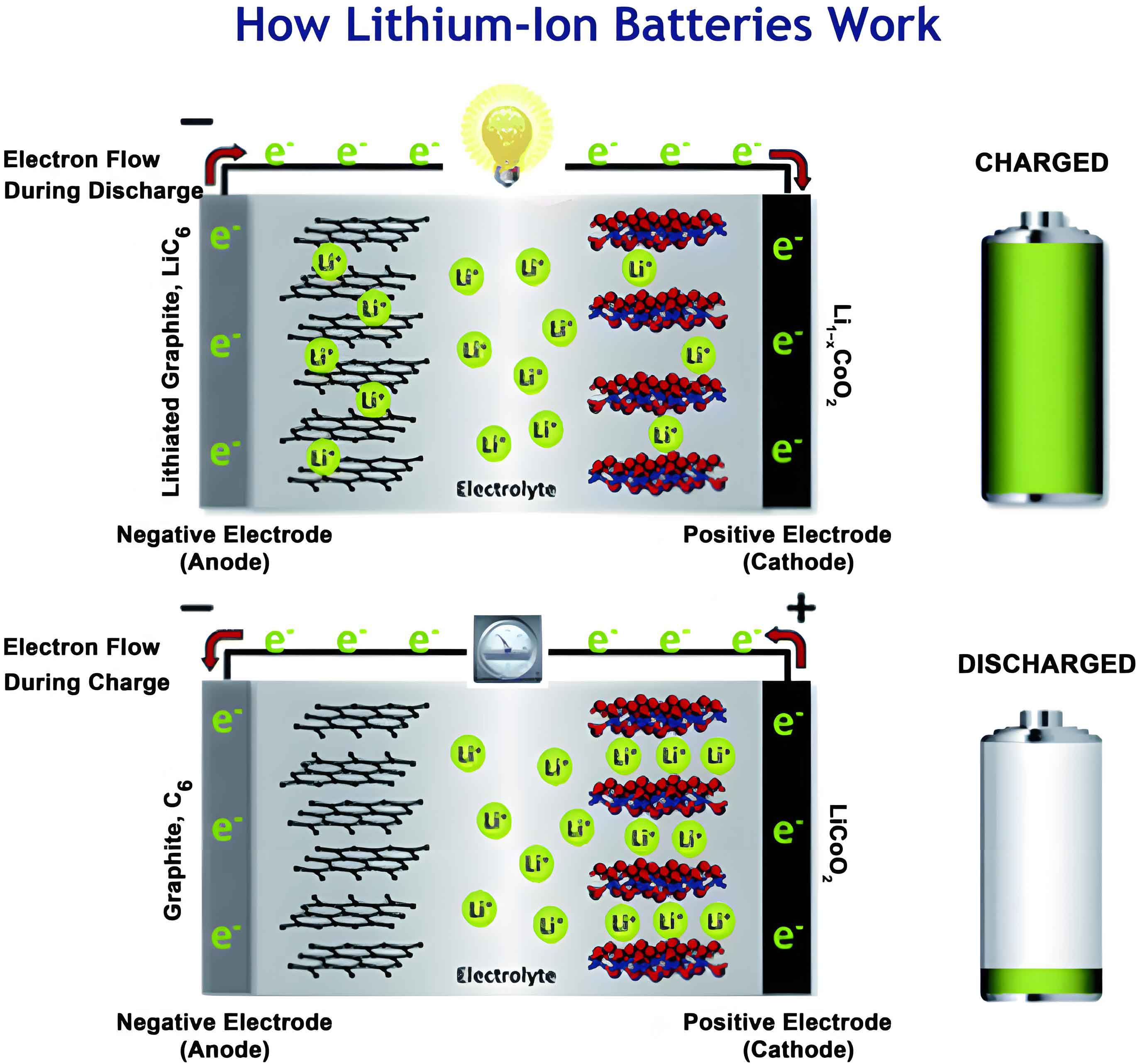
The evolution of lithium-ion battery technology has been driven by the need for higher energy storage, and single-crystal ternary cathodes represent a significant advancement. I will begin by discussing the solid-state sintering methods used to prepare these materials. The conventional approach involves sintering precursors with lithium sources like LiOH·H2O or Li2CO3 at elevated temperatures, typically 50–100 °C higher than for polycrystalline cathodes, to promote grain growth and disintegration of agglomerates. However, this method can exacerbate Li/Ni cation mixing due to increased ion mobility. Alternatively, molten salt flux-assisted sintering, which uses low-melting-point salts as fluxes, allows for lower sintering temperatures or shorter times, reducing Li/Ni mixing. After sintering, washing and re-sintering steps are often required to remove residual salts and restore the layered structure. The table below summarizes the key aspects of these preparation methods for lithium-ion battery applications.
| Preparation Method | Process Conditions | Advantages | Disadvantages | Impact on Li-Ion Battery Performance |
|---|---|---|---|---|
| Direct High-Temperature Sintering | High temperature (e.g., 900–1000 °C), excess Li/TM ratio | Simple process, large single-crystal particles | High Li/Ni mixing, increased cost due to Li loss | Reduced capacity due to Li/Ni disorder; moderate cycle life |
| Molten Salt Flux-Assisted Sintering | Lower temperature (e.g., 800–900 °C), flux addition (e.g., Li2SO4) | Reduced Li/Ni mixing, improved homogeneity | Complex post-treatment (washing/re-sintering), potential surface degradation | Enhanced capacity and stability; better Li-ion diffusion kinetics |
The advantages of single-crystal ternary cathodes in lithium-ion batteries are manifold. Their monolithic structure eliminates intergranular cracks, leading to superior cycling stability, especially under high-voltage and high-temperature conditions. For instance, in comparative studies, single-crystal NCM cathodes show minimal volume changes during phase transitions, whereas polycrystalline counterparts exhibit severe cracking. Additionally, single-crystal particles possess higher mechanical strength, enabling higher electrode compaction densities—often exceeding 3.9 g/cm3, compared to ~3.5 g/cm3 for polycrystalline materials—which is critical for boosting the energy density of lithium-ion batteries. Safety is another key benefit; single-crystal cathodes generate less gas and exhibit lower heat release during side reactions, reducing thermal runaway risks. The table below highlights these advantages in the context of lithium-ion battery systems.
| Advantage | Description | Implication for Lithium-Ion Batteries |
|---|---|---|
| Cycling Stability | No intergranular cracks; maintains particle integrity over cycles | Longer lifespan, capacity retention >90% after 500 cycles in many cases |
| Mechanical Strength | High resistance to crushing during electrode calendaring | Higher feasible compaction densities, improved energy density |
| Safety | Reduced gas evolution and lower exothermic side reactions | Enhanced thermal stability, lower risk of failure in lithium-ion battery packs |
| Compatibility with Solid-State Batteries | No internal grain boundaries, facilitating solid-solid Li-ion transport | Higher capacity and diffusion coefficients in all-solid-state lithium-ion batteries |
Despite these benefits, single-crystal ternary cathodes face several challenges that hinder their widespread adoption in lithium-ion batteries. First, Li/Ni cation mixing is prevalent due to the similar ionic radii of Li+ (0.76 Å) and Ni2+ (0.69 Å). This disorder can be quantified using the mixing parameter, often defined as the fraction of Ni in Li sites. During sintering, the exchange energy between Li and Ni can be described by the following formula: $$E_{\text{mix}} = k_B T \ln \left( \frac{x_{\text{Ni}}}{1 – x_{\text{Ni}}} \right)$$ where \(k_B\) is Boltzmann’s constant, \(T\) is temperature, and \(x_{\text{Ni}}\) is the fraction of Ni in the Li layer. High \(E_{\text{mix}}\) values indicate severe mixing, which reduces active Li+ content and compresses the Li layer spacing, impeding Li-ion diffusion. Second, lithium-ion diffusion kinetics are hindered in single-crystal particles due to their large size and limited electrolyte penetration. The apparent Li-ion diffusion coefficient \(D_{\text{Li}}\) can be modeled using the Arrhenius equation: $$D_{\text{Li}} = D_0 \exp \left( -\frac{E_a}{RT} \right)$$ where \(D_0\) is the pre-exponential factor, \(E_a\) is activation energy, \(R\) is the gas constant, and \(T\) is temperature. In single-crystal cathodes, \(E_a\) tends to be higher due to longer diffusion paths, leading to slower rate capability in lithium-ion batteries. Third, intragranular cracks can form under harsh conditions, such as high-voltage cycling, driven by irreversible phase transitions and stress concentrations. The stress \(\sigma\) induced by volume changes can be approximated by: $$\sigma = Y \cdot \frac{\Delta V}{V}$$ where \(Y\) is Young’s modulus and \(\frac{\Delta V}{V}\) is the volumetric strain. These cracks further degrade performance by isolating active material and increasing impedance.
To address these challenges, various modification strategies have been developed to optimize single-crystal ternary cathodes for lithium-ion batteries. Doping involves incorporating foreign ions into the crystal lattice to stabilize structure and enhance Li-ion diffusion. For example, single-element doping with B3+ or Nb5+ can reduce Li/Ni mixing and strengthen the lattice. The effect of doping on Li-ion conductivity can be expressed using the formula: $$\sigma_{\text{Li}} = n q \mu$$ where \(n\) is the charge carrier concentration, \(q\) is charge, and \(\mu\) is mobility. Doping increases \(n\) by creating vacancies or altering bond energies. Dual-element doping, such as Al/Zr or Ti/Zr co-doping, often shows synergistic effects; for instance, Al3+ integrates into the bulk while Zr4+ enriches the surface, collectively suppressing phase transitions and side reactions. Coating is another effective approach, where a protective layer (e.g., TiO2 or LiV2O4) is applied to the particle surface to minimize electrolyte contact and reduce transition metal dissolution. The coating thickness \(t\) and ionic conductivity \(\kappa\) influence the overall performance, as described by: $$R_{\text{coat}} = \frac{t}{\kappa A}$$ where \(R_{\text{coat}}\) is the coating resistance and \(A\) is the surface area. Combined doping and coating modifications offer comprehensive improvements by addressing both bulk and interface issues. For instance, Nb doping coupled with Li5La3Nb2O12 coating enhances structural stability and Li-ion transport simultaneously. The table below summarizes common modification strategies and their impacts on lithium-ion battery performance.
| Modification Type | Examples | Mechanism | Effect on Single-Crystal Cathode in Lithium-Ion Batteries |
|---|---|---|---|
| Single-Element Doping | B3+, Nb5+, Ti4+ | Reduces Li/Ni mixing, expands Li layer spacing, strengthens bonds | Increases capacity retention by ~20% after 500 cycles; improves rate capability |
| Dual-Element Doping | Al/Zr, Ti/Zr co-doping | Synergistic stabilization; inhibits phase transitions and surface degradation | Enhances cycling stability up to 93% capacity retention after 200 cycles at high voltage |
| Surface Coating | TiO2, LiV2O4, Li5La3Nb2O12 | Isolates cathode from electrolyte, reduces side reactions, enhances Li-ion kinetics | Boosts high-voltage performance; capacity retention improves by ~15-30% in lithium-ion batteries |
| Combined Doping and Coating | Nb doping with Li5La3Nb2O12 coating | Bulk doping stabilizes structure; coating improves interface and diffusion | Superior cycle life (>1000 cycles with >85% retention) and safety in lithium-ion batteries |
Looking ahead, the development of single-crystal ternary cathodes for lithium-ion batteries requires continued innovation. From a preparation perspective, optimizing precursor design—such as using smaller, porous particles—could lower sintering temperatures and costs. Recycling molten salts in flux-assisted methods may make this approach more economically viable for industrial-scale production of lithium-ion batteries. In terms of material modifications, further research is needed to elucidate the fundamental mechanisms of doping and coating, with a focus on identifying dopants and coatings that minimize side effects while maximizing performance. For instance, exploring high-entropy doping or multifunctional coatings could yield breakthroughs. Additionally, system-level optimization, including compatible electrolytes and anodes, is essential to fully leverage the advantages of single-crystal cathodes in practical lithium-ion batteries. For example, pairing them with silicon-based anodes or solid electrolytes may unlock higher energy densities. The future of lithium-ion batteries will likely see increased adoption of single-crystal ternary cathodes as these challenges are addressed, paving the way for safer, longer-lasting energy storage solutions.
In summary, single-crystal ternary cathode materials offer significant promise for advancing lithium-ion battery technology. Through solid-state sintering methods—both direct and flux-assisted—these materials achieve monolithic structures that excel in cycling stability, mechanical robustness, and safety. However, issues like Li/Ni mixing, sluggish Li-ion diffusion, and intragranular cracking necessitate modification strategies such as doping and coating. By employing these approaches, researchers have demonstrated notable improvements in capacity retention and rate capability. As the demand for high-performance lithium-ion batteries grows, ongoing efforts in material synthesis and modification will be crucial to realizing the full potential of single-crystal cathodes. I believe that with continued exploration, these materials will play a pivotal role in the next generation of energy storage systems, driving progress in electric vehicles and beyond.