
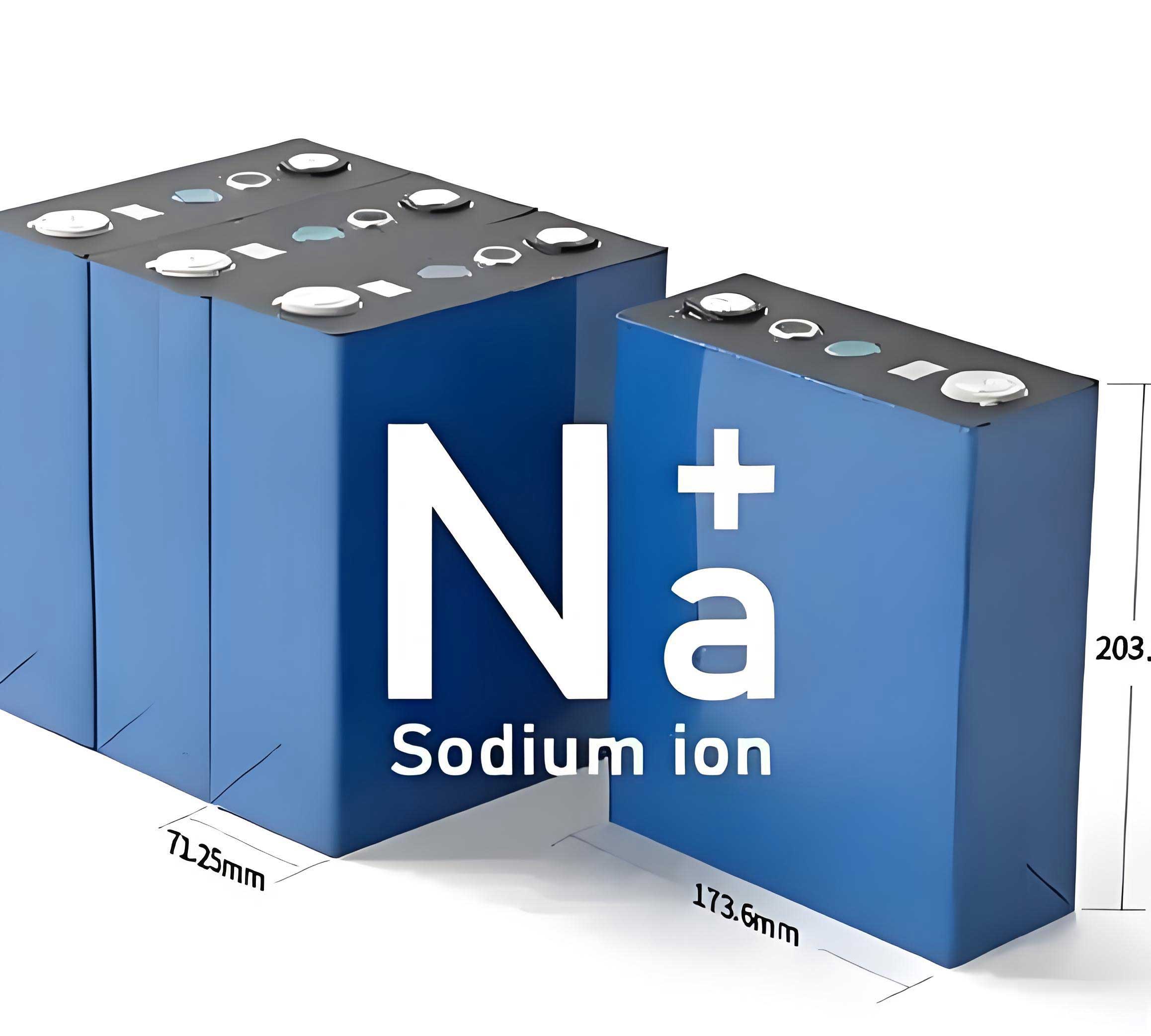
The relentless pursuit of sustainable energy solutions has placed electrochemical energy storage at the forefront of technological innovation. While lithium-ion batteries have dominated this landscape, concerns regarding lithium resource scarcity and geopolitical supply chain issues have intensified the search for complementary or alternative chemistries. Among the contenders, the sodium-ion battery stands out due to the natural abundance of sodium, its similar intercalation chemistry to lithium, and the potential for cost-effective manufacturing using adapted lithium-ion battery infrastructure. The performance and viability of a sodium-ion battery are fundamentally governed by its electrode materials, particularly the cathode.
Layered transition metal oxides with the general formula NaxTMO2 (TM = Ni, Fe, Mn, Co, etc.) are leading cathode candidates due to their high theoretical capacity, suitable operating voltage, and relatively straightforward synthesis. A prominent example is the O3-type NaNi1/3Fe1/3Mn1/3O2 (NFM). Its appeal lies in the combination of nickel’s redox activity, iron’s cost-effectiveness and stability, and manganese’s structural integrity. However, practical deployment of NFM cathodes in high-performance sodium-ion battery systems is hampered by several intrinsic challenges:
- Interfacial Instability: The highly reactive surface of NFM particles catalyzes continuous parasitic reactions with the electrolyte, especially at high states of charge. This leads to electrolyte oxidation, decomposition, and the formation of a thick, unstable cathode-electrolyte interphase (CEI).
- Structural Degradation: During (de)sodiation, especially at high voltages, irreversible phase transitions (e.g., O3 to P3 or other phases) and cation migration can occur. Furthermore, NFM materials are notoriously hygroscopic, reacting with ambient moisture to leach sodium ions from the surface lattice, forming residual alkaline species like Na2CO3 and triggering a detrimental surface reconstruction from a layered to a rock-salt structure.
- Gas Evolution: The aforementioned interfacial reactions, coupled with electrolyte solvent protonation and oxidation at high potentials, lead to the persistent generation of gaseous species (e.g., H2, CO2, CO, CxHy) during cycling. This gas evolution causes cell swelling, increased internal pressure, loss of active material, and poses significant safety risks, ultimately crippling the cycle life of the sodium-ion battery.
- Thermal Instability: In the charged state, the delithiated cathode structure, particularly the lattice oxygen, becomes thermodynamically unstable. Exothermic reactions with the electrolyte can lead to thermal runaway at elevated temperatures.
To overcome these hurdles, surface and interface engineering has emerged as a critical strategy. Conventional wet-chemical coating methods are often incompatible with NFM due to its sensitivity to moisture and solvents. This work explores the application of Atomic Layer Deposition (ALD), a vapor-phase technique renowned for its conformality, atomic-scale thickness control, and uniformity, to implement two distinct yet sophisticated modification strategies on NFM cathode materials for sodium-ion battery applications.
We designed and compared two principal modification pathways derived from ALD followed by thermal treatment:
1. Heterostructured Dual-Oxide Surface Coating: Conformal deposition of a nanoscale bilayer comprising TiO2 and Al2O3 directly onto NFM particles.
2. Gradient Binary-Cation Lattice Doping: Using the ALD-deposited oxide layers as a precursor source, a subsequent high-temperature annealing process drives the diffusion of Ti and Al cations into the surface lattice of NFM, creating a concentration gradient of stabilizing dopants.
This article provides a comprehensive, first-person account of our systematic investigation. We detail the synthesis rationale, present extensive material characterizations, evaluate the enhanced electrochemical and thermal performance, and, crucially, employ in situ Differential Electrochemical Mass Spectrometry (DEMS) to unveil the fundamental mechanisms of gas evolution and the distinct suppression effects afforded by each modification strategy. Our goal is to establish a clear understanding of how precise interface control can unlock the full potential of layered oxide cathodes for durable and safe sodium-ion battery technology.
I. Rational Design and Synthesis of Modified NFM Cathodes
The foundation of our study lies in the precise and controllable nature of Atomic Layer Deposition. ALD operates through sequential, self-limiting surface reactions, enabling the growth of uniform thin films on complex substrates, such as porous cathode powder agglomerates. For coating NFM, we employed two metalorganic precursors: Trimethylaluminum (TMA, Al(CH3)3) for Al2O3 and Tetrakis(dimethylamido)titanium (TDMAT, Ti[N(CH3)2]4) for TiO2, with deionized water as the oxygen source.
The generic ALD cycle for Al2O3 involves:
1. Exposure of the NFM surface to H2O vapor, forming a monolayer of surface -OH groups.
2. Purge to remove excess H2O and by-products.
3. Exposure to TMA, which reacts with the -OH groups in a self-limiting manner:
$$ \text{NFM-OH}^* + Al(CH_3)_3 \rightarrow \text{NFM-O-Al(CH}_3)_2^* + CH_4 \uparrow $$
4. Purge to remove excess TMA and CH4.
5. The surface is now terminated with -Al(CH3)2 groups, ready to react with the next H2O pulse to complete the cycle and form Al-O-Al linkages.
This cycle is repeated ‘n’ times to achieve the desired thickness. The process for TiO2 using TDMAT follows a similar chemisorption-based mechanism. The growth per cycle (GPC) was determined to be approximately 0.18 nm/cycle for Al2O3 and 0.048 nm/cycle for TiO2 under our optimized conditions.
Based on this, we synthesized the following key materials, summarized in Table 1:
| Sample Designation | Description | ALD Sequence | Post-ALD Treatment |
|---|---|---|---|
| NFM | Pristine, unmodified cathode material | None | None |
| NFM@TiO2(10)@Al2O3(10) | Dual-oxide heterostructure coating | 10 cycles TiO2 + 10 cycles Al2O3 | None |
| NFM#Ti(35)#Al(10) | Gradient Ti & Al co-doped in lattice | 35 cycles TiO2 + 10 cycles Al2O3 | Annealed at 850°C for 5h in O2 |
The synthesis of NFM#Ti(35)#Al(10) is particularly strategic. The initial ALD process creates a uniform, intimate mixture of TiO2 and Al2O3 layers on the NFM surface. The subsequent high-temperature annealing in an oxygen atmosphere serves two critical purposes: (i) it facilitates the solid-state diffusion of Ti and Al cations from the coating into the NFM lattice, and (ii) it simultaneously sinters the powder, healing surface defects and absorbing any residual NiO impurities present in the commercial NFM, leading to a smoother particle morphology. The number of ALD cycles (35 for Ti, 10 for Al) was optimized to provide sufficient precursor mass for effective doping without excessive residual oxide formation.
II. Structural and Chemical Characterization of Modified Materials
Extensive characterization confirmed the successful implementation of our design strategies and revealed their distinct impacts on the NFM structure.
Morphology and Coating/Doping Analysis: Scanning electron microscopy (SEM) showed that the ALD coating processes preserved the primary particle morphology of the NFM agglomerates. High-resolution transmission electron microscopy (HRTEM) provided definitive evidence. For NFM@TiO2(10)@Al2O3(10), a uniform, amorphous layer (~2-3 nm thick) encapsulating the NFM crystal was observed. The underlying NFM showed clear lattice fringes with a spacing of 0.215 nm, corresponding to the (104) plane of the layered structure. In stark contrast, NFM#Ti(35)#Al(10) exhibited no such amorphous surface layer. Instead, the crystal lattice extended directly to the particle edge with high crystallinity, and Energy-Dispersive X-ray Spectroscopy (EDS) mapping confirmed the homogeneous distribution of Ti and Al elements throughout the particles, with a noticeable concentration gradient from the surface to the core, verifying successful lattice incorporation.
Phase and Crystallinity: X-ray diffraction (XRD) patterns of all samples matched the typical O3-type layered structure (space group R 3̅m). The pristine NFM and the coated NFM@TiO2(10)@Al2O3(10) showed minor peaks attributable to NiO impurity. After annealing, these NiO peaks vanished in the NFM#Ti(35)#Al(10) pattern, confirming the healing effect of the thermal treatment. Furthermore, a slight shift of the (003) peak to a lower angle was detected for the doped sample, indicating a subtle expansion of the interlayer spacing, which can be beneficial for sodium-ion diffusion. This lattice expansion can be estimated using Bragg’s law:
$$ 2d_{hkl}\sin\theta = n\lambda $$
The calculated increase in the d-spacing for the (003) plane suggests reduced electrostatic repulsion between the oxygen layers, likely due to the stabilizing influence of the doped cations.
Surface Chemistry and Oxidation States: X-ray photoelectron spectroscopy (XPS) offered deep insights into the chemical environment. For the coated sample, the Ti 2p spectrum showed contributions from both Ti3+ and lower valence states, while the Al 2p spectrum indicated Al3+. The presence of Ti3+ suggests a possible electronic interaction at the TiO2/Al2O3 hetero-interface. For the doped sample NFM#Ti(35)#Al(10), the Ti and Al signals were consistent with Ti3+ and Al3+ integrated into the oxide lattice. More importantly, the Ni 2p and Fe 2p spectra revealed that the cation doping influenced the local electronic structure. The doped material showed a higher ratio of Ni2+/Ni3+ and Fe2+/Fe3+ compared to the pristine sample, indicating charge compensation effects. The introduction of higher-valent Al3+ and Ti3+ may lead to a partial reduction of Ni and Fe to maintain charge neutrality, which can affect the redox activity and the covalency of the metal-oxygen bonds, a key factor in oxygen stability. This can be conceptually linked to the bond strength:
$$ \text{Bond Strength} \propto \frac{(Z_{eff})}{(r_{cation} + r_{anion})} $$
where changes in effective nuclear charge (\(Z_{eff}\)) due to doping can alter the metal-oxygen bond, influencing oxygen release temperatures.
III. Electrochemical Performance Evaluation in Sodium-Ion Battery Cells
We assembled CR2032-type coin cells with sodium metal as the counter/reference electrode to evaluate the practical benefits of our modifications in a working sodium-ion battery. The electrolyte was 1 M NaClO4 in a mixture of Propylene Carbonate (PC) and Fluoroethylene Carbonate (FEC).
Initial Cycling and Coulombic Efficiency: At a low current rate of 0.1C (12 mA g-1) within a voltage window of 2.0-4.0 V, the pristine NFM delivered an initial discharge capacity of ~129.6 mAh g-1 with a high first-cycle Coulombic efficiency (CE) of 94.3%. The coated sample NFM@TiO2(10)@Al2O3(10) showed a slightly lower initial capacity (~126.5 mAh g-1) and CE (92.9%), likely due to the additional impedance from the insulating oxide layers. The doped sample NFM#Ti(35)#Al(10) exhibited the lowest initial capacity (~122.8 mAh g-1) and CE (92.8%), which we attribute to the electrochemically inactive nature of the dopants (Al3+, Ti3+) replacing some redox-active transition metals and the ongoing formation of a stable CEI on its smooth surface.
Long-Term Cycling Stability: The true merit of the modifications was revealed in long-term cycling tests at a higher rate of 1C (120 mA g-1). The cells were cycled for three formation cycles at 0.1C before switching to the 1C rate. The capacity retention was evaluated against the discharge capacity of the 2nd cycle at 1C. The results, summarized in Table 2 and depicted in cycling profiles, were striking.
| Cathode Material | Discharge Capacity at 2nd Cycle (1C) / mAh g-1 | Cycle Number at 60% Capacity Retention | Capacity Retention at Cycle 250 / % |
|---|---|---|---|
| NFM (Pristine) | ~112 | 250 | ~59 |
| NFM@TiO2(10)@Al2O3(10) | ~108 | 319 | ~70 |
| NFM#Ti(35)#Al(10) | ~105 | 358 | ~69 |
The dual-oxide coating extended the cycle life by over 25%, while the gradient cation doping achieved an improvement of over 40% compared to the pristine material. Although the coated sample showed marginally better capacity retention at the 250-cycle checkpoint, the doped sample demonstrated superior long-term endurance, surpassing the coated sample’s cycle life. This indicates that while the physical barrier of the coating is highly effective initially, the lattice-level stabilization provided by the dopants offers more profound and sustained resistance against bulk structural degradation during prolonged cycling of the sodium-ion battery.
IV. Thermal Stability Assessment
Safety is paramount for any battery technology. We used Differential Scanning Calorimetry (DSC) to evaluate the thermal stability of the cathodes in their most vulnerable state: fully charged (desodiated, at 4.0 V). The heat flow was measured as the temperature was ramped up. The onset of a large exothermic peak indicates the thermal runaway reaction between the delithiated cathode and the electrolyte.
The DSC results provided clear quantitative evidence of enhanced safety:
- NFM (Pristine): Thermal runaway peak temperature (Tpeak) = 279.8 °C.
- NFM@TiO2(10)@Al2O3(10): Tpeak = 285.9 °C (ΔT = +6.1 °C).
- NFM#Ti(35)#Al(10): Tpeak = 289.5 °C (ΔT = +9.7 °C).
Both modification strategies significantly increased the thermal runaway temperature. The doped sample exhibited the greatest improvement. This can be directly correlated to the stronger metal-oxygen bonds (M-O) achieved by the incorporation of Al3+ and Ti3+ into the lattice, which increases the activation energy for oxygen release. The exothermic reaction can be modeled as:
$$ \text{Na}_{x}\text{TMO}_{2} + \text{Electrolyte} \xrightarrow{\Delta} \text{Products} + \text{Heat} $$
The increased Tpeak signifies that the modified materials require more thermal energy to initiate this deleterious reaction, directly translating to a safer sodium-ion battery.
V. In Situ DEMS Analysis: Decoding Gas Evolution and Suppression Mechanisms
To move beyond correlative performance data and understand the fundamental interfacial processes, we employed in situ Differential Electrochemical Mass Spectrometry (DEMS). This powerful technique allows for the real-time detection and quantification of gaseous species evolved during battery operation. We monitored the first two galvanostatic cycles at 0.1C for the three cathode materials. The key findings are summarized in Table 3 and discussed below.
| Gas Species (m/z) | Potential Origin | NFM (Pristine) | NFM@TiO2(10)@Al2O3(10) | NFM#Ti(35)#Al(10) |
|---|---|---|---|---|
| H2 (2) | H2O reduction, solvent protonation | Dominant (~96% of total gas) | Drastically reduced | High, similar to pristine |
| CO2 (44) | Solvent (FEC/PC) oxidation | Minor | Present | Present, mainly in 1st charge |
| CO (28), C2H4 (27), C3H6 (41), etc. | Solvent decomposition & secondary reactions | Very minor | Detected during high-voltage charge | Minimal |
Pristine NFM: The gas evolution was overwhelmingly dominated by H2, constituting about 96% of the total detected gas. The H2 evolution started from the beginning of charging and persisted throughout the cycle. This indicates a continuous protonation reaction of the electrolyte solvents (e.g., PC) on the highly reactive NFM surface, followed by the reduction of the protonated species (R-H+) at the sodium metal anode: $$ \text{Solvent} + \text{H}^+ \rightarrow \text{R-H}^+ $$ $$ \text{R-H}^+ + e^- \rightarrow \frac{1}{2}\text{H}_2 \uparrow + \text{R} $$ Minor amounts of CO2 and C3H6 from direct solvent oxidation were also detected. This persistent, high-volume H2 generation is a primary cause of capacity fade and failure in the unmodified sodium-ion battery.
Coated NFM@TiO2(10)@Al2O3(10): The heterostructured coating induced a dramatic change. The total gas evolution was reduced to only ~22.6% of that from the pristine NFM. Crucially, the evolution of H2 was suppressed by an order of magnitude. This is the most significant finding for the coating strategy. The conformal Al2O3/TiO2 layer acts as an effective physical barrier, drastically limiting the direct contact between the catalytic NFM surface and the electrolyte, thereby inhibiting the protonation pathway. However, the DEMS signal revealed the detection of various hydrocarbon gases (C2H4, C3H6, etc.) and CO/CO2 specifically during the high-voltage charging stage (>3.3 V). This suggests that while the coating stops protonation, the oxide surface itself (possibly Ti3+ sites) can still catalyze the direct oxidation and decomposition of the electrolyte, but without the subsequent massive H2 production. These decomposition products likely contribute to forming a more stable and protective CEI.
Doped NFM#Ti(35)#Al(10): The gas evolution profile of the doped cathode was distinct from both others. Similar to the pristine sample, it produced a high volume of H2 during the initial cycles. This is consistent with its initially smooth, dopant-stabilized but uncoated surface, which allows electrolyte contact and protonation to occur. However, the key difference lay in the nature of other gases. The generation of complex hydrocarbon species (C2H4, C3H8, etc.) was minimal compared to the coated sample. The main by-products were CO2 and some C3H6, primarily during the first charge. This indicates that the lattice-doped surface, while not preventing initial solvent oxidation/protonation, effectively suppresses the secondary decomposition reactions of the primary decomposition products. The stabilized surface lattice and the stronger M-O bonds likely provide a less catalytic environment for further cracking and reforming reactions. The H2 evolution subsided after the first few cycles as a stable CEI formed, aligning with its excellent long-term cycling performance.
VI. Conclusions and Perspectives
Through a detailed and systematic investigation, we have demonstrated the profound impact of atomic-scale interface engineering on the performance of layered oxide cathodes for sodium-ion battery applications. Two distinct strategies—heterostructured dual-oxide coating and gradient binary-cation lattice doping—were successfully implemented using ALD and thermal processing.
Our work provides several key conclusions:
1. Both strategies are highly effective. They significantly improve the long-term cycling stability (25-40% increase in cycle life) and thermal safety (6-10 °C increase in runaway temperature) of NFM cathodes compared to the unmodified material.
2. The mechanisms of improvement are fundamentally different.
* The Al2O3/TiO2 dual coating primarily functions as a physical barrier. Its most critical role is the drastic suppression of electrolyte protonation, which cuts off the main source of H2 gas generation—the primary failure mechanism for pristine NFM. It offers excellent initial and mid-term capacity retention.
* The Ti/Al gradient co-doping operates at the lattice level. It strengthens the metal-oxygen framework, enhancing bulk structural and thermal stability. While it does not prevent initial H2 evolution, it suppresses harmful secondary electrolyte decomposition pathways and provides the most robust defense against long-term structural decay, yielding the best ultimate cycle life.
3. In situ DEMS is an indispensable tool for moving beyond performance metrics to understand interfacial reaction mechanisms. It clearly differentiated the gas evolution fingerprints of each modification, directly linking material design to electrochemical and chemical outcomes in the operating sodium-ion battery.
This study underscores that there is no single “best” modification for all requirements. The choice between a protective coating and lattice doping—or potentially a synergistic combination of both—will depend on the specific performance targets of the sodium-ion battery (e.g., ultra-long life vs. highest initial energy density). The methodologies and insights presented here provide a robust framework for the rational design of next-generation, high-stability cathode materials, accelerating the development of reliable and safe sodium-ion battery technology for large-scale energy storage.