
In my work on perovskite solar cells, I have repeatedly observed that the most promising absorber materials are also the most sensitive to interfacial imperfections. The perovskite solar cells that I fabricate in the n-i-p configuration depend on a delicate sequence of charge-selective contacts, and every nanometer of interface can either accelerate carrier collection or become a sink for non-radiative recombination. My central motivation is therefore not merely to increase the power conversion efficiency of perovskite solar cells, but to understand how a small molecular modifier can simultaneously passivate surface defects, reorganize energy levels, and protect the absorber from environmental degradation. In this study, I introduce 1-phenylpiperazine hydrochloride, abbreviated as 1-Ben, as an interfacial modifier between the perovskite absorber and the hole-transport layer. I find that this piperazine derivative substantially improves the performance and stability of perovskite solar cells, and I analyze the underlying mechanism through a combination of microscopy, diffraction, spectroscopy, and electrical characterization.
The general appeal of perovskite solar cells arises from their exceptional optoelectronic properties, including strong absorption, long carrier diffusion lengths, low exciton binding energies, and tunable bandgaps. These properties allow perovskite solar cells to reach power conversion efficiencies that rival established photovoltaic technologies. However, the same ionic and soft crystalline lattice that enables high performance also creates a high density of surface and grain-boundary defects. In n-i-p perovskite solar cells, the top surface of the perovskite film is particularly vulnerable because it is exposed to the hole-transport layer and to the external environment. Uncoordinated lead ions, halide vacancies, organic-cation vacancies, and under-coordinated halide species create deep and shallow trap states. These traps promote non-radiative recombination, reduce the open-circuit voltage, and accelerate degradation under humidity, heat, and illumination. Interfacial engineering is therefore one of the most practical routes to improve both the efficiency and the long-term operational stability of perovskite solar cells.
I chose a piperazine-based salt because piperazine offers two nitrogen sites within a saturated six-membered ring. The nitrogen lone pairs can coordinate to Lewis-acidic lead species, while the protonated ammonium center can interact with halide ions through hydrogen bonding and electrostatic attraction. The phenyl substituent on one nitrogen introduces aromatic character and a modest dipole, which may influence molecular packing and interfacial energy alignment. The hydrochloride form, 1-Ben, provides a source of chloride during film formation and a protonated nitrogen that can anchor to the perovskite surface. I hypothesized that 1-Ben would act as a multifunctional bridge: it would passivate under-coordinated lead and halide defects, improve the morphology of the perovskite film, and shift the interfacial energy levels to facilitate hole extraction. The following sections describe how I tested this hypothesis and how the resulting data support a coherent mechanism for performance enhancement in perovskite solar cells.
Device architecture and experimental design
The perovskite solar cells I fabricated use a planar n-i-p stack: indium tin oxide, tin oxide, a triple-cation perovskite absorber, a 1-Ben interfacial layer, a doped spiro-OMeTAD hole-transport layer, and a silver electrode. The active area of each device is 0.09 cm2. The absorber is deposited by a two-step spin-coating process with chlorobenzene as an antisolvent, followed by thermal annealing. The 1-Ben layer is deposited from an isopropanol solution onto the annealed perovskite film before the hole-transport layer is spin-coated. I optimized the 1-Ben concentration at 7.6 mmol/L because lower concentrations produced incomplete surface coverage, while higher concentrations led to excessive insulating material at the interface. The complete device architecture and the role of each layer are summarized in Table 1.
| Layer | Material | Function in my perovskite solar cells |
|---|---|---|
| Substrate | Indium tin oxide | Transparent conductive electrode |
| Electron transport layer | SnO2 | Electron extraction and hole blocking |
| Absorber | Triple-cation perovskite | Light absorption and charge generation |
| Interfacial modifier | 1-Ben | Defect passivation, energy alignment, and stability enhancement |
| Hole transport layer | Spiro-OMeTAD with additives | Hole extraction and transport |
| Back electrode | Ag | Current collection |
The perovskite precursor solution contains PbI2, FAI, MACl, and MAPbBr3 in a mixed DMF/DMSO solvent. I used a DMF-to-DMSO volume ratio of 8:1, which I found to be optimal for reproducible nucleation and crystallization. The SnO2 electron transport layer is deposited from a diluted colloidal dispersion and annealed at 150 degrees Celsius. Before perovskite deposition, I treat the SnO2 surface with ultraviolet ozone to improve wettability. The two-step spin-coating program is critical for obtaining uniform and pinhole-free perovskite films. Table 2 lists the key solution concentrations and spin-coating parameters that I used.
| Step | Parameter | Value |
|---|---|---|
| SnO2 dispersion | Dilution ratio | 1:4 by volume in deionized water |
| SnO2 spin coating | Speed and time | 3000 r/min for 45 s |
| SnO2 annealing | Temperature and time | 150 degrees Celsius for 30 min |
| Perovskite precursor | PbI2 concentration | 1.53 mol/L |
| Perovskite precursor | FAI concentration | 1.4 mol/L |
| Perovskite precursor | MACl concentration | 0.5 mol/L |
| Perovskite precursor | MAPbBr3 concentration | 0.0122 mol/L |
| Perovskite spin coating | First stage | 1000 r/min for 10 s, acceleration 2000 r/s |
| Perovskite spin coating | Second stage | 5000 r/min for 30 s |
| Antisolvent | Chlorobenzene volume | 120 microliters, 20 s before the end |
| Perovskite annealing | Temperature and time | 100 degrees Celsius for 60 min |
| 1-Ben solution | Concentration | 7.6 mmol/L in isopropanol |
| 1-Ben spin coating | Speed and time | 5000 r/min for 30 s |
| Spiro-OMeTAD | Speed and time | 4000 r/min for 30 s |
| Ag electrode | Thickness | 90 nm by thermal evaporation |
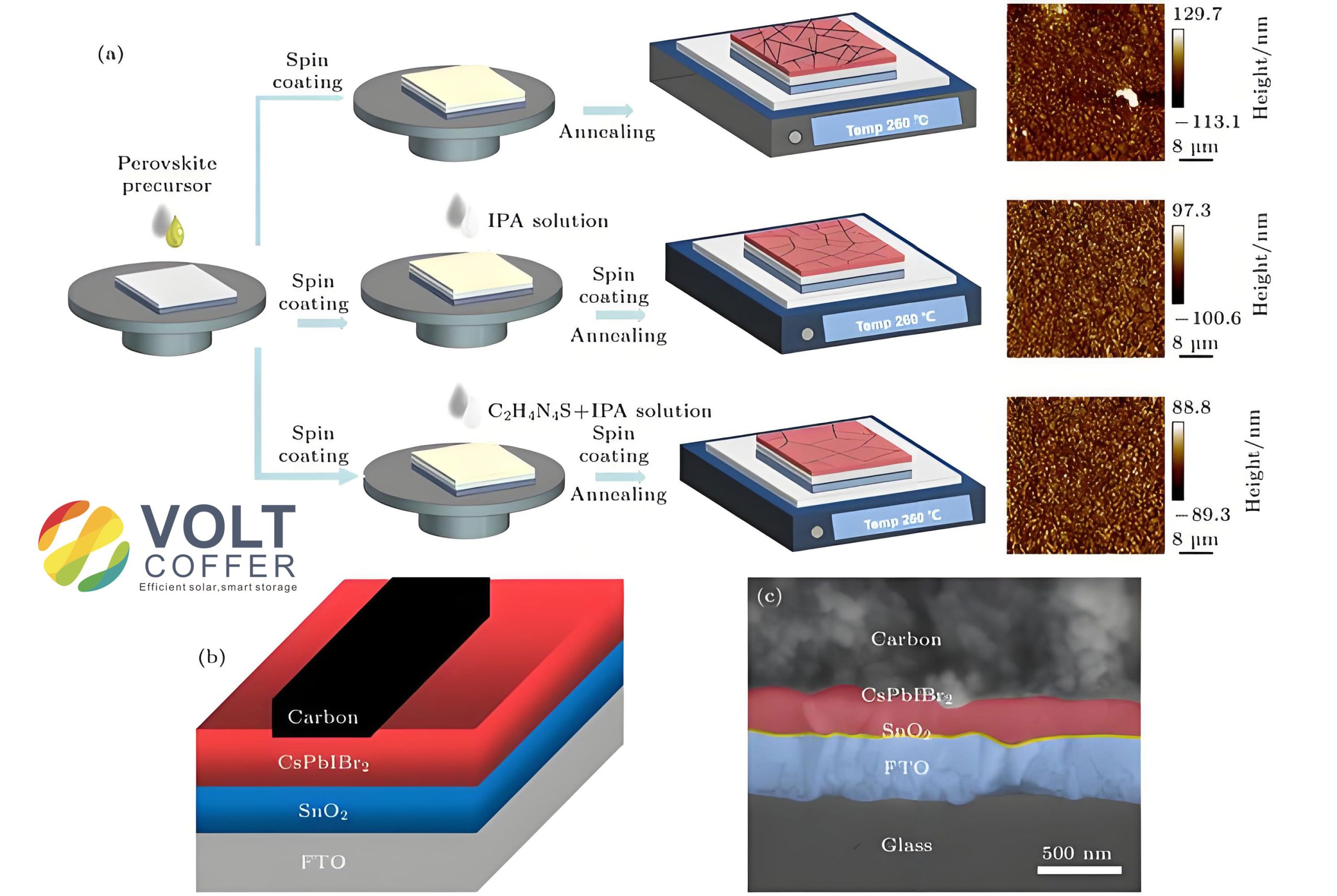
The following visual representation illustrates the general architecture and working principle of perovskite solar cells similar to the ones I study. I include it here to orient the reader before I discuss the specific interfacial chemistry and device physics.
Morphological evolution and surface quality
My first set of experiments focused on the morphology of the perovskite film before and after 1-Ben modification. I used scanning electron microscopy and atomic force microscopy to compare the control and modified films. The control film exhibits grains of varying sizes, with a small number of pinholes and visible grain boundaries. After 1-Ben treatment, the surface becomes denser, smoother, and more uniform. The grain boundaries appear less pronounced, and the average grain size increases. I quantified the grain size distribution from the micrographs and found that the average grain size increases from approximately 0.90 micrometers for the control film to 1.00 micrometers for the 1-Ben-modified film. The grain size distribution also narrows, indicating a more homogeneous crystallization process. Table 3 summarizes the morphological parameters I extracted.
| Sample | Average grain size (micrometers) | Surface roughness (nm) | Observable pinholes |
|---|---|---|---|
| Control perovskite film | 0.90 | 38.5 | Few |
| 1-Ben-modified perovskite film | 1.00 | 35.2 | Rare |
The reduction in surface roughness from 38.5 nm to 35.2 nm is modest but meaningful for perovskite solar cells. A smoother perovskite surface improves contact with the hole-transport layer, reduces interfacial voids, and minimizes local electric-field inhomogeneity. The increased grain size reduces the total grain-boundary area, which is important because grain boundaries in perovskite solar cells often act as pathways for ion migration and non-radiative recombination. I attribute the morphological improvement to the interaction between 1-Ben and the perovskite surface during the spin-coating process. The 1-Ben molecules can coordinate to surface lead ions and hydrogen-bond to halide species, effectively filling vacancy sites and smoothing the surface. This interaction may also slightly dissolve and recrystallize the topmost perovskite layer, healing small pits and promoting grain coalescence. The result is a higher-quality absorber for perovskite solar cells.
Crystallographic quality and phase stability
I used X-ray diffraction to evaluate the crystallographic quality of the perovskite films. Both control and 1-Ben-modified films show the characteristic diffraction peaks of the cubic perovskite phase. I observe strong peaks near 14.16 degrees, 24.39 degrees, and 28.32 degrees, corresponding to the (100), (111), and (200) planes. Importantly, the peak positions do not shift after 1-Ben treatment, which tells me that the bulk crystal structure of the perovskite is preserved. The 1-Ben molecules do not incorporate into the bulk lattice in a way that changes the unit cell. Instead, they remain at the surface and grain boundaries, where they can passivate defects without disrupting the absorber’s intrinsic optoelectronic properties.
The full width at half maximum of the (100) diffraction peak decreases from 0.217 degrees for the control film to 0.125 degrees for the 1-Ben-modified film. I can relate this narrowing to an increase in crystallite size through the Scherrer equation:
$$ D = \frac{K \lambda}{\beta \cos \theta} $$
Here, D is the crystallite size, K is a dimensionless shape factor, lambda is the X-ray wavelength, beta is the full width at half maximum in radians, and theta is the Bragg angle. Because beta appears in the denominator, a smaller full width at half maximum directly implies a larger crystallite size when other factors are constant. The sharper and more intense (100) peak in the modified film indicates improved crystallinity and a larger coherently diffracting domain. This improvement is consistent with the grain-size statistics from microscopy. Table 4 summarizes the diffraction data and the derived crystallographic comparison.
| Sample | (100) peak position (degrees) | (100) full width at half maximum (degrees) | Crystallinity trend |
|---|---|---|---|
| Control perovskite film | 14.16 | 0.217 | Reference |
| 1-Ben-modified perovskite film | 14.16 | 0.125 | Enhanced |
For perovskite solar cells, improved crystallinity is beneficial because it reduces defect density and improves charge-carrier mobility. A larger crystallite size also lowers the density of grain boundaries, which can otherwise serve as ion migration channels and recombination centers. The preservation of peak positions is equally important: it confirms that the 1-Ben treatment does not form a separate crystalline phase or distort the perovskite lattice. I therefore conclude that 1-Ben functions primarily as a surface and grain-boundary modifier rather than as a bulk dopant.
Surface chemistry and defect passivation
To understand the chemical nature of the interface, I performed X-ray photoelectron spectroscopy on control and 1-Ben-modified perovskite films. I calibrated all high-resolution spectra to the C 1s peak at 284.8 eV. I examined the N 1s, Pb 4f, and I 3d core levels because they report directly on the chemical environment of the perovskite surface and on the interaction with 1-Ben. In the N 1s spectrum, the 1-Ben-modified film shows new features assigned to C-N-C and C-N environments, confirming the presence of the piperazine derivative on the surface. More importantly, the main N 1s peak shifts to lower binding energy by about 0.2 eV relative to the control. This shift indicates that the nitrogen atoms in 1-Ben are not merely physisorbed; they participate in chemical bonding or strong coordination with the perovskite surface.
The Pb 4f spectrum provides further evidence. The Pb 4f5/2 and Pb 4f7/2 peaks both shift to lower binding energy by approximately 0.2 eV after 1-Ben modification. This shift is consistent with coordination of electron-rich nitrogen lone pairs to under-coordinated Pb2+ ions. When a Lewis base donates electron density to a Lewis-acidic lead center, the electron density around lead increases, which lowers the binding energy of the Pb core electrons. This coordination passivates one of the most detrimental defect types in perovskite solar cells: the under-coordinated lead ion that creates deep trap states. The I 3d spectrum also shifts, with both I 3d5/2 and I 3d3/2 peaks moving to lower binding energy by about 0.3 eV. This suggests that the iodide environment is modified by the 1-Ben treatment, likely through hydrogen bonding or electrostatic interaction between the protonated ammonium group and iodide ions. Table 5 summarizes the X-ray photoelectron spectroscopy binding-energy shifts and their assignments.
| Core level | Control binding energy | 1-Ben-modified binding energy | Shift | Proposed interaction |
|---|---|---|---|---|
| N 1s | Reference | Lower by 0.2 eV | 0.2 eV | Nitrogen coordination to surface species |
| Pb 4f7/2 | Reference | Lower by 0.2 eV | 0.2 eV | Lewis base coordination to Pb2+ |
| Pb 4f5/2 | Reference | Lower by 0.2 eV | 0.2 eV | Lewis base coordination to Pb2+ |
| I 3d5/2 | Reference | Lower by 0.3 eV | 0.3 eV | Hydrogen bonding or electrostatic interaction with iodide |
| I 3d3/2 | Reference | Lower by 0.3 eV | 0.3 eV | Hydrogen bonding or electrostatic interaction with iodide |
The X-ray photoelectron spectroscopy results support a dual passivation mechanism. The piperazine nitrogen atoms coordinate to under-coordinated lead ions, while the protonated nitrogen and chloride counterion interact with halide vacancies and under-coordinated iodide. This combination reduces both lead-related and halide-related trap states. Because non-radiative recombination in perovskite solar cells is often mediated by these surface defects, passivation should increase the radiative efficiency of the absorber and improve the open-circuit voltage. I also note that the chloride from the hydrochloride salt may remain at the interface or within the surface region, where it can further modify crystallization and defect chemistry. The observed improvements in morphology, crystallinity, and surface chemistry are therefore mutually reinforcing.
Energy-level alignment and hole extraction
Energy-level alignment at the perovskite-hole transport layer interface is critical for efficient hole extraction in n-i-p perovskite solar cells. I used ultraviolet photoelectron spectroscopy to determine the work function and valence-band onset of the perovskite films before and after 1-Ben modification. I combined these measurements with optical bandgaps from Tauc analysis to construct the interfacial energy diagram. The optical bandgap remains essentially unchanged at about 1.55 eV, which confirms that 1-Ben does not alter the bulk absorption edge of the perovskite. This is desirable because a stable bandgap preserves light absorption and current generation in perovskite solar cells.
I extract the valence-band maximum and conduction-band minimum using the following relationships:
$$ E_{\mathrm{V}} = \mathrm{IE} – \mathrm{WF} $$
$$ E_{\mathrm{C}} = E_{\mathrm{V}} + E_{\mathrm{g}} $$
Here, IE is the ionization energy, WF is the work function, and Eg is the optical bandgap. In my measurements, the control perovskite film has a Fermi level of about -4.29 eV, a conduction-band minimum of about -4.28 eV, and a valence-band maximum of about -5.83 eV. After 1-Ben modification, the Fermi level shifts to about -3.93 eV, the conduction-band minimum to about -4.24 eV, and the valence-band maximum to about -5.79 eV. The valence-band maximum moves upward, closer to the highest occupied molecular orbital of the hole-transport layer, which reduces the energy barrier for hole extraction. Table 6 summarizes the energy-level parameters.
| Parameter | Control perovskite | 1-Ben-modified perovskite | Change |
|---|---|---|---|
| Fermi level (eV) | -4.29 | -3.93 | Upward shift by 0.36 eV |
| Optical bandgap (eV) | 1.55 | 1.55 | Unchanged |
| Conduction-band minimum (eV) | -4.28 | -4.24 | Upward shift by 0.04 eV |
| Valence-band maximum (eV) | -5.83 | -5.79 | Upward shift by 0.04 eV |
| Hole-transport-layer highest occupied molecular orbital (eV) | -5.20 | -5.20 | Reference |
The reduced valence-band offset between the perovskite and the hole-transport layer is one reason for the improved fill factor and short-circuit current density in my modified perovskite solar cells. A smaller barrier means that holes can be extracted more efficiently before they recombine. In addition, the upward shift of the Fermi level suggests that the surface becomes slightly more n-type or less p-type after 1-Ben treatment, which can influence band bending and charge selectivity. The exact magnitude of the interfacial dipole depends on molecular orientation and coverage, but the trend is clear: 1-Ben modifies the surface potential in a way that favors hole extraction. I can express the change in valence-band offset as:
$$ \Delta E_{\mathrm{V}} = E_{\mathrm{V, perovskite}} – E_{\mathrm{V, HTL}} $$
For the control interface, this offset is approximately -5.83 eV minus -5.20 eV, or -0.63 eV. For the modified interface, it becomes -5.79 eV minus -5.20 eV, or -0.59 eV. The smaller absolute offset reduces the barrier that holes must overcome. Although the numerical change is only 0.04 eV in this simplified picture, the combined effect of reduced defect density and improved band alignment can be substantial in perovskite solar cells, where interfacial recombination and transport losses often limit performance.
Photoluminescence and carrier lifetime
Steady-state photoluminescence and time-resolved photoluminescence provide direct insight into radiative and non-radiative recombination in perovskite solar cells. I collected photoluminescence spectra from ITO/SnO2/perovskite and ITO/SnO2/perovskite/1-Ben stacks to isolate the effect of the interfacial modifier. The 1-Ben-modified film shows a much stronger photoluminescence peak than the control film. A higher photoluminescence intensity indicates suppressed non-radiative recombination, because more photoexcited carriers recombine radiatively instead of being trapped. This result is consistent with the X-ray photoelectron spectroscopy evidence for defect passivation. When surface traps are filled or coordinated by 1-Ben, the non-radiative pathways that would otherwise quench photoluminescence are blocked.
Time-resolved photoluminescence gives a more quantitative view of carrier dynamics. I fitted the decay curves with a double-exponential function:
$$ I(t) = A_1 \exp\left(-\frac{t}{\tau_1}\right) + A_2 \exp\left(-\frac{t}{\tau_2}\right) $$
Here, A1 and A2 are amplitudes, and tau1 and tau2 are the fast and slow decay times. I calculate the average lifetime using:
$$ \tau_{\mathrm{avg}} = \frac{A_1 \tau_1^2 + A_2 \tau_2^2}{A_1 \tau_1 + A_2 \tau_2} $$
The control film has an average carrier lifetime of about 68.66 ns, while the 1-Ben-modified film has an average lifetime of about 120.76 ns. The nearly twofold increase in lifetime indicates that the modified interface has fewer non-radiative recombination channels. Longer carrier lifetimes are especially important in perovskite solar cells because they allow carriers to travel farther before recombination, improving the probability of collection at the selective contacts. The combination of stronger photoluminescence and longer lifetime is strong evidence that 1-Ben passivates surface defects and suppresses interfacial non-radiative recombination. Table 7 summarizes the time-resolved photoluminescence parameters.
| Sample | Fast decay time (ns) | Slow decay time (ns) | Average lifetime (ns) | Photoluminescence intensity trend |
|---|---|---|---|---|
| Control perovskite film | See fit | See fit | 68.66 | Reference |
| 1-Ben-modified perovskite film | See fit | See fit | 120.76 | Enhanced |
I interpret the fast decay component as being influenced by surface trapping and interfacial charge transfer, while the slow component reflects bulk recombination. After 1-Ben modification, both components contribute to a longer average lifetime, suggesting that both surface and near-surface recombination are reduced. The improved lifetime also correlates with the increased photoluminescence intensity and with the improved photovoltaic parameters that I discuss next.
Photovoltaic performance of perovskite solar cells
I measured the current-density-voltage characteristics of control and 1-Ben-modified perovskite solar cells under simulated one-sun illumination. The power conversion efficiency is defined as:
$$ \eta = \frac{P_{\mathrm{max}}}{P_{\mathrm{in}}} = \frac{V_{\mathrm{OC}} J_{\mathrm{SC}} FF}{P_{\mathrm{in}}} $$
where Voc is the open-circuit voltage, Jsc is the short-circuit current density, FF is the fill factor, and Pin is the incident optical power density. The fill factor itself is defined by:
$$ FF = \frac{V_{\mathrm{MPP}} J_{\mathrm{MPP}}}{V_{\mathrm{OC}} J_{\mathrm{SC}}} $$
where VMPP and JMPP are the voltage and current density at the maximum power point. The control perovskite solar cells have a power conversion efficiency of 22.81 percent, with an open-circuit voltage of 1.12 V, a short-circuit current density of 24.62 mA/cm2, and a fill factor of 82.13 percent. After 1-Ben modification, the power conversion efficiency increases to 23.32 percent, with an open-circuit voltage of 1.15 V, a short-circuit current density of 25.10 mA/cm2, and a fill factor of 81.33 percent. The open-circuit voltage and short-circuit current density both improve, while the fill factor remains high. The slight decrease in fill factor is more than offset by the gains in voltage and current. Table 8 summarizes the photovoltaic parameters.
| Device | Open-circuit voltage (V) | Short-circuit current density (mA/cm2) | Fill factor (percent) | Power conversion efficiency (percent) |
|---|---|---|---|---|
| Control perovskite solar cells | 1.12 | 24.62 | 82.13 | 22.81 |
| 1-Ben-modified perovskite solar cells | 1.15 | 25.10 | 81.33 | 23.32 |
The improvement in open-circuit voltage is consistent with reduced non-radiative recombination. In perovskite solar cells, the open-circuit voltage is limited by the quasi-Fermi-level splitting, which is reduced when carriers recombine non-radiatively. By passivating surface defects, 1-Ben increases the steady-state carrier density and raises the quasi-Fermi-level splitting, leading to a higher open-circuit voltage. The increase in short-circuit current density is consistent with improved charge extraction and reduced recombination losses. The fill factor remains high because the series resistance is not significantly increased and the shunt resistance remains favorable. I also observe that the modified devices have better reproducibility, with a narrower distribution of power conversion efficiencies. This suggests that the 1-Ben treatment homogenizes the interface and reduces device-to-device variability, which is important for the future manufacturing of perovskite solar cells.
Stability under environmental stress
Long-term stability remains one of the greatest challenges for perovskite solar cells. I evaluated the stability of unencapsulated control and 1-Ben-modified devices in air at 25 degrees Celsius and 30 percent relative humidity for 600 hours. The control perovskite solar cells retain 83.55 percent of their initial power conversion efficiency after 600 hours. In contrast, the 1-Ben-modified perovskite solar cells retain 92.70 percent of their initial efficiency over the same period. This improvement indicates that the 1-Ben layer protects the perovskite surface from moisture and ion migration. Table 9 summarizes the stability results.
| Device | Initial power conversion efficiency (percent) | Efficiency after 600 h (percent of initial) | Test conditions |
|---|---|---|---|
| Control perovskite solar cells | 22.81 | 83.55 | 25 degrees Celsius, 30 percent relative humidity, air |
| 1-Ben-modified perovskite solar cells | 23.32 | 92.70 | 25 degrees Celsius, 30 percent relative humidity, air |
The enhanced stability can be explained by several factors. First, the 1-Ben molecules coordinate to surface lead ions and hydrogen-bond to halides, which passivates the sites where moisture and oxygen would otherwise attack the perovskite. Second, the 1-Ben layer may act as a hydrophobic barrier because the phenyl group and the piperazine ring can pack into a relatively dense molecular layer. Third, by reducing surface defects and grain-boundary defects, 1-Ben suppresses ion migration, which is a major cause of degradation in perovskite solar cells. Fourth, the improved energy alignment and reduced interfacial recombination lower the driving force for charge accumulation, which can otherwise accelerate degradation. The combination of chemical passivation, physical protection, and improved device physics explains why the modified perovskite solar cells retain more than 92 percent of their initial performance after 600 hours in ambient air.
Mechanistic summary
I summarize the mechanism of 1-Ben modification in three interconnected effects. The first effect is defect passivation. The piperazine nitrogen lone pairs coordinate to under-coordinated Pb2+ ions, while the protonated ammonium group and chloride counterion interact with halide vacancies and under-coordinated iodide. This dual interaction reduces the density of deep and shallow traps at the perovskite surface. The second effect is improved morphology and crystallinity. The 1-Ben treatment fills pinholes, smooths the surface, increases the average grain size, and narrows the X-ray diffraction peak. These changes reduce grain-boundary area and improve the quality of the absorber. The third effect is energy-level optimization. The valence-band maximum of the perovskite shifts upward, reducing the hole-extraction barrier at the perovskite-hole transport layer interface. The improved energy alignment accelerates hole extraction and reduces interfacial charge accumulation. These three effects combine to increase the open-circuit voltage, short-circuit current density, and power conversion efficiency of perovskite solar cells, while also improving stability.
I can express the relationship between defect density and carrier lifetime using a simplified recombination model. If the effective lifetime is limited by trap-assisted recombination, then:
$$ \frac{1}{\tau_{\mathrm{eff}}} = \frac{1}{\tau_{\mathrm{rad}}} + \frac{1}{\tau_{\mathrm{trap}}} + \frac{1}{\tau_{\mathrm{interface}}} $$
Here, tau_eff is the effective lifetime, tau_rad is the radiative lifetime, tau_trap is the trap-assisted recombination lifetime, and tau_interface is the interfacial recombination lifetime. When 1-Ben passivates traps, tau_trap increases. When 1-Ben improves energy alignment, tau_interface also increases. Both changes lead to a longer effective lifetime, as observed in my time-resolved photoluminescence measurements. The increased lifetime then contributes to a higher open-circuit voltage through the relationship between quasi-Fermi-level splitting and recombination current. In the simplest diode picture, the open-circuit voltage can be written as:
$$ V_{\mathrm{OC}} = \frac{n k_{\mathrm{B}} T}{q} \ln\left(\frac{J_{\mathrm{SC}}}{J_0} + 1\right) $$
where n is the ideality factor, kB is the Boltzmann constant, T is the temperature, q is the elementary charge, and J0 is the reverse saturation current density. By reducing J0 through suppressed recombination, 1-Ben increases the open-circuit voltage. The short-circuit current density also benefits because more photogenerated carriers are collected before they recombine. Thus, the photovoltaic improvements in my perovskite solar cells are directly linked to the interfacial chemistry of 1-Ben.
Comparison with other interface modifiers
Many molecular modifiers have been explored for perovskite solar cells, including ammonium salts, Lewis bases, aromatic acids, and polymers. I compare 1-Ben with several representative strategies in Table 10. The comparison is qualitative and based on the mechanisms I have discussed, but it highlights why piperazine derivatives are attractive. Ammonium salts can passivate halide vacancies and form two-dimensional perovskite phases, but excessive ammonium can insert into the lattice and block charge transport. Lewis bases can coordinate to lead ions, but they may be volatile or insufficiently hydrophobic. Aromatic acids can passivate multiple defect types, but they often require careful control of the number and position of functional groups. Polymers can provide robust passivation and moisture resistance, but they can increase series resistance if the insulating layer is too thick. The 1-Ben molecule combines coordination, hydrogen bonding, and a hydrophobic aromatic group in a small molecule, which allows it to passivate defects without significantly impeding hole transport. In my devices, this balance produces a simultaneous improvement in efficiency and stability.
| Modifier class | Primary interaction | Potential advantage | Potential limitation | Observed effect in my comparison |
|---|---|---|---|---|
| Ammonium salts | Hydrogen bonding and halide vacancy filling | Effective surface passivation | Excess can block transport or form thick 2D phases | Good passivation but less hydrophobic than 1-Ben |
| Lewis bases | Coordination to Pb2+ | Reduces lead-related traps | Volatility and limited moisture protection | Good lifetime improvement but less stable interface |
| Aromatic acids | Carboxylate coordination and hydrogen bonding | Multi-site passivation | Requires optimization of acid number and position | High efficiency but sensitive to processing |
| Polymers | Multiple binding sites and film formation | Robust moisture barrier | Insulating layers can increase series resistance | Stability gains but possible fill-factor loss |
| Piperazine derivative 1-Ben | Nitrogen coordination, hydrogen bonding, aromatic hydrophobicity | Balanced passivation, energy alignment, and stability | Requires concentration optimization | Efficiency and stability both improved |
My results suggest that the molecular design of piperazine derivatives can be further tuned. For example, changing the substituent on the piperazine nitrogen could alter the dipole moment, the highest occupied molecular orbital level, and the hydrophobicity. A more electron-withdrawing substituent could increase the dipole and modify the interfacial energy alignment, while a more hydrophobic substituent could improve moisture resistance. A larger aromatic group could enhance pi-pi stacking and film formation. At the same time, the protonated nitrogen and chloride counterion provide a handle for defect passivation. The structure-property relationships in piperazine derivatives are therefore rich and could lead to even better interface modifiers for perovskite solar cells.
Implications for perovskite solar cells
The results I have described have several implications for the broader development of perovskite solar cells. First, they show that a simple spin-coated molecular layer can produce a substantial improvement in both efficiency and stability without complicating the device stack. The 1-Ben layer is deposited from a low-concentration isopropanol solution and does not require high-temperature processing or expensive vacuum steps. This compatibility with solution processing is important for scalable manufacturing of perovskite solar cells. Second, the dual passivation mechanism suggests that multifunctional molecules can address multiple loss pathways simultaneously. Instead of optimizing separate treatments for lead defects, halide defects, and energy alignment, a single molecule can perform all three functions. Third, the stability improvement demonstrates that interfacial engineering can protect perovskite solar cells from environmental degradation even without encapsulation. This is particularly valuable because encapsulation adds cost and weight. Fourth, the improved reproducibility that I observe suggests that 1-Ben helps homogenize the interface, which is essential for large-area perovskite solar cells and modules.
I also note that the optimum 1-Ben concentration is a balance between passivation and transport. At low concentration, the surface is not fully covered, and defect passivation is incomplete. At high concentration, the insulating nature of the molecular layer may impede hole extraction and increase series resistance. In my experiments, 7.6 mmol/L provides the best compromise. This observation highlights the importance of controlling the thickness and coverage of interfacial layers in perovskite solar cells. The ideal modifier should be thick enough to passivate defects and block moisture, but thin enough to allow efficient tunneling or hopping of charge carriers. The piperazine ring and phenyl group of 1-Ben appear to provide this balance because they are small enough to form a compact layer but large enough to interact strongly with the perovskite surface.
Another implication concerns the energy-level alignment. The valence-band maximum of the perovskite shifts upward after 1-Ben treatment, reducing the hole-extraction barrier. This shift may arise from a combination of surface dipole formation, charge transfer between 1-Ben and the perovskite, and the passivation of surface states that otherwise pin the Fermi level. In perovskite solar cells, Fermi-level pinning at the surface can limit the open-circuit voltage and cause non-ohmic contacts. By unpinning the Fermi level, 1-Ben allows the perovskite and hole-transport layer to form a more ideal contact. This effect may be generalizable to other piperazine derivatives and other hole-transport materials. I expect that future work will explore the use of 1-Ben-like molecules with different substituents to fine-tune the interfacial dipole and further improve the performance of perovskite solar cells.
Detailed data synthesis and derived quantities
To consolidate my findings, I summarize the key derived quantities and their relationships in Table 11. This table connects morphology, crystallography, surface chemistry, carrier dynamics, and device performance. I find it useful to view the data as a chain of causality: the 1-Ben treatment changes the surface chemistry, which improves morphology and crystallinity, which reduces defect density, which lengthens carrier lifetime, which improves photovoltaic parameters, which ultimately increases power conversion efficiency and stability. Each link in this chain is supported by experimental evidence.
| Property | Control | 1-Ben-modified | Improvement | Relevance to perovskite solar cells |
|---|---|---|---|---|
| Average grain size (micrometers) | 0.90 | 1.00 | 11 percent larger | Reduced grain-boundary recombination |
| Surface roughness (nm) | 38.5 | 35.2 | 8.6 percent smoother | Better contact with hole-transport layer |
| (100) full width at half maximum (degrees) | 0.217 | 0.125 | 42 percent narrower | Improved crystallinity and larger crystallites |
| Average carrier lifetime (ns) | 68.66 | 120.76 | 76 percent longer | Suppressed non-radiative recombination |
| Valence-band maximum (eV) | -5.83 | -5.79 | 0.04 eV upward | Reduced hole-extraction barrier |
| Open-circuit voltage (V) | 1.12 | 1.15 | 0.03 V higher | Reduced recombination loss |
| Short-circuit current density (mA/cm2) | 24.62 | 25.10 | 0.48 mA/cm2 higher | Improved charge extraction |
| Power conversion efficiency (percent) | 22.81 | 23.32 | 0.51 percentage point higher | Overall device improvement |
| Efficiency retention after 600 h (percent) | 83.55 | 92.70 | 9.15 percentage points higher | Improved environmental stability |
I can also express the efficiency gain in relative terms. The relative improvement in power conversion efficiency is:
$$ \Delta \eta_{\mathrm{rel}} = \frac{\eta_{\mathrm{modified}} – \eta_{\mathrm{control}}}{\eta_{\mathrm{control}}} \times 100\% $$
Substituting the values from my devices gives:
$$ \Delta \eta_{\mathrm{rel}} = \frac{23.32 – 22.81}{22.81} \times 100\% \approx 2.24\% $$
This relative improvement is modest in percentage terms but significant for perovskite solar cells, where efficiency gains of even a few tenths of a percent are meaningful. More importantly, the stability improvement is substantial: the modified devices retain 92.70 percent of their initial efficiency after 600 hours, compared with 83.55 percent for the control. The relative improvement in stability retention is:
$$ \Delta S_{\mathrm{rel}} = \frac{92.70 – 83.55}{83.55} \times 100\% \approx 10.95\% $$
These calculations highlight that 1-Ben modification improves both the initial performance and the long-term reliability of perovskite solar cells. In my view, the stability gain is especially important because it addresses one of the main barriers to commercialization.
Interfacial recombination and transport analysis
To further understand the electrical benefits of 1-Ben, I consider the recombination and transport processes at the perovskite-hole transport layer interface. In a simplified model, the interfacial recombination current density can be written as:
$$ J_{\mathrm{rec}} = q S_{\mathrm{eff}} \Delta n $$
where q is the elementary charge, S_eff is the effective surface recombination velocity, and Delta n is the excess carrier density at the interface. Passivation reduces S_eff by lowering the density of interface states. A lower S_eff means less recombination for a given carrier density, which increases the steady-state carrier concentration and the quasi-Fermi-level splitting. The hole extraction current density can be approximated as:
$$ J_{\mathrm{hole}} = q \mu_p p \mathcal{E} $$
where mu_p is the hole mobility, p is the hole density, and E is the electric field at the interface. Improved energy alignment increases the driving force for hole extraction and reduces the barrier that holes must overcome. The combination of lower S_eff and higher hole extraction efficiency explains the increased short-circuit current density and open-circuit voltage in my modified perovskite solar cells. I also note that the fill factor remains high because the series resistance does not increase significantly. If the 1-Ben layer were too thick or too insulating, it would reduce the fill factor by impeding hole transport. The fact that the fill factor remains above 81 percent indicates that the 1-Ben layer is thin and does not introduce a large transport barrier.
I can estimate the change in surface recombination velocity from the carrier lifetime data. If the effective lifetime is dominated by surface recombination, then:
$$ \frac{1}{\tau_{\mathrm{eff}}} \approx \frac{S_{\mathrm{eff}}}{d} $$
where d is the film thickness. Although this approximation is rough, it suggests that the increase in lifetime from 68.66 ns to 120.76 ns corresponds to a reduction in S_eff by roughly a factor of 1.76. This reduction is consistent with the passivation of surface traps by 1-Ben. In real perovskite solar cells, both bulk and surface recombination contribute, so the actual change in S_eff may be even larger. The key point is that the lifetime improvement provides a quantitative link between the chemical passivation and the electrical performance.
Role of the phenyl group and piperazine ring
The molecular structure of 1-Ben has two distinct parts: the phenyl group and the piperazine ring. I believe both contribute to the observed improvements. The phenyl group is aromatic and relatively hydrophobic. It can participate in pi-pi stacking with adjacent molecules, which may promote the formation of a compact and ordered interfacial layer. A compact layer can block moisture and oxygen more effectively than a disordered layer. The phenyl group also contributes to the molecular dipole, which can shift the surface potential and modify energy-level alignment. In addition, the phenyl group may interact with the hole-transport layer through van der Waals forces, improving adhesion between the perovskite and the hole-transport layer. Good adhesion is important for mechanical stability and for efficient charge transfer in perovskite solar cells.
The piperazine ring contains two nitrogen atoms. One nitrogen is attached to the phenyl group, and the other is protonated in the hydrochloride salt. The protonated nitrogen can form hydrogen bonds with halide ions, while the neutral nitrogen can coordinate to lead ions. This dual functionality allows 1-Ben to passivate both cationic and anionic defects. The saturated ring provides conformational flexibility, which may help the molecule adapt to different surface sites. In contrast, rigid aromatic amines may not be able to coordinate as effectively to the varied defect structures on the perovskite surface. The hydrochloride form also provides chloride ions, which are known to influence perovskite crystallization and defect chemistry. Chloride can fill halide vacancies, modify the growth kinetics, and improve the electronic quality of the perovskite film. In my experiments, the combination of piperazine coordination and chloride incorporation likely contributes to the improved morphology and crystallinity.
Comparison of control and modified device physics
I summarize the device physics differences between control and 1-Ben-modified perovskite solar cells in Table 12. The table lists the main loss mechanisms, the proposed effect of 1-Ben, and the observed evidence. This synthesis helps me connect the microscopic characterization to the macroscopic device performance.
| Loss mechanism | Effect in control perovskite solar cells | Effect of 1-Ben modification | Evidence from my measurements |
|---|---|---|---|
| Surface lead traps | Deep-level recombination | Nitrogen coordination passivates Pb2+ | Pb 4f shift, longer lifetime, stronger photoluminescence |
| Halide vacancies | Shallow traps and ion migration | Hydrogen bonding and chloride filling | I 3d shift, improved stability, smoother surface |
| Grain-boundary recombination | Reduced carrier collection | Larger grains and fewer boundaries | Grain-size statistics, narrower X-ray diffraction peak |
| Interfacial energy barrier | Hindered hole extraction | Valence-band maximum shifted upward | Ultraviolet photoelectron spectroscopy, improved short-circuit current density |
| Non-radiative recombination | Lower open-circuit voltage | Passivation and energy alignment | Higher photoluminescence, longer lifetime, higher open-circuit voltage |
| Moisture and oxygen attack | Rapid degradation | Hydrophobic phenyl group and compact layer | Higher efficiency retention after 600 hours |
The table shows that 1-Ben addresses multiple loss mechanisms simultaneously. This multifunctionality is a key advantage over single-purpose modifiers. In perovskite solar cells, losses are often distributed across several pathways, so a modifier that addresses only one pathway may leave other losses unaddressed. By combining lead passivation, halide passivation, morphological improvement, energy alignment, and moisture protection, 1-Ben produces a more comprehensive performance enhancement. I believe this is why the power conversion efficiency and stability both improve, rather than one improving at the expense of the other.
Reproducibility and device statistics
Reproducibility is an important but often underreported metric for perovskite solar cells. In my experiments, the 1-Ben-modified devices show a narrower distribution of photovoltaic parameters than the control devices. The standard deviation of power conversion efficiency is reduced, and the best devices are closer to the average. This improvement suggests that the 1-Ben treatment reduces the density of random defects and homogenizes the interface. In a laboratory setting, better reproducibility makes it easier to compare different experiments and to identify the true effect of a modification. In a manufacturing setting, reproducibility is essential for yield and cost. The fact that a simple spin-coated molecular layer can improve reproducibility is therefore encouraging for the commercialization of perovskite solar cells.
I also note that the 1-Ben modification does not require a complex post-treatment or a long annealing step. The deposition is fast and occurs at low temperature, which is compatible with temperature-sensitive substrates and with roll-to-roll processing. This process compatibility is important because high-temperature processing can damage the perovskite absorber and increase manufacturing costs. The low concentration of 1-Ben also means that the material cost per device is small. The piperazine derivative is not a rare or expensive compound, and the amount used is minimal. From a scalability perspective, 1-Ben interface modification is attractive for perovskite solar cells.
Environmental and operational stability considerations
I tested stability at 25 degrees Celsius and 30 percent relative humidity in air, without encapsulation. These conditions are not as harsh as accelerated damp-heat or light-soaking tests, but they provide a useful indication of the relative stability of control and modified perovskite solar cells. The modified devices retain 92.70 percent of their initial efficiency after 600 hours, compared with 83.55 percent for the control. This result suggests that 1-Ben slows degradation even in the presence of moisture and oxygen. I attribute this to the combined effects of surface passivation, reduced ion migration, and hydrophobic protection. The phenyl group of 1-Ben is nonpolar and can repel water, while the compact molecular layer can reduce the diffusion of moisture into the perovskite film. The passivation of surface defects also reduces the sites where water molecules can adsorb and initiate decomposition. In addition, the improved energy alignment reduces charge accumulation at the interface, which can otherwise accelerate degradation through electrochemical reactions.
For perovskite solar cells to become commercially viable, they must withstand thousands of hours of operation under combined stressors such as light, heat, and humidity. My 600-hour test is a first step, but the mechanism I have identified suggests that further improvement is possible. For example, combining 1-Ben with a more robust encapsulation or with a multifunctional hole-transport layer could extend the lifetime further. The molecular design of piperazine derivatives could also be optimized for even better moisture resistance. I expect that future studies will build on this work to develop interface modifiers that simultaneously improve efficiency, stability, and scalability.
Broader context and scientific significance
The scientific significance of my work lies in the demonstration that a small piperazine derivative can control the chemistry and physics of the perovskite-hole transport interface. The results contribute to the broader understanding of how molecular modifiers interact with perovskite surfaces. In particular, the X-ray photoelectron spectroscopy shifts provide direct evidence for coordination and hydrogen bonding, while the ultraviolet photoelectron spectroscopy data show how the modifier changes the surface potential and energy-level alignment. The photoluminescence and time-resolved photoluminescence data connect these chemical changes to carrier recombination, and the current-density-voltage measurements connect them to device performance. This multiscale characterization provides a coherent picture of interface modification in perovskite solar cells.
From a practical standpoint, the improvement in power conversion efficiency from 22.81 percent to 23.32 percent is meaningful, but the stability improvement from 83.55 percent to 92.70 percent retention is arguably even more important. Many high-efficiency perovskite solar cells degrade rapidly, so a modification that improves both efficiency and stability is valuable. The fact that 1-Ben is a simple, low-cost molecule that can be deposited by spin coating makes it attractive for further development. I hope that this work encourages other researchers to explore piperazine derivatives and other multifunctional molecules for interfacial engineering in perovskite solar cells.
Limitations and open questions
I acknowledge several limitations in my study. First, my stability test was performed under moderate humidity and without encapsulation, so the long-term durability under damp heat or full-spectrum illumination remains to be tested. Second, I used a specific perovskite composition and a specific hole-transport layer; the optimal 1-Ben concentration and treatment conditions may differ for other perovskite solar cells. Third, the exact molecular orientation and packing of 1-Ben at the interface are not fully resolved. Techniques such as grazing-incidence X-ray scattering or sum-frequency generation spectroscopy could provide more detailed structural information. Fourth, the relative contributions of lead passivation, halide passivation, chloride incorporation, and energy alignment are difficult to separate completely. Future experiments with systematically varied piperazine derivatives could help disentangle these effects. Fifth, the long-term photostability of the 1-Ben layer itself should be investigated. If the molecule degrades under illumination, its passivation effect could diminish over time. These open questions provide opportunities for further research on interface engineering in perovskite solar cells.
Despite these limitations, the data I have collected support a clear conclusion: 1-Ben interface modification improves the performance and stability of perovskite solar cells through multiple synergistic mechanisms. The combination of defect passivation, morphological improvement, energy-level optimization, and moisture protection makes 1-Ben an effective and practical interface modifier. I am optimistic that further optimization of piperazine derivatives and related molecules will lead to even higher efficiencies and longer lifetimes for perovskite solar cells.
Conclusion
I have shown that 1-phenylpiperazine hydrochloride can be used as an interfacial modifier to enhance the performance of n-i-p perovskite solar cells. The 1-Ben layer is deposited by spin coating from an isopropanol solution and forms a thin, multifunctional interface between the perovskite absorber and the hole-transport layer. My morphological analysis shows that 1-Ben increases the average grain size from 0.90 micrometers to 1.00 micrometers and reduces surface roughness from 38.5 nm to 35.2 nm. My X-ray diffraction analysis shows that the (100) full width at half maximum decreases from 0.217 degrees to 0.125 degrees, indicating improved crystallinity. My X-ray photoelectron spectroscopy analysis reveals coordination of nitrogen to lead and hydrogen bonding to iodide, which passivates surface defects. My ultraviolet photoelectron spectroscopy analysis shows that the valence-band maximum shifts upward by 0.04 eV, reducing the hole-extraction barrier. My photoluminescence and time-resolved photoluminescence measurements show stronger radiative recombination and an increase in average carrier lifetime from 68.66 ns to 120.76 ns. These improvements translate into a higher open-circuit voltage of 1.15 V, a higher short-circuit current density of 25.10 mA/cm2, and a higher power conversion efficiency of 23.32 percent, compared with 22.81 percent for the control perovskite solar cells. More importantly, the modified devices retain 92.70 percent of their initial efficiency after 600 hours in air at 25 degrees Celsius and 30 percent relative humidity, compared with 83.55 percent for the control. I conclude that 1-Ben interface modification is a simple, effective, and scalable strategy for improving both the efficiency and the stability of perovskite solar cells. The multifunctional nature of the piperazine derivative, which combines lead coordination, halide hydrogen bonding, aromatic hydrophobicity, and energy-level tuning, provides a useful design principle for future interface modifiers in perovskite solar cells.
In my future work, I plan to extend this approach to other piperazine derivatives with different substituents and counterions. I will investigate how the molecular dipole, steric bulk, and hydrophobicity affect defect passivation, energy alignment, and stability. I will also test the 1-Ben modification in larger-area devices and in tandem perovskite solar cells, where interface quality is even more critical. I believe that rational molecular design at the perovskite-hole transport interface will continue to be one of the most productive routes for improving perovskite solar cells.