
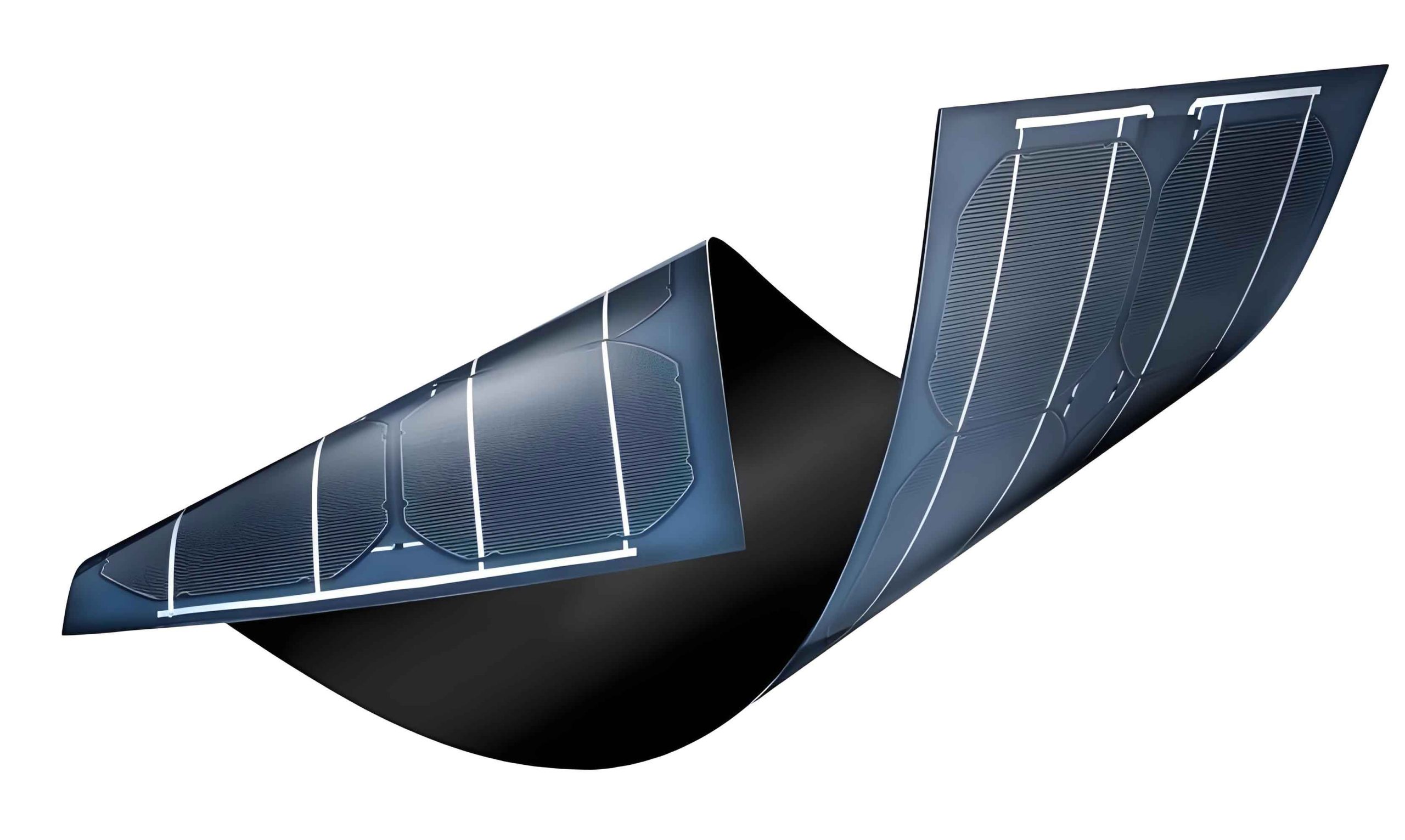
The pursuit of sustainable energy solutions has placed thin film solar panel technology at the forefront of innovation. Among various types, copper indium gallium selenide (CIGS) based thin film solar panels offer promising efficiency and material usage advantages. However, the manufacturing process, specifically the chemical bath deposition (CBD) used to form the cadmium sulfide (CdS) buffer layer, introduces a significant environmental challenge: the generation of wastewater containing toxic heavy metals, primarily cadmium. With increasing global regulatory pressure on heavy metal pollution and a strategic push towards a circular economy, achieving zero liquid discharge (ZLD) for such wastewater streams is no longer an option but a necessity. This discussion outlines a comprehensive technical pathway for treating and fully reclaiming cadmium-laden wastewater from a thin film solar panel production facility, ensuring environmental protection and resource conservation.
The imperative for ZLD is particularly acute for facilities located in environmentally sensitive regions, such as upstream of major river systems or near aquatic reserves. Cadmium, a persistent and bioaccumulative toxin, poses severe risks to aquatic life and human health through the food chain. Therefore, a discharge-based approach, even with advanced treatment, carries inherent long-term ecological risks. The goal must shift from mere compliance to complete elimination of effluent, transforming wastewater from a liability into a recoverable resource. For the thin film solar panel industry, this is a critical step in aligning its green energy product with a fully sustainable manufacturing lifecycle.
Wastewater Sources and Characteristics in Thin Film Solar Panel Production
In the context of CIGS thin film solar panel fabrication, the primary source of cadmium contamination is the CBD process. This wet-chemical technique involves the controlled decomposition of thiourea in an alkaline ammonia medium containing cadmium ions (e.g., from cadmium sulfate) to deposit a thin CdS film on the substrate. After each deposition cycle, the spent chemical bath, now a concentrated waste stream, must be replaced. Subsequently, the coated panels undergo rinsing with high-purity water to remove residual chemicals, generating a more dilute but still contaminated stream.
The two resulting wastewater streams—spent CBD bath and CBD rinse water—differ markedly in their pollutant concentrations, yet both are challenging. The spent bath is a complex matrix with high levels of cadmium, ammonia, and organic compounds (notably unreacted or decomposed thiourea products), while the rinse water is a diluted version. The key characteristics are summarized below:
| Wastewater Stream | Cadmium (Cd²⁺) | Ammonia-N (NH₃-N) | Chemical Oxygen Demand (COD) | Key Features |
|---|---|---|---|---|
| Spent CBD Bath | > 10 mg/L | > 3000 mg/L | > 3000 mg/L | High concentration, complex matrix, low biodegradability, alkaline pH. |
| CBD Rinse Water | ~0.5 – 1.0 mg/L | ~150 – 300 mg/L | ~150 – 300 mg/L | Dilute but significant volume, contains same pollutants at lower levels. |
The core chemical reaction in the CBD process that dictates the pollutants present is:
$$ \text{Cd}^{2+} + \text{SC(NH}_2)_2 + 4\text{OH}^- \rightarrow \text{CdS} \downarrow + \text{CN}_2^{2-} + 4\text{H}_2\text{O} $$
This reaction, while forming the desired CdS layer, leaves behind excess cadmium, ammonia from the alkaline milieu, and residual thiourea or its by-products like cyanamide ($\text{CN}_2^{2-}$), contributing to the high COD. The presence of high ammonia and organics alongside heavy metals makes conventional treatment insufficient for ZLD, as they can foul downstream membrane and evaporation systems. A robust pretreatment sequence is therefore paramount.
Technical Roadmap for Zero Liquid Discharge
The overarching strategy for ZLD in thin film solar panel wastewater management is a combination of targeted pretreatment, membrane concentration, and thermal crystallization. The logic is sequential: first, remove or reduce components that hinder efficient membrane operation (ammonia, cadmium, organics); second, use membrane filtration to produce a high-quality permeate for reuse and concentrate the remaining salts; third, evaporate the concentrated brine to solid salts for disposal, recovering the last portion of clean water. The integrated process flow is designed to handle the two distinct streams appropriately before combining them.
1. Pretreatment for Stream Segregation and Conditioning
The spent bath and rinse water are pretreated separately to mitigate their high-strength characteristics.
- For Spent CBD Bath (High-Strength Pretreatment):
- Hydrolysis & Precipitation: The bath is first heated and its pH adjusted. Under alkaline and elevated temperature conditions, a significant portion of thiourea hydrolyzes, generating sulfide ions which precipitate some cadmium as CdS. Simultaneously, cadmium hydroxide forms.
$$ \text{SC(NH}_2)_2 + 2\text{OH}^- \rightarrow \text{S}^{2-} + \text{CN}_2^{2-} + 2\text{H}_2\text{O} $$
$$ \text{Cd}^{2+} + \text{S}^{2-} \rightarrow \text{CdS} \downarrow $$
$$ \text{Cd}^{2+} + 2\text{OH}^- \rightarrow \text{Cd(OH)}_2 \downarrow $$
This step removes a substantial fraction of cadmium, protecting the next critical unit. - Ammonia Stripping (Steam/Air): The supernatant, still laden with ammonia, is fed to a stripping tower. The pH is raised further (to >11) to shift the ammonium-ammonia equilibrium towards gaseous ammonia.
$$ \text{NH}_4^+ + \text{OH}^- \rightleftharpoons \text{NH}_3 \uparrow + \text{H}_2\text{O} $$
Steam or air is introduced, stripping the ammonia from the water. The vapor is condensed and absorbed to produce a recoverable ammonia solution (~16%), which can potentially be purified and reused in the thin film solar panel process, closing an internal material loop.
- Hydrolysis & Precipitation: The bath is first heated and its pH adjusted. Under alkaline and elevated temperature conditions, a significant portion of thiourea hydrolyzes, generating sulfide ions which precipitate some cadmium as CdS. Simultaneously, cadmium hydroxide forms.
- For CBD Rinse Water (Low-Strength Pretreatment):
This stream undergoes coagulation and flocculation to remove suspended solids and a portion of metals before joining the main treatment train.
2. Combined Treatment for Membrane Readiness
The pretreated streams are combined in a mixing tank. The combined effluent now has reduced but still challenging levels of cadmium and organics. To meet the strict inlet criteria for sensitive reverse osmosis membranes, further polishing is required.
- Enhanced Cadmium Removal: A heavy metal precipitant (e.g., a specialized organic sulfide or dithiocarbamate) is added to sequester residual dissolved cadmium ions into an insoluble complex, followed by flocculation. The target is to bring cadmium below 0.05 mg/L.
- Advanced Oxidation for Organics: To degrade persistent thiourea derivatives and lower COD, a Fenton oxidation process is employed. This involves adding ferrous iron ($\text{Fe}^{2+}$) and hydrogen peroxide ($\text{H}_2\text{O}_2$) under acidic conditions to generate highly reactive hydroxyl radicals ($\cdot\text{OH}$).
$$ \text{Fe}^{2+} + \text{H}_2\text{O}_2 \rightarrow \text{Fe}^{3+} + \cdot\text{OH} + \text{OH}^- $$
These radicals non-selectively oxidize organic compounds, ultimately breaking them down to $\text{CO}_2$, $\text{N}_2$, and water. The resulting $\text{Fe}^{3+}$ also acts as a coagulant, aiding in sludge formation.
3. Membrane Concentration Cascade
With pollutants effectively pretreated, the water enters the membrane concentration stage, which is the heart of the water recovery system. A multi-barrier approach ensures high-quality permeate and maximizes system recovery.
| Membrane Unit | Primary Function | Mechanism | Outcome |
|---|---|---|---|
| Multi-Media Filter (MMF) | Coarse removal of suspended solids and residual floc. | Depth filtration through layers of sand, anthracite, etc. | Protects downstream UF membranes from fouling. |
| Ultrafiltration (UF) | Removal of colloids, microbes, and macromolecules. | Size exclusion (pore size ~0.01-0.1 µm). | Produces a clarified feed for RO, significantly reducing SDI. |
| Reverse Osmosis (RO) | Primary desalination and pollutant rejection. | Solution-diffusion and electrostatic repulsion against ions. | Produces high-quality permeate (>95% water recovery). Rejects >99% of ions, including any trace cadmium. |
| Diaphragm Tube RO (DTRO) | Concentration of RO brine. | Specialized RO for high-salinity, high-fouling feeds. Operates at very high pressures. | Further concentrates the brine stream by 4-6x, drastically reducing volume for evaporation. |
The rejection of cadmium ions by RO membranes can be described by a combination of sieving and Donnan (charge) exclusion mechanisms. The separation performance is often evaluated using the observed rejection ($R_{obs}$):
$$ R_{obs} = \left(1 – \frac{C_p}{C_f}\right) \times 100\% $$
where $C_p$ is the permeate concentration and $C_f$ is the feed concentration. For a well-conditioned feed, RO can achieve $R_{obs}$ for cadmium ions exceeding 99.9%, producing permeate with cadmium levels well below 0.005 mg/L.
4. Thermal Evaporation & Crystallization
The final concentrate from the DTRO unit, a highly saline brine containing the concentrated salts and the last vestiges of non-volatile contaminants, is sent to a thermal evaporator. Mechanical Vapor Recompression (MVR) evaporators are energy-efficient for this duty. Here, water is boiled off under vacuum, condensed, and added to the reuse pool. The process continues until the dissolved solids precipitate out as crystals, forming a mixed salt sludge or “evaporative residue.” This solid residue, encapsulating the heavy metals, is dewatered and handled as hazardous solid waste for secure disposal. This step completes the liquid discharge cycle—all incoming wastewater has been converted into reusable water and a solid waste, achieving ZLD.
Plant-Wide Water Reuse Strategy
The success of a ZLD system in thin film solar panel manufacturing hinges not just on treatment, but on strategic reintegration of the recovered water. A segregated reuse plan ensures system reliability and process safety.
1. Reuse of Treated Cadmium Wastewater: The high-purity permeate from the RO/DTRO/MVR system, meeting or exceeding drinking water standards, is directed to a dedicated storage tank. This water is used exclusively as feedwater for the on-site ultrapure water (UPW) generation system that supplies the CBD process line itself. This creates a closed-loop for the most critical and sensitive water circuit within the thin film solar panel factory. Any shortfall in this loop is made up with fresh demineralized water.
2. Reuse of Other Non-Hazardous Wastewater: Other process rinses in the thin film solar panel line (e.g., for glass cleaning, other layer rinses) typically generate wastewater containing only traces of solids and no heavy metals. This stream is treated via simple clarification and filtration and is reused as make-up water for cooling towers or other non-process applications.
The mass balance benefits are significant. For a typical facility, implementing this scheme can lead to substantial freshwater savings and complete elimination of hazardous wastewater discharge. The following table illustrates a conceptual water balance:
| Stream | Volume (m³/day) | Destination/Reuse |
|---|---|---|
| Cadmium Wastewater Generated | 484 | Input to ZLD system. |
| Permeate from ZLD System | ~465 (96% recovery) | Feed to CBD UPW system. |
| Other Process Wastewater | 1083 | Treated and sent to cooling towers. |
| Freshwater Make-up Required | Reduced by ~1551 | Net saving due to reuse. |
| Liquid Effluent Discharge | 0 | Achieved Zero Liquid Discharge. |
Critical Considerations and Optimization Potential
While the described ZLD pathway is technically viable for thin film solar panel production, its successful long-term implementation requires attention to several operational nuances and optimization opportunities.
1. Ensuring Robust Cadmium Pretreatment: The efficiency of the initial precipitation steps is critical. The fine particle size of CdS and Cd(OH)₂ demands optimized selection of coagulants and flocculants to ensure fast settling and effective solid-liquid separation. Jar testing and pilot studies are essential to determine the correct chemical dosing and sequence for the specific wastewater matrix of the thin film solar panel factory.
2. Stability of Production Water Quality: The CBD process in thin film solar panel manufacturing is highly sensitive to water quality. Therefore, the reclaimed water stream must be monitored with rigorous online instrumentation (e.g., for conductivity, TOC, specific ions). A robust control system should automatically divert any off-spec permeate back to the treatment train, preventing it from entering the reuse storage tank and safeguarding production integrity.
3. Maximizing Resource Recovery – The Ammonia Loop: An advanced opportunity lies in refining the recovered ammonia solution. Instead of merely selling it as a crude product, on-site purification (e.g., via distillation) could upgrade it to the technical grade required for the CBD process itself. This would close a major material loop, reducing raw material procurement costs and minimizing the plant’s overall chemical footprint, making the thin film solar panel manufacturing process more sustainable and cost-effective.
4. Management of Membrane Concentrates and Solid Residues: The anti-scalant chemicals used in RO systems and the mixed salts in the evaporator residue require careful management. Selection of environmentally benign antiscalants and exploration of potential resource recovery from the salt mix (e.g., separation of less contaminated salts) are areas for ongoing research to further enhance the sustainability profile of the ZLD system for the thin film solar panel industry.
Conclusion
The path to sustainable thin film solar panel manufacturing necessitates confronting its environmental footprints head-on. The generation of cadmium-containing wastewater represents a significant challenge that can be transformed into an opportunity for innovation and leadership in industrial water stewardship. The integrated ZLD technical route—combining sophisticated pretreatment, a multi-stage membrane cascade, and final thermal concentration—provides a proven and effective framework to eliminate aqueous discharge of heavy metals. By converting all wastewater into high-quality process reuse water and a minimal volume of stable solid waste, thin film solar panel producers can fundamentally decouple their operations from environmental water impacts. This not only ensures regulatory future-proofing and protects sensitive ecosystems but also enhances water security and operational efficiency. As the industry evolves, the adoption of such comprehensive ZLD strategies will be a defining marker of truly sustainable thin film solar panel production, ensuring that the promise of clean energy is fulfilled throughout the entire product lifecycle.