
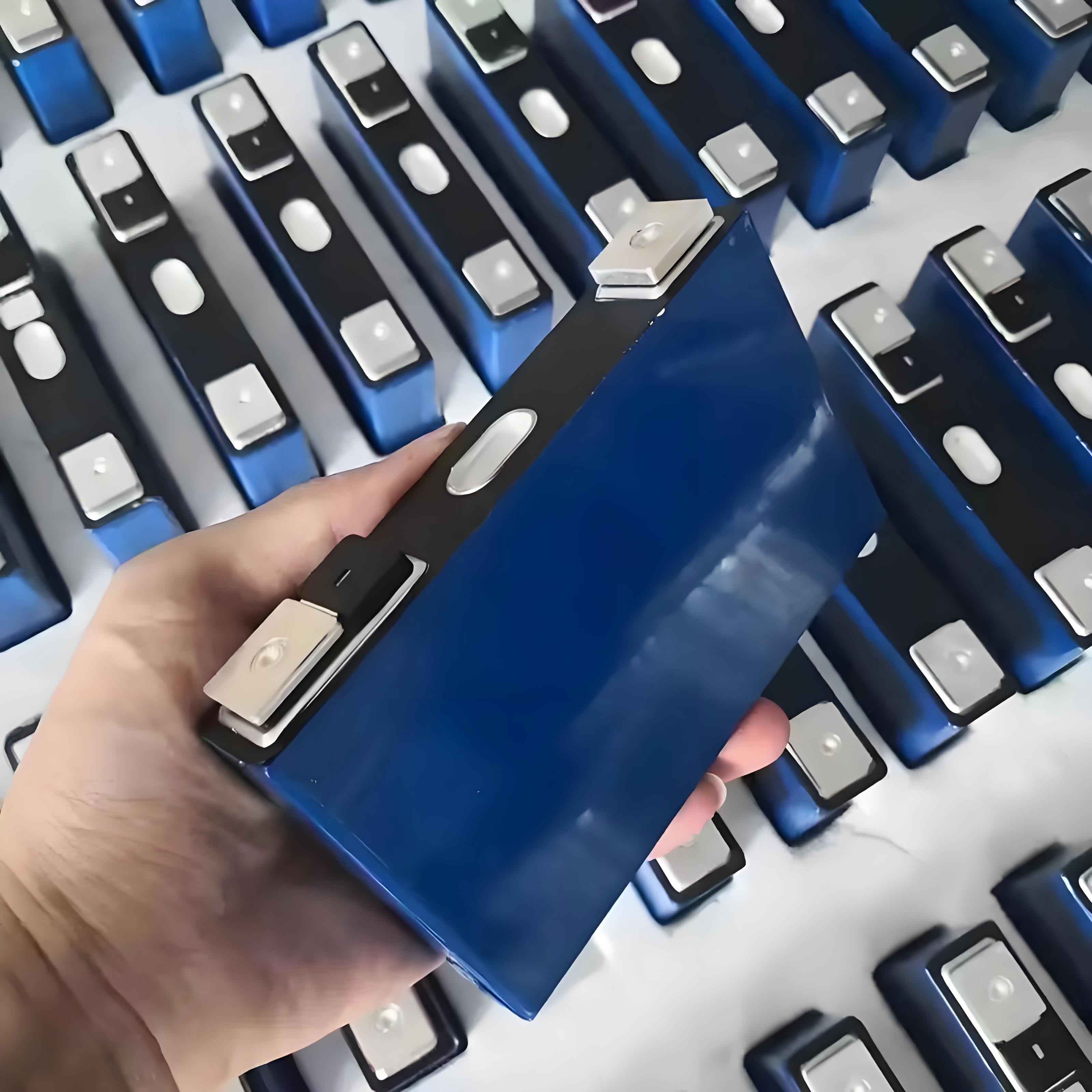
The rapid proliferation of LiFePO4 batteries in electric vehicles and energy storage systems has generated growing concerns about recycling spent cathode/anode materials. This review systematically analyzes state-of-the-art recovery technologies and high-value applications for LiFePO4 battery components, focusing on innovative methodologies that address both economic viability and environmental sustainability.
1. Pyrometallurgical Recovery of LiFePO4 Cathodes
Pyrometallurgical approaches employ high-temperature treatments (>800°C) to decompose LiFePO4 into separable phases. The general reaction can be expressed as:
$$ 2\text{LiFePO}_4 + \text{C} \xrightarrow{\Delta} \text{Li}_2\text{O} + 2\text{Fe} + \text{P}_2\text{O}_5 + \text{CO}_2 $$
| Additive | Temperature (°C) | Li Recovery (%) | Fe Phase |
|---|---|---|---|
| Na₂CO₃ | 750 | 99.2 | Fe-P alloy |
| CaO | 900 | 92.4 | Fe₃(PO₄)₂ |
| SiO₂ | 850 | 87.6 | Fe₂SiO₄ |
Recent advances demonstrate that molten salt-assisted roasting significantly enhances lithium recovery from LiFePO4 batteries. For instance, Na₂SO₄-NaCl eutectic systems enable selective lithium extraction at reduced temperatures (600-650°C) through ion-exchange mechanisms:
$$ \text{LiFePO}_4 + \text{Na}^+ \rightarrow \text{NaFePO}_4 + \text{Li}^+ $$
2. Hydrometallurgical Extraction Strategies
Acid leaching remains the predominant method for LiFePO4 battery recycling, with H₂SO₄-H₂O₂ systems showing superior leaching efficiency:
$$ 2\text{LiFePO}_4 + 4\text{H}_2\text{SO}_4 + \text{H}_2\text{O}_2 \rightarrow 2\text{Li}^+ + 2\text{Fe}^{3+} + 2\text{PO}_4^{3-} + 4\text{SO}_4^{2-} + 4\text{H}_2\text{O} $$
| Leaching Agent | Oxidant | Li Recovery (%) | Time (h) |
|---|---|---|---|
| 2M H₂SO₄ | 3% H₂O₂ | 98.7 | 2 |
| 1.5M HCl | 0.5M NaClO | 95.2 | 3 |
| Organic acids | O₂ oxidation | 89.4 | 5 |
Emerging mechanochemical processes using organic acids (e.g., oxalic acid) demonstrate exceptional selectivity:
$$ \text{LiFePO}_4 + \text{H}_2\text{C}_2\text{O}_4 \rightarrow \text{Li}_2\text{C}_2\text{O}_4 + \text{FeC}_2\text{O}_4 + \text{H}_3\text{PO}_4 $$
3. Direct Regeneration of LiFePO4 Cathodes
Solid-state relithiation techniques enable direct regeneration of degraded LiFePO4 batteries through defect engineering:
$$ \text{Li}_{1-x}\text{FePO}_4 + x\text{Li}^+ + xe^- \rightarrow \text{LiFePO}_4 $$
| Method | Capacity Retention (%) | Cycle Life | Energy Consumption (kWh/kg) |
|---|---|---|---|
| Electrochemical | 98.5 | 500 cycles | 0.8 |
| Hydrothermal | 95.2 | 300 cycles | 1.2 |
| Molten Salt | 97.1 | 450 cycles | 2.5 |
4. Anode Graphite Upcycling
Spent graphite from LiFePO4 batteries demonstrates remarkable potential for functional material synthesis:
$$ \text{Graphite} + \text{HNO}_3 \rightarrow \text{Graphene Oxide} + \text{NO}_x + \text{H}_2\text{O} $$
| Application | Specific Surface Area (m²/g) | Conductivity (S/cm) | Performance Metric |
|---|---|---|---|
| Supercapacitors | 1,520 | 4,200 | 325 F/g @1A/g |
| Catalyst Support | 890 | 1,850 | TOF = 0.45 s⁻¹ |
| Li-ion Anodes | 410 | 3,100 | 372 mAh/g |
5. Challenges and Future Perspectives
The recycling of LiFePO4 batteries faces fundamental challenges described by the following efficiency equation:
$$ \eta_{\text{total}} = \prod_{i=1}^n \eta_i = \eta_{\text{collection}} \times \eta_{\text{disassembly}} \times \eta_{\text{separation}} \times \eta_{\text{purification}} $$
| Technical Barrier | Current Status | 2030 Target |
|---|---|---|
| Metal Recovery Rate | Li: 85%, Fe: 92% | Li: 95%, Fe: 98% |
| Energy Consumption | 8-12 kWh/kg | <5 kWh/kg |
| Recycling Cost | $2.1/kg | $1.3/kg |
Future developments in LiFePO4 battery recycling require synergistic advances in:
- Automated sorting systems using AI-powered recognition
- Solvometallurgical processes with ionic liquid media
- Closed-loop regeneration of electrolyte components
- Multi-scale computational modeling for process optimization
This comprehensive analysis confirms that sustainable recycling of LiFePO4 batteries can achieve >90% material recovery efficiency while reducing carbon footprint by 40-60% compared to virgin material production. Continued innovation in separation technologies and value-added applications will be crucial for establishing circular economy models in the lithium-ion battery industry.