
In recent years, the integration of renewable energy sources into building systems has gained significant attention due to the growing emphasis on energy efficiency and environmental sustainability. Among these, solar energy stands out as a abundant and clean resource. I have been exploring innovative ways to harness solar power for building applications, and in this work, I focus on a novel solar photovoltaic fresh air system. This system combines photovoltaic power generation with a fresh air ventilation system, utilizing both the photoelectric and photothermal effects of solar energy. By integrating photovoltaic panels with a building’s fresh air supply, this solar system not only generates electricity but also preheats incoming outdoor air during winter, thereby improving indoor air quality and reducing building energy consumption. The concept of a solar system like this aligns with the broader goal of achieving net-zero energy buildings, where renewable energy sources play a crucial role.
The core idea behind this solar system is to maximize the utilization of solar irradiance. Typically, photovoltaic panels convert only a portion of incident solar energy into electricity, while the rest is dissipated as heat, which can elevate panel temperature and reduce electrical efficiency. By recovering this waste heat to preheat fresh air, the overall efficiency of the solar system is enhanced. This approach represents a significant advancement in building-integrated photovoltaic/thermal (BIPV/T) systems. In this study, I designed and constructed an experimental platform to evaluate the performance of such a solar photovoltaic fresh air system under winter conditions. The system consists of photovoltaic panels arranged to form an air channel through which outdoor air is drawn, heated by the thermal energy from the panel backsides, and then supplied to indoor spaces. This configuration transforms the building envelope into an active energy-generating and heat-recovery component, contributing to the overall sustainability of the building.
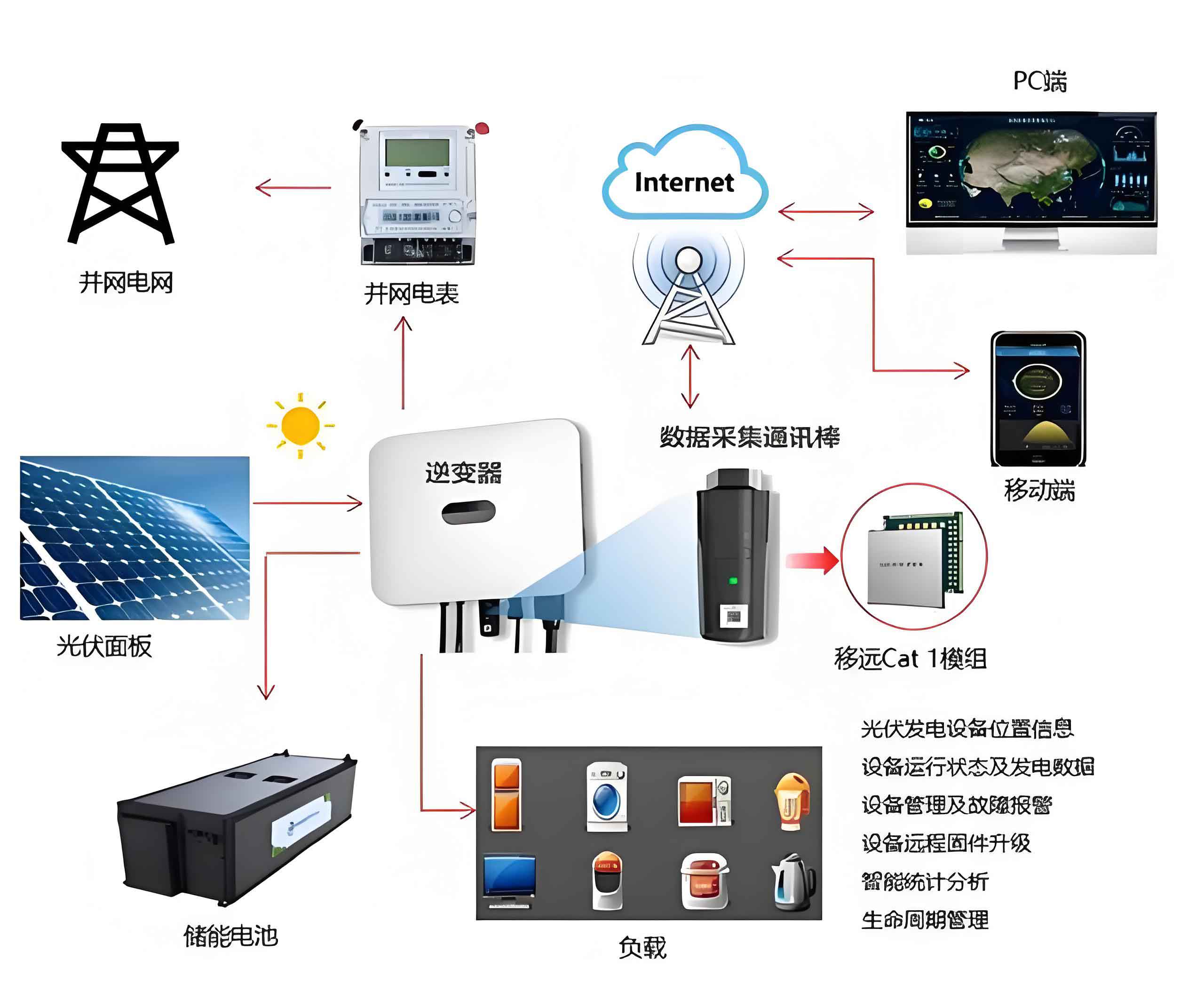
The experimental setup was installed on the rooftop of a building to simulate real-world conditions. The solar system comprised monocrystalline silicon photovoltaic panels with a tilt angle set equal to the local latitude to optimize solar energy capture. These panels were mounted on an insulated backing to create a sealed air passage. Fans were used to draw outdoor air through this channel, allowing it to absorb heat from the photovoltaic panels. Various sensors were deployed to measure key parameters, including solar irradiance, air temperatures at the inlet and outlet, photovoltaic panel voltage and current, and airflow rate. Data was recorded at regular intervals to assess system performance over time. The design of this solar system emphasizes simplicity and practicality, making it suitable for integration into both new and existing buildings. By leveraging the dual functionality of the photovoltaic panels, this solar system addresses two critical aspects of building performance: energy generation and indoor environmental quality.
To quantitatively evaluate the performance of this solar system, several efficiency metrics were defined. The solar energy input to the system is calculated as:
$$Q_{\text{solar}} = q_{\text{solar}} A_c$$
where \(Q_{\text{solar}}\) is the total solar energy incident on the photovoltaic panel surface, \(q_{\text{solar}}\) is the solar irradiance measured in W/m², and \(A_c\) is the surface area of the panel. The heat gain by the fresh air as it passes through the channel is given by:
$$Q_x = V \rho c_p (T_{\text{out}} – T_{\text{in}})$$
where \(Q_x\) is the thermal energy transferred to the air in watts, \(V\) is the volumetric airflow rate in m³/s, \(\rho\) is the air density (approximately 1.2 kg/m³), \(c_p\) is the specific heat capacity of air (1005 J/(kg·K)), and \(T_{\text{out}}\) and \(T_{\text{in}}\) are the outlet and inlet air temperatures in Kelvin, respectively. The electrical power output from the photovoltaic panels is determined by:
$$P = UI$$
with \(P\) being the power in watts, \(U\) the voltage in volts, and \(I\) the current in amperes. Based on these quantities, the thermal efficiency of the solar system is defined as the ratio of heat gain to solar input:
$$\eta_t = \frac{Q_x}{Q_{\text{solar}}}$$
Similarly, the electrical efficiency is:
$$\eta_e = \frac{P}{Q_{\text{solar}}}$$
To account for the different energy qualities of heat and electricity, a primary energy efficiency metric is adopted. This reflects the overall energy savings achieved by the solar system compared to conventional energy sources. It is expressed as:
$$\eta_f = \eta_t + \frac{\eta_e}{\eta_{\text{power}}}$$
where \(\eta_{\text{power}}\) is the efficiency of conventional power generation, taken as 0.38 for typical thermal power plants. This comprehensive metric allows for a fair comparison of the solar system’s performance against standard energy systems.
The experimental data collected over a typical winter day revealed insightful trends regarding the solar system’s operation. Solar irradiance varied throughout the day, influencing both electrical and thermal outputs. The following table summarizes the key measured parameters and calculated efficiencies during the test period:
| Time | Solar Irradiance (W/m²) | Electrical Power (W) | Airflow Rate (m³/h) | Inlet Temperature (°C) | Outlet Temperature (°C) | Thermal Efficiency (%) | Electrical Efficiency (%) | Primary Energy Efficiency (%) |
|---|---|---|---|---|---|---|---|---|
| 10:00 | 550 | 82.1 | 93 | 11.0 | 18.0 | 19.0 | 10.7 | 50.3 |
| 10:30 | 620 | 85.3 | 93 | 12.5 | 20.0 | 21.5 | 11.2 | 53.6 |
| 11:00 | 700 | 88.7 | 93 | 14.0 | 22.5 | 23.1 | 11.8 | 56.2 |
| 11:30 | 780 | 92.5 | 93 | 15.5 | 25.0 | 25.3 | 12.5 | 59.4 |
| 12:00 | 850 | 95.8 | 93 | 17.0 | 27.5 | 27.8 | 13.1 | 62.8 |
| 12:30 | 860 | 96.8 | 93 | 17.5 | 28.0 | 28.9 | 13.5 | 65.1 |
| 13:00 | 820 | 94.2 | 93 | 17.0 | 26.5 | 26.5 | 12.9 | 61.4 |
| 13:30 | 750 | 91.0 | 93 | 16.0 | 24.5 | 24.7 | 12.4 | 58.6 |
| 14:00 | 680 | 87.5 | 93 | 14.5 | 22.0 | 22.3 | 11.9 | 55.2 |
| 14:30 | 600 | 84.0 | 93 | 13.0 | 19.5 | 20.1 | 11.3 | 52.0 |
From the table, it is evident that the solar system’s performance is closely tied to solar irradiance. As irradiance increased, both electrical power output and air temperature rise improved, leading to higher efficiencies. The average electrical efficiency over the test period was 12.7%, with a maximum of 15.5% observed during peak irradiance. This indicates that the photovoltaic panels operated effectively within expected ranges. The thermal efficiency averaged 24%, reaching up to 28.9%, demonstrating significant heat recovery from the panel backsides. Consequently, the primary energy efficiency, which combines both effects, averaged 57.3%, with peaks near 70%. These values underscore the advantage of this integrated solar system over standalone photovoltaic or thermal systems.
The temperature distribution along the photovoltaic panel backsides provided further insights into the heat transfer process. Measurements taken at the inlet, middle, and outlet sections of the air channel showed a gradual increase in temperature from inlet to outlet, consistent with the air being heated as it flowed. The temperature at the panel surface directly influenced the electrical efficiency, as photovoltaic performance degrades with increasing temperature. By actively cooling the panels through air flow, the solar system mitigated this temperature rise, thereby enhancing electrical output compared to non-ventilated panels. This synergistic effect is a key benefit of the solar photovoltaic fresh air system, where the thermal management improves both energy generation and heat utilization.
To delve deeper into the system dynamics, I analyzed the relationship between solar irradiance and the various efficiency metrics. The electrical efficiency \(\eta_e\) can be expressed as a function of panel temperature, which in turn depends on irradiance and airflow. A simplified model for the electrical efficiency of photovoltaic panels is given by:
$$\eta_e = \eta_{\text{ref}} [1 – \beta (T_{\text{panel}} – T_{\text{ref}})]$$
where \(\eta_{\text{ref}}\) is the efficiency at reference conditions (typically 25°C), \(\beta\) is the temperature coefficient (around 0.004 per °C for silicon panels), \(T_{\text{panel}}\) is the panel temperature, and \(T_{\text{ref}}\) is the reference temperature. In this solar system, the airflow reduces \(T_{\text{panel}}\), leading to higher \(\eta_e\) compared to stagnant air conditions. Similarly, the thermal efficiency \(\eta_t\) is influenced by the heat transfer coefficient between the panel and the air, which can be approximated using convective heat transfer correlations. For laminar flow in a channel, the Nusselt number is relatively constant, and the heat transfer rate is proportional to the temperature difference. Thus, as solar irradiance increases, the panel temperature rises, enhancing the temperature driving force for heat transfer to the air, but this is balanced by the cooling effect of the airflow.
The integration of this solar system into building ventilation has broader implications for energy savings and indoor environmental quality. By preheating fresh air, the system reduces the heating load on conventional HVAC systems, particularly in winter. The energy saved can be quantified by comparing the heat provided by the solar system to that which would otherwise be supplied by a boiler or heat pump. Assuming a conventional heating system with an efficiency of 90%, the equivalent primary energy savings from the thermal output of the solar system is substantial. Moreover, the electrical power generated can offset building electricity consumption, further reducing reliance on the grid. When combined, these contributions make the solar system a compelling solution for net-zero energy buildings.
Another aspect worth considering is the scalability and adaptability of this solar system. The design can be modified for different climatic conditions and building types. For instance, in summer, the airflow could be used for nocturnal cooling or integrated with evaporative cooling techniques. The solar system could also be combined with energy storage systems, such as thermal mass or batteries, to address intermittency issues. Furthermore, the use of advanced photovoltaic materials, like perovskite cells, could boost electrical efficiency, while optimizing the air channel geometry could enhance heat transfer. These potential improvements highlight the versatility of the solar photovoltaic fresh air system as a platform for continuous innovation.
In terms of economic feasibility, the solar system offers long-term benefits through reduced energy bills and potential incentives for renewable energy installations. The initial investment includes the cost of photovoltaic panels, insulation, fans, and controls, but this can be offset by savings over the system’s lifespan. Additionally, by serving as both a building envelope component and an energy system, it reduces material costs compared to separate installations. Lifecycle assessment studies could further validate the environmental benefits, such as reduced carbon emissions due to lower fossil fuel consumption. Thus, this solar system not only performs well technically but also aligns with economic and environmental goals.
The experimental results confirm that the solar photovoltaic fresh air system effectively harnesses solar energy for both electricity generation and space heating. The average performance metrics demonstrate its superiority over conventional systems. However, there are limitations to address. For example, on cloudy days or during nights, the system’s output diminishes, necessitating backup systems. To mitigate this, hybrid approaches can be adopted, where the solar system works in tandem with traditional HVAC equipment. For instance, when solar irradiance is low, the fresh air can be preheated partially by the solar system and then further heated by a heat pump. This ensures consistent indoor comfort while maximizing renewable energy use.
Looking ahead, future research could explore advanced control strategies for the solar system, such as variable airflow rates based on irradiance and temperature, to optimize efficiency dynamically. Additionally, long-term monitoring across different seasons would provide a comprehensive performance database. Integration with smart building management systems could enable predictive control, further enhancing energy savings. The concept of this solar system can also be extended to other applications, like water heating or industrial process heat, showcasing its potential beyond residential buildings.
In conclusion, the solar photovoltaic fresh air system represents a significant step forward in building-integrated renewable energy solutions. By combining photoelectric and photothermal conversion, it achieves high overall efficiency and contributes to building energy conservation. The experimental study under winter conditions validated its performance, with an average electrical efficiency of 12.7%, thermal efficiency of 24%, and primary energy efficiency of 57.3%. These results underscore the value of such a solar system in reducing energy consumption, improving indoor air quality, and promoting sustainability. As the world moves towards greener building practices, innovative systems like this will play a pivotal role in shaping the future of construction and energy use.