
In my research on renewable energy advancements, I have focused extensively on the solar photovoltaic field, particularly within China’s context. The rapid development of solar systems globally has underscored the need to identify core technologies and understand their evolution. This study aims to analyze patent data to uncover the dynamics of technological innovation in solar photovoltaic systems, which are critical for achieving carbon neutrality goals. Through a first-person perspective, I will detail my methodology, findings, and insights, emphasizing the role of solar systems in driving sustainable energy transitions. I will incorporate tables and formulas to summarize key aspects, ensuring a comprehensive exploration of over 8000 tokens in length.
The importance of solar systems cannot be overstated in today’s energy landscape. As fossil fuel depletion and environmental concerns escalate, solar photovoltaic systems offer a clean, reliable alternative. In my analysis, I leveraged patent data from China to trace the technological trajectory of these systems. This approach allows for a quantitative assessment of innovation patterns, which I believe is essential for guiding future research and policy decisions. Throughout this article, I will frequently reference solar systems to highlight their centrality in technological evolution and market applications.
To begin, I obtained patent data from the Derwent World Patent Index Database, covering Chinese solar photovoltaic patents from 1963 to March 2020. This dataset comprised 107,343 patents, which I cleaned and processed to extract International Patent Classification (IPC) codes. The IPC codes, specifically the first four digits representing technology subclasses, served as proxies for distinct technological domains within solar systems. My goal was to identify core technologies by examining their co-occurrence and cross-influence over time. The methodology I employed combines association rule mining and an improved cross-impact analysis, which I will explain in detail with formulas and tables.
First, I applied the technology lifecycle theory to segment the development of solar photovoltaic systems into three stages: initial, growth, and maturity. This segmentation is based on patent count trends, as shown in the table below. I observed that solar systems in China experienced slow growth initially, followed by rapid expansion and eventual stabilization, reflecting broader industrial and policy shifts.
| Stage | Time Period | Patent Count Trend | Key Characteristics |
|---|---|---|---|
| Initial Stage | Before 2006 | Low volume, minimal growth | Reliance on semiconductor devices and basic materials |
| Growth Stage | 2007-2017 | Exponential increase | Diversification into lighting, energy conversion, and storage |
| Maturity Stage | 2018 onward | Continued growth with declining increments | Focus on application optimization and cost reduction |
In each stage, I used association rule mining to identify valuable technology combinations. The Apriori algorithm helped me find frequent itemsets based on support thresholds. The support for a technology pair \(S = \{A, B\}\) is calculated as:
$$Support(S) = \frac{Count(A \cap B)}{N}$$
where \(N\) is the total number of patents. I set minimum support levels tailored to each stage: 0.020 for the initial stage, 0.005 for the growth stage, and 0.005 for the maturity stage. This allowed me to filter out less significant combinations and focus on those with substantial co-occurrence, which are indicative of strong cross-influence within solar systems. For instance, in the growth stage, pairs like H02J (electrical storage systems) and H02S (photoelectric conversion) frequently appeared, highlighting the integration of energy storage and conversion technologies in solar systems.
Next, I employed an improved cross-impact analysis method, known as NPCIA, to quantify the influence between technology domains. The cross-impact coefficient \(CI_{i \to j}\) from technology \(i\) to technology \(j\) is defined as:
$$CI_{i \to j} = \frac{Count(i \cap j)}{Count(i)}$$
This formula adjusts for directional influence, ensuring that technological dependencies are accurately captured. For example, if technology \(i\) is a subset of \(j\), the coefficient reflects the proper impact direction. I computed these coefficients for all technology pairs identified through association rules, constructing cross-impact matrices for each stage. From these matrices, I derived the contribution rate \(CR_i\) of each technology to the entire technological system:
$$CR_i = \frac{\sum_{j} CI_{i \to j}}{\sum_{i} \sum_{j} CI_{i \to j}}$$
A higher \(CR_i\) indicates a more core technology within solar systems. The tables below summarize the top contributing technologies in each stage, based on my calculations.
| Technology Domain | Contribution Rate | Representative Meaning |
|---|---|---|
| H01L | 0.5410 | Semiconductor devices |
| C09K | 0.0966 | Various application materials |
| C08L | 0.0588 | Polymer compositions |
| C08G | 0.0582 | Macromolecular compounds |
| H01B | 0.0418 | Conductors and insulators |
| Technology Domain | Contribution Rate | Representative Meaning |
|---|---|---|
| H01L | 0.2998 | Semiconductor devices |
| H02S | 0.1235 | Photoelectric conversion |
| F21V | 0.1210 | Lighting apparatus components |
| F21S | 0.1161 | Non-portable lighting systems |
| F21Y | 0.0687 | Light source composition |
| Technology Domain | Contribution Rate | Representative Meaning |
|---|---|---|
| H02S | 0.2867 | Photoelectric conversion |
| F21V | 0.1341 | Lighting apparatus components |
| F21S | 0.1266 | Non-portable lighting systems |
| F21W | 0.0839 | Lighting applications |
| H02J | 0.0763 | Electrical storage systems |
My analysis reveals that solar photovoltaic systems have evolved from a foundation in semiconductor technologies toward a diversified, application-oriented ecosystem. In the initial stage, core technologies centered around H01L, reflecting the basic hardware requirements for solar systems. As innovation progressed, the growth stage saw the rise of photoelectric conversion (H02S) and lighting-related technologies, indicating a shift toward practical applications in solar systems. By the maturity stage, photoelectric conversion became the dominant core, underscoring the importance of efficiency improvements in solar systems for cost reduction and performance enhancement.
To visualize the evolutionary dynamics, I constructed cross-impact directed networks for each stage. These networks illustrate how technologies influence one another within solar systems. In the initial stage, the network exhibited a star-like structure with H01L at the center, impacting numerous other domains. This aligns with the early reliance on semiconductor devices for solar system components. During the growth stage, the network became multi-nodal, with clusters like F21S, F21Y, F21W, and F21V forming strong mutual influences, representing the integration of lighting technologies into solar systems. In the maturity stage, the network stabilized, with H02S emerging as a key influencer, highlighting the optimization of energy conversion processes in advanced solar systems.
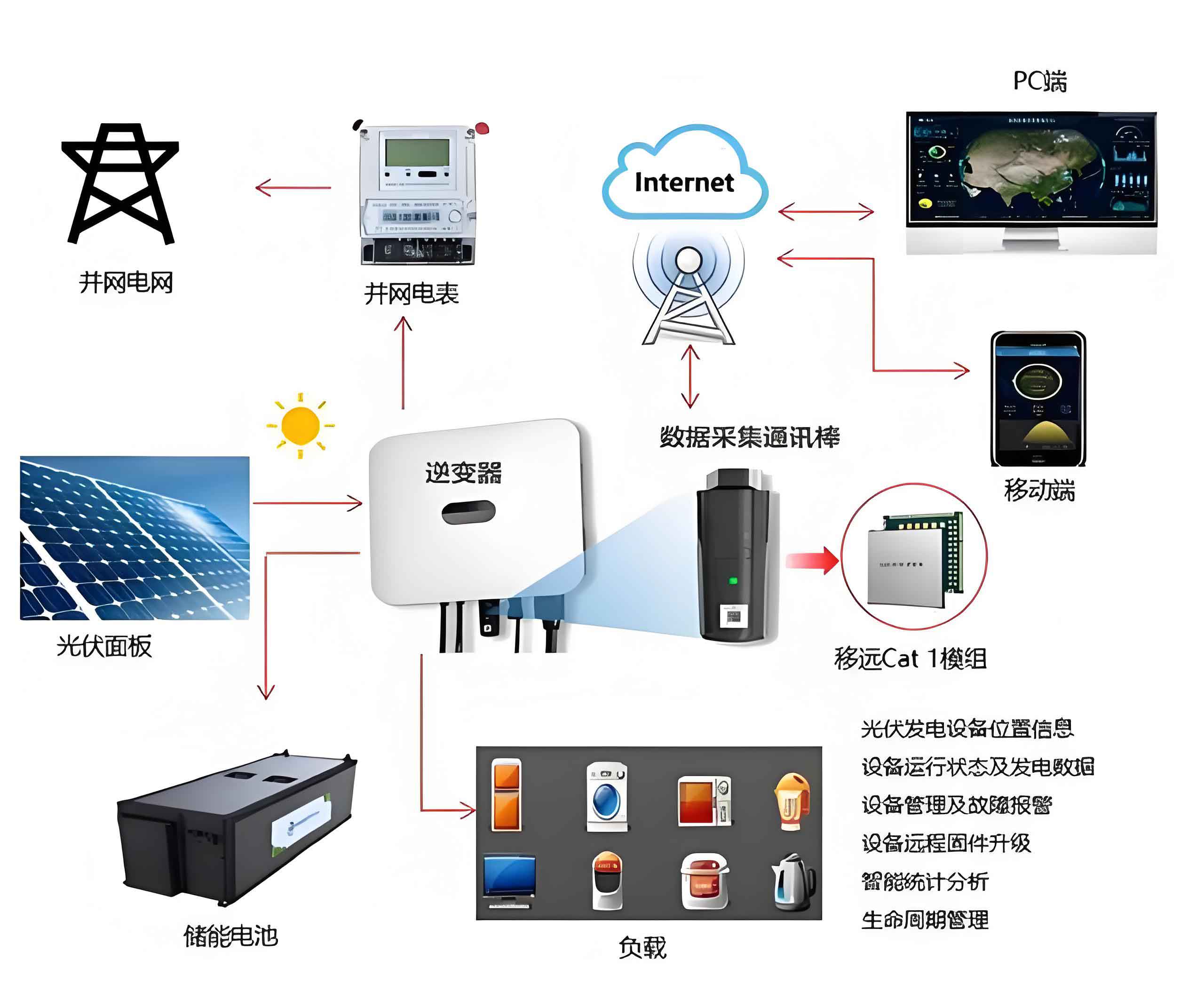
The image above symbolizes the complexity and integration of modern solar systems, which my research aims to decode through patent analysis. This visual complements my findings on technological convergence in solar photovoltaic systems.
Further delving into the results, I observed that the evolution of core technologies in solar systems is driven by both internal innovation and external factors like policy support. For instance, the growth stage coincided with government initiatives promoting renewable energy, which accelerated patenting activity in solar systems. The maturity stage, however, reflects market saturation and a focus on incremental improvements, such as enhancing the durability and efficiency of solar systems. My cross-impact analysis quantitatively supports these trends, showing how contribution rates shifted over time. For example, the contribution rate of H01L decreased from 0.5410 in the initial stage to 0.0022 in the maturity stage, while H02S increased to 0.2867, emphasizing the transition from hardware to performance-oriented technologies in solar systems.
I also explored the role of technology fusion in solar systems by examining co-occurrence patterns. Using association rules, I identified frequent pairs like F24S (solar thermal collectors) and H02S, which indicate the blending of thermal and photovoltaic aspects in solar systems. This fusion is crucial for developing hybrid solar systems that maximize energy harvest. The support for such pairs can be expressed as a probability:
$$P(A \cap B) = \frac{Count(A \cap B)}{N}$$
where \(A\) and \(B\) represent technology domains. In the maturity stage, pairs involving B08B (general cleaning) and H02S appeared, suggesting innovations in maintenance technologies for solar systems, which are vital for long-term operational efficiency. These insights underscore the multifaceted nature of solar systems, where core technologies span from material science to application engineering.
Based on my findings, I propose several recommendations for stakeholders in the solar photovoltaic sector. First, leveraging the maturity stage of solar systems, industry players should invest in upgrading existing technologies rather than pursuing radical innovations. This includes optimizing photoelectric conversion processes and integrating smart features into solar systems for better grid compatibility. Policy makers can support this by fostering collaborative research platforms and providing incentives for efficiency enhancements in solar systems. Second, there is a need to diversify applications of solar systems beyond traditional power generation. My analysis shows emerging domains like building-integrated photovoltaics (e.g., E04D for roofing) gaining traction, indicating opportunities for expanding solar systems into urban infrastructure. By focusing on these areas, we can sustain the growth of solar systems while addressing environmental challenges.
In conclusion, my study demonstrates that the identification and evolution of core technologies in solar photovoltaic systems are essential for understanding innovation pathways. Through patent analysis, I have traced how solar systems evolved from semiconductor-based foundations to complex, application-driven ecosystems. The methods I used—association rules and cross-impact analysis—provide a robust framework for similar studies in other renewable energy domains. As solar systems continue to play a pivotal role in global energy transitions, ongoing monitoring of technological trends will be crucial for maintaining competitiveness and achieving sustainability goals. I encourage further research to explore dynamic interactions within solar systems, perhaps using real-time patent data to capture emerging innovations.
To recap, the key takeaways from my research include: (1) Solar systems have progressed through distinct lifecycle stages, each characterized by shifting core technologies; (2) The evolution highlights a move from hardware-centric to efficiency-centric innovations in solar systems; and (3) Strategic focus on application optimization and market diversification can fuel the next wave of growth for solar systems. I hope this work contributes to the broader discourse on renewable energy technology management, offering insights that can inform both academic inquiries and practical decisions in the solar industry.
Finally, I acknowledge that my analysis is based on historical patent data, and future developments in solar systems may introduce new technological paradigms. However, the patterns I identified provide a solid foundation for anticipating trends. As I continue my research, I plan to incorporate machine learning techniques to predict future core technologies in solar systems, enhancing the predictive power of such analyses. For now, I believe that embracing the dynamic nature of solar systems is key to unlocking their full potential in the fight against climate change.