
In recent years, the rapid development of lithium-ion battery technology has significantly impacted various industries, including the maritime sector. As a researcher and engineer focused on marine energy systems, I have observed a growing interest in adopting lithium-ion batteries for ship propulsion and power storage due to their environmental benefits, low vibration and noise, and flexible layout options. Among these, the LiFePO4 battery stands out for its safety, cost-effectiveness, and performance, making it a prime candidate for marine applications. This article delves into the key technologies involved in configuring marine LiFePO4 battery energy storage systems, drawing from practical experiences and analysis. I will explore the characteristics of LiFePO4 batteries, address potential risks, and present detailed integration and configuration schemes, with a focus on an intelligent unmanned system carrier as a case study. The goal is to provide comprehensive insights for engineers and designers in the field, emphasizing the importance of LiFePO4 battery technology in advancing sustainable maritime operations.
The adoption of LiFePO4 batteries in ships is driven by their superior properties compared to traditional batteries like lead-acid. These batteries offer high energy density, typically ranging from 80 to 200 Wh/kg, which is three to five times that of conventional options. This allows for compact and lightweight energy storage solutions, crucial for space-constrained vessels. Additionally, LiFePO4 batteries exhibit excellent discharge rates, maintaining voltage stability across various loads, and boast a long cycle life—often exceeding 3,000 cycles while retaining capacity. Safety is a paramount concern, and LiFePO4 batteries are known for their thermal stability, reducing risks of combustion or explosion. For instance, thermal runaway tests on LiFePO4 cells under 100% state of charge (SOC) conditions show gas compositions dominated by hydrogen and carbon dioxide, with no oxygen release, indicating a lower ignition risk. The chemical reactions during thermal runaway occur at temperatures around 300°C, below the auto-ignition points of released gases (530°C to 750°C), thereby minimizing fire hazards. This aligns with classification society standards, where LiFePO4 batteries often achieve safety level 2, making them suitable for marine use.
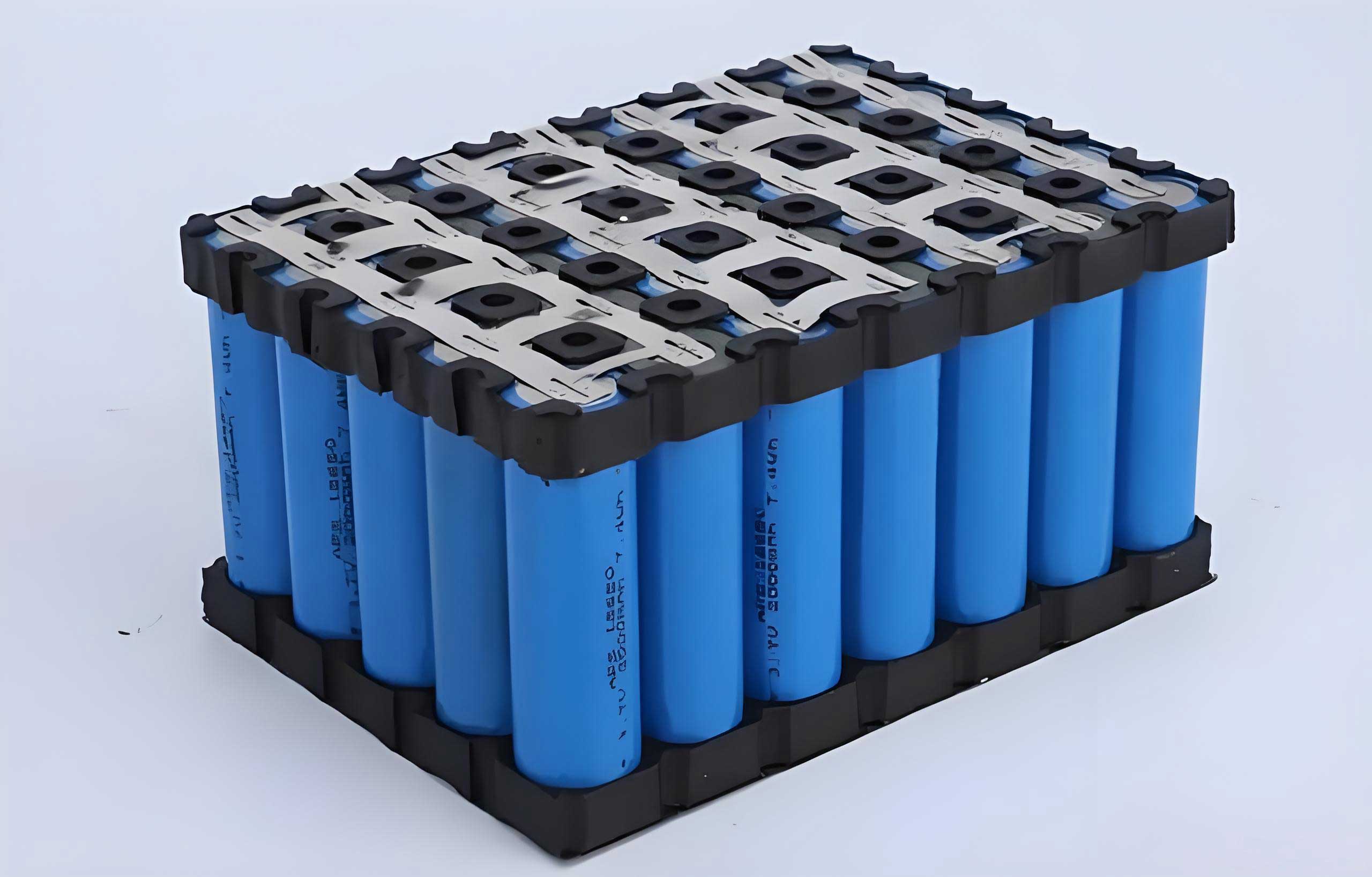
To quantify the advantages of LiFePO4 batteries, let’s consider their energy density and efficiency. The energy density can be expressed as:
$$E_d = \frac{E}{m}$$
where \(E_d\) is the energy density in Wh/kg, \(E\) is the total energy in Wh, and \(m\) is the mass in kg. For a typical LiFePO4 battery, \(E_d\) ranges from 80 to 200 Wh/kg, whereas lead-acid batteries average around 30–50 Wh/kg. This difference enables significant weight reduction in marine systems. Moreover, the efficiency of LiFePO4 batteries exceeds 97%, with a self-discharge rate below 0.3% per day, ensuring reliable energy retention over time. These characteristics make LiFePO4 batteries ideal for large-capacity power sources in ships, where they can be scaled from individual cells to megawatt-level arrays. The DC nature of LiFePO4 batteries facilitates integration with DC grids, avoiding frequency and phase matching issues common with AC generators. This compatibility supports various operational modes, such as load leveling, peak shaving, and energy recovery during braking, enhancing overall system efficiency.
However, deploying LiFePO4 batteries in marine environments involves addressing several risks. Based on guidelines from classification societies like China Classification Society (CCS), key hazards include thermal runaway, electric shock, fire and explosion, gas propagation, and external fire. For thermal runaway, preventive measures involve multi-sensor monitoring—using gas, smoke, and temperature sensors—to detect early signs and trigger alarms or ventilation systems. The gas composition during thermal runaway, as shown in Table 1, highlights the dominance of hydrogen and carbon dioxide, guiding sensor selection. Electric shock risks are mitigated through insulation design and real-time monitoring via battery management systems (BMS), which track insulation status and alert operators. Fire and explosion risks require a layered approach: robust battery pack construction with high-strength materials, internal cooling designs, use of high-ignition-point components, BMS-based voltage and temperature tracking, and installation of fire suppression systems like heptafluoropropane. Gas propagation is controlled through venting mechanisms and BMS oversight, while external fire risks are managed by environmental temperature monitoring and automatic shutdown protocols. These strategies ensure that LiFePO4 battery systems maintain high safety standards onboard.
| Gas Component | Percentage (mol/mol) |
|---|---|
| CO₂ | 30% |
| H₂ | 46% |
| CO | 11% |
| Alkanes | 7% |
The integration of LiFePO4 battery energy storage systems on ships involves meticulous configuration. Taking the intelligent unmanned system carrier as an example, the power battery pack is designed to support zero-emission operations during port maneuvers. The electrical load analysis includes propulsion and auxiliary systems, totaling approximately 525 kW. To meet this demand for one hour with a safety margin of 12.5%, the LiFePO4 battery capacity is set at 600 kWh. The system uses 3.22 V, 271 Ah LiFePO4 cells, arranged in a hierarchical structure: cells form modules, modules combine into packs, packs group into clusters, and clusters parallel to form the battery system. Specifically, the configuration involves 1P5S modules, 1P20S packs, and 1P240S clusters, resulting in a nominal voltage of 772.8 V and a total capacity of 628 kWh. This modular approach allows for flexibility and scalability, catering to varying power needs. The BMS adopts a three-tier architecture—battery area management unit (BAMS), battery cluster management unit (BMMS), and module management unit (BCMS)—to oversee operations, perform state-of-charge (SOC) calculations, and ensure protection against faults. The BMS communicates with the ship’s energy management system (EMS) to optimize charging and discharging, maintaining grid stability and generator efficiency.
In terms of functionality, the LiFePO4 battery storage system interfaces with the DC grid via DC-DC converters. These converters regulate voltage during charging and discharging, ensuring the DC bus remains at 1000 V. The EMS orchestrates battery operations based on grid conditions: when load falls below 30% and SOC is under 85%, charging initiates; when load exceeds 60%, charging stops. This load-leveling capability reduces generator fluctuations and improves fuel economy. Additionally, the EMS uses the LiFePO4 battery to stabilize voltage, activating charge or discharge modes if the grid deviates from 950–1050 V. Such dynamic control underscores the versatility of LiFePO4 battery systems in marine applications, enabling both primary propulsion and ancillary power support.
Beyond main power, LiFePO4 batteries are also viable for emergency power systems, replacing traditional diesel generators. On the unmanned carrier, the emergency battery supplies 220 V AC and 24 V DC power to critical loads like navigation, communication, and lighting. The capacity calculation follows classification rules, considering equipment power, usage factors, and inverter efficiency. The formula for battery capacity \(C\) is:
$$C = \frac{P_{AC} \times t \times K_1}{K_2} + P_{DC} \times t \times K_2$$
where \(P_{AC}\) and \(P_{DC}\) are AC and DC power in kW, \(t\) is the required duration (18 hours), \(K_1\) is the usage factor, and \(K_2\) is the inverter coefficient (0.8). Based on load statistics, the calculated capacity is 158.5 kWh, leading to a configured system with 195.4 kWh using 3.22 V, 271 Ah LiFePO4 cells in a 14P8S arrangement. This system includes rectifiers, chargers, and an uninterruptible power supply (UPS) for BMS backup, ensuring uninterrupted operation during outages. The use of LiFePO4 batteries here highlights their reliability and safety, even in emergency scenarios.
To further illustrate the technical aspects, let’s delve into the mathematical modeling of LiFePO4 battery performance. The state of charge (SOC) can be estimated using coulomb counting:
$$SOC(t) = SOC_0 – \frac{1}{C_n} \int_0^t I(\tau) \, d\tau$$
where \(SOC_0\) is the initial SOC, \(C_n\) is the nominal capacity in Ah, and \(I\) is the current in A. For LiFePO4 batteries, this model is accurate due to low self-discharge. Additionally, the open-circuit voltage \(V_{oc}\) relates to SOC through empirical equations, often linearized as:
$$V_{oc} = a \cdot SOC + b$$
with constants \(a\) and \(b\) derived from testing. These models aid in BMS algorithms for precise control. Thermal management is another critical area; the heat generation rate \(Q\) during operation can be expressed as:
$$Q = I^2 R + I \left( \frac{\partial V}{\partial T} \right) \Delta T$$
where \(R\) is internal resistance, \(V\) is voltage, and \(T\) is temperature. Proper cooling designs, such as forced air or liquid systems, mitigate overheating risks in LiFePO4 battery packs.
| Parameter | LiFePO4 Battery | Lead-Acid Battery | Lithium Cobalt Oxide Battery |
|---|---|---|---|
| Energy Density (Wh/kg) | 80–200 | 30–50 | 150–250 |
| Cycle Life (cycles) | >3000 | 300–500 | 500–1000 |
| Safety Level | High | Moderate | Low |
| Cost (per kWh) | Moderate | Low | High |
| Marine Suitability | Excellent | Fair | Poor |
The deployment of LiFePO4 battery systems also involves economic considerations. The total cost of ownership (TCO) includes initial investment, maintenance, and lifecycle costs. For a marine LiFePO4 battery system, TCO can be modeled as:
$$TCO = C_{cap} + \sum_{i=1}^N \frac{C_{main,i}}{(1+r)^i} + C_{replace}$$
where \(C_{cap}\) is capital cost, \(C_{main}\) is annual maintenance, \(r\) is discount rate, and \(C_{replace}\) is replacement cost after cycle life. Given the long cycle life of LiFePO4 batteries, the TCO often proves lower than alternatives over time, justifying their adoption. Furthermore, environmental benefits, such as reduced emissions and noise, align with global sustainability goals, enhancing the appeal of LiFePO4 battery technology in shipping.
In practice, the integration of LiFePO4 batteries requires compliance with international standards. Organizations like the International Maritime Organization (IMO) and classification societies (e.g., CCS, DNV) set guidelines for battery safety, installation, and testing. For instance, shock and vibration tests simulate sea conditions, ensuring LiFePO4 battery packs withstand marine environments. Electromagnetic compatibility (EMC) is also crucial to prevent interference with ship systems. These standards drive continuous innovation in LiFePO4 battery design, pushing for higher reliability and performance.
Looking ahead, advancements in LiFePO4 battery technology promise even greater efficiencies. Research focuses on improving energy density through nanomaterials, enhancing thermal management with phase-change materials, and developing smart BMS with artificial intelligence for predictive maintenance. Hybrid systems combining LiFePO4 batteries with supercapacitors or fuel cells are also explored to optimize power dynamics. For marine applications, these innovations could enable fully electric ships with extended ranges and reduced operational costs.
In conclusion, LiFePO4 battery energy storage systems represent a transformative technology for the maritime industry. Their high energy density, safety, and compatibility with DC grids make them ideal for propulsion and emergency power. Through rigorous risk management, modular configuration, and advanced BMS, LiFePO4 batteries can be deployed reliably on vessels like the intelligent unmanned system carrier. As technology evolves, the role of LiFePO4 batteries will expand, driving greener and more efficient shipping. Engineers and designers should leverage these insights to innovate and implement robust marine energy solutions, harnessing the full potential of LiFePO4 battery technology for a sustainable future.