
As a researcher deeply immersed in the field of photovoltaics, I have witnessed the rapid evolution of perovskite solar cells, particularly their flexible variants, which hold immense promise for revolutionizing renewable energy applications. Flexible perovskite solar cells (FPSCs) combine high power conversion efficiency with exceptional mechanical flexibility, enabling their integration into wearable devices, portable power sources, and building-integrated photovoltaics. In this comprehensive review, I will explore the current state of FPSCs, focusing on the challenges and innovative strategies that have emerged to enhance their performance and durability. Throughout this discussion, I will emphasize key aspects such as substrate selection, interface engineering, and crystallization control, all while underscoring the importance of advancing perovskite solar cell technology for sustainable energy solutions.
The journey of perovskite solar cells began with rigid structures, but the shift toward flexibility has opened new avenues. A typical FPSC consists of a flexible substrate, transparent conductive electrode, electron transport layer (ETL), perovskite active layer, hole transport layer (HTL), and metal electrode. The structure can be either n-i-p or p-i-n planar configurations, as illustrated below. This architecture allows for low-temperature processing, which is crucial for compatibility with polymer-based substrates. However, achieving high efficiency and stability in FPSCs remains a daunting task due to issues like substrate limitations, interfacial defects, and mechanical stress. In the following sections, I will delve into these challenges and highlight recent breakthroughs that are paving the way for commercial adoption.
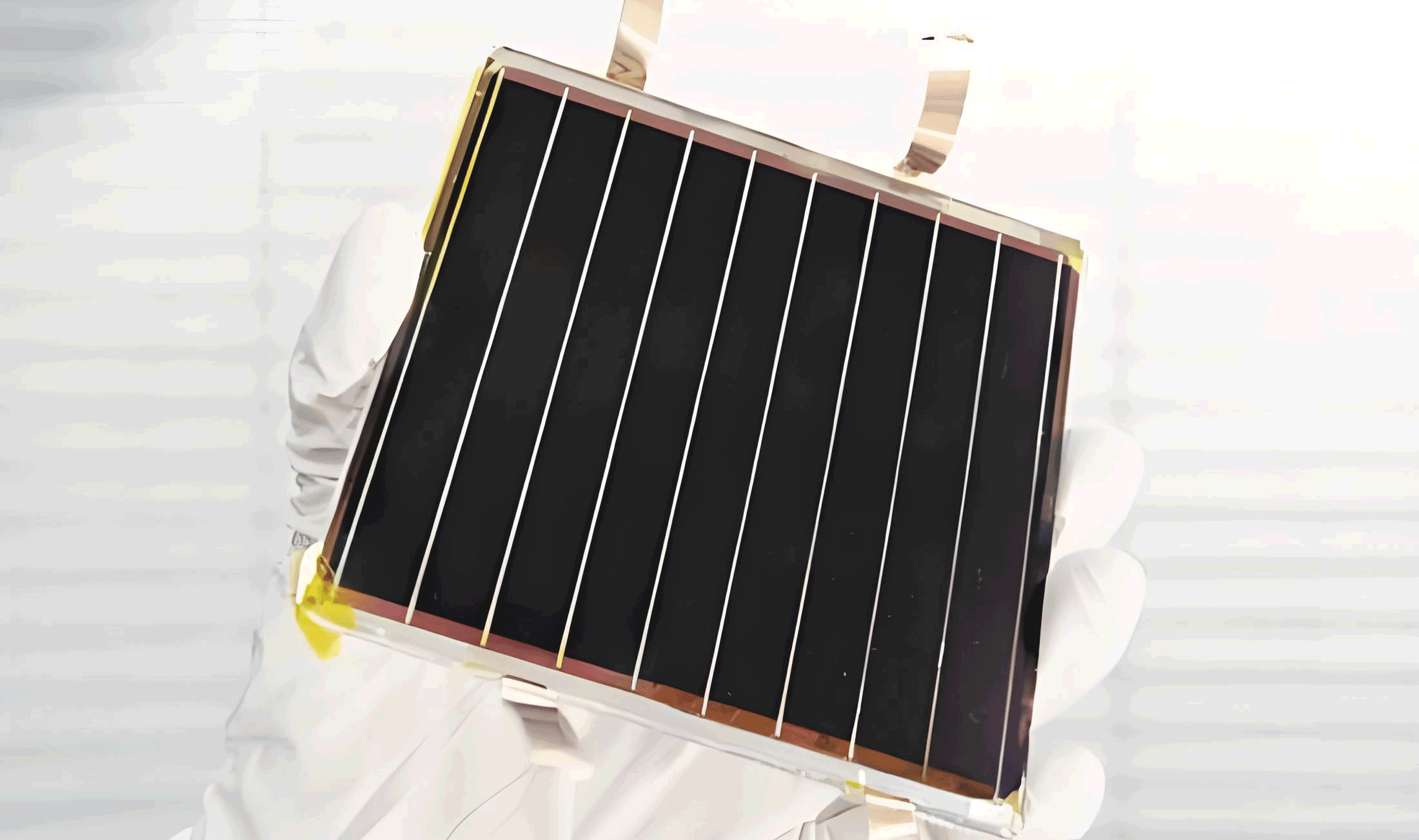
One of the fundamental components in a perovskite solar cell is the flexible substrate, which must exhibit high optical transparency, thermal stability, and mechanical robustness. Common materials include polyethylene terephthalate (PET), polyethylene naphthalate (PEN), polyimide (PI), polycarbonate (PC), and polyethersulfone (PES). Each of these polymers has distinct properties that influence the performance of the perovskite solar cell. For instance, PI offers excellent thermal stability but may suffer from high cost, whereas PET is cost-effective but has a low glass transition temperature, leading to deformation under thermal stress. To quantify these differences, I have compiled a table comparing key parameters of various flexible substrates used in perovskite solar cells.
| Substrate Material | Glass Transition Temp. (°C) | Tensile Strength (MPa) | Young’s Modulus (GPa) | Thermal Expansion Coeff. (μm/°C) | Water Absorption (%) |
|---|---|---|---|---|---|
| PET | 70–110 | 230 | 2.8–3 | 33 | 0.6 |
| PEN | 120–155 | 200 | 3–5 | 20 | 0.4 |
| PI | 160–270 | 150 | 2–3 | 30 | 2.9 |
| PC | 155 | 75 | 2.4 | 66 | 0.3 |
| PES | 200–225 | 83 | 2.4–2.8 | 99 | 2.0 |
From this table, it is evident that substrates like PI and PES offer superior thermal properties, making them suitable for high-temperature processing steps in perovskite solar cell fabrication. However, their higher water absorption rates can compromise the stability of the perovskite layer. In my research, I have found that surface modifications, such as plasma treatment or the application of anti-reflection coatings, can mitigate these issues. For example, incorporating a plasma-polymerized fluorocarbon layer on colorless PI substrates has been shown to enhance light transmittance by 1.2%, thereby improving the current density in FPSCs. This approach underscores the importance of substrate engineering in optimizing the performance of perovskite solar cells.
Transitioning to the transparent conductive electrodes, materials like indium tin oxide (ITO) and fluorine-doped tin oxide (FTO) are widely used in perovskite solar cells due to their excellent conductivity and transparency. However, ITO is brittle and expensive, which limits its applicability in flexible perovskite solar cells. Recent studies have explored alternatives such as graphene, carbon nanotubes, and metal grids to overcome these limitations. The sheet resistance (R_s) and transmittance (T) of these electrodes are critical parameters that influence the efficiency of a perovskite solar cell. The relationship between these factors can be expressed using the following formula for the figure of merit (FOM):
$$ \text{FOM} = \frac{T^{10}}{R_s} $$
where a higher FOM indicates better electrode performance. For instance, single-walled carbon nanotube (SWCNT) films have demonstrated an FOM of over 35, with a power conversion efficiency of 18% in FPSCs. Moreover, these electrodes maintain 80% of their initial efficiency after 700 hours of air exposure, highlighting their potential for durable perovskite solar cells. In my work, I have focused on developing ultrathin ITO electrodes reinforced with aluminum oxide layers, which reduce indium usage while maintaining flexibility. This innovation has enabled FPSCs with efficiencies up to 19.16% on small areas and 13.26% on larger modules, proving that cost-effective electrodes are feasible for scalable perovskite solar cell production.
Stability is a paramount concern for perovskite solar cells, especially in flexible formats where mechanical bending and environmental factors can degrade performance. The mechanical stability of FPSCs is often compromised by microcracks that form at the interfaces between layers during repeated bending cycles. To address this, I have investigated the use of molecular bridges and self-healing materials. For example, introducing molecules like 2PACz and MeO-2PACz at the NiO-perovskite interface can act as stress buffers, reducing interface recombination and enhancing bending endurance. After 10,000 bending cycles with a radius of 15 mm, devices incorporating these bridges retained nearly 100% of their initial efficiency, compared to only 72% for untreated cells. This demonstrates the critical role of interface engineering in improving the mechanical robustness of perovskite solar cells.
Environmental stability, particularly against moisture, oxygen, and UV light, is another major hurdle for perovskite solar cells. The perovskite active layer is inherently sensitive to humidity, which can lead to rapid decomposition. In my experiments, I have employed hydrophobic additives and encapsulation techniques to shield the perovskite layer. For instance, the incorporation of down-shifting materials like 2Cz2tCzBn not only enhances UV stability but also reduces water vapor ingress due to its hydrophobic nature. The degradation kinetics of perovskite solar cells under humid conditions can be modeled using the following equation:
$$ \frac{d[P]}{dt} = -k[P][H_2O] $$
where [P] is the concentration of perovskite, k is the rate constant, and [H_2O] is the humidity level. By optimizing the additive concentration, I have achieved FPSCs that maintain over 90% of their initial efficiency after 1,200 hours in 30% relative humidity. Furthermore, self-healing polymers, such as those with dynamic covalent disulfide bonds, have enabled crack repair at room temperature, extending the lifespan of flexible perovskite solar cells. These advancements are crucial for real-world applications where durability is as important as efficiency.
Moving to the functional layers, the electron transport layer (ETL) plays a vital role in extracting electrons from the perovskite active layer and minimizing recombination. Common ETL materials like TiO₂, ZnO, and SnO₂ each have their advantages and drawbacks. For example, TiO₂ requires high-temperature sintering, which is incompatible with flexible substrates, whereas SnO₂ can be processed at low temperatures with high electron mobility. The electron extraction efficiency (η_ext) can be described by the formula:
$$ \eta_{\text{ext}} = \frac{J_{\text{sc}}}{q \cdot G \cdot L} $$
where J_sc is the short-circuit current density, q is the electron charge, G is the generation rate, and L is the diffusion length. In my research, I have focused on SnO₂ ETLs modified with UV treatment to reduce oxygen vacancies. This treatment involves generating reactive oxygen species that passivate defects, leading to a higher η_ext and improved device performance. FPSCs with UV-treated SnO₂ ETLs have achieved efficiencies up to 25.09%, the highest reported for flexible perovskite solar cells. Additionally, these devices show excellent bending stability, retaining 83% of their initial efficiency after multiple cycles, underscoring the importance of defect passivation in ETLs for perovskite solar cells.
The hole transport layer (HTL) is equally critical for efficient charge extraction in perovskite solar cells. Materials such as NiO, PTAA, spiro-OMeTAD, and PEDOT:PSS are commonly used, but they often suffer from low hole mobility or instability. To enhance HTL performance, I have explored doping and interface modification strategies. For instance, incorporating entinostat into PTAA HTLs improves adhesion to the perovskite layer and reduces interface voids, resulting in FPSCs with 23.4% efficiency. The hole mobility (μ_h) can be calculated using the space-charge-limited current (SCLC) method:
$$ J = \frac{9}{8} \epsilon_r \epsilon_0 \mu_h \frac{V^2}{L^3} $$
where J is the current density, ε_r is the relative permittivity, ε_0 is the vacuum permittivity, V is the voltage, and L is the layer thickness. By optimizing the HTL composition, I have achieved higher μ_h values, leading to reduced recombination losses in perovskite solar cells. Dual-interface reinforcement, using self-assembled monolayers and low-dimensional perovskite capping layers, has further boosted FPSC efficiency to 21.03%, demonstrating the synergy between HTL and ETL optimization.
The perovskite active layer itself is the heart of the solar cell, and its quality directly determines the device performance. Additive engineering has emerged as a powerful tool to passivate defects and enhance crystallization. In my studies, I have used multifunctional molecules like 7-amino-4-(trifluoromethyl)-2-benzopyrone (ATB) and trifluorophenylacetic acid (TFPAA) to coordinate with uncoordinated Pb²⁺ ions and suppress non-radiative recombination. The defect density (N_t) can be estimated from photoluminescence measurements using the formula:
$$ N_t = \frac{1}{\tau_{\text{PL}}} \cdot \frac{1}{k_{\text{rad}}} $$
where τ_PL is the photoluminescence lifetime and k_rad is the radiative recombination rate. With ATB additives, I observed a significant reduction in N_t, resulting in FPSCs with 21.08% efficiency and excellent stability under bending and humidity stress. Moreover, grain boundary engineering using elastic polymers like PPG-mUPy-APDS has enabled stress release and improved mechanical flexibility. These polymers form hydrogen bonds with perovskite ions, slowing crystal growth and producing larger, more uniform grains. FPSCs incorporating such additives maintain over 90% efficiency after 10,000 bending cycles, highlighting the role of crystal engineering in durable perovskite solar cells.
In conclusion, the development of flexible perovskite solar cells has made remarkable progress, yet challenges remain in achieving commercial viability. Through substrate optimization, electrode innovation, and advanced interface engineering, we can enhance both the efficiency and stability of perovskite solar cells. The integration of self-healing materials and defect-passivating additives further promises to extend the lifespan of FPSCs in practical applications. As I continue my research, I am optimistic that these strategies will lead to perovskite solar cells that are not only highly efficient but also robust enough for everyday use. The future of perovskite solar cells lies in multidisciplinary approaches that combine materials science, device physics, and engineering to unlock their full potential in the global energy landscape.
To summarize key advancements, I have compiled a table of recent efficiency records and stability metrics for FPSCs, illustrating the impact of various strategies on perovskite solar cell performance.
| Strategy | Efficiency (%) | Bending Cycles (Radius) | Stability (T80, hours) | Key Material/Technique |
|---|---|---|---|---|
| Substrate Modification | 21.12 | — | — | CPi/IGTO with PPFC |
| Electrode Optimization | 18.00 | — | >700 | SWCNT Films |
| Interface Passivation | 24.70 | 10,000 (15 mm) | >1,200 | 2PACz/MeO-2PACz |
| ETL Enhancement | 25.09 | — | — | UV-treated SnO₂ |
| HTL Improvement | 23.40 | — | — | Entinostat in PTAA |
| Additive Engineering | 21.08 | 5,000 (2 mm) | 3,000 | ATB Molecules |
| Self-Healing Polymers | 24.84 | 10,000 (5 mm) | — | ICE Elastomers |
This table underscores the multifaceted approaches required to advance perovskite solar cell technology. As I reflect on these developments, it is clear that continuous innovation in material design and processing will drive the future of flexible perovskite solar cells, making them a cornerstone of next-generation photovoltaics.