
As I reflect on the transformative period of China’s 13th Five-Year Plan, I am struck by the profound shifts in the building materials industry and the rapid ascent of solar energy systems. From my perspective, this era represents a critical juncture where traditional sectors must evolve to embrace sustainability, innovation, and efficiency. The integration of solar systems into building materials is not merely a trend but a necessity for future development. In this article, I will delve into the key initiatives, challenges, and opportunities, using tables and formulas to elucidate the progress and potential. My aim is to highlight how solar systems can become a cornerstone of this industrial transformation, driving both economic growth and environmental stewardship.
The building materials sector has long been a pillar of China’s economy, but it faces mounting pressures from overcapacity, environmental concerns, and the need for structural upgrades. During the 13th Five-Year Plan, the focus has shifted toward green development, with an emphasis on reducing emissions, promoting recycling, and fostering new business models. Simultaneously, the solar energy sector, particularly in regions like Shandong, has achieved remarkable milestones, setting records in photovoltaic deployment. I believe that by weaving solar systems into the fabric of building materials, we can unlock synergies that propel both industries forward. This integration aligns with global trends toward renewable energy and sustainable construction, making it a pivotal strategy for the coming decades.
One of the core objectives has been to enhance innovation and technological advancement. In my view, this requires a concerted effort to develop new materials and processes that incorporate solar systems directly. For instance, photovoltaic glass and solar-integrated roofing materials can transform buildings into energy producers. The efficiency of such solar systems can be modeled using the formula for energy output: $$ E = A \times \eta \times G \times t $$ where \( E \) is the energy generated, \( A \) is the surface area, \( \eta \) is the conversion efficiency, \( G \) is the solar irradiance, and \( t \) is the time period. By optimizing these parameters, we can maximize the contribution of solar systems to the building’s energy needs. Additionally, the performance ratio (PR) of a solar system is crucial, defined as $$ PR = \frac{E_{\text{actual}}}{E_{\text{theoretical}}} \times 100\% $$ where \( E_{\text{actual}} \) is the measured output and \( E_{\text{theoretical}} \) is the expected output under standard conditions. Improving PR through better design and maintenance is essential for the widespread adoption of solar systems.
To summarize the key engineering projects outlined in the building materials plan, I have compiled a table that highlights six major initiatives. These projects aim to address structural issues, promote green practices, and integrate renewable energy sources like solar systems.
| Project Name | Primary Objectives | Targets for 13th Five-Year Plan | Role of Solar Systems |
|---|---|---|---|
| Innovation and Technology Promotion | Develop new materials, enhance R&D, and adopt smart manufacturing. | Achieve breakthroughs in 10 key areas; increase R&D investment by 15%. | Integrate photovoltaic technologies into building components; promote solar system applications. |
| Advanced Product Development | Create high-value-added products, such as specialty glass and composites. | Launch 20 new product lines; increase market share of advanced materials by 25%. | Incorporate solar cells into materials like facades and windows to create energy-generating solar systems. |
| Green Manufacturing and Recycling | Implement circular economy principles, reduce waste, and lower carbon footprint. | Recycle 50% of industrial by-products; cut CO2 emissions by 20% per unit output. | Use solar systems to power manufacturing processes, reducing reliance on fossil fuels. |
| Service-Oriented Transformation | Expand into services like design, installation, and maintenance. | Increase service revenue to 30% of total industry income. | Offer installation and upkeep services for solar systems integrated into buildings. |
| Energy Conservation and Emission Reduction | Achieve compliance with strict environmental standards, especially in cement, glass, and ceramics. | Reduce energy consumption by 15% in key sectors; deploy 100 green demonstration projects. | Deploy solar systems to offset energy use; aim for 30% green materials in new construction. |
| Mergers and Acquisitions | Consolidate industry, reduce enterprise numbers, and improve competitiveness. | Cut enterprise count by 25% in cement, glass, and ceramics; raise top-10 firm concentration to 80%. | Foster large firms capable of investing in integrated solar system technologies. |
From my experience, these projects underscore the importance of policy support and market demand. For example, the push for green buildings has accelerated the adoption of solar systems, which can be quantified through the reduction in carbon emissions. The carbon savings from using a solar system can be expressed as $$ \Delta C = E_{\text{solar}} \times \text{EF}_{\text{grid}} $$ where \( \Delta C \) is the carbon reduction, \( E_{\text{solar}} \) is the energy produced by the solar system, and \( \text{EF}_{\text{grid}} \) is the emission factor of the local grid. Over time, this contributes to national climate goals. Moreover, the economic benefits of solar systems are evident in cost savings, with the levelized cost of energy (LCOE) given by $$ \text{LCOE} = \frac{\sum_{t=1}^{n} \frac{I_t + M_t}{(1+r)^t}}{\sum_{t=1}^{n} \frac{E_t}{(1+r)^t}} $$ where \( I_t \) is the investment cost in year \( t \), \( M_t \) is the maintenance cost, \( E_t \) is the energy output, \( r \) is the discount rate, and \( n \) is the system lifetime. As solar system costs decline, LCOE becomes more competitive, driving further integration.
Shandong Province serves as a shining example of solar system achievements. I recall that in 2010, the world’s largest solar power station was established in Dongying, Shandong, marking a milestone in photovoltaic deployment. This project showcased the potential of large-scale solar systems to generate clean energy and reduce reliance on coal. The success in Shandong has inspired similar initiatives nationwide, reinforcing the role of solar systems in regional development. To illustrate the key records set in Shandong, I have prepared a table summarizing the “firsts” in solar photovoltaic development.
| Achievement | Description | Impact | Connection to Solar Systems |
|---|---|---|---|
| Largest Solar Power Station (2010) | A 100 MW monocrystalline silicon plant in Dongying, with an additional 7 MW facility. | Annual generation of 130 million kWh, saving 47,000 tons of coal equivalent. | Demonstrated the scalability of utility-scale solar systems for grid integration. |
| Highest Provincial PV Capacity | Shandong led in installed photovoltaic capacity during the early 2010s. | Boosted local energy security and created jobs in the solar system industry. | Highlighted the viability of distributed and centralized solar systems in diverse settings. |
| Innovation in PV Technology | Pioneered advances in silicon efficiency and bifacial modules. | Reduced costs and improved performance ratios for solar systems. | Accelerated the adoption of solar systems through technological breakthroughs. |
| Integration with Agriculture | Developed agro-photovoltaic projects combining crops with solar panels. | Enhanced land use efficiency and farmer incomes. | Showcased versatile applications of solar systems beyond traditional rooftops. |
In my opinion, the lessons from Shandong are invaluable for the broader building materials sector. By leveraging solar systems, we can address the dual challenges of energy consumption and environmental impact. For instance, in cement production, which is energy-intensive, installing on-site solar systems can offset electricity use, with the potential savings calculated as $$ S = P_{\text{solar}} \times h \times c_{\text{elec}} $$ where \( S \) is the savings, \( P_{\text{solar}} \) is the installed solar capacity, \( h \) is the annual operating hours, and \( c_{\text{elec}} \) is the electricity cost per kWh. This not only cuts costs but also reduces the carbon footprint, aligning with the green manufacturing goals. Furthermore, the integration of solar systems into building envelopes, such as through building-integrated photovoltaics (BIPV), can turn structures into net-zero energy entities. The energy balance for such a building can be represented as $$ E_{\text{net}} = E_{\text{consumption}} – E_{\text{solar}} $$ where \( E_{\text{net}} \) is the net energy draw, \( E_{\text{consumption}} \) is the total energy used, and \( E_{\text{solar}} \) is the energy generated by the solar system. Achieving \( E_{\text{net}} \leq 0 \) is the ultimate goal, making buildings self-sufficient through solar systems.
The path forward, however, is fraught with obstacles. I have observed that overcapacity in traditional materials like cement and glass persists, hindering the transition to greener alternatives. To overcome this, the industry must embrace supply-side reforms, focusing on reducing excess capacity and fostering innovation. Solar systems can play a key role here by creating new demand for advanced materials. For example, the production of solar glass requires high transparency and durability, driving upgrades in glass manufacturing. The optical efficiency of such glass can be modeled using $$ T = e^{-\alpha d} $$ where \( T \) is the transmittance, \( \alpha \) is the absorption coefficient, and \( d \) is the thickness. Optimizing this for solar systems ensures maximum light penetration for energy conversion. Additionally, policy incentives are crucial; I advocate for subsidies, carbon trading mechanisms, and exit subsidies to encourage the adoption of solar systems and the phasing out of outdated产能.
Looking at the broader picture, the convergence of building materials and solar systems offers a roadmap for sustainable industrialization. In my view, this synergy can be enhanced through digitalization and smart technologies. For instance, the Internet of Things (IoT) can monitor the performance of solar systems in real-time, with data analytics optimizing maintenance schedules. The reliability of a solar system can be assessed using the failure rate formula $$ \lambda(t) = \frac{dF(t)}{dt} \cdot \frac{1}{R(t)} $$ where \( \lambda(t) \) is the hazard function, \( F(t) \) is the cumulative failure distribution, and \( R(t) \) is the reliability function. By minimizing failures, we ensure the long-term viability of solar systems. Moreover, cross-industry collaboration is essential; I envision partnerships between material producers, solar system installers, and construction firms to streamline integration. The economic impact can be significant, with job creation in both sectors.
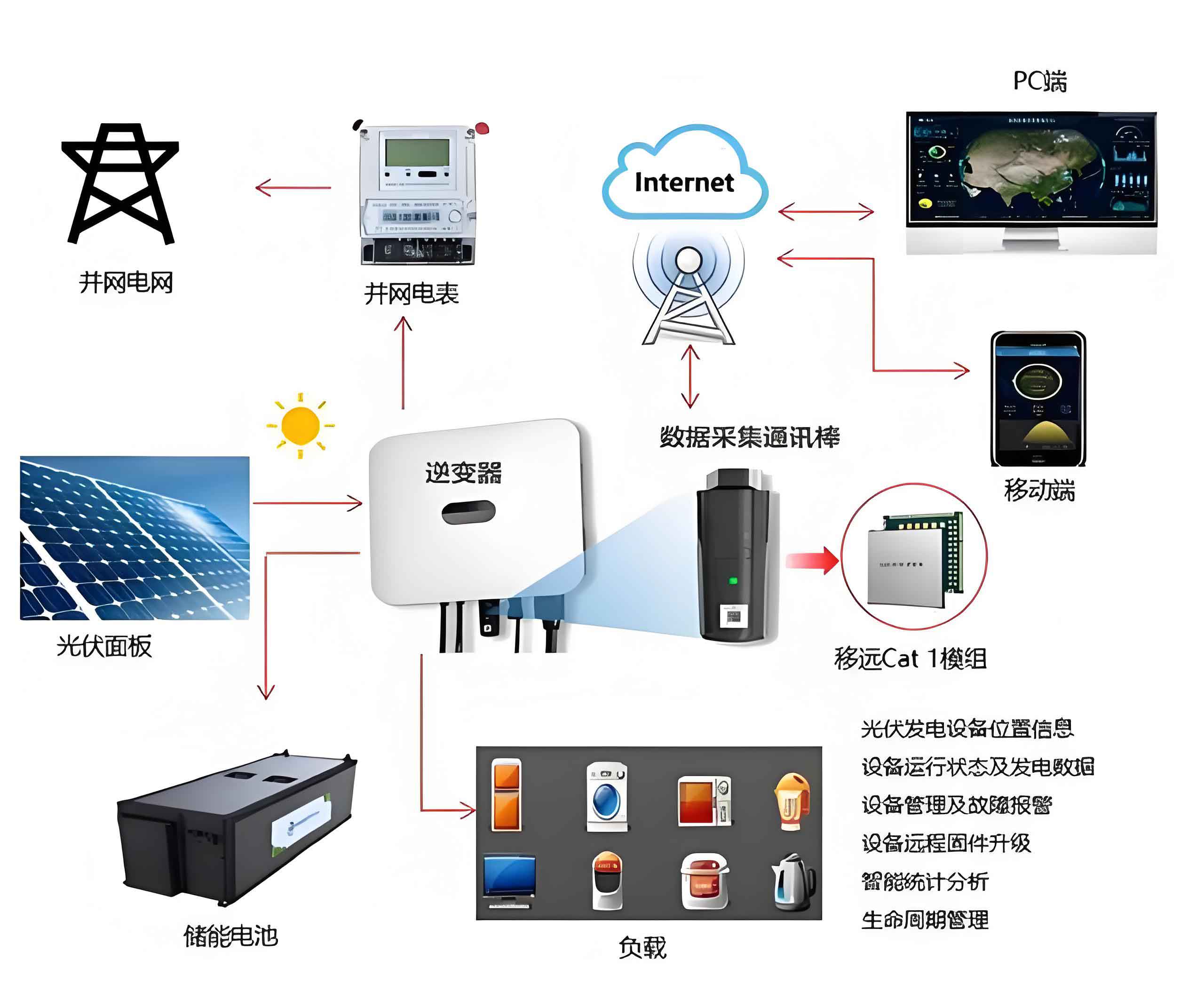
As we progress, the importance of solar systems cannot be overstated. In my experience, they represent a versatile solution for energy challenges, from powering homes to industrial facilities. The cumulative installed capacity of solar systems globally is growing exponentially, and China is poised to lead this charge. The growth rate can be described by $$ C(t) = C_0 e^{kt} $$ where \( C(t) \) is the capacity at time \( t \), \( C_0 \) is the initial capacity, and \( k \) is the growth constant. For the building materials industry, tapping into this growth means developing products that are compatible with solar systems, such as lightweight composites for panel mounting or heat-resistant coatings for concentrated solar power. The thermal performance of such materials can be evaluated using $$ Q = U \cdot A \cdot \Delta T $$ where \( Q \) is the heat transfer rate, \( U \) is the overall heat transfer coefficient, \( A \) is the area, and \( \Delta T \) is the temperature difference. Enhancing insulation properties can improve the efficiency of solar systems by reducing thermal losses.
In conclusion, I am optimistic about the future of building materials and solar systems. The 13th Five-Year Plan has laid a foundation for transformation, but sustained effort is needed to realize its full potential. From my perspective, the key lies in policy coherence, technological innovation, and market-driven adoption. Solar systems should be at the heart of this journey, providing clean energy and enabling sustainable construction. As we move beyond the plan period, I urge stakeholders to prioritize integration, invest in R&D, and foster a culture of sustainability. The formulas and tables presented here are tools to guide decision-making, but the ultimate success will depend on collective action. By embracing solar systems, we can build a greener, more resilient industry that contributes to global environmental goals and economic prosperity.