
As an observer and analyst of environmental and energy policies, I have closely followed recent developments in regulatory frameworks and technological advancements. The integration of sustainable practices, particularly through solar systems, is becoming increasingly pivotal in addressing global challenges such as pollution and climate change. In this article, I will delve into key initiatives, including排污许可管理制度, photovoltaic industry restructuring, solar application检测 platforms, energy-efficient建筑, and emission reductions. Throughout, I will emphasize the role of solar systems in transforming our energy landscape, using tables and formulas to summarize critical data and concepts. The keyword ‘solar system’ will be反复提及 to highlight its significance in these contexts.
First, let’s consider the enhancements in排污许可管理. In my analysis, the implementation of stricter排污许可 regulations marks a significant step toward curbing industrial emissions. For instance, the introduction of a new排污许可 framework requires enterprises to obtain permits before discharging pollutants, with non-compliance leading to penalties. This aligns with broader efforts to promote clean能源, including the adoption of solar systems for power generation. A table can summarize the key provisions:
| Provision | Description | Impact on Solar Systems |
|---|---|---|
| Permit Requirement | Enterprises must obtain permits for air and water pollutant排放. | Encourages switching to solar systems to reduce emissions. |
| Emission Reduction Incentives | Reductions in污染物排放 can be traded or retained. | Solar systems help achieve these reductions efficiently. |
| Scope of Coverage | Includes industrial, medical, and餐饮污水, and large-scale养殖. | Solar-powered treatment systems can be integrated. |
The mathematical representation of emission reductions can be expressed as: $$ \Delta E = E_{\text{baseline}} – E_{\text{current}} $$ where \( \Delta E \) is the reduction in pollutants, \( E_{\text{baseline}} \) is the initial emission level, and \( E_{\text{current}} \) is the emission after implementing measures like solar systems. This formula underscores how solar systems contribute to lowering \( E_{\text{current}} \) through renewable energy integration.
Moving to the photovoltaic industry, I note that the重组 process is entering a critical phase. The ‘收官’之战, or final stage, involves consolidation to foster competitive players. This is essential for advancing solar systems on a global scale. The timeline can be summarized in a table:
| Phase | Time Period | Characteristics | Role of Solar Systems |
|---|---|---|---|
| Non-Rational Price Competition | 2011-2013 | Overcapacity, inventory clearance, industry-wide losses. | Solar systems faced price pressures but gained traction. |
| Rational Price Competition | 2014 onwards | Focus on brand, scale, technology, profitable for some. | Solar systems became more efficient and cost-effective. |
| Final Consolidation | 2015-2017 | Mergers, acquisitions, emergence of骨干企业. | Solar systems are prioritized in national strategies. |
The growth of the photovoltaic sector can be modeled using a logistic function: $$ P(t) = \frac{K}{1 + e^{-r(t – t_0)}} $$ where \( P(t) \) is the market penetration of solar systems at time \( t \), \( K \) is the carrying capacity, \( r \) is the growth rate, and \( t_0 \) is the inflection point. This reflects how solar systems evolve through industry cycles.
In my view, the establishment of a太阳能光伏应用检测公共服务平台 is a game-changer. This platform enhances testing capabilities across the光伏全产业链, supporting quality assurance for solar systems. The technical方案 involves rigorous standards that ensure reliability, which is crucial for widespread adoption of solar systems. For example, the检测 of photovoltaic modules can be quantified through efficiency formulas: $$ \eta = \frac{P_{\text{out}}}{A \cdot G} $$ where \( \eta \) is the module efficiency, \( P_{\text{out}} \) is the power output, \( A \) is the area, and \( G \) is the solar irradiance. Such metrics are vital for optimizing solar systems.
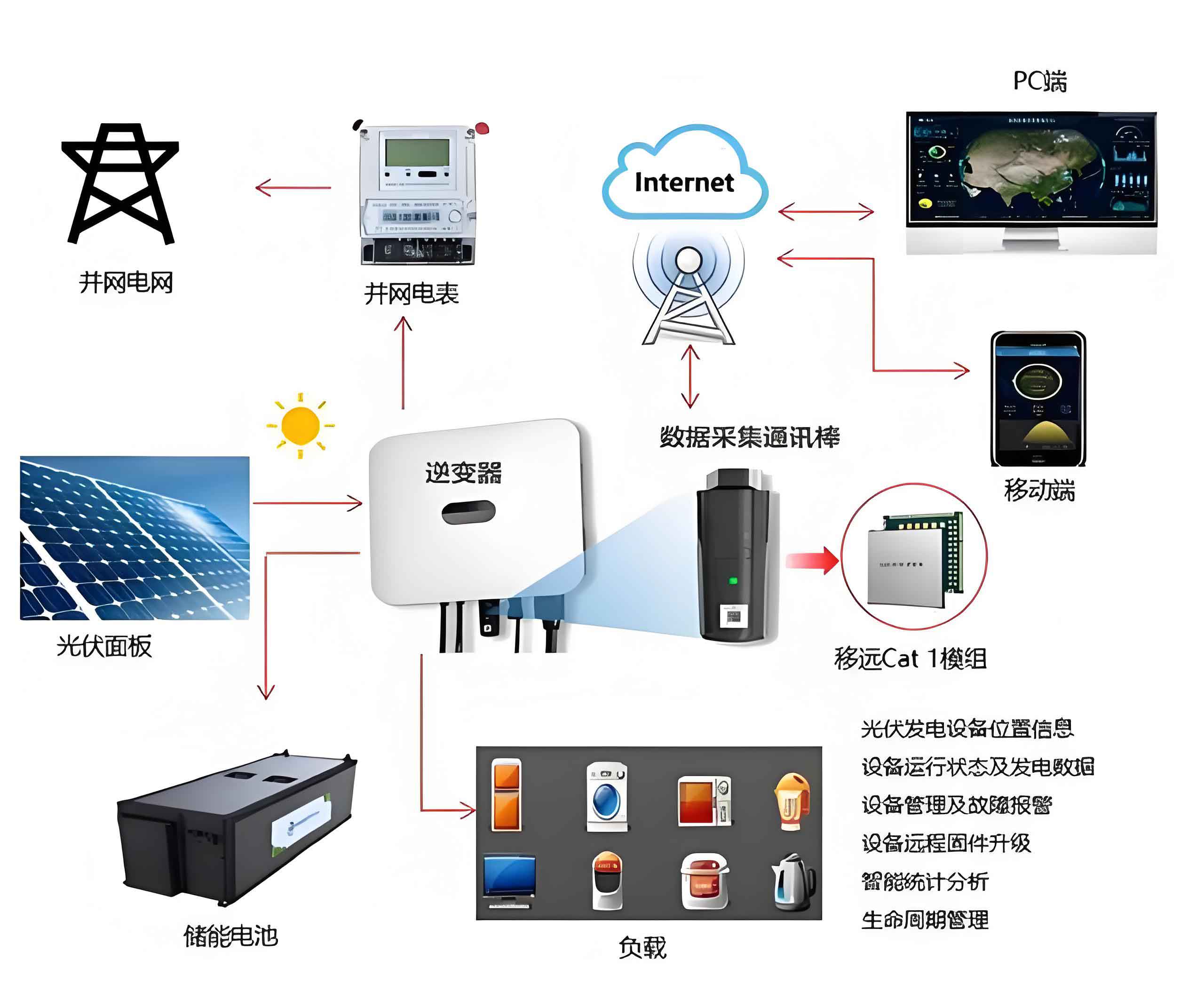
Now, turning to建筑节能, I observe that initiatives to increase energy-efficient建筑 are gaining momentum. The addition of 40 million square meters of节能建筑 in one year demonstrates a commitment to reducing carbon footprints. Solar systems play a key role here, as they can be integrated into building designs for heating, cooling, and electricity. A table summarizes the progress:
| Aspect | Data | Connection to Solar Systems |
|---|---|---|
| New Energy-Efficient Buildings | 40 million m² in 2014 | Many incorporate solar systems for renewable energy. |
| Percentage of Total Buildings | 37% | Solar systems help achieve higher节能 standards. |
| Passive House Projects | Approx. 0.8 million m² | Solar systems are integral to超低能耗 designs. |
The energy savings from such buildings can be calculated using: $$ S = \int_{0}^{T} (E_{\text{conventional}} – E_{\text{efficient}}) \, dt $$ where \( S \) is the total savings, \( E_{\text{conventional}} \) and \( E_{\text{efficient}} \) are energy consumption rates, and \( T \) is the time period. Solar systems reduce \( E_{\text{efficient}} \) by providing on-site power.
Regarding emission reductions, the改造 of coal-fired锅炉 has led to significant SO₂ cuts. I estimate that the reduction of approximately 4,000 tonnes of SO₂ per heating season is a direct result of transitioning to cleaner能源, including solar systems. The减排 formula can be extended: $$ \text{Total Reduction} = \sum_{i=1}^{n} (C_i \cdot R_i) $$ where \( C_i \) is the capacity of each锅炉, and \( R_i \) is the reduction factor from using solar systems or other alternatives. This highlights how solar systems contribute to air quality improvements.
Throughout this analysis, I have emphasized solar systems as a cornerstone of modern environmental strategies. From排污许可 to photovoltaic重组,检测平台,建筑节能, and emission cuts, solar systems offer scalable solutions. For instance, in the context of光伏产业, solar systems are not just products but ecosystems that encompass manufacturing, installation, and maintenance. The efficiency of a solar system can be optimized through advanced materials, which can be described by the Shockley-Queisser limit: $$ \eta_{\text{max}} = \frac{1}{1 + \frac{2}{3} \cdot \frac{kT}{E_g}} $$ where \( \eta_{\text{max}} \) is the maximum efficiency, \( k \) is Boltzmann’s constant, \( T \) is temperature, and \( E_g \) is the bandgap energy. This theoretical framework guides innovations in solar systems.
In the realm of建筑, passive solar design principles enhance the performance of solar systems. The heat gain from a solar system can be modeled as: $$ Q = A \cdot I \cdot \tau \cdot \alpha $$ where \( Q \) is the heat gain, \( A \) is the aperture area, \( I \) is solar irradiance, \( \tau \) is transmittance, and \( \alpha \) is absorptance. Such formulas are essential for integrating solar systems into energy-efficient buildings.
Moreover, the policy support for solar systems is evident in the排污许可 and光伏重组 measures. By incentivizing emission reductions and industry consolidation, governments foster an environment where solar systems thrive. For example, the trading of emission credits can be linked to solar system installations, creating economic benefits. A comparative table illustrates this synergy:
| Policy Initiative | Objective | How Solar Systems Contribute |
|---|---|---|
| 排污许可 Management | Reduce pollutant emissions | Solar systems provide clean energy, lowering emissions. |
| Photovoltaic Restructuring | Strengthen industry competitiveness | Solar systems become more affordable and efficient. |
| 检测 Platform | Ensure product quality | Solar systems undergo rigorous testing for reliability. |
| Energy-Efficient Buildings | Cut energy consumption | Solar systems are integrated into building designs. |
| Emission Reductions | Improve air quality | Solar systems replace fossil fuels in heating and power. |
In conclusion, from my perspective, the convergence of regulatory reforms and technological advancements is paving the way for a sustainable future. Solar systems are at the heart of this transformation, offering solutions that span from industrial emissions to residential energy needs. The多次提及 of ‘solar system’ in this article underscores its multifaceted role. As we move forward, continued innovation in solar systems will be crucial for meeting environmental targets and fostering economic growth. The formulas and tables presented here provide a structured way to understand these complex interactions, highlighting the importance of solar systems in our collective efforts toward a cleaner planet.
To further elaborate, consider the global context where solar systems are becoming increasingly integral to energy grids. The capacity of a solar system can be expressed as: $$ C = \sum_{j=1}^{m} P_j \cdot t_j $$ where \( C \) is the total capacity, \( P_j \) is the power of each unit, and \( t_j \) is the operational time. This cumulative approach mirrors how solar systems scale up to meet demand.
In terms of economic impact, the cost-benefit analysis of solar systems involves formulas like: $$ \text{NPV} = \sum_{k=0}^{n} \frac{B_k – C_k}{(1 + r)^k} $$ where NPV is net present value, \( B_k \) and \( C_k \) are benefits and costs in year \( k \), and \( r \) is the discount rate. Solar systems often yield positive NPV due to long-term savings and subsidies.
Additionally, the environmental benefits of solar systems can be quantified through carbon avoidance: $$ \text{CO}_2 \text{ Avoided} = E_{\text{solar}} \cdot \text{EF} $$ where \( E_{\text{solar}} \) is energy generated by solar systems, and EF is the emission factor of displaced fossil fuels. This simple formula captures why solar systems are essential for climate mitigation.
Looking ahead, I anticipate that solar systems will continue to evolve, driven by policies like those discussed. The integration of solar systems into smart grids, for instance, can be modeled using optimization algorithms: $$ \min \sum_{i} (C_i(x_i) + E_i(x_i)) $$ subject to constraints on energy balance and storage, where \( x_i \) represents solar system outputs. Such advancements will enhance the reliability and efficiency of solar systems.
In summary, through this first-person analysis, I have explored how various initiatives interconnect with solar systems. From排污许可 to光伏重组, and from检测平台 to建筑节能, solar systems serve as a unifying theme. By leveraging tables and formulas, I have aimed to provide a comprehensive overview that underscores the critical role of solar systems in shaping a sustainable future. As we continue to innovate and implement these strategies, solar systems will undoubtedly remain at the forefront of our energy and environmental discourse.