
As the global push for carbon neutrality accelerates, the li-ion battery industry has experienced exponential growth, with production scales expanding rapidly. However, this expansion brings heightened fire risks, particularly in manufacturing facilities where thermal runaway events can lead to catastrophic outcomes. In this article, I will explore the unique challenges posed by li-ion battery production plants and propose comprehensive disposal strategies based on thorough analysis of architectural layouts, process characteristics, and fire dynamics. The focus is on mitigating risks through tactical approaches that emphasize safety, control, and efficiency. Throughout this discussion, the term li-ion battery will be frequently referenced to underscore its central role in these hazards.
The production of li-ion batteries involves complex processes that can be broadly categorized into three stages: front-end, mid-end, and back-end. Each stage presents distinct fire risks, but the back-end processes, such as formation and aging, are particularly critical due to the activated state of the batteries. Below is a table summarizing the key stages and their associated risks in li-ion battery production:
| Process Stage | Key Activities | Primary Fire Risks | Remarks |
|---|---|---|---|
| Front-end | Mixing, Coating, Calendering, Slitting | Flammable solvents (e.g., NMP), radioactive materials | Raw material hazards dominate |
| Mid-end | Winding/Stacking, Welding, Drying, Electrolyte Filling, Sealing | Electrolyte leakage (LiPF6 hydrolysis to HF), thermal events | Introduction of reactive components |
| Back-end | Formation, Capacity Testing, Sorting, Aging | Thermal runaway of li-ion battery, gas explosions, high energy density | Batteries are electrically active; highest risk phase |
The architectural design of li-ion battery plants further complicates fire response. Facilities often feature large-span, cleanroom structures with complex internal partitions,密闭 spaces, and limited smoke evacuation routes. Common layout types include closed-loop, I-shaped, scissor-type, and L-shaped configurations, each influencing fire spread patterns. For instance, in closed-loop designs, processes are interconnected across multiple floors or buildings, creating vertical or horizontal fire propagation paths. The energy density in storage areas, such as aging warehouses, can be extremely high, with total energy storage often exceeding several megawatt-hours. This concentration amplifies the thermal runaway potential of li-ion battery units, especially when state-of-charge (SOC) levels are elevated. Research indicates that the time to thermal explosion decreases with higher SOC, following a relationship approximated by: $$ t_{explosion} \propto \frac{1}{SOC^n} $$ where \( n \) is a material-dependent exponent. For a li-ion battery with SOC near 100%, the combustion intensity can be 2.5 times greater than at 25% SOC, highlighting the critical need for targeted interventions.
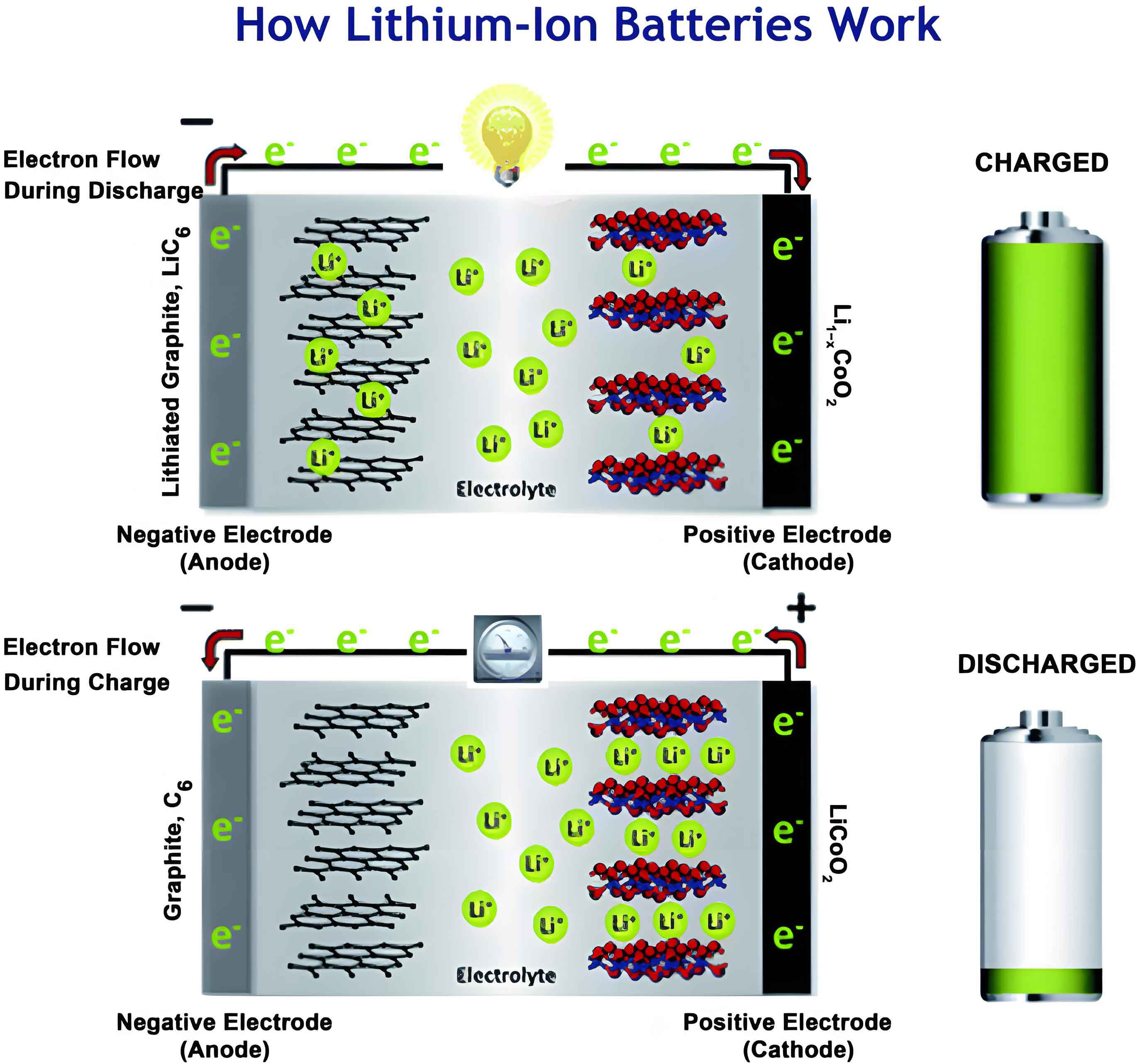
Fire accidents in li-ion battery plants exhibit several distinctive characteristics that challenge conventional firefighting methods. Firstly, thermal runaway in li-ion battery cells can trigger chain reactions, leading to rapid fire escalation and explosion risks. The heat release rate during such events can be modeled using equations like: $$ \dot{Q} = m \cdot \Delta H_c \cdot f(t) $$ where \( \dot{Q} \) is the heat release rate, \( m \) is the mass of the li-ion battery, \( \Delta H_c \) is the heat of combustion, and \( f(t) \) is a time-dependent function accounting for propagation. Secondly, the presence of toxic gases, such as hydrogen fluoride (HF) from electrolyte decomposition, poses severe health hazards. The concentration of HF downwind can remain detectable over large distances, necessitating extensive safety perimeters. Thirdly, structural complexities, including suspended ceilings and interconnected utility shafts, facilitate hidden fire spread and hinder interior access. Table 2 outlines the major risk factors in li-ion battery production facilities:
| Risk Category | Specific Factors | Impact on Fire Dynamics |
|---|---|---|
| Thermal Hazards | High SOC li-ion battery, energy-dense storage, exothermic reactions | Rapid temperature rise, explosion potential |
| Chemical Hazards | Flammable solvents, HF generation, electrolyte leaks | Toxic smoke, secondary fires, environmental contamination |
| Structural Hazards | Large-span designs, cleanroom enclosures, inadequate防火分隔 | Fire spread through concealed spaces, collapse risks |
| Operational Hazards | Automated logistics, fixed system failures, poor management | Delayed detection, impaired suppression |
To address these challenges, I propose a phased disposal strategy tailored to the evolution of fire incidents in li-ion battery plants. The approach centers on three scenarios: initial stage (single cell thermal runaway), developing stage (spread within a process zone), and fully developed stage (widespread involvement). Each scenario demands specific tactics, with an emphasis on leveraging fixed systems, emergency access points, and controlled burning where appropriate.
In the initial stage, when a single li-ion battery undergoes thermal runaway without spreading, the response should prioritize process-based measures. Immediate actions include cutting power to photovoltaic and energy storage systems, while avoiding indiscriminate shutdowns that might disable automated suppression in formation areas. Activating fixed fire protection systems, such as water sprinklers within aging racks, is crucial for cooling and containment. Additionally, fire curtains should be deployed to isolate the affected segment, and inherent safety protocols—like automated gas suppression using agents such as perfluorohexanone—can be initiated. For example, faulted li-ion battery units can be transferred to sealed chambers for inundation, followed by immersion in emergency water tanks. The effectiveness of sprinklers can be assessed using the formula: $$ \dot{m}_{water} = K \cdot \sqrt{P} $$ where \( \dot{m}_{water} \) is the water flow rate, \( K \) is the sprinkler coefficient, and \( P \) is the pressure. Ensuring adequate water supply through pump connections is vital to maintain system performance during this critical phase.
When the fire escalates to a developing stage, involving multiple li-ion battery units within a single process zone like formation or storage, the strategy shifts to defensive control. External attack lines using large-flow monitors or elevated water towers should be established, preferably from upwind positions and away from potential explosion vents. Internal offensive operations are generally discouraged unless necessary for rescue or critical asset protection; if required, emergency doors or purpose-made breaches can serve as entry points to minimize exposure. Smoke management becomes paramount—fixed exhaust systems should be activated, supplemented by mechanical ventilation or strategic openings created with heavy machinery. For供水保障, a redundant water supply network is essential, often involving remote供水 systems and tanker relays. The cooling demand for a burning li-ion battery array can be estimated as: $$ Q_{cooling} = N \cdot c_p \cdot \Delta T $$ where \( N \) is the number of batteries, \( c_p \) is the specific heat capacity, and \( \Delta T \) is the temperature reduction required. This phase underscores the importance of “solidify, relocate, control combustion, and dissipate heat” tactics to prevent further escalation.
In the fully developed stage, where entire li-ion battery formation or storage areas are engulfed, offensive interior operations become untenable. The focus turns to external suppression and containment. For single-story plants, earth berms or sandbag barriers can be constructed to confine runoff, followed by gradual cooling and excavation of damaged li-ion battery units. In multi-story facilities, elevated streams from articulated booms can be used to apply water intermittently, cooling structural elements and reducing collapse risks. The accumulated water inside must be drained promptly to avoid overload. Throughout, monitoring for toxic gases like HF is critical, with safety zones expanded based on real-time detection data. The radial dispersion of HF can be modeled using Gaussian plume equations: $$ C(x,y,z) = \frac{Q}{2\pi u \sigma_y \sigma_z} \exp\left(-\frac{y^2}{2\sigma_y^2}\right) \exp\left(-\frac{z^2}{2\sigma_z^2}\right) $$ where \( C \) is concentration, \( Q \) is emission rate, \( u \) is wind speed, and \( \sigma \) are dispersion parameters. This mathematical approach aids in predicting hazard zones and guiding evacuation.
Safety management during li-ion battery fire incidents requires a holistic risk assessment. All areas of the facility should be evaluated for hidden dangers, such as unauthorized modifications or faulty固定消防设施. Continuous atmospheric monitoring for combustibles, toxins, and electrical leaks is imperative, with personnel equipped with insulated suits and detection tools. Emergency rescue teams must be positioned with clear egress routes, and machinery like excavators kept on standby for rapid breach operations. Post-fire cleanup should only commence after li-ion battery temperatures normalize, conducted under technical supervision to prevent reignition or electrocution. Table 3 summarizes the key disposal measures across different incident stages for li-ion battery plants:
| Incident Stage | Primary Objectives | Recommended Tactics | Equipment and Notes |
|---|---|---|---|
| Initial Stage | Contain single cell thermal runaway | Process shutdown, fixed system activation, curtain isolation | Sprinklers, gas suppression, emergency doors; focus on li-ion battery cooling |
| Developing Stage | Prevent zone-wide spread, ensure safety | External water application, limited内攻 via应急门, smoke exhaust | Monitors, drones, robots; monitor li-ion battery array stability |
| Fully Developed Stage | Contain and control large-scale fires | External saturation, dike construction, structural cooling | Elevated towers,远程供水, heavy machinery; avoid interior entry |
Beyond immediate firefighting, long-term enhancements for li-ion battery plant safety involve improving design standards and消防装备. Current regulations often lack specific requirements for explosion risks in formation areas, necessitating updates to codes like GB 51377-2019. Facilities should incorporate robust防火分隔, adequate fixed suppression for li-ion battery storage, and redundant utility systems. Fire departments need specialized assets, such as large-capacity foam tenders, remote-controlled devices, and HF detection kits, to effectively respond to li-ion battery incidents. Research into advanced extinguishing agents for li-ion battery fires, including water-based additives or inert gases, remains a priority to suppress thermal runaway more efficiently.
In conclusion, the fire risks associated with li-ion battery production are multifaceted, stemming from the inherent properties of li-ion battery cells, plant architectures, and process layouts. Through systematic analysis, I have outlined disposal strategies that adapt to evolving scenarios, emphasizing the integration of fixed systems, emergency accesses, and defensive tactics. The repeated mention of li-ion battery throughout this discussion highlights its pivotal role in these hazards. By adopting a proactive approach that combines engineering controls, tactical innovation, and continuous monitoring, the safety of li-ion battery manufacturing environments can be significantly enhanced. Future efforts should focus on standardizing best practices and fostering collaboration between industry and emergency responders to mitigate the challenges posed by the expanding li-ion battery sector.
To further elaborate on the technical aspects, consider the energy release from a typical li-ion battery during thermal runaway. The total energy \( E \) can be expressed as: $$ E = \int_0^{t_f} \dot{Q} \, dt $$ where \( t_f \) is the duration of the event. For a large-scale storage of li-ion battery units, this energy can reach gigajoule levels, necessitating substantial cooling resources. Moreover, the gas production from a decomposing li-ion battery, including CO, H2, and HF, follows stoichiometric relationships that influence explosion limits. The lower explosive limit (LEL) for such mixtures can be approximated using Le Chatelier’s principle: $$ LEL_{mix} = \frac{1}{\sum \frac{y_i}{LEL_i}} $$ where \( y_i \) are the volume fractions of flammable gases from the li-ion battery. Understanding these parameters aids in designing ventilation and suppression systems tailored for li-ion battery facilities.
In summary, the disposal of fires in li-ion battery plants demands a nuanced understanding of both the technology and the built environment. By prioritizing risk assessment, leveraging appropriate tactics, and investing in specialized capabilities, emergency responders can better manage incidents involving li-ion battery systems. As the industry continues to grow, ongoing research and adaptation will be crucial to safeguarding lives and assets against the unique threats posed by li-ion battery production and storage.