
As a researcher and industry observer focused on energy storage technologies, I have witnessed the remarkable resurgence of lithium iron phosphate (LiFePO4) batteries in recent years. Since 2020, the LiFePO4 battery market has entered a new growth cycle, driven by evolving policies, technological advancements, and expanding applications. The intrinsic advantages of LiFePO4 batteries—such as high safety, long cycle life, and cost-effectiveness—have positioned them as a pivotal solution in the global shift toward electrification and sustainable energy. In this article, I will explore the prospects of LiFePO4 battery applications across various sectors, analyze market trends, and discuss emerging directions for battery enterprises. I aim to provide a detailed perspective, supported by data, tables, and formulas, to underscore the growing significance of LiFePO4 batteries in the modern economy.
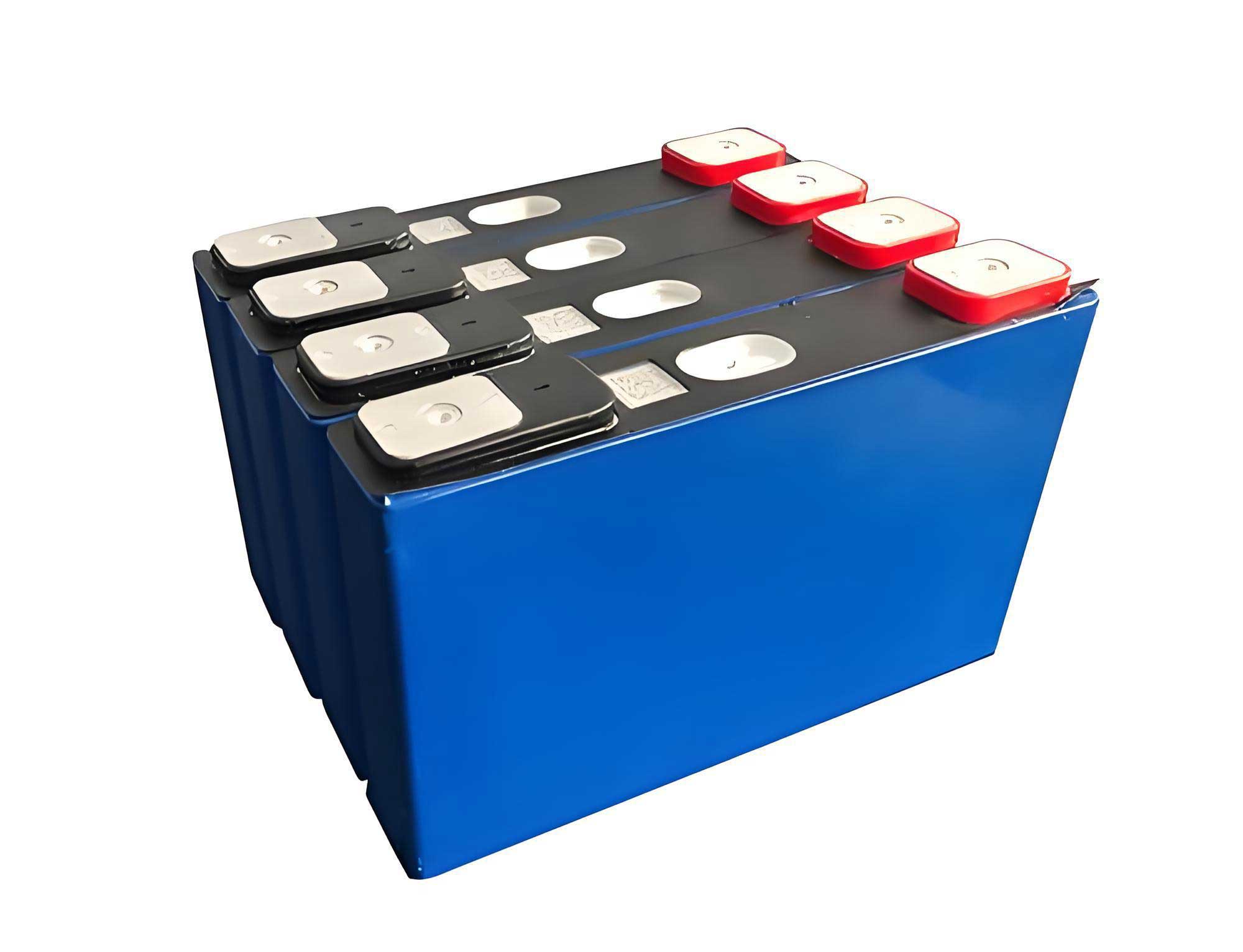
The LiFePO4 battery, a type of lithium-ion battery, has gained traction due to its stable phosphate structure, which enhances thermal and chemical stability. This makes LiFePO4 batteries less prone to thermal runaway compared to other cathode materials like nickel-cobalt-manganese (NCM) or nickel-cobalt-aluminum (NCA). The energy density of LiFePO4 batteries has improved significantly, with recent innovations such as cell-to-pack (CTP) and blade battery designs pushing practical values beyond 200 Wh/kg. The cost per kilowatt-hour for LiFePO4 batteries has also declined, driven by economies of scale and material optimization. A simple formula for estimating the total cost of ownership (TCO) of a LiFePO4 battery system can be expressed as:
$$ \text{TCO} = C_{\text{initial}} + \sum_{t=1}^{n} \frac{M_t}{(1+r)^t} – \frac{S}{(1+r)^n} $$
where \( C_{\text{initial}} \) is the initial battery cost, \( M_t \) is maintenance cost in year \( t \), \( S \) is salvage value, \( r \) is discount rate, and \( n \) is battery lifespan. The long cycle life of LiFePO4 batteries, often exceeding 3000 cycles at 80% depth of discharge, reduces \( M_t \) and enhances TCO advantages. These attributes have fueled the adoption of LiFePO4 batteries in diverse fields, from electric vehicles to grid storage, as I will detail below.
LiFePO4 batteries are now deployed across multiple sectors, each with unique requirements and growth trajectories. The primary applications include new energy vehicles, energy storage systems, two-wheelers, heavy-duty trucks, and electric ships. Below, I summarize the key characteristics and projections for each domain in Table 1, highlighting the role of LiFePO4 battery technology.
| Application Sector | Key Drivers | Estimated LiFePO4 Battery Demand (GWh) by 2025 | Annual Growth Rate (CAGR) | Notable LiFePO4 Battery Features |
|---|---|---|---|---|
| New Energy Vehicles (NEVs) | Policy support, cost reduction, safety demands | 136 | 40-50% | High safety, long cycle life, CTP/blade designs |
| Energy Storage (Grid & 5G Base Stations) | Renewable integration, 5G rollout, backup power needs | 155 (cumulative for 5G) | 30% | Stability, scalability, low TCO |
| Two-Wheelers (E-bikes & Scooters) | New standards, shared mobility, export markets | 20 | 25% | Lightweight, durability, cost-effectiveness |
| Heavy-Duty Trucks | Electrification of logistics, economic benefits | 25 | 35% | High power density, ruggedness, fast charging |
| Electric Ships | Environmental regulations, operational savings | 6 | 40% | Marine safety, energy density, corrosion resistance |
In the new energy vehicle sector, LiFePO4 batteries have staged a strong comeback, particularly in passenger cars. The entry of Tesla with LiFePO4 battery-equipped models in 2020 catalyzed market interest, followed by vehicles like the BYD Han EV and Wuling MINI EV. The subsidy policy for NEVs in 2021, which reduced subsidies by 20% year-on-year, has encouraged automakers to prioritize cost-efficient solutions like LiFePO4 batteries. I estimate that by 2025, LiFePO4 batteries will account for 40-50% of the total power battery market in China, with global demand potentially reaching 50 million tons of LiFePO4 material annually. The energy density improvement can be modeled using the formula for specific energy:
$$ E_{\text{specific}} = \frac{C \times V}{m} $$
where \( C \) is capacity in Ah, \( V \) is voltage, and \( m \) is mass. Recent innovations have boosted \( E_{\text{specific}} \) for LiFePO4 batteries to over 200 Wh/kg, narrowing the gap with NCM batteries. Moreover, the cycle life of LiFePO4 batteries, often expressed as:
$$ N_{\text{cycles}} = N_0 \times \left(1 – \frac{D}{100}\right)^k $$
where \( N_0 \) is initial cycle count, \( D \) is depth of discharge, and \( k \) is degradation factor, ensures longevity exceeding 10 years in automotive applications. This makes LiFePO4 batteries ideal for high-utilization fleets and ride-sharing services.
Energy storage represents a rapidly growing arena for LiFePO4 battery deployment. In 5G base stations, LiFePO4 batteries serve as backup power sources due to their reliability and safety. The cumulative demand from 5G infrastructure is projected to reach 155 GWh by 2030, with annual installations around 10 GWh in the early 2020s. For grid-scale storage, LiFePO4 batteries facilitate renewable energy integration by providing frequency regulation and peak shaving. The levelized cost of storage (LCOS) for LiFePO4 systems can be calculated as:
$$ \text{LCOS} = \frac{\sum_{t=0}^{T} (I_t + O_t + F_t) / (1+r)^t}{\sum_{t=0}^{T} E_t / (1+r)^t} $$
where \( I_t \) is investment cost, \( O_t \) is operation cost, \( F_t \) is fuel cost (zero for batteries), \( E_t \) is energy output, and \( T \) is project lifetime. LiFePO4 batteries typically achieve LCOS values below $0.15/kWh, outperforming many alternatives. The modularity of LiFePO4 battery packs also allows for scalable designs, as seen in containerized storage solutions.
The two-wheeler market, including e-bikes and scooters, has embraced LiFePO4 batteries due to regulatory shifts like China’s new national standards and the growth of shared mobility platforms. By 2025, I expect 70% of electric two-wheelers to be lithium-based, with LiFePO4 batteries capturing a significant share owing to their cost and safety. The battery capacity for a typical e-bike ranges from 0.5 to 1.5 kWh, and the mass production of LiFePO4 cells has driven prices down to below $100/kWh. The charging efficiency \( \eta \) of a LiFePO4 battery can be expressed as:
$$ \eta = \frac{E_{\text{stored}}}{E_{\text{input}}} \times 100\% $$
where \( E_{\text{stored}} \) is energy stored and \( E_{\text{input}} \) is energy supplied. LiFePO4 batteries often achieve \( \eta > 95\% \), enhancing user convenience. Furthermore, the adoption of LiFePO4 batteries in heavy-duty trucks is accelerating, with models like the FAW J6P using 282 kWh packs. The total cost savings from electric trucks can be substantial, given the high mileage and fuel costs. For electric ships, LiFePO4 batteries offer a clean alternative to diesel, with capacities up to 3000 kWh per vessel. The power requirement for marine propulsion can be estimated as:
$$ P = \frac{F \times v}{\eta_{\text{prop}}} $$
where \( P \) is power, \( F \) is thrust, \( v \) is velocity, and \( \eta_{\text{prop}} \) is propulsion efficiency. LiFePO4 battery systems are being optimized to meet these demands, with prototypes already in operation.
Turning to market dynamics, the production and sales of LiFePO4 materials have surged. In 2020, global output reached 140,000 tons, and I forecast it to exceed 250,000 tons by 2021, driven by the aforementioned applications. Market concentration is high, with top players holding over 80% share. Price trends have been volatile; after a dip in early 2020, LiFePO4 material prices rebounded to $6,000-6,500 per ton in early 2021 for power-grade variants. The price elasticity of demand for LiFePO4 batteries can be described as:
$$ E_d = \frac{\% \Delta Q_d}{\% \Delta P} $$
where \( E_d \) is elasticity, \( Q_d \) is quantity demanded, and \( P \) is price. Given the inelastic nature of battery demand in critical sectors, price fluctuations may not significantly impede growth. Table 2 provides a snapshot of LiFePO4 material market indicators.
| Metric | 2020 Value | 2021 Projection | Trend |
|---|---|---|---|
| Global Production (tons) | 140,000 | 250,000 | Rapid increase |
| Average Price ($/ton) – Power Grade | 5,000 | 6,500 | Moderate rise |
| Market Concentration (Top 5 Share) | 85% | 90% | Increasing |
| Capacity Utilization Rate | 75% | 85% | Improving |
| Demand from NEVs (GWh equivalent) | 30.8 | 50 | Strong growth |
The evolution of LiFePO4 battery enterprises is marked by several strategic shifts. First, there is a move from product sales to operational leasing, particularly in mobility and storage sectors. This transforms the revenue model and improves lifecycle economics. Second, standardization of LiFePO4 battery modules is gaining traction, especially for energy storage, to streamline deployment and reduce costs. Third, material suppliers are consolidating and optimizing production processes; the energy consumption per ton of LiFePO4 material, denoted as \( E_{\text{mat}} \), is a key metric:
$$ E_{\text{mat}} = \frac{E_{\text{total}}}{M_{\text{output}}} $$
where \( E_{\text{total}} \) is total energy used and \( M_{\text{output}} \) is output mass. Companies are relocating to regions with lower electricity costs, such as Southwest China, to minimize \( E_{\text{mat}} \). Fourth, technological innovations continue, with research into nano-structured LiFePO4 cathodes to enhance ionic conductivity. The diffusion coefficient \( D \) of lithium ions in LiFePO4 can be approximated by the Arrhenius equation:
$$ D = D_0 \exp\left(-\frac{E_a}{RT}\right) $$
where \( D_0 \) is pre-exponential factor, \( E_a \) is activation energy, \( R \) is gas constant, and \( T \) is temperature. Improvements in \( D \) directly boost charge/discharge rates. Lastly, cross-sector collaboration is expanding, with battery makers partnering with vehicle OEMs, shipbuilders, and grid operators to co-develop tailored LiFePO4 battery solutions.
Looking ahead, the prospects for LiFePO4 batteries are immensely promising. I anticipate that by 2030, LiFePO4 batteries will dominate applications where safety and cost are paramount, such as mass-market EVs, residential storage, and industrial power backups. The global market size for LiFePO4 batteries could exceed $100 billion annually, underpinned by continuous R&D and scale effects. Challenges remain, including raw material sourcing (e.g., lithium and phosphorus) and competition from next-generation batteries, but the inherent strengths of LiFePO4 technology position it for enduring success. In conclusion, the LiFePO4 battery is not just a temporary trend but a cornerstone of the electrified future, and its applications will only broaden as we advance toward a sustainable energy ecosystem.