
In my extensive experience within the rail transit industry, the evolution of energy storage solutions has been pivotal to enhancing operational efficiency, safety, and sustainability. Traditional lead-acid batteries, long the standard for backup power in applications such as DC screens in traction power substations, have increasingly shown limitations that hinder progress. Through firsthand observation and practical implementation, I have witnessed a significant shift towards advanced lithium-ion technologies, particularly the lifepo4 battery. This article delves into a detailed comparison, highlighting why the lifepo4 battery represents a superior alternative, supported by technical analyses, formulas, and tables to elucidate its advantages.
The transition is driven by pressing needs: lead-acid batteries often exhibit issues like bulging, electrolyte leakage, terminal corrosion, and increased internal resistance, which pose fire and smoke hazards. Their bulky design, short lifespan, and high maintenance demands further complicate rail transit operations. In contrast, the lifepo4 battery offers a compelling solution with its high energy density, enhanced safety, and eco-friendly profile. My involvement in pilot projects, such as retrofitting DC power systems in vehicle depots, has provided concrete evidence of its benefits. The lifepo4 battery not only meets but exceeds performance expectations, aligning with global “dual-carbon” policies and green transit initiatives.
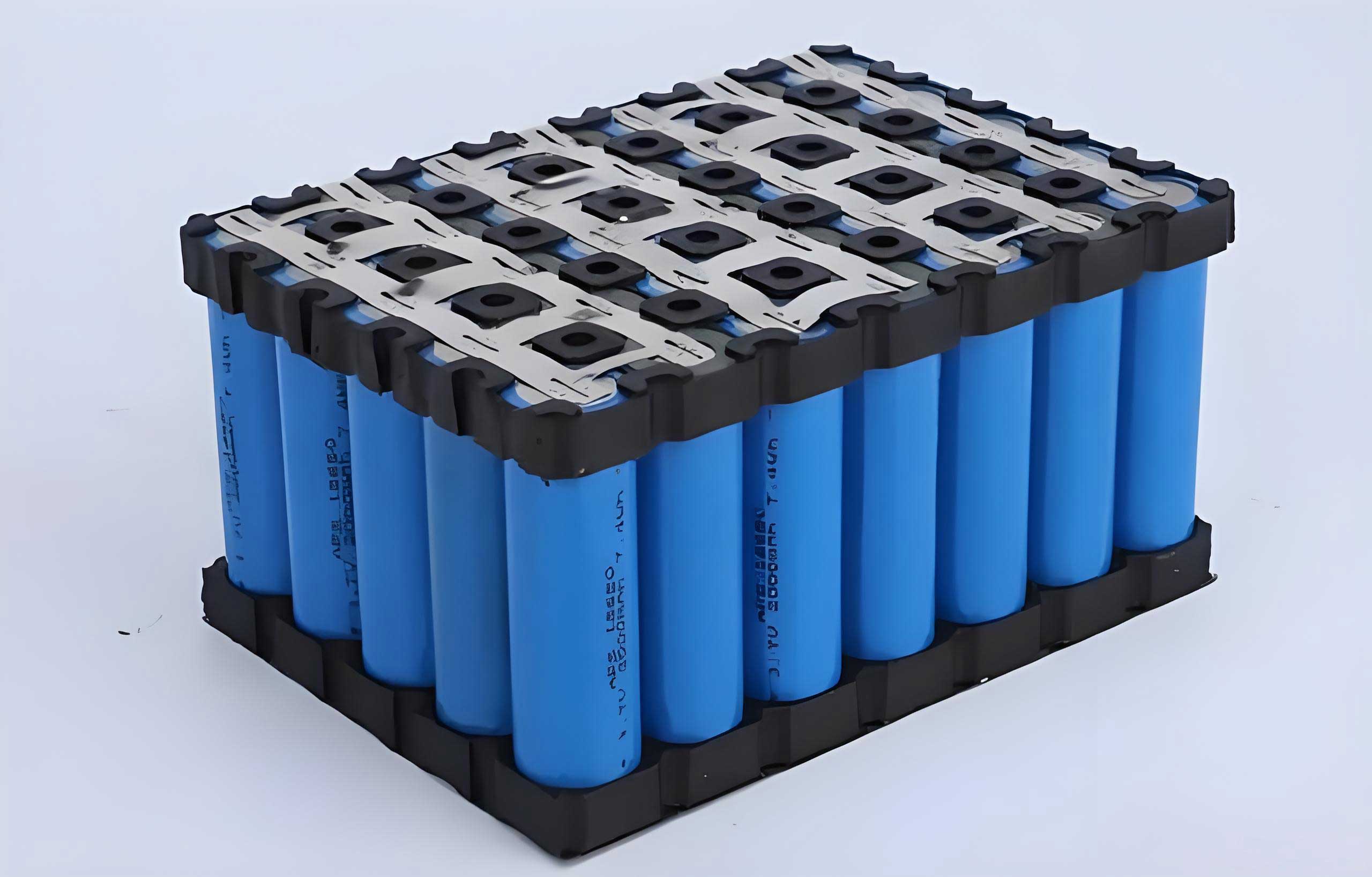
To understand the superiority of the lifepo4 battery, it is essential to grasp its fundamental chemistry. Lithium iron phosphate (LiFePO₄) serves as the cathode material, providing a stable olivine structure that resists thermal runaway and ensures safety. The overall reaction can be simplified as:
$$ \text{LiFePO}_4 \rightleftharpoons \text{FePO}_4 + \text{Li}^+ + e^- $$
This reversibility contributes to the long cycle life of the lifepo4 battery. Key parameters include a nominal voltage of 3.2 V per cell, high thermal stability up to 55°C, and minimal self-discharge. Compared to other lithium-ion variants, the lifepo4 battery avoids cobalt usage, reducing costs and environmental impact. Its energy density can be expressed mathematically:
$$ \text{Volumetric Energy Density} = \frac{E}{V} \quad \text{and} \quad \text{Gravimetric Energy Density} = \frac{E}{m} $$
where \(E\) is energy in watt-hours, \(V\) is volume in liters, and \(m\) is mass in kilograms. For a typical lifepo4 battery, values range from 240 Wh/L and 110 Wh/kg, significantly outperforming lead-acid batteries.
The inevitable replacement of lead-acid batteries stems from multiple factors. From a performance standpoint, lead-acid technology suffers from low energy density, typically 35-40 Wh/kg, and sensitivity to temperature fluctuations due to gas recombination effects. Its lifecycle is limited, with deep discharge cycles rarely exceeding 600 at 80% depth of discharge (DOD). In contrast, the lifepo4 battery achieves over 2000 cycles at 80% DOD, extending service life to 10-15 years. From a development perspective, battery technology progresses toward higher efficiency and sustainability, making the lifepo4 battery a natural successor. Maintenance-wise, lead-acid systems require frequent checks for corrosion, electrolyte levels, and internal resistance, often without integrated monitoring. The lifepo4 battery, however, incorporates a Battery Management System (BMS) that enables real-time surveillance, reducing labor costs and enhancing reliability. Safety concerns further drive this shift: lead-acid batteries use ABS casings that are flammable and emit toxic fumes during thermal runaway, whereas the lifepo4 battery maintains structural integrity under stress, preventing fires and explosions.
When selecting batteries for rail transit, safety is paramount, followed by performance, maintenance, and cost. Among lithium-ion options, the lifepo4 battery stands out. To illustrate, consider the comparison of mainstream battery types in Table 1.
| Battery Type | Specific Energy (Wh/kg) | Safety Profile | Cycle Life (80% DOD) | Cost Factor | Environmental Impact |
|---|---|---|---|---|---|
| Lithium Cobalt Oxide (LCO) | 150-200 | Low | 500-800 | High | High (Cobalt) |
| Lithium Manganese Oxide (LMO) | 100-150 | Moderate | 500-1000 | Low | Moderate |
| Lithium Nickel Manganese Cobalt (NMC) | 150-220 | Moderate | 1000-2000 | Medium | Moderate (Nickel/Cobalt) |
| Lithium Titanate (LTO) | 70-80 | High | 3000-7000 | Very High | Low |
| Lifepo4 Battery | 90-110 | Very High | 2000-3000 | Low-Medium | Very Low (Iron/Phosphate) |
The lifepo4 battery excels in safety and longevity, making it ideal for critical rail infrastructure. Its operational temperature range of -20°C to 55°C surpasses lead-acid’s 0°C to 40°C, ensuring reliability in diverse environments. Moreover, the lifepo4 battery supports higher discharge rates, often up to 2.5C, compared to lead-acid’s typical 0.5C limit. This capability is crucial during peak power demands in transit systems.
A detailed performance comparison between lead-acid and lifepo4 batteries reveals stark contrasts. In my projects, we replaced a 216V/150Ah lead-acid bank with a 217V/100Ah lifepo4 battery system. Despite the lower Ah rating, the lifepo4 battery delivered equivalent backup time due to its superior discharge efficiency. Table 2 summarizes key parameters.
| Parameter | Lead-Acid Battery (Example) | Lifepo4 Battery (Example) | Comparison Notes |
|---|---|---|---|
| Cell Voltage | 12 V | 3.2 V | Higher voltage per cell in lifepo4 battery reduces series count. |
| Capacity | 150 Ah | 100 Ah | Lifepo4 battery achieves same runtime with lower Ah due to higher efficiency. |
| Weight | 828 kg (total) | 350 kg (total) | Lifepo4 battery is ~50% lighter, easing installation. | Volume | 0.48 m³ | 0.48 m³ | Similar footprint, but lifepo4 battery offers higher energy density. |
| Internal Resistance | ~5.9 mΩ | ~1 mΩ | Lower resistance in lifepo4 battery minimizes heat loss. |
| Gravimetric Energy Density | 35-40 Wh/kg | 110 Wh/kg | Lifepo4 battery outperforms by ~2.75x. |
| Volumetric Energy Density | 80 Wh/L | 240 Wh/L | Lifepo4 battery outperforms by ~3x. |
| Temperature Range | 0°C to 40°C | -20°C to 55°C | Lifepo4 battery operates in wider range. |
| Self-Discharge Rate | <5% per month | <3% per month | Lifepo4 battery retains charge longer. |
| Cycle Life (80% DOD) | 500-600 cycles | 2000+ cycles | Lifepo4 battery lasts 4x longer. |
| Discharge Rate | 0.1C to 1C | 1C to 2.5C | Lifepo4 battery supports higher currents. |
| Environmental Impact | Lead pollution | Non-toxic materials | Lifepo4 battery is eco-friendly. |
| Safety Failure Mode | Fire/smoke risk | No fire or smoke | Lifepo4 battery is inherently safer. |
The lifepo4 battery’s advantages extend beyond raw numbers. Its float charge performance is superior, with voltage stability that prolongs lifespan. The float charge voltage for a lifepo4 battery is typically around 3.4-3.5 V per cell, calculated as:
$$ V_{\text{float}} = n \times (3.4 \, \text{V}) $$
where \(n\) is the number of cells in series. This contrasts with lead-acid’s 2.25 V per cell, requiring more cells for the same voltage. Additionally, the lifepo4 battery exhibits minimal capacity fade over time, modeled by:
$$ C(t) = C_0 \times e^{-\alpha t} $$
where \(C(t)\) is capacity at time \(t\), \(C_0\) is initial capacity, and \(\alpha\) is the fade coefficient. For lifepo4 battery, \(\alpha\) is notably lower than for lead-acid.
Maintenance and operational management represent another area where the lifepo4 battery shines. Lead-acid systems demand manual inspections for dirt accumulation, terminal corrosion, and electrolyte levels. Without integrated monitoring, faults may go undetected until failure. In contrast, the lifepo4 battery incorporates a sophisticated BMS that provides real-time data on voltage, current, temperature, and state of charge (SOC). The BMS ensures cell balancing through active or passive methods, enhancing consistency and longevity. This translates to significant cost savings. For instance, labor hours for maintenance can be reduced by over 70% with a lifepo4 battery system. The BMS also enables remote monitoring via communication interfaces, supporting predictive maintenance and reducing downtime. Table 3 contrasts maintenance aspects.
| Aspect | Lead-Acid Battery | Lifepo4 Battery |
|---|---|---|
| Inspection Frequency | Monthly to quarterly | Minimal (BMS-based) |
| Key Tasks | Cleaning, voltage checks, internal resistance tests, electrolyte top-up | Remote monitoring, software updates |
| Fault Detection | Manual, prone to error | Automated with alerts |
| Cell Balancing | Not typically available | Integrated in BMS |
| Replacement Strategy | Full bank replacement often needed | Modular, partial replacement possible |
| Labor Cost Impact | High | Low |
Safety is a critical concern in rail transit, and the lifepo4 battery offers robust protections. Its chemical stability minimizes thermal runaway risks, even under overcharge or short-circuit conditions. The heat generation during failure can be approximated by:
$$ Q = I^2 R t $$
where \(Q\) is heat, \(I\) is current, \(R\) is internal resistance, and \(t\) is time. With lower \(R\), the lifepo4 battery produces less heat. Moreover, its failure mode involves no explosive gas release, unlike lead-acid batteries that emit hydrogen. This aligns with stringent safety standards in underground and confined spaces.
Environmental sustainability further underscores the value of the lifepo4 battery. Lead-acid batteries contain toxic heavy metals, posing disposal challenges and subject to environmental taxes. The lifepo4 battery uses abundant iron and phosphate, which are non-hazardous and recyclable. This supports circular economy goals and reduces carbon footprint over the lifecycle. In terms of “green rail” initiatives, adopting lifepo4 battery technology contributes directly to carbon neutrality targets.
Economic analysis reveals that while the upfront cost of a lifepo4 battery may be higher, its total cost of ownership (TCO) is lower due to longer lifespan and reduced maintenance. The TCO can be expressed as:
$$ \text{TCO} = C_{\text{initial}} + \sum_{t=1}^{n} (C_{\text{maintenance},t} + C_{\text{energy},t}) – S_{\text{residual}} $$
where \(C_{\text{initial}}\) is initial purchase cost, \(C_{\text{maintenance},t}\) and \(C_{\text{energy},t}\) are annual costs, and \(S_{\text{residual}}\) is residual value. For a lifepo4 battery, \(n\) (lifespan) is larger, and maintenance costs are negligible. Table 4 provides a simplified TCO comparison over 15 years for a typical rail transit backup system.
| Cost Component | Lead-Acid Battery | Lifepo4 Battery |
|---|---|---|
| Initial Investment | $20,000 | $30,000 |
| Replacement Cycles (every 5 years for lead-acid, none for lifepo4) | $40,000 (2 replacements) | $0 |
| Annual Maintenance | $2,000 | $500 |
| Energy Losses (due to inefficiency) | $3,000 | $1,000 |
| Disposal Costs | $1,000 | $200 |
| Total TCO | $66,000 | $31,700 |
| TCO per kWh | $330 | $158.5 |
The lifepo4 battery demonstrates clear economic benefits, with TCO nearly 50% lower. This makes it a financially sound choice for rail operators seeking long-term savings.
In application, the lifepo4 battery has proven effective across various rail transit scenarios, from DC power backup to onboard energy storage. Its modular design allows flexible configurations, and the BMS ensures compatibility with existing infrastructure. For example, in retrofitting projects, we have seamlessly integrated lifepo4 battery systems without major modifications, leveraging their lightweight nature for easier installation. The lifepo4 battery also supports fast charging, which can be modeled by:
$$ t_{\text{charge}} = \frac{C}{I_{\text{charge}}} $$
where \(C\) is capacity and \(I_{\text{charge}}\) is charging current. With high charge acceptance, the lifepo4 battery reduces downtime during maintenance cycles.
Looking ahead, the lifepo4 battery is poised to become the standard in rail transit energy storage. Advances in material science may further improve its energy density, while digitalization will enhance BMS capabilities for smarter grid integration. The lifepo4 battery also aligns with emerging trends like regenerative braking energy storage, where its high cycle life and efficiency are invaluable. Continuous innovation in the lifepo4 battery technology will drive even greater performance and cost reductions.
In conclusion, the lifepo4 battery represents a transformative solution for rail transit, offering unparalleled safety, performance, and sustainability. Through detailed comparisons and empirical evidence, it is evident that the lifepo4 battery outperforms lead-acid alternatives in every critical aspect. Its adoption not only addresses immediate operational challenges but also supports broader environmental goals. As the industry moves towards greener and smarter transit systems, the lifepo4 battery will play a central role in powering this evolution. My experience confirms that investing in lifepo4 battery technology is a strategic decision that yields long-term benefits for reliability, cost-efficiency, and ecological stewardship.