
In the context of global efforts towards carbon neutrality, the rapid development of energy storage technologies, particularly those based on lithium-ion batteries, has become pivotal for the green transformation of energy systems. Lithium-ion batteries dominate both stationary energy storage markets and electric vehicle applications due to their high energy density, long cycle life, and decreasing costs. However, safety incidents involving lithium-ion batteries, such as thermal runaway, fires, and explosions, have raised significant concerns, leading to substantial property damage and even loss of life. Ensuring the safety of lithium-ion battery systems throughout their entire lifecycle is thus a critical requirement. While extensive research has focused on thermal runaway mechanisms, risk assessment, fault diagnosis, and system protection, these approaches often react to failures after they occur. Proactive safety management requires real-time and accurate assessment of the battery’s safety state, which integrates various influencing factors to quantify the ongoing impact of internal and external conditions on safety. This assessment enables early warning and intelligent operation, enhancing the system’s reliability. Nonetheless, evaluating the safety state of lithium-ion batteries remains challenging due to multiple failure modes, complex mechanisms, and ambiguous definitions. This article reviews recent literature to summarize definitions, classification strategies, assessment methods, influencing factors, and safety boundaries, while highlighting research gaps and future directions.
The concept of state estimation in battery management systems (BMS) is essential for optimizing performance and safety. While states like state of charge (SOC) and state of health (SOH) are well-defined, the state of safety (SOS) lacks a unified standard. Early approaches simply used threshold-based methods, such as temperature limits, to binary classify safety as safe or unsafe. More refined strategies, like the European Council for Automotive Research (EUCAR) hazard levels, categorize safety into eight levels based on observable outcomes, from no effect to explosion. However, these reactive classifications do not facilitate predictive assessment. Recently, researchers have proposed quantitative definitions, such as representing SOS as the inverse of the probability of danger under abuse conditions. For instance, Cabrera-Castillo et al. defined SOS as a product of safety functions for multiple factors, calculated as:
$$ \text{SOS}(\mathbf{x}) = \prod_{k=1}^{n} f_k(x_k) $$
where \( f_k(x_k) = \frac{1}{\left(\frac{1}{\zeta} – 1\right) \left(\frac{x_k – x_{k,100}}{x_{k,\zeta} – x_{k,100}}\right)^2 + 1} \), with \( \zeta \) as a warning value, \( x_k \) the current value of factor \( k \), \( x_{k,100} \) the maximum safety point, and \( x_{k,\zeta} \) the safety limit. This probabilistic approach allows SOS to range from 0 to 1, with levels such as unsafe (0–0.64), warning (0.64–0.8), and safe (0.8–1). Such definitions enable dynamic tracking of safety states, crucial for proactive management in lithium-ion battery systems.
Assessment methods for the safety state of lithium-ion batteries can be broadly divided into qualitative knowledge-based approaches and quantitative comprehensive methods. Qualitative methods, like decision trees, use thresholds on BMS data (e.g., voltage, temperature) to quickly classify safety into colors such as red (danger), orange (warning), and green (safe). These are suitable for rapid evaluations but rely heavily on expert knowledge. Quantitative methods, on the other hand, integrate multiple indicators to compute a safety score or probability. For example, entropy weight-TOPSIS methods combine consistency metrics (voltage, temperature) with anomaly detection (voltage drop, high temperature) to derive a percentage safety score. Another approach leverages abuse probability functions to calculate SOS, considering factors like voltage, ambient temperature, and current. These quantitative methods are more suitable for online applications due to their real-time data processing capabilities. However, current implementations often overlook internal states, such as lithium plating or internal temperature, limiting their accuracy. The table below summarizes key assessment methods for lithium-ion battery safety state:
| Method Type | Description | Advantages | Limitations |
|---|---|---|---|
| Threshold-Based | Uses simple limits (e.g., temperature > 45°C) for binary safety classification. | Easy to implement; fast computation. | Reactive; ignores multiple factors; no gradation. |
| EUCAR Hazard Levels | Categorizes safety into 8 levels based on observed outcomes (e.g., leakage, fire). | Standardized; useful for post-failure analysis. | Not predictive; requires observable events. |
| Probabilistic SOS | Calculates SOS as inverse of abuse probability using functions for multiple factors. | Quantitative; dynamic; enables early warning. | Complex; requires accurate factor models. |
| Decision Tree | Applies knowledge-based rules to BMS data for color-coded safety states. | Fast; intuitive visualization. | Depends on expert knowledge; may oversimplify. |
| Entropy-Weight-TOPSIS | Combines multiple indicators with objective weighting to compute safety scores. | Comprehensive; real-time; quantitative. | May miss internal states like lithium plating. |
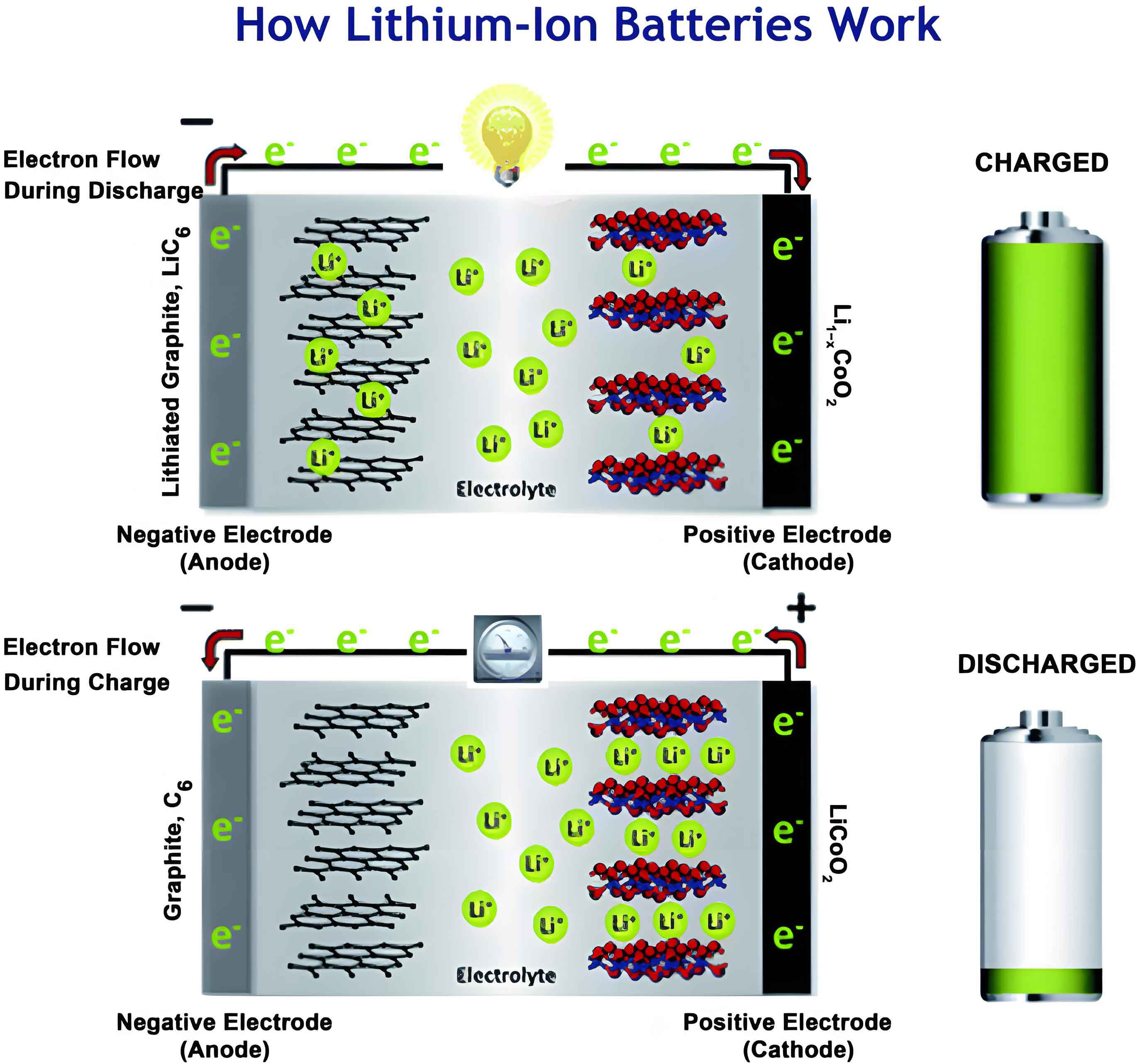
The safety state of a lithium-ion battery is influenced by numerous external and internal factors, each with specific safety boundaries that can shift under different conditions. Key factors include voltage, ambient temperature, current, mechanical deformation, extreme external conditions (e.g., humidity, electrical shock), SOC, SOH, internal resistance, and lithium plating state. Understanding these factors and their safety boundaries is essential for accurate SOS assessment. For instance, voltage abuse—either overvoltage or undervoltage—can trigger detrimental side reactions. Overvoltage may cause lithium plating on the anode, SEI growth, and eventually thermal runaway, while undervoltage can lead to copper dissolution and internal short circuits. The safety boundaries for voltage depend on battery chemistry; for lithium iron phosphate (LFP) batteries, the nominal voltage is 3.2 V, with charging and discharging cut-offs at 3.65 V and 2.0 V, respectively. However, these boundaries can migrate with aging or temperature changes. Similarly, ambient temperature affects safety: high temperatures accelerate SEI growth and may induce thermal runaway, whereas low temperatures promote lithium plating during charging. The typical operating range for LFP batteries is -30°C to 55°C, but charging below 0°C is prohibited due to lithium plating risks. Current influences safety through lithium plating at high charging rates or excessive heat generation during discharge. The maximum charging current for a lithium-ion battery is limited by anode kinetics, and safety thresholds vary with temperature and SOC. Mechanical deformation, from internal pressure build-up or external forces like collision, can cause internal short circuits. Extreme conditions such as high humidity may lead to insulation failure. SOC and SOH also play roles: higher SOC increases energy release risk during faults, while SOH degradation may reduce thermal stability due to lithium plating or increased internal resistance. The safety boundaries for these factors are often determined through abuse testing or model-based approaches, but they are dynamic and require continuous updating. Below is a table summarizing safety boundaries for key factors in lithium-ion batteries:
| Factor | Safety Boundary (Typical for LFP) | Migration Characteristics | Impact on Safety |
|---|---|---|---|
| Voltage | Charging: ≤3.65 V; Discharging: ≥2.0 V | Shrinks with aging or low temperature. | Overvoltage causes lithium plating; undervoltage leads to copper dissolution. |
| Ambient Temperature | Operation: -30°C to 55°C; Charging: >0°C | Lower charging limits in cold; reduced heat tolerance in heat. | High temp accelerates aging; low temp induces lithium plating. |
| Current | Charging: ≤1C (varies with temp); Discharging: ≤3C | Decreases at low temps or high SOC. | High charging current causes lithium plating; high discharge current generates excess heat. |
| Mechanical Deformation | No visible swelling; withstands specified force (e.g., 100 kN). | Weakens with aging or prior damage. | Can cause internal short circuits or leakage. |
| SOC | Recommended: 20%–80% for storage; 100% for operation. | Higher SOC increases risk severity. | More energy available for release during faults. |
| SOH | End-of-life: SOH < 80% | Safety may degrade due to lithium plating or increased resistance. | Mixed effects: lower capacity reduces energy but aging increases instability. |
The mechanisms by which these factors affect the safety state of lithium-ion batteries are complex and often interrelated. Voltage abuse, for example, drives side reactions that compromise safety. Overvoltage forces excessive lithium extraction from the cathode, leading to structural collapse and oxygen release, while lithium ions plate on the anode surface, reacting with electrolyte to form hydrogen gas. The heat generated from these reactions can be modeled using Arrhenius equations, where the reaction rate \( k \) is given by:
$$ k = A \exp\left(-\frac{E_a}{RT}\right) $$
Here, \( A \) is the pre-exponential factor, \( E_a \) the activation energy, \( R \) the gas constant, and \( T \) the temperature. This equation helps quantify thermal runaway risks. Similarly, ambient temperature impacts safety through its effect on reaction kinetics. Low temperatures reduce lithium-ion diffusion in the anode, increasing the overpotential and favoring lithium plating. The critical temperature for safe charging can be derived from electrochemical models, such as the Butler-Volmer equation, which describes the current density \( i \) as:
$$ i = i_0 \left[ \exp\left(\frac{\alpha_a F \eta}{RT}\right) – \exp\left(-\frac{\alpha_c F \eta}{RT}\right) \right] $$
where \( i_0 \) is the exchange current density, \( \alpha_a \) and \( \alpha_c \) are transfer coefficients, \( F \) is Faraday’s constant, and \( \eta \) is the overpotential. When \( \eta \) becomes too negative at low temperatures, lithium plating occurs. Current influences safety primarily through lithium plating during charging. The safe charging current boundary can be estimated using models that incorporate anode potential limits. For instance, a single-particle model might predict the maximum current \( I_{\text{max}} \) at a given SOC to avoid plating, expressed as:
$$ I_{\text{max}} = f(\text{SOC}, T, R_{\text{int}}) $$
where \( R_{\text{int}} \) is the internal resistance. Mechanical deformation, such as from impact, can cause internal short circuits with localized heat generation, modeled by Joule heating: \( Q = I^2 R t \), where \( Q \) is heat, \( I \) the short-circuit current, \( R \) the resistance, and \( t \) time. Extreme conditions like humidity introduce electrolyte contamination, leading to increased self-discharge and potential short circuits. SOC and SOH affect safety indirectly; higher SOC raises the risk of severe outcomes during faults, while SOH degradation may alter thermal stability. For example, lithium plating from aging lowers the self-heating onset temperature \( T_{\text{onset}} \), which can be modeled as:
$$ T_{\text{onset}} = T_0 – \Delta T(\text{SOH}) $$
where \( T_0 \) is the onset temperature for a new battery and \( \Delta T \) a function of SOH. Internal resistance, measurable via DC pulses or electrochemical impedance spectroscopy (EIS), serves as an indicator of health and safety. Increased resistance may signal SEI growth or lithium plating, both of which degrade safety. Lithium plating state is particularly critical, as metallic lithium reduces thermal stability and can cause internal short circuits. Detection methods include voltage relaxation analysis, where the relaxation voltage \( V_{\text{relax}} \) after charging shows plateaus indicative of lithium stripping, or EIS, where impedance spectra reveal changes in charge transfer resistance. The overall safety state of a lithium-ion battery can thus be seen as a function of multiple interacting factors:
$$ \text{SOS} = g(V, T, I, M, E, \text{SOC}, \text{SOH}, R_{\text{int}}, L) $$
where \( V \) is voltage, \( T \) temperature, \( I \) current, \( M \) mechanical state, \( E \) extreme conditions, \( L \) lithium plating state, and \( g \) a complex function often approximated by probabilistic or multi-criteria models.
Despite progress, several challenges persist in the safety state assessment of lithium-ion batteries. First, there is a lack of systematic analysis on the coupled mechanisms of multiple factors. Most studies focus on single factors, but in real-world applications, factors like voltage, temperature, and current interact nonlinearly. For instance, high current at low temperature exacerbates lithium plating, while aging may shift voltage safety boundaries. Understanding these interactions requires advanced modeling, such as coupled electrochemical-thermal models, which integrate equations for ion transport, heat generation, and side reactions. A simplified coupled model might express the temperature rise \( \Delta T \) as:
$$ \Delta T = \int \left( \frac{I^2 R_{\text{int}}}{C_p} + \frac{\sum Q_{\text{side}}}{C_p} \right) dt $$
where \( C_p \) is heat capacity, \( Q_{\text{side}} \) heat from side reactions, and the terms depend on voltage, current, and SOC. Second, safety boundaries and their migration features are poorly quantified. While abuse tests provide static thresholds, these thresholds change with battery age, usage patterns, and environmental conditions. For example, the maximum charging current for a lithium-ion battery may decrease after cycles due to increased internal resistance. Developing dynamic safety boundary models that adapt to real-time data is essential. This could involve machine learning techniques trained on historical data to predict threshold migrations. Third, quantitative assessment methods for SOS remain underdeveloped. Current approaches often rely on simplified abuse functions or limited indicators, neglecting internal states like lithium plating. Future methods should incorporate more comprehensive metrics, perhaps using multi-physics models or data-driven algorithms. For example, a Bayesian network could integrate sensor data to estimate SOS probabilities, updating in real-time as new data arrives. The formula might be:
$$ P(\text{SOS} | \mathbf{D}) = \frac{P(\mathbf{D} | \text{SOS}) P(\text{SOS})}{P(\mathbf{D})} $$
where \( \mathbf{D} \) is the observed data vector. Additionally, the integration of SOS assessment into BMS and big data platforms needs standardization to ensure interoperability and accuracy.
In conclusion, the safety state assessment of lithium-ion batteries is a vital yet evolving field. It enables proactive safety management by quantifying the dynamic impact of various factors on battery safety. While definitions and methods have been proposed, challenges like coupled factor mechanisms, dynamic safety boundaries, and quantitative assessment gaps hinder widespread adoption. Future research should focus on developing integrated models that account for factor interactions, creating adaptive threshold migration algorithms, and enhancing quantitative SOS evaluation with real-time data fusion. As lithium-ion battery technologies continue to power the transition to sustainable energy, advancing safety state assessment will be crucial for ensuring reliability and preventing incidents in applications ranging from grid storage to electric vehicles.
To further elaborate, consider the role of lithium plating in safety state degradation. Lithium plating, often induced by low-temperature or high-current charging, deposits metallic lithium on the anode, which can react exothermically with electrolyte. The amount of plated lithium \( L \) might be estimated from voltage relaxation profiles, using empirical equations like:
$$ L = k \cdot \Delta V \cdot t_{\text{relax}} $$
where \( k \) is a constant, \( \Delta V \) the voltage drop during relaxation, and \( t_{\text{relax}} \) the relaxation time. This highlights the need for advanced monitoring techniques in lithium-ion battery systems. Moreover, the interplay between SOH and SOS is complex. As a lithium-ion battery ages, its capacity fades, but safety may deteriorate faster due to lithium plating or increased impedance. Regular testing, such as EIS, can track these changes. For instance, the growth of SEI layer resistance \( R_{\text{SEI}} \) can be modeled as:
$$ R_{\text{SEI}} = R_0 + A \sqrt{t} $$
where \( R_0 \) is initial resistance, \( A \) a growth constant, and \( t \) time. Such models aid in predicting safety state trends. In practice, implementing SOS assessment requires robust algorithms that process data from BMS sensors. A potential framework involves a multi-layer approach: sensor data acquisition, feature extraction (e.g., voltage variance, temperature gradients), factor analysis, and SOS computation using a weighted sum or probabilistic model. For example, a weighted SOS score could be:
$$ \text{SOS}_{\text{score}} = \sum_{i=1}^{n} w_i \cdot f_i(x_i) $$
with weights \( w_i \) determined by entropy methods or expert judgment. This aligns with the trend towards smart BMS with embedded intelligence. Ultimately, the goal is to achieve a real-time safety map for lithium-ion battery systems, where SOS values guide operational decisions, such as adjusting charging rates or initiating cooling, to maintain safety within acceptable bounds. As research progresses, collaboration between academia and industry will be key to translating these concepts into practical solutions, ensuring that lithium-ion batteries continue to serve as a safe and reliable cornerstone of modern energy infrastructure.