
Large-scale deployment of energy storage cells in applications such as electric vehicles and grid stabilization demands sophisticated management systems to ensure safety, reliability, and longevity. A critical function of these systems is cell balancing, which mitigates the performance degradation caused by inherent inconsistencies among individual energy storage cells. In this review, I provide a comprehensive overview of energy management system methods for energy storage cells, focusing on balancing topologies and control strategies. The discussion encompasses both dissipative and non-dissipative approaches, their working principles, advantages, and limitations. I also explore key control algorithms based on state of charge, open-circuit voltage, temperature, load, capacity, and hybrid methods. Finally, I outline future research directions to enhance the efficiency, cost-effectiveness, and intelligence of balancing systems for energy storage cells.
Introduction
The global energy transition has accelerated the adoption of energy storage systems, driven by policies that promote renewable integration and grid flexibility. Among various storage technologies, lithium-ion energy storage cells have emerged as a leading choice due to their high energy density, long cycle life, and decreasing costs. However, the performance of a battery pack composed of numerous series-connected energy storage cells is often limited by the weakest cell. Inconsistencies in manufacturing, aging, and operating conditions lead to voltage and capacity divergence, which can cause overcharge, overdischarge, and accelerated degradation. Cell balancing, therefore, becomes an indispensable function of the battery management system (BMS). The selection of an appropriate balancing topology and control strategy directly impacts the energy utilization, safety, and lifetime of the entire energy storage system. This article systematically reviews the state-of-the-art balancing techniques for energy storage cells, with an emphasis on topology classification, performance comparison, and emerging trends.
Battery Management System Overview
The BMS is the core electronic subsystem responsible for monitoring, protecting, and optimizing the operation of an energy storage cell pack. It acquires critical physical parameters such as cell voltage, current, and temperature, and computes key states including state of charge (SOC), state of power (SOP), state of energy (SOE), and state of health (SOH). The BMS performs the following essential functions:
- Measurement: High-frequency, high-precision acquisition of voltage, current, and temperature for each energy storage cell.
- Alarm: Detection of abnormal conditions such as overvoltage, undervoltage, overcurrent, overtemperature, or communication faults.
- Safety Management: Immediate disconnection of faulty cells or modules to prevent thermal runaway or electrical hazards.
- Self-diagnosis: Internal monitoring of sensor accuracy, communication integrity, and software health.
Modern BMS design trends toward modularity, intelligence, and scalability. The balancing subsystem, whether integrated within the BMS or as a separate module, must be efficient, reliable, and cost-effective. Below, I discuss the primary balancing topologies used for energy storage cells.
Balancing Topologies for Energy Storage Cells
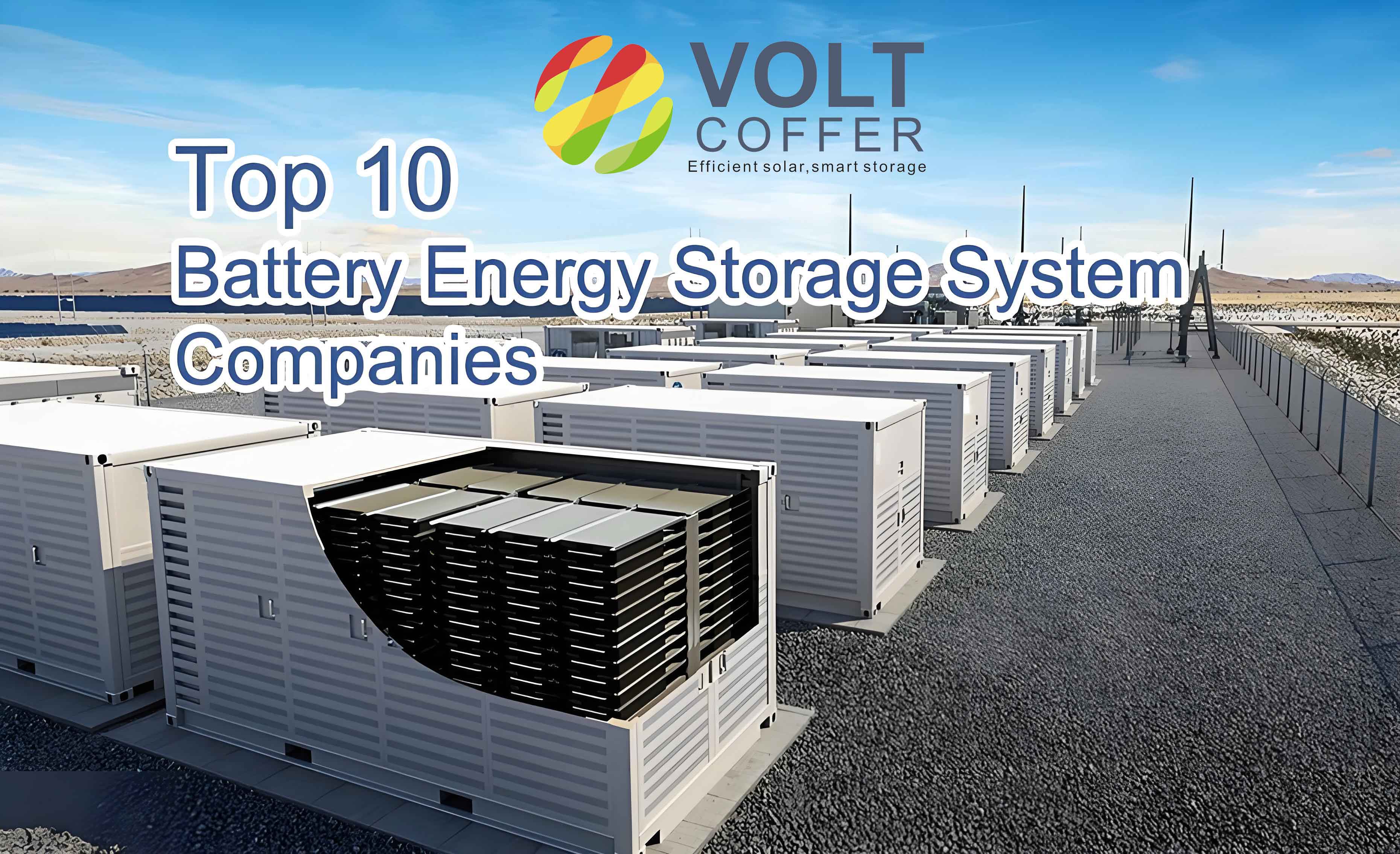
Balancing topologies are broadly classified into dissipative (passive) and non-dissipative (active) types, based on the energy flow path. The choice of topology significantly affects balancing speed, energy efficiency, circuit complexity, and cost. Figure 1 (inserted above) illustrates a typical energy storage battery pack. In the following subsections, I detail each topology class.
Dissipative Topologies
Dissipative balancing, also known as passive balancing, operates by shunting excess energy from higher-voltage energy storage cells through a resistor, converting it into heat. The simplest implementation uses a fixed resistor connected in parallel with each cell via a switch. When the voltage of a cell exceeds a threshold, the switch closes and the resistor dissipates energy until the cell voltage drops to the level of its neighbors. While this method is low-cost and easy to control, it suffers from poor energy efficiency and thermal management challenges. The energy dissipated as heat not only reduces overall system efficiency but also elevates temperature, which may accelerate aging of adjacent energy storage cells.
| Topology Type | Advantages | Limitations |
|---|---|---|
| Fixed-Resistor Dissipative | Low cost, simple control, compact | Poor efficiency, heat generation, slow balancing |
| Switched-Resistor Dissipative | Adjustable dissipation, moderate simplicity | Still wasteful, thermal stress |
| Single-Capacitor Active | Low cost, small size | Complex control, many switches |
| Single-Inductor Active | Fast balancing, moderate efficiency | Voltage stress, control complexity |
| Single-Winding Transformer Active | Galvanic isolation, low magnetic loss | Difficult implementation, moderate speed |
| LC Resonant Active | Zero-current switching, low EMI | Slow balancing, current depends on voltage difference |
| Full-Bridge Active | High speed, high efficiency | Large size, complex control, high cost |
Non-Dissipative Topologies
Non-dissipative topologies transfer energy from overcharged energy storage cells to undercharged ones using reactive components such as capacitors, inductors, or transformers. This approach preserves the total energy of the pack and minimizes thermal waste. I describe the main subtypes below.
Capacitor-Based Balancing
Capacitor-based active balancing employs a flying capacitor that temporarily stores energy. For instance, a single-capacitor topology uses switches to connect a capacitor across any two adjacent energy storage cells. The capacitor charges from the higher-voltage cell and then discharges into the lower-voltage cell, iteratively reducing the voltage difference. This method is simple but requires many switches and the balancing speed is limited by the capacitance value and switching frequency.
Inductor-Based Balancing
Inductor-based topologies exploit the property that inductor current cannot change instantaneously. A single-inductor topology uses switches to connect the inductor first to a high-energy cell (charging the inductor) and then to a low-energy cell (discharging). This achieves faster balancing than capacitor methods and can be modulated for higher power transfer. However, voltage stress on switches and control complexity are concerns.
Transformer-Based Balancing
Transformer-based topologies provide galvanic isolation between energy storage cells, enhancing safety. A single-winding transformer can transfer energy from one cell to another via magnetic coupling. The primary side is connected to the donor cell, and the secondary side to the recipient cell. Advantages include isolation and moderate efficiency, but the transformer size and cost can be high, especially for large packs.
Converter-Based Balancing
DC-DC converter-based topologies offer flexible and efficient energy transfer. They can be non-isolated (e.g., LC resonant) or isolated (e.g., full-bridge). The LC resonant topology uses zero-current switching to mitigate EMI and switching losses, though balancing speed is slower when voltage differences are small. Full-bridge converters achieve high-speed, high-efficiency balancing but require complex control and substantial hardware. Table 1 summarizes the key pros and cons of each topology.
Balancing Control Strategies for Energy Storage Cells
The effectiveness of a balancing circuit depends heavily on the control strategy that determines when and how much energy to transfer. The core decision variable should accurately reflect the imbalance among energy storage cells. Common variables include SOC, open-circuit voltage (OCV), temperature, load current, capacity, or a combination thereof.
State-of-Charge (SOC) Based Balancing
SOC represents the remaining capacity of an energy storage cell as a percentage of its maximum capacity. Balancing based on SOC aims to equalize the SOC of all cells. SOC cannot be measured directly but is estimated using methods such as Coulomb counting (ampere-hour integration). The fundamental SOC estimation equation is:
$$
\text{SOC}(t) = \text{SOC}(t_0) + \frac{1}{C_n} \int_{t_0}^{t} \eta I(\tau) d\tau
$$
where \(C_n\) is the nominal capacity, \(\eta\) is the Coulombic efficiency, and \(I\) is the current (positive for discharge, negative for charge). While simple, this method suffers from cumulative errors due to current sensor offset and unknown initial SOC. Advanced estimation techniques like Kalman filtering or neural networks can improve accuracy but increase computational load.
Open-Circuit Voltage (OCV) Based Balancing
OCV has a well-known monotonic relationship with SOC for lithium-ion energy storage cells. By measuring the terminal voltage after a relaxation period (when no current flows), the SOC can be inferred. The OCV-SOC relationship can be expressed as a nonlinear function:
$$
V_{OC} = f(\text{SOC})
$$
Using OCV as a balancing criterion is attractive because voltage measurement is straightforward and inexpensive. However, the need for a relaxation period (typically minutes to hours) makes it unsuitable for real-time balancing during operation. Additionally, polarization effects distort voltage readings immediately after current interruptions.
Temperature-Based Balancing
Temperature imbalance among energy storage cells can lead to uneven aging and performance. Balancing strategies can incorporate thermal information to redistribute current or activate cooling/heating. Passive thermal balancing relies on heat spreading, while active methods use controlled charging/discharging to equalize temperatures. Integrating temperature with SOC or voltage control can improve overall health.
Load-Based Balancing
Dynamic load changes can exacerbate cell imbalances. A load-based balancing strategy monitors the output power and adjusts the balancing current accordingly. For example, during heavy discharge, the controller may prioritize transferring energy to weaker cells. This adaptive approach improves response time but requires high-bandwidth sensing and control.
Capacity-Based Balancing
Ideally, balancing should equalize the usable capacity of each energy storage cell rather than just voltage. Capacity balancing attempts to make the actual available energy in each cell identical. However, online capacity estimation is challenging and typically performed offline or during periodic checks. Thus, capacity-based balancing remains more of a research concept than a practical implementation.
Hybrid Balancing Strategies
Hybrid methods combine two or more variables to achieve robust performance. For instance, a combined SOC-temperature strategy can reduce balancing action when cells are cold (high internal resistance) to avoid excessive energy loss. Another example is using SOC as the primary variable but overriding with voltage limits to prevent overcharge. Hybrid controllers often employ fuzzy logic or machine learning to adapt to varying conditions. Table 2 compares the key features of these control strategies.
| Strategy | Balancing Variable | Advantages | Limitations |
|---|---|---|---|
| SOC-based | State of Charge | Direct capacity indicator, effective | Requires accurate estimation; error accumulation |
| OCV-based | Open-Circuit Voltage | Simple measurement, low cost | Needs relaxation; not real-time |
| Temperature-based | Cell temperature | Improves thermal uniformity, safety | Slow response; auxiliary sensors needed |
| Load-based | Output power/current | Adaptive to dynamic conditions | High computation; complex control |
| Capacity-based | Usable capacity | Ideal for long-term aging | Difficult online estimation |
| Hybrid | Multiple variables | Robust, high performance | Complexity, calibration effort |
Performance Metrics and Efficiency Considerations
When designing a balancing system for energy storage cells, several performance metrics must be considered simultaneously. Balancing speed determines how quickly a given voltage or SOC difference is corrected. Efficiency is the ratio of transferred energy to total energy consumed (including losses in switches, inductors, etc.). A simple efficiency metric can be defined as:
$$
\eta_{bal} = \frac{E_{transferred}}{E_{dissipated} + E_{transferred}}
$$
Other important factors include component count, cost, reliability, and control complexity. Table 3 presents a qualitative comparison of typical topologies across these dimensions.
| Topology | Balancing Speed | Energy Efficiency | Component Count | Control Complexity | Cost |
|---|---|---|---|---|---|
| Fixed Resistor | Low | Very Low | Low | Very Low | Low |
| Switched Resistor | Low | Low | Low | Low | Low |
| Single Capacitor | Moderate | Moderate | Moderate | High | Low |
| Single Inductor | High | High | Moderate | High | Moderate |
| Single Transformer | Moderate | High | Moderate | High | Moderate |
| LC Resonant | Moderate | High | Moderate | High | Moderate |
| Full-Bridge Converter | Very High | Very High | High | Very High | High |
As shown in Table 3, no single topology excels in all categories. The choice depends on the specific application requirements—for instance, electric vehicles prioritize high speed and efficiency, while stationary storage may tolerate slower balancing with lower cost.
Future Research Directions
The field of balancing for energy storage cells continues to evolve. I identify several promising avenues for future work:
- Novel Topologies: Exploration of hybrid circuits that combine capacitive, inductive, and transformer elements to achieve both high speed and high efficiency. Emerging wide-bandgap semiconductors (e.g., GaN, SiC) can further reduce switching losses and enable miniaturization.
- Intelligent Control Algorithms: Machine learning, particularly reinforcement learning and deep neural networks, can optimize balancing decisions in real time by learning from historical data and current system states. These methods can adapt to varying cell aging, temperature, and load patterns.
- Integration with Battery Pack Design: Balancing circuits should be considered early in pack design, potentially integrated into cell interconnects or module housings to save space and reduce wiring. Modular architectures with decentralized balancing controllers can enhance scalability.
- Cost Reduction: For widespread adoption, especially in large-scale storage, the cost per energy storage cell must decrease. This can be achieved through simpler circuits, shared components, or highly integrated ICs.
- Advanced Diagnostics: Using balancing circuits to also perform health diagnostics (e.g., internal resistance measurement, impedance spectroscopy) can provide added value without additional hardware.
Conclusion
Effective energy management of large battery packs relies on robust balancing systems that address the inherent variability among energy storage cells. This review has examined the spectrum of balancing topologies—from simple dissipative resistors to sophisticated active converters—and the corresponding control strategies that decide when and how to transfer energy. I have highlighted that the optimal choice depends on a trade-off among speed, efficiency, cost, and complexity. Future advancements in power electronics, control theory, and system integration will continue to enhance the performance and practicality of balancing solutions. As the demand for reliable and long-lasting energy storage cells grows, research and development in this area will remain critical to the success of electrification and renewable energy storage.