
As a researcher deeply involved in the field of electrochemical energy storage, I have witnessed firsthand the rapid expansion of the global “dual carbon” and energy transformation landscape. The model of “renewable energy generation plus large-scale energy storage” has become the mainstream approach for building new power systems in China. Among various technologies, the lithium-ion battery energy storage battery system stands out as the most mature and fastest-growing technology in the power energy storage sector, thanks to its excellent cycle performance, flexible construction, high specific energy, and relatively low cost. By the end of 2023, the cumulative installed capacity of new energy storage projects nationwide had reached 31.39 GW/66.87 GWh, with lithium-ion energy storage battery technology accounting for an overwhelming 97.4% of this capacity. Projections indicate that by 2030, the installed capacity of wind and solar power in China could reach 2200–2400 GW, with new energy storage projected at 160 GW/400 GWh, further amplifying the deployment of energy storage battery stations.
However, alongside this rapid development, safety incidents involving energy storage systems have become increasingly frequent, raising widespread concerns about the reliability of lithium-ion energy storage battery systems. According to incomplete statistics, nearly 70 energy storage-related safety accidents have occurred globally since 2017, involving projects exceeding 4 GWh. The number of incidents has grown sharply as the market expands. Analysis of publicly reported accidents in 2023 reveals that a significant proportion of fires occur within the first two years of operation, particularly within the first year. These incidents often result from internal short circuits in battery cells, leading to thermal runaway and subsequent fire propagation. The flammable and explosive gases released can mix with air, causing catastrophic explosions. The safety issues of lithium-ion energy storage battery systems have thus become a critical bottleneck limiting their large-scale commercialization. Urgent research and development are needed for safety prevention and control technologies across the entire lifecycle, from battery manufacturing and power station design to operation and post-accident firefighting. In this article, I will comprehensively review the research progress from five key aspects: intrinsic safety of lithium-ion energy storage batteries, thermal runaway propagation and suppression, early warning and detection technologies, thermal management of energy storage battery systems, and multi-level safety prevention and control strategies.
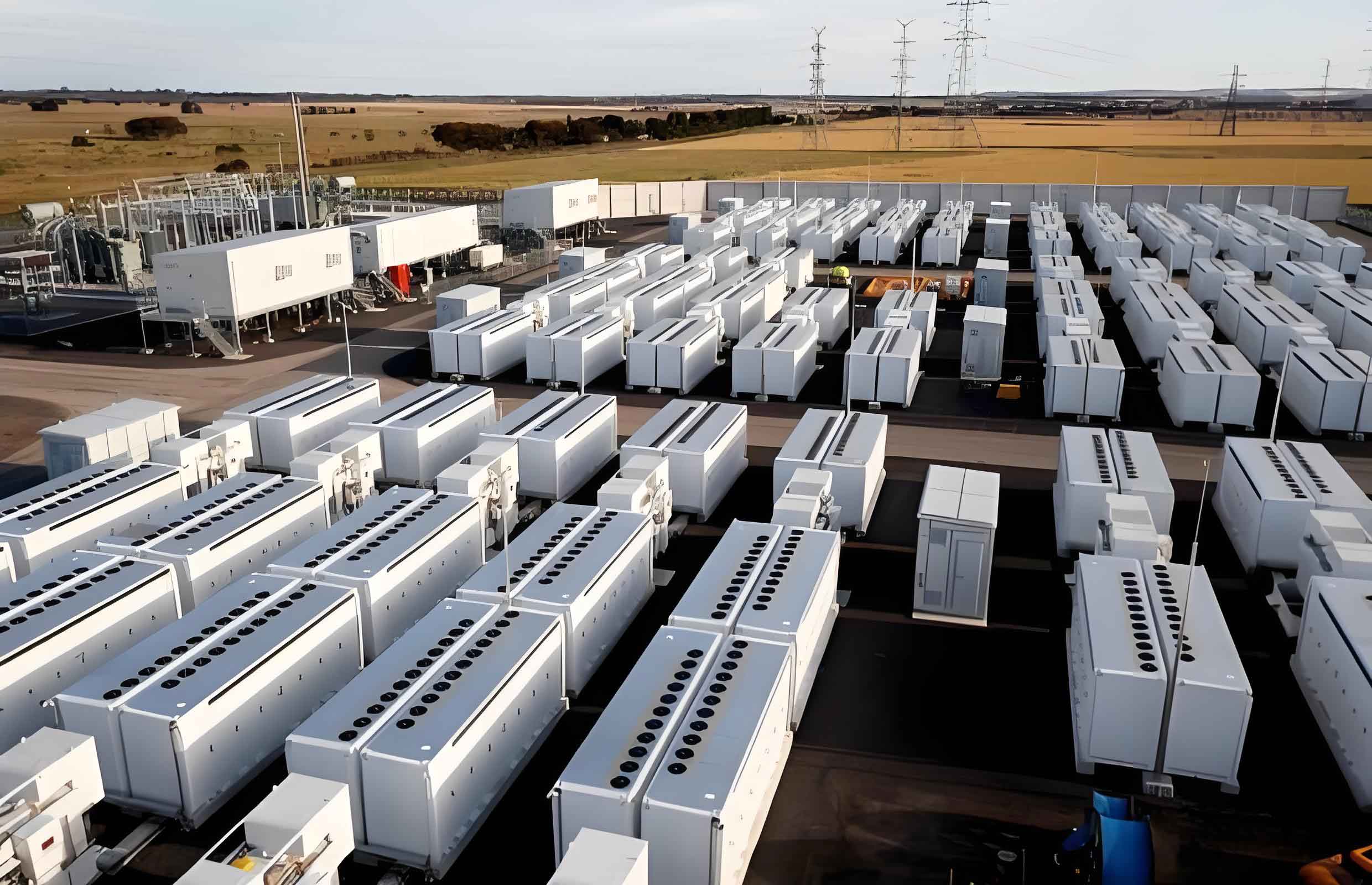
Intrinsic Safety Technologies for Lithium-ion Energy Storage Batteries
The intrinsic safety of lithium-ion energy storage batteries is the primary factor influencing the overall safety of the system. The core component, the battery, can undergo sudden combustion or explosion under complex operating conditions, including overcharging, short circuits, extrusion, and extreme temperatures. To fundamentally address these safety challenges, modifications to key materials such as electrodes, electrolytes, and separators are essential to reduce internal side reactions and enhance inherent safety.
Electrolyte Enhancement
The low flash point and high flammability of organic carbonate electrolytes are the root causes of thermal runaway in lithium-ion energy storage batteries. The addition of non-flammable additives is an effective strategy to reduce electrolyte flammability. Common additives include phosphorus-containing, fluorine-containing, and silicon-containing compounds.
For instance, dimethyl methylphosphonate (DMMP) has been shown to significantly inhibit flame size, evaporation rate, and combustion intensity of electrolytes. Tris(2-chloropropyl) phosphate exhibits superior flame retardancy among composite retardants. Fluorinated solvents, such as pentafluoroethoxycyclotriphosphazene (PFPN), can render the electrolyte completely non-flammable with only a 5% mass fraction addition. Perfluoro(2-methyl-3-pentanone) (PFMP) combined with N,N-dimethylacetamide (DMAC) and fluorocarbon surfactants can create a composite electrolyte with dual self-cooling and flame-retardant properties. Additionally, concentrated electrolytes like LiTFSI in fluoroethylene carbonate (FEC) demonstrate excellent flame retardancy and wide temperature range performance.
The following table summarizes key additives and their effects on electrolyte safety:
| Additive Type | Example Compound | Key Effect on Safety | Optimal Concentration |
|---|---|---|---|
| Phosphorus-based | DMMP | Reduces flame size and combustion intensity | Variable |
| Halogenated | Tris(2-chloropropyl) phosphate | Superior flame retardancy | ~10% by mass |
| Fluorinated | PFPN | Completely non-flammable | 5% by mass |
| Fluorinated ether | PFMP + DMAC + FS | Self-cooling and flame-retardant | Variable |
The thermal stability and non-flammability of the electrolyte are critical for the safe operation of energy storage battery systems. The reaction mechanism for additive performance can be described by the heat release rate reduction principle, where the additive A decomposes endothermically: $$ A \rightarrow \text{Products} + \Delta H_{\text{endothermic}} $$
Separator Modification
Separators play a vital role in preventing direct contact between electrodes and ensuring ion transport. Commercial polyolefin separators suffer from high thermal shrinkage, compromising battery safety. Advanced separators, such as those based on polyimide (PI), can maintain dimensional stability up to 500°C. Ceramic coatings (e.g., SiO₂, Al₂O₃) on polymer membranes enhance heat resistance and mechanical strength. Flame-retardant coatings using materials like decabromodiphenyl ethane and antimony oxide further improve safety.
The following table compares the thermal shrinkage of various separator materials at elevated temperatures:
| Separator Material | Temperature (°C) | Time (min) | Thermal Shrinkage (%) |
|---|---|---|---|
| Polyolefin (PE/PP) | 140 | 30 | > 50% (melted) |
| Polyimide (PI) | 180 | 30 | < 1% |
| PET with Al₂O₃ coating | 200 | 30 | < 5% |
| PAN/Phosphazene composite | 200 | 30 | < 5% |
Electrode Material Stabilization
Frequent charge-discharge cycles can degrade the structural stability of cathode (e.g., NCM) and anode (e.g., graphite) materials, impacting safety. Surface coatings and doping strategies improve thermal stability. For example, TiO₂ coating on NCM523 raises the thermal decomposition temperature. Yttrium gradient doping stabilizes the crystal structure. Magnesium doping in NCA prevents particle cracking during overcharge.
The thermal stability enhancement can be quantified by the increase in onset temperature of oxygen release: $$ T_{\text{onset,doped}} = T_{\text{onset,pristine}} + \Delta T $$ where \(\Delta T\) can range from 20 to 50°C depending on the doping element and concentration.
Thermal Runaway Propagation and Suppression in Energy Storage Battery Systems
Thermal runaway in lithium-ion energy storage batteries releases significant heat, which can propagate to adjacent cells. Controlling temperature is essential for preventing large-scale fire. Various fire-extinguishing agents have been investigated, including water-based agents (e.g., water mist), clean gases (e.g., Novec1230, heptafluoropropane), and others.
Water mist has proven highly effective due to its superior cooling capacity, while gas agents like heptafluoropropane can suppress flames quickly but may lead to re-ignition due to insufficient cooling. The cooling efficiency of different agents has been quantified:
$$ \text{Cooling rate} \, (\degree\text{C/min}) = \frac{\Delta T}{\Delta t} $$
The following table summarizes the cooling performance of various agents on an energy storage battery module:
| Agent | Cooling Rate (°C/min) | Re-ignition Risk |
|---|---|---|
| Water Mist | 0.24 | Low |
| Perfluorohexanone | 0.15 | Moderate |
| Heptafluoropropane | 0.05 | High |
| Nitrogen | 0.07 | High |
In experiments, perfluorohexanone microemulsions reduced the peak temperature of the battery module by up to 145°C. Liquid nitrogen cooling has also been validated as an effective strategy for inhibiting thermal runaway propagation. The heat absorption capacity of a cooling agent can be modeled by: $$ Q_{\text{absorbed}} = m \cdot C_p \cdot \Delta T $$ where \(m\) is the mass, \(C_p\) the specific heat, and \(\Delta T\) the temperature rise.
Active Monitoring and Early Warning Technologies for Energy Storage Battery Systems
Traditional smoke and temperature detectors are insufficient for early warning of thermal runaway in lithium-ion energy storage battery systems. Modern approaches utilize electrical signals, data-driven models, and gas analysis for proactive detection.
Electrical Signal Warning
Electrochemical impedance spectroscopy (EIS) is a promising technique for early detection. Changes in internal resistance, particularly at specific frequencies, can indicate cell degradation or micro-short circuits. For example, using single-frequency impedance at \(X_{1\,\text{Hz}}\) and \(X_{100\,\text{Hz}}\) allows real-time monitoring. This method can issue warnings more than 5 minutes before thermal runaway.
The relationship between impedance and internal temperature can be expressed by an Arrhenius-type equation: $$ |Z(T)| = A \cdot \exp\left(\frac{E_a}{RT}\right) $$ where \(A\) is a pre-exponential factor, \(E_a\) is the activation energy, \(R\) is the gas constant, and \(T\) is the temperature.
Data-Model Hybrid-Driven Early Warning
Combining measured data (voltage, current, temperature) with mathematical models (e.g., Thevenin model, extended Kalman filter) enables nonlinear state estimation and fault detection. Machine learning models such as CNN-BiGRU-Attention have achieved high accuracy (over 99.7%) in predicting safety incidents. These models can detect anomalies before visible signs appear, providing critical lead time for intervention.
Gas and Vapor Analysis for Early Warning
Lithium-ion energy storage battery thermal runaway releases characteristic gases, including hydrogen (H₂), carbon monoxide (CO), carbon dioxide (CO₂), hydrogen chloride (HCl), and hydrogen fluoride (HF). Hydrogen is often detected 13 minutes before ignition, offering substantial early warning. Gas sensors (e.g., MQ-2, MQ-7, MQ-8) can detect these gases and trigger alarms. AI-based image recognition of vaporized electrolyte can also provide warnings within 1 minute of vapor emission, significantly faster than conventional detectors.
The following table lists typical gas indicators and their detection times for energy storage battery thermal runaway:
| Gas Species | Detection Time Before Ignition (min) | Concentration Threshold (ppm) |
|---|---|---|
| Hydrogen (H₂) | 13 | 500–1000 |
| Carbon Monoxide (CO) | 8–10 | 200–500 |
| Carbon Dioxide (CO₂) | 5–8 | 5000–10000 |
| Hydrogen Fluoride (HF) | 3–5 | 50–100 |
Thermal Management Safety Technologies for Energy Storage Battery Systems
In containerized energy storage battery systems, thousands of cells are densely packed, leading to uneven heat distribution and temperature differences that degrade performance and safety. Effective thermal management is crucial. Current technologies include air cooling, liquid cooling, phase change material (PCM) cooling, and heat pipe cooling.
Air cooling remains the most widely used due to its low cost and maturity, but it is less effective for high-capacity systems. Optimized duct designs and fan configurations can maintain temperature differences below 5°C during 0.5C operation. Liquid cooling, using coolants like transformer oil, offers superior performance, with immersion cooling showing the best thermal uniformity at high discharge rates. PCM-based cooling, combined with heat pipes or water cooling, can provide passive thermal regulation and extend safe operating duration.
The thermal performance of a cooling system can be evaluated by the overall heat transfer coefficient \(U\): $$ Q = U \cdot A \cdot \Delta T_{\text{lm}} $$ where \(A\) is the heat transfer area and \(\Delta T_{\text{lm}}\) is the log mean temperature difference. The following table compares key cooling technologies for energy storage battery systems:
| Technology | Cooling Capacity (W/m²K) | Temperature Uniformity | Technical Maturity | Cost |
|---|---|---|---|---|
| Air Cooling | 10–50 | Moderate | High | Low |
| Liquid Cooling (Indirect) | 100–500 | Good | High | Moderate |
| Immersion Cooling | 500–1000 | Excellent | Moderate | High |
| Phase Change Material (PCM) | Passive, variable | Good | Low (Lab stage) | High |
| Heat Pipe | 1000–10000 | Excellent | Moderate | High |
Multi-Level Safety Prevention and Control Systems for Energy Storage Battery Stations
Given the complexity of large-scale energy storage battery systems, a multi-layered approach is essential. This involves hierarchical architecture from the cell level to the system level, integrating early warning, localized suppression, and firefighting.
A typical multi-level safety system includes:
- Level 1 (Cell/Pack): Intrinsic safety design, BMS monitoring, and passive protection (e.g., safety vents).
- Level 2 (Module/Cluster): Gas-based suppression for early-stage fires, cluster-level temperature monitoring.
- Level 3 (Container/Cabin): Water-based suppression (water mist or immersion) for large-scale fires, explosion-proof venting.
- Level 4 (Station): Integrated fire alarm system, remote monitoring, emergency response protocols.
For example, a “flooding” type fire suppression system can deliver water-based agents directly to the battery module, preventing thermal propagation. The system uses composite detectors monitoring H₂, CO, and volatile organic compounds. Two alarm levels are set: Level 1 (warning) triggers audible-visual alarms; Level 2 (fire) activates the suppression system after a 3-minute delay. Such systems have proven effective in preventing re-ignition.
The effectiveness of a multi-level system can be quantified by the reduction in fire escalation probability: $$ P_{\text{escalation, mitigated}} = P_{\text{initial}} \cdot \prod_{i=1}^{n} (1 – \eta_i) $$ where \(\eta_i\) is the efficiency of the i-th level of protection, and \(n\) is the number of layers.
The following table outlines a multi-level safety framework for an energy storage battery station:
| Level | Component | Technology | Response Time |
|---|---|---|---|
| Level 1 | Cell/Pack | Intrinsic material safety, BMS, fuse | Milliseconds to seconds |
| Level 2 | Cluster | Gas-based suppression (e.g., perfluorohexanone) | Seconds to minutes |
| Level 3 | Container | Water mist or immersion cooling | Minutes |
| Level 4 | Station-wide | Integrated detection, remote control, evacuation | Continuous |
Conclusion
In my research and analysis, the safety of lithium-ion energy storage battery systems remains the most prominent challenge for large-scale deployment. Progress has been made across multiple areas: intrinsic material modifications, advanced fire suppression, early warning systems, thermal management, and multi-level protection. However, several issues persist. For intrinsic safety, while coating and doping improve thermal stability, these processes are often complex and not yet scalable for industrial production. In fire suppression, the industry tends to focus on individual components rather than system integration, leading to poor compatibility and coordination among subsystems. For early warning, conventional detectors are inadequate, and a combination of real-time electrical impedance monitoring, gas analysis, and data-driven models is needed for effective multi-stage alerting. Thermal management continues to rely heavily on air cooling, but future systems will benefit from hybrid approaches like PCM and liquid cooling, tailored to high-capacity storage battery systems. Finally, multi-level safety systems must be intelligently integrated with AI technologies to achieve real-time monitoring, early risk identification, and graded emergency responses.
In conclusion, improving the inherent safety of battery materials must be combined with advanced prevention and control technologies. A scientific simulation platform and AI-enhanced intelligent control will be crucial for enhancing the safety and reliability of grid-scale energy storage battery systems. These efforts will provide the necessary technical support for the large-scale engineering and commercialization of lithium-ion energy storage battery systems, ensuring safe and sustainable energy storage solutions for the future.