
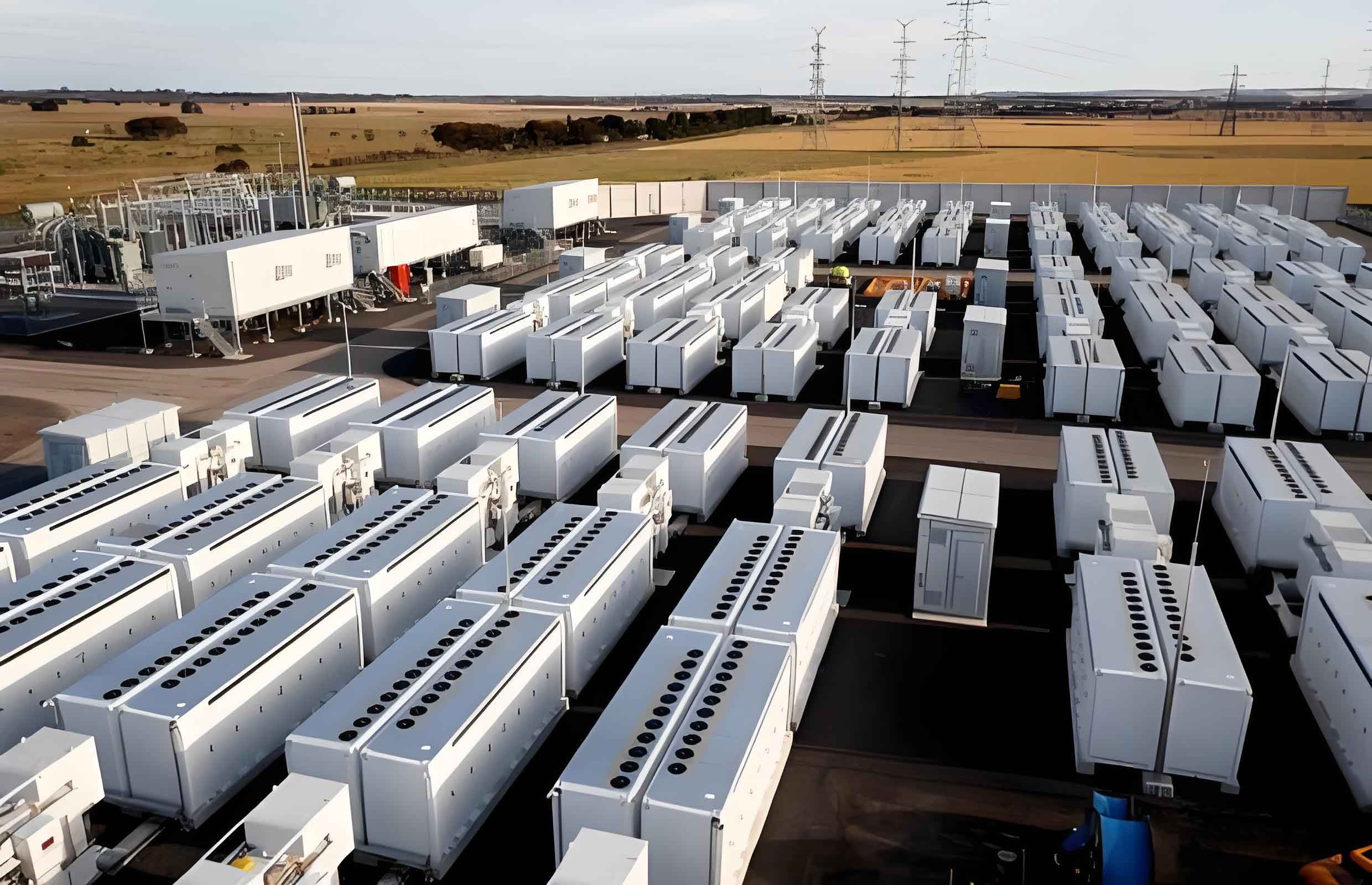
The rapid expansion of the global energy storage market has positioned lithium-ion energy-storage batteries as a cornerstone technology for achieving carbon neutrality goals. With their high energy density and scalable architecture, these systems are deployed in residential, commercial, and utility-scale applications. However, the inherent reactivity of lithium components introduces significant risks during transportation—including thermal runaway, fire, and explosion—if safety protocols are not rigorously followed. International and domestic regulations have therefore established comprehensive requirements covering safety testing, labeling, packaging, product structure, and quality management systems. This paper consolidates and analyzes these requirements to provide clear guidance for manufacturers, carriers, and other stakeholders involved in the transport of lithium-ion energy-storage batteries.
1. Overview of Regulatory Frameworks
The primary international instrument governing the transport of dangerous goods is the United Nations Recommendations on the Transport of Dangerous Goods – Model Regulations (United Nations TDG). These regulations are supplemented by the UN Manual of Tests and Criteria, which specifies the test methods to ensure that lithium-ion energy-storage batteries can withstand the stresses of transportation. Additionally, modal-specific regulations apply:
| Transport Mode | Applicable Regulation | Key Reference |
|---|---|---|
| Air | IATA Dangerous Goods Regulations (DGR) & ICAO Technical Instructions | Lithium battery handling, cargo-only aircraft labels |
| Sea | International Maritime Dangerous Goods Code (IMDG Code) | UN 3480/3536 classification, packaging groups |
| Road (International) | European Agreement Concerning the International Carriage of Dangerous Goods by Road (ADR) | Vehicle marking, emergency response |
| Rail | Regulation Concerning the International Carriage of Dangerous Goods by Rail (RID) / Chinese TB/T 30006 | Additional labeling (Class 4.2) for China rail |
| Inland Waterways | European Agreement Concerning the International Carriage of Dangerous Goods by Inland Waterways (ADN) | Barge transport restrictions |
All national and regional regulations are harmonized with the UN TDG framework, though some add specific requirements. In China, for example, road transport follows JT/T 617, while maritime transport of lithium-ion energy-storage batteries must comply with JT/T 1543. Compliance with these codes is mandatory before any shipment.
2. Safety Testing Requirements for Transport
Before a lithium-ion energy-storage battery can be offered for transport, it must pass the series of tests defined in Section 38.3 of the UN Manual of Tests and Criteria. These tests simulate extreme conditions encountered during logistics: low pressure, temperature cycling, vibration, shock, short circuit, crush/impact, overcharge, and forced discharge. The specific test matrix depends on the assembly level.
2.1 Tests for Cells
Each cell destined for transport directly (e.g., as a replacement component) must satisfy:
- T1 – Altitude simulation (15,000 m)
- T2 – Thermal cycling (-40°C to +72°C, 10 cycles)
- T3 – Vibration (sinusoidal sweep, 7–200 Hz)
- T4 – Shock (half-sine, 150 g / 6 ms or 50 g / 11 ms)
- T5 – External short circuit at 55°C
- T6 – Crush (force up to 13 kN) or impact (9.1 kg drop from 610 mm)
- T8 – Forced discharge (overdischarge at high current)
2.2 Tests for Battery Modules and Packs
Battery modules (assemblies of cells) and packs (comprising multiple modules) are subject to all of the above except T8 is replaced by T7 (overcharge test) for systems with overcharge protection. The crush/impact test (T6) is conducted on the cells inside the module. For battery packs with a rated energy exceeding 6200 Wh (usually termed battery clusters or cabinets), additional verification of protective functions is required.
| Assembly Level | Required Tests | Remarks |
|---|---|---|
| Cell | T1, T2, T3, T4, T5, T6, T8 | Direct transport allowed |
| Module / Pack (≤6200 Wh) | T1, T2, T3, T4, T5, T6, T7, T8 | T6 on constituent cells; T7 on the pack if protection exists |
| Cluster / Cabinet (>6200 Wh) | Functionality tests for short-circuit, overcharge, overdischarge protection | Structural integrity also required |
The pass criteria for all tests are that no leakage, rupture, venting (other than normal gas release), or fire occurs, and the voltage drop is within specified limits.
3. UN Number and Labeling Requirements
Correct identification and marking of lithium-ion energy-storage batteries are critical for safe handling and emergency response. Two principal UN numbers apply.
3.1 UN 3480 – Lithium-ion Batteries
This designation covers all lithium-ion energy-storage batteries that are not installed in equipment. Examples include standalone residential storage units, utility-scale battery modules, and containerized systems under certain configurations. The following labels must be affixed:
- Marine/road transport: Class 9 hazard label (UN TDG 9A) – black and white stripes on the upper half, battery symbol below, minimum size 100 mm × 100 mm.
- Air transport (cargo-only): Additional “Cargo Aircraft Only” label – red on white, 100 mm × 100 mm.
- Rail transport in China: Additional Class 4.2 label (flammable solid) – red and white vertical stripes, 100 mm × 100 mm.
Each label must be placed adjacent to the UN number and proper shipping name on the same surface of the package, with good contrast to the background color.
3.2 UN 3536 – Lithium-ion Batteries Installed in a Cargo Transport Unit
This category is specifically for containerized lithium-ion energy-storage battery systems where the battery is permanently fixed inside a standard or custom container. The container acts as both the battery enclosure and the transport packaging. Two labeling methods are accepted:
| Method | Description | Dimensions |
|---|---|---|
| 1 | UN number “3536” printed in black digits (≥65 mm high) in the center of a standard Class 9 label (between the symbol and class number) | Label 250 mm × 250 mm |
| 2 | Orange rectangular placard (≥120 mm × 300 mm) with black border and “3536” in black, placed next to a Class 9 label (250 mm × 250 mm) | Placard border thickness 10 mm |
Both methods require that the markings be displayed on two opposite sides of the container to ensure visibility even when one side is obstructed.
4. Packaging Requirements
Packaging protects lithium-ion energy-storage batteries from mechanical damage and prevents internal short circuits. The UN TDG specifies packaging performance levels for different sizes.
4.1 Packaging for UN 3480
4.1.1 Volume ≤ 3 m³ and Net Mass ≤ 400 kg
Packaging must meet Packing Group II performance requirements. Approved packaging codes include 4A (steel), 4B (aluminum), 4C1/4C2 (plywood), 4D (fibreboard), 4F (reconstituted wood), 4G (fibreboard), 4H1/4H2 (plastic). All packaging must prevent movement of the batteries inside, using non-conductive cushioning or separators. For systems with a total mass of 12 kg or more, the use of a UN-certified box is optional if the battery itself has a sturdy, impact-resistant outer casing that passes a 1.2 m drop test (per TDG Section 6.1.5.3 or JT/T 1543). In that case, the battery must be secured on a pallet or other handling device.
4.1.2 Volume ≤ 3 m³ and Net Mass > 400 kg
Large packaging types are required: natural wood (50C), plywood (50D), reconstituted wood (50F), or fibreboard (50G). These must also meet Packing Group II performance and include internal restraints to immobilize the battery.
4.1.3 Volume > 3 m³
These are typically cabinet-type lithium-ion energy-storage battery systems that cannot be enclosed in a standard dangerous goods box. Instead, the battery cabinet itself must be designed as a rigid, impact-resistant outer enclosure. It must pass a bottom lift test and a drop test (from 1.2 m) using a dummy load of equal mass, without deformation that compromises safety. Additionally, a protective outer shroud or handling attachment (e.g., forklift pockets) is required.
4.2 Packaging for UN 3536
Containerized lithium-ion energy-storage battery systems do not require separate outer packaging because the container is the packaging. However, the following conditions must be satisfied:
- The battery system must have systems to prevent overcharge and overdischarge between battery modules.
- Internal battery modules must be securely anchored to the container’s structural members (e.g., steel frames) using bolted connections or equivalent means to withstand predictable shock, vibration, and impact loads.
- Any dangerous goods not essential for the operation of the system (e.g., loose cooling fluids, spare lead-acid batteries) must not be transported inside the same unit.
- The container itself must be approved by a classification society (e.g., CCS, DNV, Lloyd’s) and the total weight of the battery system must not exceed the container’s rated payload.
5. Product Structural Requirements
The design of lithium-ion energy-storage batteries must incorporate features that mitigate transport risks. Key structural requirements include:
- Pressure relief: Each cell or battery must have a vent or be designed to prevent rupture under normal transport conditions. For large systems, pressure equalization valves may be needed.
- Short-circuit prevention: Terminals must be protected by insulation, recessed connectors, or non-conductive caps. Multi-pole connectors should have interlocking designs to avoid accidental bridging.
- Reverse-current protection: For batteries with parallel-connected circuits, diodes, fuses, or electronic switches must prevent reverse current flow that could cause overheating.
- Energy rating marking: The watt-hours (Wh) rating must be permanently affixed to the outer casing. For modules with multiple cells, the total Wh of the assembly is marked.
- Structural integrity for large systems: Cabinets exceeding 3 m³ must have a robust steel or aluminum frame capable of withstanding stacking loads (if applicable) and side impacts. Finite element analysis or physical testing should confirm that the enclosure remains intact after a 1.2 m corner drop.
- Containerized systems: The internal fixings must be designed to resist a longitudinal acceleration of 2g, lateral acceleration of 1g, and vertical acceleration of 2g (as per typical container securing standards).
The following table summarizes the correlation between product type and required structural features:
| Product Type | Key Structural Feature | Verification Method |
|---|---|---|
| Cell (any capacity) | Pressure relief, terminal insulation | Visual inspection, UN 38.3 T5 |
| Module (≤ 6200 Wh) | Short-circuit protection, reverse current diodes | Design documentation, functional test |
| Cabinet (> 3 m³) | Rigid outer enclosure, bottom lift capability | Drop test (1.2 m), bottom lift test |
| Container system (UN 3536) | Bolted internal frames, overcharge/overdischarge mitigation | Classification society approval, vibration simulation |
6. Quality Management System and Documentation
The UN TDG (Section 2.9.4(e)) requires that manufacturers of lithium-ion energy-storage batteries maintain a quality management system covering at least the following nine elements:
- Design control and verification
- Incoming inspection of components
- In-process and final inspection
- Calibration of test equipment
- Control of non-conforming products
- Corrective and preventive action procedures
- Document and record control
- Personnel training
- Traceability (e.g., serial numbers, date codes)
Although a formal third-party certificate (such as ISO 9001 or IATF 16949) is not mandatory, the manufacturer must be able to provide documented evidence of compliance when requested by a competent authority. In practice, most leading energy-storage battery manufacturers hold ISO 9001 certification, which satisfies the regulatory requirement. The documentation should include test reports for UN 38.3, packaging test certificates, and records of periodic quality audits.
7. Summary of Key Compliance Steps
To ensure safe transport of a lithium-ion energy-storage battery, the following sequential checklist must be followed:
| Step | Action | Reference |
|---|---|---|
| 1 | Confirm product passes UN 38.3 tests | UN Manual of Tests and Criteria, Section 38.3 |
| 2 | Determine UN number (3480 or 3536) and assign proper shipping name | UN TDG, Chapter 2.9 |
| 3 | Select appropriate packaging (UN box, large packaging, or built-in enclosure) | UN TDG, Chapter 4 – Packing instructions |
| 4 | Apply required labels (Class 9, cargo aircraft only, etc.) | UN TDG, Chapter 5.2 |
| 5 | Verify structural features: venting, short-circuit protection, reverse current protection | UN TDG, Section 2.9.4 |
| 6 | Prepare quality management documentation (ISO 9001 or equivalent) | UN TDG, Section 2.9.4(e) |
| 7 | Ensure dangerous goods declaration and safety data sheets are completed | IMDG Code / ADR / IATA DGR |
8. Emerging Challenges and Future Directions
As lithium-ion energy-storage batteries evolve in capacity and form factor, regulators are continuously updating transport requirements. Recent trends include:
- High-capacity cells (>100 Ah): Testing protocols are being revised to account for increased thermal mass and potential for cascading failures.
- Solid-state batteries: Although not yet commercialized, preliminary transport guidelines emphasize the absence of liquid electrolyte and lower reactivity.
- Second-life batteries: Retired electric vehicle batteries repurposed for stationary storage must demonstrate that they still meet UN 38.3 criteria after refurbishment.
- Digitalization: Electronic dangerous goods declarations and QR code-linked test certificates are being piloted to improve traceability.
Stakeholders must monitor updates to the UN Model Regulations (revised every two years) and modal-specific amendments to maintain compliance.
Conclusion
The safe transport of lithium-ion energy-storage batteries requires a multidisciplinary approach that integrates rigorous testing, correct classification, robust packaging, sound structural design, and a documented quality management system. By adhering to the unified framework of UN TDG and modal adaptations, manufacturers and logistics providers can significantly reduce the risk of incidents. Continuous training and collaboration with regulatory authorities will further enhance the safety culture surrounding these essential energy storage devices. The rapidly growing global market for lithium-ion energy-storage batteries demands that all parties remain vigilant and committed to the highest safety standards.