
With the rapid advancement of intelligent underground mining, the demand for reliable and safe power sources for electric vehicles and robotics has become increasingly critical. Lithium-ion batteries, particularly the LiFePO4 battery variant, have emerged as the preferred choice due to their high energy density, long cycle life, and stable discharge characteristics. However, safety concerns persist, especially in the harsh and confined environments of underground mines, where thermal runaway incidents can lead to catastrophic consequences such as fires or explosions. In this context, we focus on the thermal runaway behavior of mining-specific LiFePO4 batteries under overcharging conditions, as electrical abuse, particularly overcharging, is identified as a primary trigger in mining applications. This study aims to elucidate the thermal runaway characteristics of large-capacity LiFePO4 battery cells and modules, providing insights for enhanced safety design and management in underground mining operations.
Underground mines present unique challenges for battery safety, including limited ventilation, presence of explosive gases, and stringent operational requirements. Unlike civilian applications, mining equipment often employs explosion-proof designs, which can influence heat dissipation and thermal propagation. The LiFePO4 battery, known for its inherent thermal stability compared to other chemistries, is widely adopted in mining for its safety profile. Nonetheless, overcharging remains a significant risk factor due to factors like battery inconsistency, management system failures, or defects. Our research investigates the thermal runaway evolution in 200Ah LiFePO4 battery cells and modules subjected to various overcharging rates (0.5C, 1C, 1.5C), analyzing temperature and voltage responses to identify key stages and hazards. This work contributes to the growing body of knowledge on mining battery safety, emphasizing the need for robust protective measures.
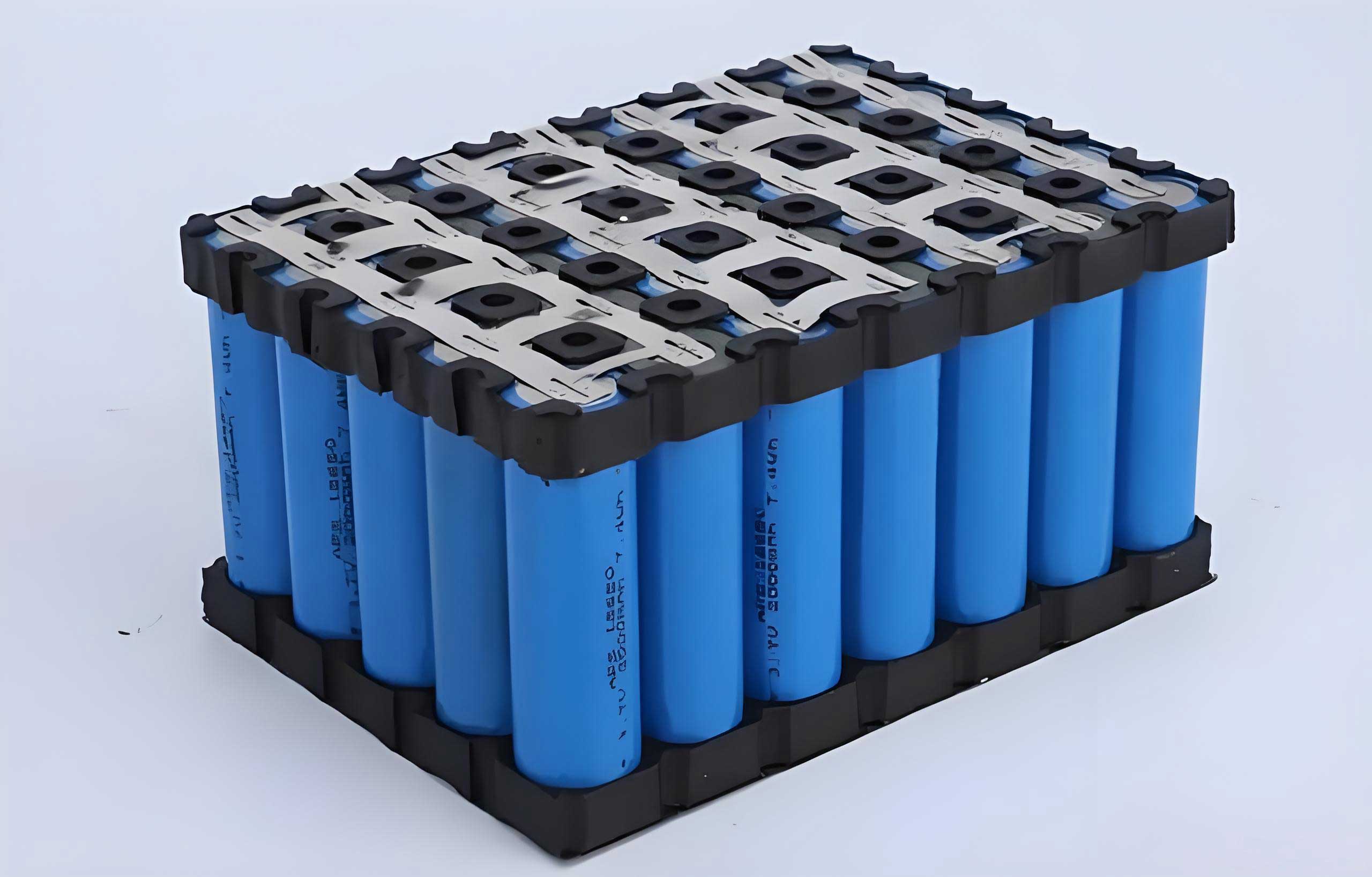
Our experimental setup involved commercial 200Ah prismatic LiFePO4 battery cells with nominal voltage of 3.2V and operating temperature range of -20°C to 40°C. These LiFePO4 battery units are typical for mining applications, designed to meet explosion-proof standards. We conducted overcharging tests on both individual battery cells and battery modules consisting of three cells arranged in parallel. The modules were fixed with clamps to simulate real-world packaging conditions. Overcharging was performed using a high-power charger under constant current-constant voltage protocol: constant current until the voltage reached 35V, then constant voltage until thermal runaway occurred. We applied three overcharging rates: 0.5C (100A), 1C (200A), and 1.5C (300A). For battery cell tests, a K-type thermocouple was attached to the center of the largest surface to measure temperature (T1). In module tests, thermocouples were placed on each cell’s surface (T1, T12, T23, T3) to monitor thermal propagation. Voltage data was recorded continuously, and an infrared camera captured temperature distribution during events.
The thermal runaway process for the LiFePO4 battery cell was observed to unfold in three distinct stages: Stage I – Shell Expansion, Stage II – Slow Gas Ejection, and Stage III – Violent Gas Ejection followed by Natural Cooling. These stages were consistent across different overcharging rates, but timing and severity varied. Below, we summarize key parameters from our tests in Table 1, illustrating the impact of overcharging rate on thermal runaway initiation and progression.
| Overcharging Rate | Time to Safety Valve Rupture, t1 (s) | Time to Internal Short Circuit, t2 (s) | Overcharged Capacity at t1, C1 (Ah) | Overcharged Capacity at t2, C2 (Ah) | Temperature at t1, T1 (°C) | Temperature at t2, T2 (°C) | Maximum Temperature, Tmax (°C) | Voltage at t1, V1 (V) |
|---|---|---|---|---|---|---|---|---|
| 0.5C | 1030 | 2425 | 28.6 | 67.4 | 47.5 | 108.0 | 271.3 | 5.3 |
| 1C | 498 | 1067 | 27.7 | 59.3 | 46.0 | 110.0 | 317.2 | 5.8 |
| 1.5C | 307 | 667 | 25.6 | 55.6 | 46.0 | 113.4 | 348.0 | 5.9 |
As shown in Table 1, increasing the overcharging rate reduces both t1 and t2, indicating accelerated thermal runaway onset. The overcharged capacities C1 and C2 also decrease with higher rates, suggesting that faster overcharging leads to quicker accumulation of abusive energy. Notably, T1 remains relatively constant around 46-47.5°C, implying that safety valve rupture is primarily temperature-triggered at this threshold. In contrast, T2 shows a slight increase with rate, ranging from 108°C to 113.4°C, linked to internal short circuit events. The maximum temperature Tmax rises significantly with overcharging rate, from 271.3°C at 0.5C to 348.0°C at 1.5C, highlighting the intense heat generation during thermal runaway of the LiFePO4 battery.
To further analyze the heat release, we employ a fundamental thermal equation to estimate the energy generated during thermal runaway. The heat production Q can be expressed as:
$$ Q = M \cdot C_p \cdot \Delta T $$
where M is the mass of the LiFePO4 battery, Cp is the specific heat capacity, and ΔT is the temperature rise. Assuming typical values for a 200Ah LiFePO4 battery (M ≈ 5 kg, Cp ≈ 1000 J/kg·K), and ΔT calculated from initial to peak temperature, we can approximate Q. For instance, at 1.5C overcharging with ΔT ≈ 300°C (from 20°C to 348°C), the heat release is:
$$ Q \approx 5 \, \text{kg} \times 1000 \, \text{J/kg·K} \times 300 \, \text{K} = 1.5 \times 10^6 \, \text{J} $$
This substantial energy release underscores the potential hazard in mining environments. The thermal runaway stages are driven by internal reactions: in Stage I, overcharging elevates the cathode potential, leading to electrolyte oxidation and gas generation, causing shell expansion. Stage II involves decomposition of the solid-electrolyte interphase (SEI) and reactions between lithiated graphite and electrolyte, exacerbated by rising temperature. Stage III is marked by internal short circuits, violent exothermic reactions, and rapid temperature spike. The voltage behavior complements this: during Stage II, voltage surges due to separator meltdown, then collapses to zero upon short circuit.
For battery module tests, we observed similar three-stage behavior, but with enhanced thermal effects due to constrained heat dissipation. The overcharged cell (cell #1) underwent thermal runaway, while adjacent cells (cell #2 and #3) experienced temperature rises without thermal runaway. Table 2 summarizes maximum temperatures recorded in module tests under different overcharging rates, demonstrating the influence of packaging on thermal outcomes.
| Overcharging Rate | Temperature of Overcharged Cell (T1, °C) | Temperature at Interface (T12, °C) | Temperature of Adjacent Cell (T23, °C) | Temperature of Distant Cell (T3, °C) |
|---|---|---|---|---|
| 0.5C | 470.0 | 354.0 | 96.0 | 65.0 |
| 1C | 454.0 | 340.0 | 92.0 | 62.0 |
| 1.5C | 460.0 | 345.0 | 94.0 | 63.0 |
The data in Table 2 reveals that temperatures in module tests are significantly higher than in cell tests; for example, at 0.5C, Tmax reaches 470°C compared to 271.3°C for a single cell. This is attributed to reduced heat dissipation in the module configuration, where cells are tightly packed and clamped, mimicking explosion-proof enclosures. The adjacent cell (cell #2) shows elevated interface temperatures (T12 up to 354°C) but lower surface temperatures (T23 around 96°C), indicating that heat transfer occurs but not sufficient to trigger thermal runaway in neighboring LiFePO4 battery units. This suggests that for this specific LiFePO4 battery design and module arrangement, thermal runaway propagation may require more severe conditions, such as higher energy input or direct flame impingement.
To quantify the thermal propagation risk, we can model heat transfer between cells. Consider Fourier’s law for one-dimensional heat conduction through the battery casing:
$$ q = -k \cdot A \cdot \frac{dT}{dx} $$
where q is heat flux, k is thermal conductivity, A is cross-sectional area, and dT/dx is temperature gradient. Assuming a simplified model with two cells in contact, the heat flux from the overcharged cell to the adjacent cell can be estimated. If the temperature difference is ΔT_contact = T1 – T12, and the contact resistance is R, the heat transfer rate may be insufficient to raise the adjacent cell’s internal temperature to critical levels (typically above 150-200°C for LiFePO4 battery reactions). Our experiments indicate that the critical condition for chain reaction in mining LiFePO4 batteries is not met under these overcharging scenarios, but further studies are needed to define thresholds for larger modules or different configurations.
The high temperatures recorded, exceeding 400°C in modules, pose severe risks in underground mines. Such heat can ignite flammable gases or dust, compromise structural integrity, and endanger personnel. Therefore, implementing cooling and protective measures is imperative. In explosion-proof battery enclosures, design considerations must account for heat dissipation from the LiFePO4 battery during thermal runaway. A practical approach involves calculating the required heat capacity of enclosure materials to absorb generated heat. For instance, using stainless steel for the cover (Cp ≈ 500 J/kg·K), the mass M_cover needed to limit temperature rise ΔT_cover can be derived from:
$$ Q = M_{\text{cover}} \cdot C_{p,\text{cover}} \cdot \Delta T_{\text{cover}} $$
Rearranging, we get:
$$ M_{\text{cover}} = \frac{Q}{C_{p,\text{cover}} \cdot \Delta T_{\text{cover}}} $$
If we aim to keep ΔT_cover below 150°C (to meet safety standards) and assume Q = 1.5 × 10^6 J from earlier, then:
$$ M_{\text{cover}} \approx \frac{1.5 \times 10^6 \, \text{J}}{500 \, \text{J/kg·K} \times 150 \, \text{K}} \approx 20 \, \text{kg} $$
This simplified calculation highlights the substantial mass required for passive cooling, underscoring the need for active cooling systems or advanced materials in mining LiFePO4 battery packs. Additionally, factors like air gaps, insulation, and venting designs can mitigate heat transfer, but these must be balanced against size and weight constraints.
Beyond thermal protection, preventing overcharging is crucial for enhancing LiFePO4 battery safety in mining. Battery management systems (BMS) should incorporate robust overcharge protection, including voltage and temperature monitoring, balancing circuits, and fail-safe mechanisms. Regular maintenance and testing of LiFePO4 battery packs can identify inconsistencies or defects early. Moreover, advancing early warning technologies, such as real-time data analytics for anomaly detection, can preempt thermal runaway events. Research into safer electrolytes or additives for LiFePO4 battery chemistry may also reduce overcharging risks.
In summary, our study on mining LiFePO4 battery thermal runaway under overcharging reveals a consistent three-stage process influenced by overcharging rate. Higher rates accelerate thermal runaway but do not significantly alter initial temperature thresholds. The LiFePO4 battery modules exhibit elevated temperatures due to poor heat dissipation, yet thermal propagation to adjacent cells was not observed in our tests. These findings emphasize the importance of tailored cooling solutions and proactive safety measures for LiFePO4 battery deployments in underground mines. Future work should explore larger module arrays, different abuse conditions, and advanced modeling to fully characterize thermal runaway chain reactions in mining environments.