
The relentless consumption of traditional fossil fuels presents a global challenge, driving the urgent need for sustainable and clean energy solutions. Among these, the lithium-ion battery stands out due to its superior energy density, extended cycle life, and environmental friendliness. Its applications span electric vehicles, smart grids, and portable electronics. To meet the escalating demand for higher energy density, research has intensely focused on developing high-voltage cathode materials. Notably, Ni-rich layered transition metal oxides, particularly LiNixCoyMnzO2 (x ≥ 0.5, NCM), offer promisingly high reversible capacity at a relatively low cost. Within this family, LiNi0.8Co0.1Mn0.1O2 (NCM811) is a leading candidate for next-generation high-energy-density lithium-ion batteries. However, a critical bottleneck exists: the conventional LiPF6-carbonate electrolyte system decomposes oxidatively at voltages exceeding ~4.2 V, severely limiting the operational voltage window and thus the achievable capacity of the lithium-ion battery. This decomposition accelerates cathode surface degradation, leading to rapid capacity fading and poor cycle life. Therefore, stabilizing the cathode-electrolyte interphase (CEI) at high potentials is paramount for unlocking the full potential of high-voltage cathodes in advanced lithium-ion batteries.
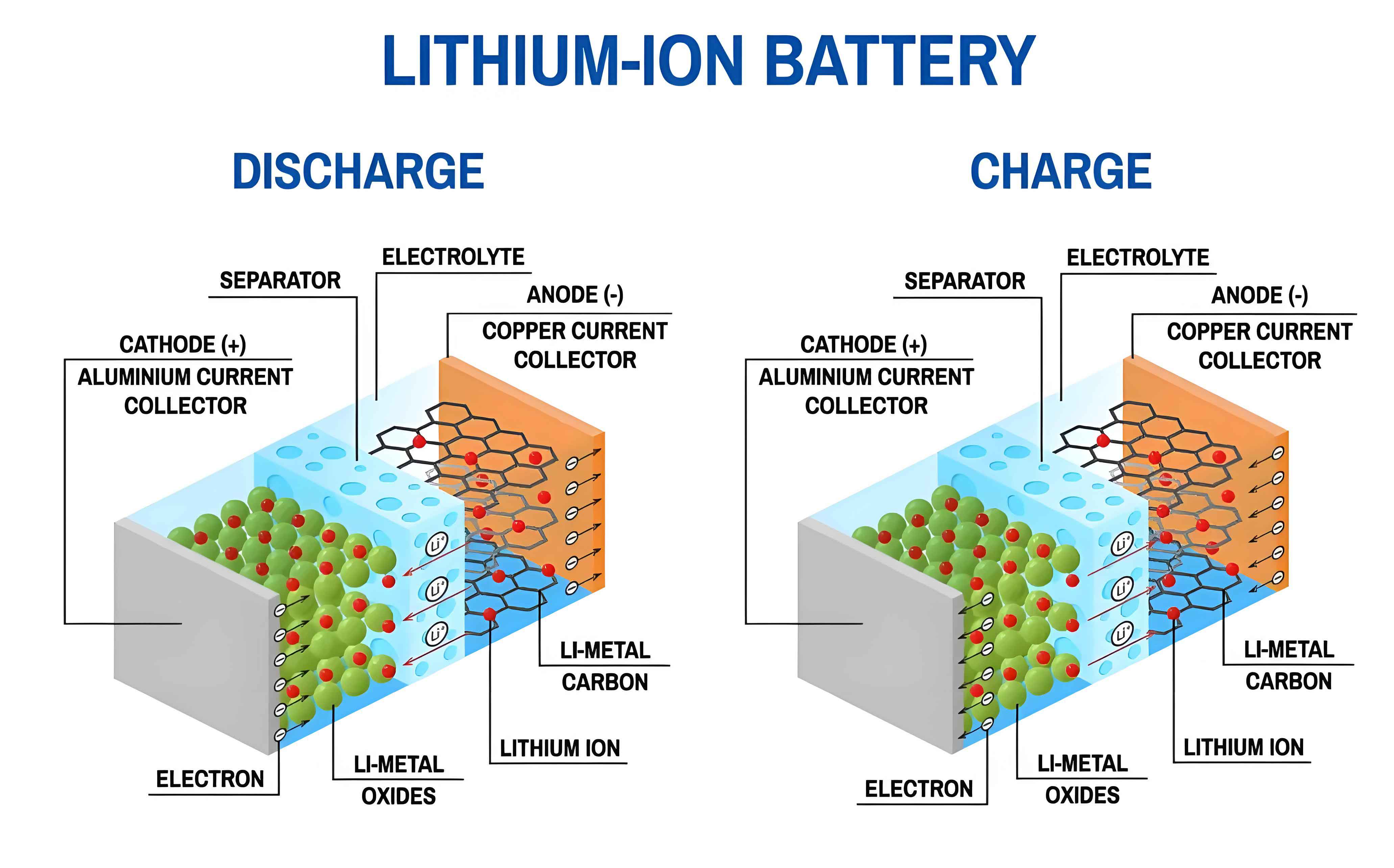
Our work addresses this challenge by designing a novel electrolyte additive strategy. We introduce triphenylphosphine oxide (TPPO) into a standard carbonate-based electrolyte. TPPO was hypothesized to preferentially oxidize and participate in the formation of a robust, protective CEI layer on the NCM811 cathode surface during the initial charging cycles. This in-situ formed layer would act as a physical and chemical barrier, mitigating detrimental side reactions between the highly delithiated cathode and the electrolyte, thereby enhancing the high-voltage stability of the lithium-ion battery. We systematically investigated the effect of TPPO concentration on the electrochemical performance of Li||NCM811 cells, focusing on high-voltage cycling and rate capability. Furthermore, we employed post-cycling characterization to elucidate the morphological and compositional changes on the cathode surface, providing direct evidence for the CEI-forming role of TPPO in improving the durability of the lithium-ion battery.
The fundamental electrochemical reactions governing a lithium-ion battery can be described by the Butler-Volmer equation, which relates the current density at an electrode to the overpotential:
$$ i = i_0 \left[ \exp\left(\frac{\alpha_a F \eta}{RT}\right) – \exp\left(-\frac{\alpha_c F \eta}{RT}\right) \right] $$
Where \( i \) is the current density, \( i_0 \) is the exchange current density, \( \alpha_a \) and \( \alpha_c \) are the anodic and cathodic charge transfer coefficients, \( F \) is Faraday’s constant, \( \eta \) is the overpotential, \( R \) is the gas constant, and \( T \) is the temperature. A stable CEI layer directly influences the charge transfer kinetics and the apparent exchange current density \( i_0 \) by passivating the surface and reducing parasitic reactions. The formation of this protective layer is a complex electrochemical process that can be modulated by electrolyte additives like TPPO.
Experimental Methodology
All electrolyte preparation and cell assembly procedures were conducted in an argon-filled glovebox with oxygen and moisture levels maintained below 0.1 ppm. The baseline electrolyte (denoted as 0TPPO) consisted of 1.0 M LiPF6 in a mixture of ethylene carbonate (EC) and diethyl carbonate (DEC) (1:1 by volume). Modified electrolytes were prepared by adding specific mass fractions of TPPO additive (0.5 wt.%, 1.0 wt.%, and 2.0 wt.%) to the baseline solution. The homogeneous mixtures were stored in sealed vials.
The NCM811 cathode slurry was formulated by mixing active material (LiNi0.8Co0.1Mn0.1O2), conductive carbon (Super P), and polyvinylidene fluoride (PVDF) binder in a mass ratio of 80:10:10, using N-methyl-2-pyrrolidone (NMP) as the solvent. The slurry was ball-milled for 30 minutes to ensure uniformity before being coated onto a clean aluminum foil current collector. The coated electrode was dried at 80°C under vacuum overnight, followed by calendaring and punching into circular discs with a diameter of 12 mm.
CR2032-type coin cells were assembled in the glovebox using the prepared NCM811 cathode discs, lithium metal foil as the counter/reference electrode, a polypropylene separator (Celgard 2400), and approximately 80 µL of the respective electrolyte. The cells were hermetically sealed using a hydraulic crimper. Electrochemical performance was evaluated using a multichannel battery testing system. Cycling stability tests were conducted at a constant current rate of 1 C (where 1 C corresponds to approximately 200 mA g-1) within various voltage windows (2.7-4.3 V, 2.7-4.4 V, 2.7-4.5 V, and 2.7-4.6 V). Rate capability tests were performed by cycling cells at progressively increasing current densities (0.2 C, 0.5 C, 1 C, 2 C, 5 C) before returning to 0.2 C, within fixed voltage windows. Cyclic voltammetry (CV) measurements were carried out on an electrochemical workstation at a scan rate of 0.5 mV s-1 between 2.6 and 4.5 V. The morphology and elemental composition of the NCM811 electrodes before and after cycling were characterized using scanning electron microscopy (SEM) coupled with energy-dispersive X-ray spectroscopy (EDS).
Results and Discussion
Electrochemical Analysis via Cyclic Voltammetry
Cyclic voltammetry provides initial insights into the redox behavior and electrochemical reversibility of the NCM811 cathode in different electrolytes. The CV curves for the first three cycles for cells with varying TPPO content are presented in Figure 1. All cells exhibited a primary redox couple in the potential range of 3.6 V to 4.2 V, which is attributed to the successive Ni2+/Ni3+ and Ni3+/Ni4+ oxidation and reduction reactions during lithium (de)intercalation, a characteristic process in high-nickel cathodes for lithium-ion batteries.
A critical parameter for assessing stability is the potential difference (\(\Delta E_p\)) between the anodic (oxidation) and cathodic (reduction) peaks. A smaller \(\Delta E_p\) indicates higher electrochemical reversibility and lower polarization. The third-cycle CV curves were isolated for comparison (Figure 2). The cell containing 1 wt.% TPPO additive demonstrated the smallest \(\Delta E_p\) among all tested electrolytes. The evolution of the peak currents and positions over successive cycles also revealed superior overlapping for the 1 wt.% TPPO system compared to others, suggesting the formation of a more stable and conductive interface, which is crucial for the long-term operation of the lithium-ion battery. The reduced polarization implies smoother Li+ ion transport and charge transfer kinetics across the newly formed CEI, a direct benefit of the TPPO modification in the electrolyte of the lithium-ion battery.
High-Voltage Cycling Performance
The cycling stability of the lithium-ion battery under high charge cut-off voltages is the most direct metric for evaluating the efficacy of the TPPO additive. The discharge capacity and capacity retention after 50 cycles at 1 C rate across different voltage windows are summarized in Table 1 and depicted graphically in Figure 3.
| Voltage Window (V) | TPPO Content (wt.%) | Initial Discharge Capacity (mAh g-1) | Discharge Capacity after 50 cycles (mAh g-1) | Capacity Retention (%) |
|---|---|---|---|---|
| 2.7 – 4.3 | 0 | 176.90 | 143.59 | 81.17 |
| 0.5 | 188.72 | 187.31 | 99.25 | |
| 1.0 | 189.86 | 192.44 | 101.36 | |
| 2.0 | 182.03 | 178.64 | 98.14 | |
| 2.7 – 4.4 | 0 | 188.55 | 193.14 | 102.43 |
| 0.5 | 202.36 | 149.27 | 73.76 | |
| 1.0 | 206.21 | 206.43 | 100.11 | |
| 2.0 | 192.55 | 192.70 | 100.08 | |
| 2.7 – 4.5 | 0 | 205.72 | 133.86 | 65.07 |
| 0.5 | 206.74 | 131.10 | 63.42 | |
| 1.0 | 223.31 | 213.69 | 95.69 | |
| 2.0 | 203.91 | 189.64 | 91.75 | |
| 2.7 – 4.6 | 0 | 255.57 | 130.82 | 58.00 |
| 0.5 | 153.77 | 110.47 | 71.84 | |
| 1.0 | 193.44 | 194.96 | 100.79 | |
| 2.0 | 211.89 | 81.88 | 38.64 |
The data reveals a compelling narrative. At a moderate voltage of 4.3 V, all TPPO-containing electrolytes showed excellent capacity retention (>98%), outperforming the baseline (81.2%). This indicates that even at lower voltages, TPPO contributes to a more stable interface. However, the true test is at higher potentials. As the upper cut-off voltage increased to 4.5 V and 4.6 V, the performance diverged dramatically. The baseline lithium-ion battery suffered severe capacity fade, retaining only 65.1% and 58.0% at 4.5 V and 4.6 V, respectively. The cell with 0.5 wt.% TPPO also showed poor retention at 4.5 V (63.4%), suggesting an insufficient amount of additive to form a complete protective layer under extreme conditions.
Strikingly, the lithium-ion battery with 1.0 wt.% TPPO exhibited exceptional high-voltage stability. It maintained 95.7% capacity at 4.5 V and, most notably, 100.8% capacity at 4.6 V after 50 cycles. The slight increase in capacity can be attributed to a gradual activation or optimization of the electrode/electrolyte interface during cycling. This result unequivocally demonstrates that an optimal concentration of TPPO can effectively suppress electrolyte oxidation and cathode degradation, enabling stable high-voltage cycling of the NCM811-based lithium-ion battery.
Conversely, an excessive amount of TPPO (2.0 wt.%) proved detrimental at high voltage, with capacity retention plummeting to 38.6% at 4.6 V. This suggests that an overly thick or resistive CEI layer formed, which impeded Li+ ion transport, increasing internal resistance and leading to rapid failure. This highlights the importance of additive dosage optimization in electrolyte engineering for high-performance lithium-ion batteries.
Rate Capability Assessment
The rate capability of a lithium-ion battery determines its power delivery, crucial for applications requiring rapid charging or high discharge currents. Figure 4 presents the rate performance of cells with different TPPO contents at two voltage windows (2.7-4.3 V and 2.7-4.4 V). Cells were subjected to sequential cycling at increasing C-rates (0.2C, 0.5C, 1C, 2C, 5C) before returning to 0.2C to assess capacity recovery.
A general observation is that the addition of TPPO, particularly at 1 wt.%, enhanced the rate performance, especially at the higher 4.4 V window. At the most demanding 5 C rate, the capacity delivered by the cell with 1 wt.% TPPO was significantly higher than that of the baseline cell. This indicates that the CEI film derived from TPPO is not only protective but also sufficiently ionically conductive, allowing for fast Li+ transfer even under high current densities.
Furthermore, the capacity recovery upon returning to 0.2 C is a critical indicator of structural and interfacial reversibility. The lithium-ion battery with 1 wt.% TPPO consistently showed the best recovery, regaining nearly its initial low-rate capacity. For instance, at 4.4 V, after the 5 C pulse, it recovered to 223.35 mAh g-1, compared to 215.59 mAh g-1 for the baseline. This superior recovery suggests that the TPPO-derived CEI layer effectively mitigates structural damage and parasitic reactions induced by high-current stress, preserving the integrity of the NCM811 cathode within the lithium-ion battery. The relationship between current (I), capacity (C), and time (t) at a given C-rate is defined as:
$$ I = C \cdot C_{rate} $$
$$ t_{discharge} = \frac{1}{C_{rate}} \quad (\text{in hours, for full discharge}) $$
The ability to maintain capacity at high C-rates, as seen with the optimized TPPO electrolyte, points to favorable kinetics governed by a low charge-transfer resistance (\(R_{ct}\)) at the cathode interface, a parameter often modeled in equivalent circuit analysis of electrochemical impedance spectroscopy (EIS) data.
Post-Cycling Morphological and Compositional Analysis
To directly corroborate the electrochemical findings and understand the mechanism of TPPO action, we performed ex-situ SEM and EDS analysis on the NCM811 cathodes after 5 cycles at 4.4 V. Figure 5 shows the pristine NCM811 electrode, revealing clean, well-defined secondary particles composed of densely packed primary grains.
The cathode cycled in the baseline electrolyte (0TPPO) presents a stark contrast (Figure 6). The surface is covered by a non-uniform, patchy, and loosely adherent film. The underlying particle morphology is still visible, indicating an incomplete and unstable CEI layer. This inhomogeneous coverage fails to provide consistent protection, leaving large areas of the cathode vulnerable to direct contact and reaction with the electrolyte, leading to transition metal dissolution and surface reconstruction—key failure modes in high-voltage lithium-ion batteries.
In contrast, the cathode cycled in the 1 wt.% TPPO electrolyte (Figure 7) is covered by a dense, uniform, and conformal surface layer. The original grain boundaries are completely obscured, indicating the formation of a robust and continuous CEI film. This layer acts as an effective barrier, physically separating the active cathode material from the bulk electrolyte and chemically passivating the highly reactive surface sites that form at high states of charge.
EDS elemental analysis provided compositional evidence for the different interfacial layers. The results are quantified in Table 2. The pristine electrode shows expected levels of C (from conductive agent and binder), O (from NCM811), and transition metals (Ni, Co, Mn). Traces of F and P from residual LiPF6 salt may also be present.
| Sample Description | C | O | F | P | Ni | Remarks |
|---|---|---|---|---|---|---|
| Pristine NCM811 | 52.98 | 19.54 | 6.96 | ~0 | 16.45 | Clean surface. |
| After cycling in 0TPPO | 40.30 | 19.95 | 9.67 | 0.55 | 22.39 | Increased F, P suggests decomposition products. |
| After cycling in 1% TPPO | 36.97 | 21.31 | 12.39 | 0.86 | 21.66 | Significant increase in F, P indicates TPPO-involved CEI. |
After cycling in the baseline electrolyte, a noticeable increase in F content (6.96% to 9.67%) is observed, accompanied by the appearance of P (0.55%). This is attributed to the decomposition of LiPF6 and ethylene carbonate, forming species like LiF and LixPFyOz, which constitute part of the native, unstable CEI.
The cathode from the 1 wt.% TPPO cell shows a more pronounced increase in both F (12.39%) and P (0.86%) content. The significantly higher F signal strongly suggests a CEI layer richer in LiF, a component known for good ionic conductivity and mechanical stability. The increased P content, relative to the baseline-cycled sample, implies that phosphorus-containing species from the oxidized TPPO molecule are incorporated into the CEI. This compositional modification is key to the enhanced stability. The formation of a LiF-rich, TPPO-derived composite CEI can be conceptually linked to improved interfacial energy and stability. The interfacial energy (\(\gamma_{sl}\)) between the solid cathode (s) and the liquid electrolyte (l) is modified by the adsorbed/additive-derived layer, promoting wettability and stability. A stable interface minimizes the continuing reaction free energy (\(\Delta G_r\)) over cycles:
$$ \Delta G_r = -nFE + \Delta G_{\text{interface}} $$
Where \(E\) is the cell potential and \(\Delta G_{\text{interface}}\) represents the energy contribution from interface formation and evolution. A more stable CEI reduces the positive contribution of \(\Delta G_{\text{interface}}\) to the overall reaction energy, making the cycling process more sustainable.
Mechanistic Elucidation and Conclusion
Based on the integrated electrochemical and physico-chemical analysis, we propose a coherent mechanism for the action of TPPO as a high-voltage additive for lithium-ion batteries. During the initial charging process, especially when the cell voltage exceeds the oxidation stability limit of the conventional carbonate solvents (~4.2 V vs. Li/Li+), the TPPO molecule (with its electron-deficient phosphorus center) is preferentially oxidized on the surface of the NCM811 cathode. This electrochemical oxidation triggers the polymerization or decomposition of TPPO, leading to the in-situ formation of a protective cathode-electrolyte interphase (CEI) layer.
This TPPO-derived CEI is uniform, dense, and chemically tailored. It is rich in LiF and incorporates phosphorus-oxygen species, creating a robust barrier. The primary functions of this layer are threefold: 1) Passivation: It isolates the highly reactive, delithiated cathode surface from direct contact with the bulk electrolyte, drastically reducing continuous oxidative decomposition. 2) Mechanical Stability: It accommodates the volumetric changes of the NCM811 particles during cycling, preventing crack formation and exposure of fresh surfaces. 3) Ionic Conduction: It facilitates the transport of Li+ ions while blocking electron transfer, enabling reversible (de)intercalation with low polarization, as evidenced by the excellent rate performance.
The concentration of TPPO is critical. At 1 wt.%, the amount is optimal to form a complete, thin, and effective film. At lower concentrations (0.5 wt.%), the coverage is incomplete, failing under high-voltage stress. At excessive concentrations (2 wt.%), the formed CEI layer becomes too thick and resistive, increasing the impedance (\(R_{ct}\)) and hindering Li+ transport, which ultimately degrades the performance of the lithium-ion battery. This behavior can be related to a model where CEI growth follows a self-limiting mechanism initially but transitions to a diffusion-limited thickening process at high additive concentrations, described phenomenologically by:
$$ \text{CEI Thickness} (d) \propto k_1 \sqrt{t} + k_2[TPPO] t $$
Where \(k_1\) and \(k_2\) are constants related to the formation kinetics, \(t\) is time, and [TPPO] is the additive concentration. The second term becomes dominant at high [TPPO], leading to excessive growth.
In conclusion, we have successfully demonstrated that triphenylphosphine oxide (TPPO) serves as an effective high-voltage electrolyte additive for stabilizing LiNi0.8Co0.1Mn0.1O2 cathodes. At an optimal concentration of 1 wt.%, TPPO enables exceptional cycling stability in a wide voltage window up to 4.6 V, with capacity retention exceeding 100% after 50 cycles, a feat unattainable with the baseline electrolyte. It also enhances the rate capability and capacity recovery of the lithium-ion battery. The performance improvement is directly linked to the formation of a superior, dense, and conductive CEI layer on the cathode surface, rich in LiF and incorporating TPPO decomposition products. This work provides a simple yet highly effective electrolyte engineering strategy to unlock the high-energy-density potential of Ni-rich NCM cathodes, representing a significant step forward in the development of advanced lithium-ion batteries for demanding applications. Future work will involve detailed spectroscopic analysis (e.g., XPS) of the CEI composition and testing in full-cell configurations with graphite or silicon-based anodes to assess practical viability.