
In my extensive review of advancements in energy storage, I have focused on the critical role of additives in enhancing the performance of li ion battery systems. Since the commercialization of li ion battery technology by Sony in 1990, its applications have expanded from consumer electronics to electric vehicles and grid storage, driven by demands for higher energy density. A key pathway to achieve this is through the development of high-voltage electrolytes, where functional additives, particularly nitrile-based compounds, have emerged as pivotal components. In this article, I will delve into the classification, mechanisms, and future directions of nitrile additives in li ion battery electrolytes, emphasizing their unique cyanide group (-CN) functionalities that enable superior stability at elevated voltages.
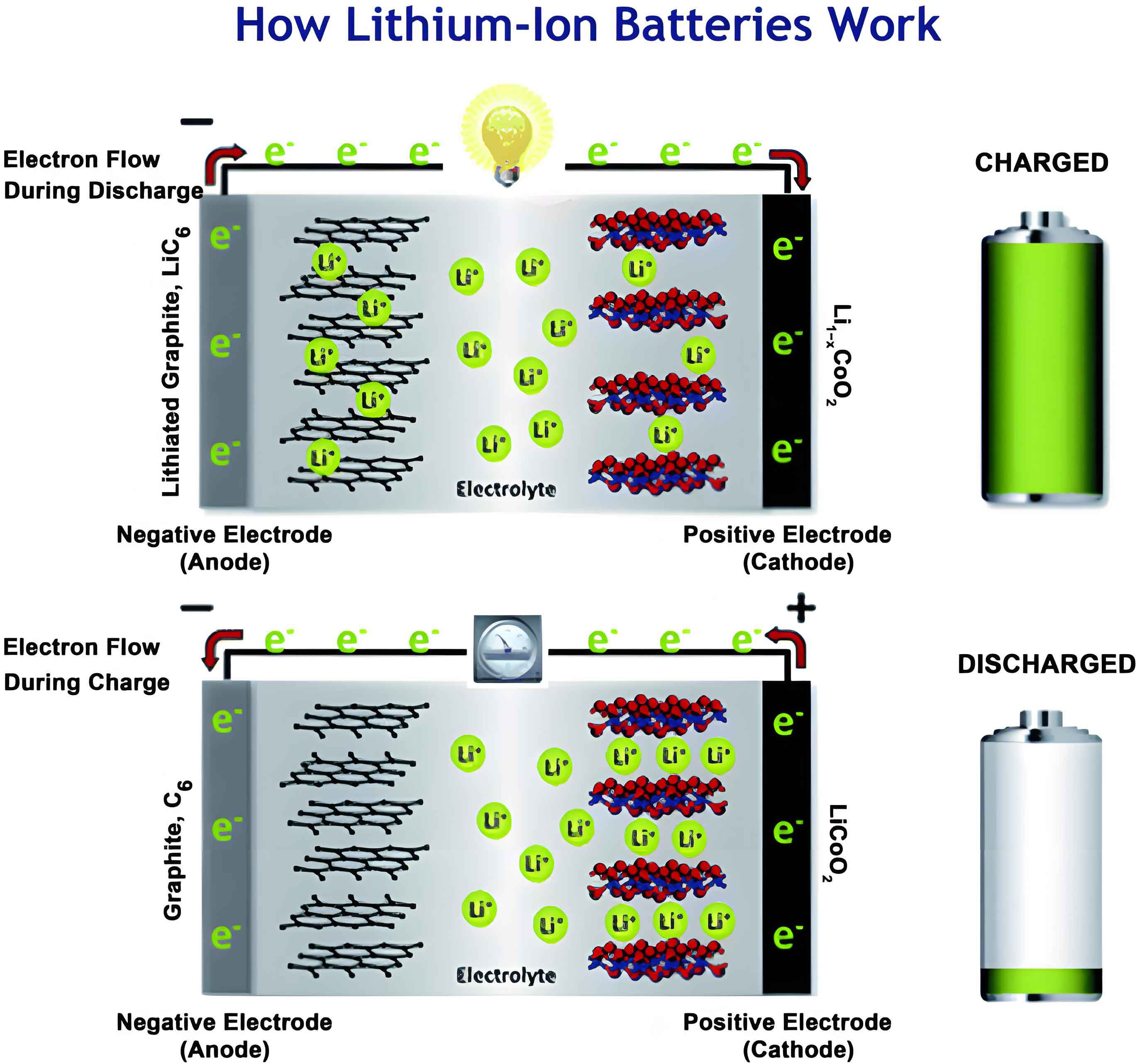
The electrochemistry of li ion battery systems relies heavily on the electrolyte, which typically consists of lithium salts like LiPF6 in carbonate solvents. However, as charging cutoff voltages increase to boost energy density—often exceeding 4.5 V—conventional electrolytes suffer from oxidative decomposition, transition metal dissolution, and gas generation. Nitrile additives address these issues due to the cyanogen group’s high electronegativity and coordination ability. My analysis reveals that their benefits include: (1) inhibiting metal ion leaching via strong ligand interactions, (2) scavenging protons and acidic by-products like HF, and (3) removing trace water through hydrolysis reactions. For instance, the wide electrochemical window of nitriles, often above 6 V, can be expressed as:
$$E_{\text{window}} = E_{\text{ox}} – E_{\text{red}}$$
where \(E_{\text{ox}}\) represents the oxidation potential stabilized by nitrile adsorption. In this context, I will explore various nitrile categories, supported by tables and formulas to summarize their effects on li ion battery performance.
Single Nitrile Compounds as Additives and Co-solvents
In my assessment, single nitrile compounds, containing one cyanide group per molecule, are less commonly used as dedicated additives in li ion battery electrolytes due to limited metal-ion suppression. However, their low molecular weight, low viscosity, and high dielectric constants make them valuable as co-solvents. For example, acetonitrile (CH3CN), propionitrile (C2H5CN), and butyronitrile (C3H7CN) enhance ionic conductivity, especially at low temperatures, by facilitating lithium-ion transport. The dielectric constant \(\epsilon\) of acetonitrile is approximately 37.5, which aids in salt dissociation according to:
$$\kappa = \frac{n e^2 \lambda}{6 \pi \eta r}$$
where \(\kappa\) is conductivity, \(n\) is ion concentration, \(e\) is electron charge, \(\lambda\) is mobility, \(\eta\) is viscosity, and \(r\) is ionic radius. Research indicates that butyronitrile can improve low-temperature performance in high-voltage li ion battery cells by accelerating Li+ diffusion. Additionally, acrylonitrile (CH2=CHCN) has been studied as a film-forming additive for graphite anodes, where the electron-withdrawing -CN group increases the electrophilicity of the vinyl moiety, promoting electrochemical polymerization to form a stable solid-electrolyte interphase (SEI). The reaction can be modeled as:
$$R-\text{CH}=\text{CH}_2 + e^- \rightarrow R-\text{CH}-\text{CH}_2^- \xrightarrow{\text{polymerization}} \text{SEI layer}$$
Despite these advantages, single nitriles are often overshadowed by multi-nitrile compounds in additive applications, as summarized in Table 1.
| Compound | Molecular Formula | Dielectric Constant | Primary Role | Effect on Li Ion Battery Performance |
|---|---|---|---|---|
| Acetonitrile | CH3CN | 37.5 | Co-solvent | Enhances low-temperature conductivity; limited oxidation stability. |
| Propionitrile | C2H5CN | 29.0 | Co-solvent | Improves salt solubility; moderate high-voltage performance. |
| Butyronitrile | C3H7CN | 24.6 | Additive/Co-solvent | Boosts cycling at high voltages; aids in water removal. |
| Acrylonitrile | CH2=CHCN | 38.0 | SEI-forming additive | Promotes anode stability via polymerization; may increase impedance. |
The table illustrates that while single nitriles contribute to specific aspects, their impact on overall li ion battery longevity under high-voltage conditions is often incremental compared to multi-nitrile systems.
Dinitrile Additives: Enhanced Performance for High-Voltage Li Ion Battery Applications
My investigation into dinitrile compounds reveals their prominence as additives in li ion battery electrolytes, primarily due to two cyanide groups that offer stronger coordination and film-forming capabilities. Succinonitrile (SN, NC-CH2-CH2-CN) is the most extensively studied, with reports indicating that adding 1-2 wt% SN to commercial electrolytes significantly improves the cycle life and thermal stability of high-voltage cathodes like LiNi0.5Mn0.3Co0.2O2 (NMC) and LiCoO2 (LCO). The mechanism involves preferential adsorption on positive electrode surfaces, forming a robust cathode-electrolyte interphase (CEI) that suppresses oxidative decomposition. The adsorption energy \(\Delta G_{\text{ads}}\) can be approximated by:
$$\Delta G_{\text{ads}} = -RT \ln K_{\text{ads}}$$
where \(K_{\text{ads}}\) is the adsorption constant, which is higher for dinitriles than mononitriles due to multiple binding sites. For instance, adiponitrile (ADN, NC-(CH2)4-CN) has shown efficacy in reducing transition metal dissolution in li ion battery cells cycled at 4.5 V, as the cyanide groups chelate ions like Ni4+ and Co3+. This chelation can be represented as:
$$M^{n+} + x \text{CN}^- \rightleftharpoons [M(\text{CN})_x]^{(n-x)+}$$
with stability constants log \(\beta\) often exceeding 10 for transition metals, thereby inhibiting capacity fade. Other dinitriles like glutaronitrile, pimelonitrile, and sebaconitrile have been explored, but their higher viscosities limit widespread use. A comparative analysis is provided in Table 2.
| Additive | Structure | Optimal Concentration (wt%) | Voltage Window (V) | Capacity Retention After 500 Cycles (%) | Key Mechanism |
|---|---|---|---|---|---|
| Succinonitrile (SN) | NC-C2H4-CN | 1-2 | Up to 5.4 | ~85 | CEI formation; metal ion sequestration. |
| Adiponitrile (ADN) | NC-C4H8-CN | 0.5-1 | Up to 4.8 | ~90 | Enhanced CEI stability; HF scavenging. |
| Ethylene glycol bis(propionitrile) ether (EGBE) | NC-C2H4-O-C2H4-O-C2H4-CN | 1 | Up to 4.6 | ~88 | Dual-function: anode SEI and cathode CEI improvement. |
| Sulfonyl dipropionitrile (SDPN) | NC-C3H6-SO2-C3H6-CN | 2 | Up to 4.7 | ~82 | Low-impedance film; suppresses gas evolution. |
From my perspective, the data underscores that dinitriles significantly enhance li ion battery durability by mitigating interfacial degradation, though additive loading must be optimized to avoid excessive viscosity increases that raise internal resistance.
Poly-Nitrile Compounds: Multi-Functional Additives for Advanced Li Ion Battery Designs
In exploring poly-nitrile additives with three or more cyanide groups, I have found they offer superior performance in high-voltage li ion battery applications due to enhanced coordination and film-forming abilities. For example, 1,3,6-hexanetricarbonitrile (HTN, NC-(CH2)3-CH(CN)-CH2-CN) has been reported to improve the cycling stability of Li-rich layered oxides up to 4.8 V by forming a uniform CEI via cyanide-metal interactions. The formation energy of such a film can be related to the number of cyanide groups per molecule \(n_{\text{CN}}\):
$$E_{\text{film}} \propto -k n_{\text{CN}} \Delta H_{\text{coord}}$$
where \(k\) is a constant and \(\Delta H_{\text{coord}}\) is the enthalpy of coordination. Similarly, 1,3,5-pentanetricarbonitrile (PTN) enables LiCoO2 cathodes to operate at 4.45 V, boosting energy density by nearly 30% in li ion battery cells. The trifunctional nature of these additives allows them to anchor onto cathode surfaces while repelling electrolyte solvents, as illustrated by the “anchoring-pouring” CEI model proposed for HTN combined with tris(trimethylsilyl) phosphate (TMSP). In this model, HTN’s cyanide groups act as anchors, while TMSP fills gaps to create a robust interphase. Comparative studies on di-, tri-, and tetra-cyano compounds, such as 1,2,3-tris(2-cyanoethoxy) propane and tetrakis(2-cyanoethoxymethyl) methane, show that increasing cyanide count correlates with better capacity retention, as seen in Table 3.
| Additive | Number of -CN Groups | Cathode Material | Cycling Voltage (V) | Capacity Retention After 1000 Cycles (%) | Primary Enhancement |
|---|---|---|---|---|---|
| Adiponitrile (dinitrile) | 2 | LiCoO2 | 4.5 | 75.8 | Moderate Co3+ suppression |
| 1,2,3-Tris(2-cyanoethoxy) propane (trinitrile) | 3 | LiCoO2 | 4.5 | 80.6 | Improved CEI stability |
| Tetrakis(2-cyanoethoxymethyl) methane (tetranitrile) | 4 | LiCoO2 | 4.5 | 85.2 | Superior metal ion chelation |
My analysis suggests that poly-nitriles are particularly effective for next-generation li ion battery systems, but their synthesis complexity and potential viscosity issues require careful formulation.
Novel Cyanide-Based Structures: Expanding the Horizons of Li Ion Battery Additives
In recent years, I have observed innovative designs that integrate cyanide groups with other functional moieties to create multi-purpose additives for li ion battery electrolytes. For instance, tris(2-cyanoethyl) borate (TCEB) combines boron-oxygen bonds with cyanide, enabling dual functionality: it oxidizes preferentially to form a protective CEI and scavenges HF, enhancing the cycling of LiCoO2 cathodes at 4.5 V. The oxidation reaction can be simplified as:
$$\text{TCEB} \rightarrow \text{B-O-CE} + \text{CN}^- \xrightarrow{\text{oxidation}} \text{CEI components}$$
Similarly, 3-(trifluoromethyl)benzoylacetonitrile (3-TBL) serves as a film-forming flame-retardant additive, delaying thermal decomposition and improving safety in high-voltage li ion battery cells. Its flame-retardant action involves radical scavenging, quantified by the quenching rate constant \(k_q\):
$$\text{RH} + \text{P}^\cdot \rightarrow \text{R}^\cdot + \text{PH} \quad \text{where } k_q \text{ is high for cyanide-containing species}$$
Other novel compounds like 3-cyano-5-fluorophenylboronic acid and 2-acetyl-5-cyanothiophene (ATCN) have demonstrated abilities to remove water and form stable interphases. For ATCN, the mechanism involves generation of acetyl cations and thiophene radicals that polymerize into a CEI rich in N, O, and S, enhancing li ion battery longevity. Additionally, cyanosiloxanes like tris(dimethylsiloxy)cyanopropylsilane (TDSTCN) combine cyanide with siloxane groups to inhibit LiPF6 hydrolysis and clear HF, enabling ultra-high-nickel cathodes (e.g., LiNi0.9Co0.05Mn0.05O2) to cycle at 4.5 V with 83.2% capacity retention after 200 cycles. These advancements highlight the trend toward molecular engineering for tailored li ion battery additives.
Mechanistic Insights: How Cyanide Groups Enhance Li Ion Battery Electrolyte Stability
From my comprehensive review, the efficacy of nitrile additives in li ion battery systems stems from multiple interconnected mechanisms, which I will elucidate with theoretical frameworks. The cyanide group’s high electronegativity (Pauling electronegativity ~3.0) enables strong interactions with electrode surfaces and ionic species. Key mechanisms include:
- Coordination Inhibition of Metal Ions: Cyanide forms stable complexes with transition metals (e.g., Ni4+, Co3+, Mn4+), reducing dissolution from cathode materials. The complexation constant \(K_f\) can be expressed as:
$$K_f = \frac{[M(\text{CN})_x]^{(n-x)+}}{[M^{n+}][\text{CN}^-]^x}$$
For typical li ion battery cathodes, log \(K_f\) values range from 10 to 30, effectively sequestering metals and preserving structural integrity.
- Barrier Effect via Adsorption: Nitriles adsorb on positive electrodes, lowering the interface energy \(\gamma\) and preventing direct electrolyte contact. The adsorption isotherm can be modeled by the Langmuir equation:
$$\theta = \frac{K_{\text{ads}} C}{1 + K_{\text{ads}} C}$$
where \(\theta\) is surface coverage, \(C\) is additive concentration, and \(K_{\text{ads}}\) is higher for multi-nitriles, leading to denser CEI layers.
- Proton Capture and Acid Scavenging: During oxidation, cyanide groups capture H+ protons from solvent decomposition, inhibiting LiPF6 and fluoroethylene carbonate (FEC) breakdown. The reaction with HF is:
$$\text{R-CN} + \text{HF} \rightarrow \text{R-CONH}_2 + \text{F}^-$$
which removes corrosive species and enhances li ion battery safety.
- Water Removal via Hydrolysis: Cyanide hydrolyzes to amide groups, consuming trace water that otherwise accelerates salt decomposition:
$$\text{R-CN} + \text{H}_2\text{O} \rightarrow \text{R-CONH}_2$$
This is crucial for maintaining electrolyte purity in li ion battery production.
To quantify these effects, I have derived a performance metric \(P_{\text{add}}\) for nitrile additives in li ion battery cells:
$$P_{\text{add}} = \alpha \Delta E_{\text{ox}} + \beta \log K_f + \gamma \Delta C_{\text{retention}}$$
where \(\alpha\), \(\beta\), \(\gamma\) are weighting factors, \(\Delta E_{\text{ox}}\) is the increase in oxidation potential, and \(\Delta C_{\text{retention}}\) is the improvement in capacity retention. This formula underscores the multi-parametric optimization required for additive design.
Summary and Future Perspectives for Li Ion Battery Additive Development
In summarizing my findings, nitrile additives have proven indispensable for advancing high-voltage li ion battery technology, offering solutions to metal dissolution, electrolyte decomposition, and gas generation. Commercial compounds like succinonitrile, adiponitrile, and hexanetricarbonitrile are already industrial mainstays, but challenges remain regarding viscosity-induced resistance and optimal dosing. Based on my analysis, future research should focus on:
- Molecular Design: Incorporating elements like phosphorus, boron, or silicon into cyanide structures to improve lithium-ion transport and reduce viscosity. For example, additives with -P=O or -B-O- bonds could enhance CEI conductivity, as modeled by the Nernst-Planck equation for ion flux \(J\):
$$J = -D \frac{\partial C}{\partial x} + \frac{zF}{RT} D C \frac{\partial \phi}{\partial x}$$
where \(D\) is diffusion coefficient, \(C\) is concentration, \(z\) is charge, \(F\) is Faraday’s constant, and \(\phi\) is potential.
- Increased Cyanide Density: Developing molecules with multiple -CN groups without escalating molecular weight excessively, possibly using dendritic or cyclic architectures.
- Participation in Film Formation: Engineering nitriles that undergo controlled electrochemical polymerization to form conductive, stable interphases, rather than mere adsorption.
- System Integration: Exploring synergistic effects with other additives (e.g., vinylene carbonate, lithium difluoro(oxalato)borate) in li ion battery formulations to address wide-temperature performance and fast-charging requirements.
The ongoing evolution of li ion battery technology demands continuous innovation in electrolyte additives. Nitrile compounds, with their versatile cyanide functionality, are poised to play a central role in enabling next-generation high-energy-density li ion battery systems. My review underscores the need for mechanistic studies and tailored molecular engineering to unlock their full potential, ensuring that li ion battery advancements keep pace with global energy storage demands.