
Perovskite solar cells have garnered significant attention in the photovoltaic field due to their exceptional optoelectronic properties and remarkable defect tolerance. The power conversion efficiency of these devices has rapidly increased, reaching certified values of over 26%. However, the weak ionic bonding in perovskite materials makes them highly sensitive to electric fields, leading to instability under reverse bias conditions. This poses a major challenge for commercialization, as partial shading in modules can cause shaded sub-cells to experience reverse bias, resulting in performance degradation. In this article, I will explore the electrical failure mechanisms, aging behaviors, and stability enhancement strategies for perovskite solar cells under reverse bias, drawing from recent research progress. I will incorporate tables and formulas to summarize key findings and provide a comprehensive analysis.
The degradation of perovskite solar cells under reverse bias is primarily driven by ion migration, interfacial reactions, and thermal effects. The soft lattice nature of perovskites facilitates ion movement, especially halide ions like iodide, under electric fields. This can lead to defect formation, phase segregation, and irreversible damage. Understanding these processes is crucial for improving device longevity. I will discuss how reverse bias affects current-density-voltage (J-V) characteristics, breakdown voltage thresholds, and self-recovery phenomena. Additionally, I will review strategies such as interface blocking layers, surface passivation, and electrode modifications that enhance stability. Characterization techniques, including in-situ methods, will be covered to illustrate dynamic ion migration studies.
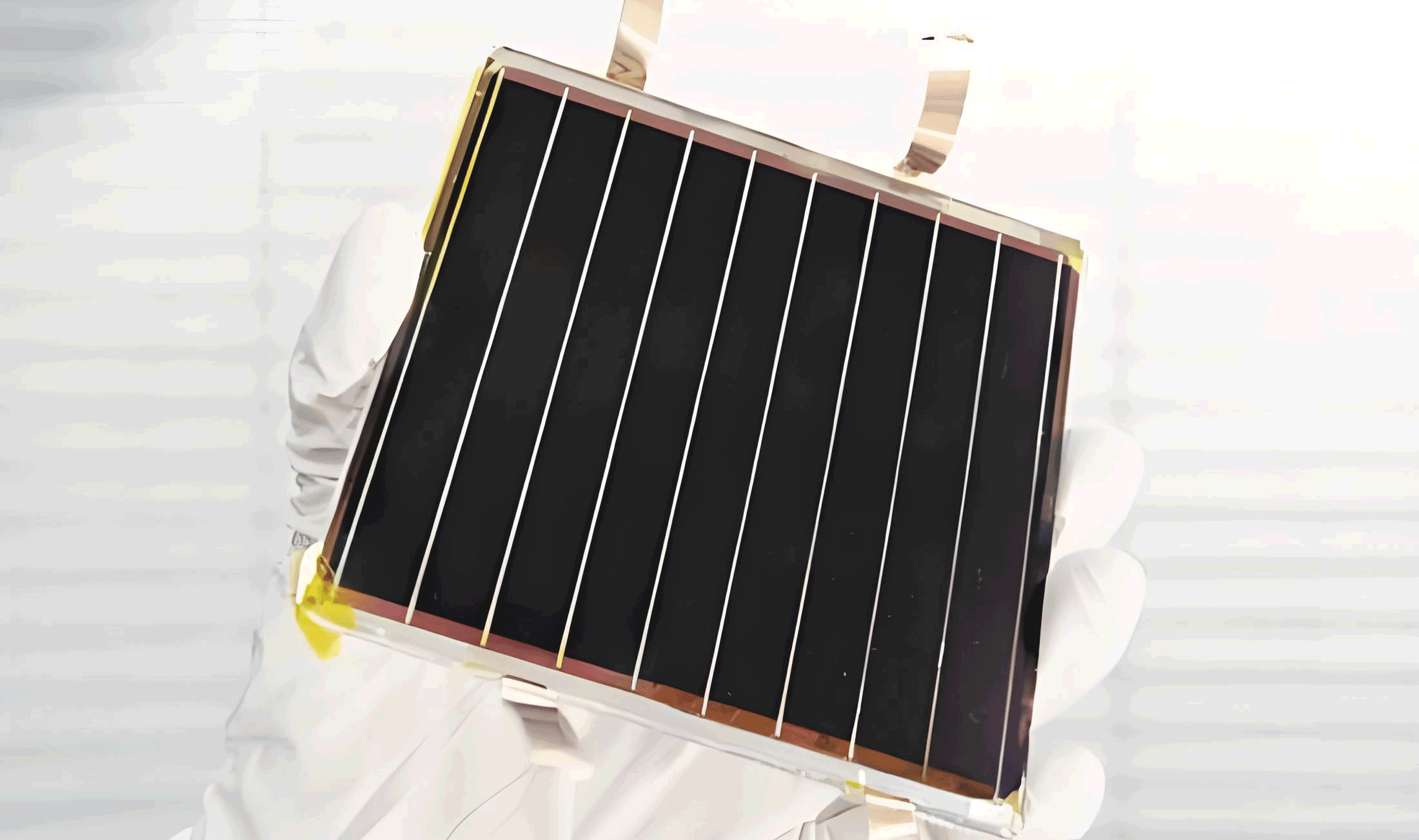
Under reverse bias, the J-V curves of perovskite solar cells exhibit distinct evolution patterns. For metal-electrode devices, low reverse biases (0 to -1 V) cause a significant drop in fill factor (FF) while open-circuit voltage (V_OC) and short-circuit current density (J_SC) remain relatively stable, resulting in an S-shaped curve. This can be modeled using diode equations with series and shunt resistances. The diode equation under reverse bias can be expressed as:
$$J = J_0 \left( \exp\left(\frac{q(V – J R_s)}{n k T}\right) – 1 \right) + \frac{V – J R_s}{R_{sh}}$$
where \(J\) is the current density, \(J_0\) is the reverse saturation current density, \(q\) is the electron charge, \(V\) is the applied voltage, \(R_s\) is the series resistance, \(R_{sh}\) is the shunt resistance, \(n\) is the ideality factor, \(k\) is Boltzmann’s constant, and \(T\) is the temperature. Under reverse bias, \(V\) is negative, and the exponential term becomes negligible, leading to \(J \approx -J_0 + (V – J R_s)/R_{sh}\). As degradation progresses, \(R_{sh}\) decreases due to ion migration, causing the S-shaped distortion. At higher reverse biases beyond the breakdown voltage, \(V_OC\) and \(J_SC\) plummet, and the J-V curve becomes linear, indicating permanent failure. The breakdown voltage \(V_{bd}\) is a critical parameter, defined as the point where reverse current density surges abruptly. This can be associated with avalanche or Zener breakdown mechanisms, given by:
$$V_{bd} = \frac{E_c^2 \varepsilon}{2 q N}$$
where \(E_c\) is the critical electric field, \(\varepsilon\) is the permittivity, and \(N\) is the doping concentration. For perovskite solar cells, \(V_{bd}\) varies with device structure and efficiency, as summarized in Table 1.
| Device Structure | PCE (%) | Breakdown Voltage (V) |
|---|---|---|
| ITO/PTAA/Cs0.22FA0.78Pb(I0.85Br0.15)3/C60/BCP/Au | 15 | -15.36 |
| ITO/PTAA/FA0.9Cs0.1PbI3/LiF/C60/SnO2/ITO/Cu | 23.8 | -20 |
| ITO/NiOx/PolyTPD/PFN/Cs0.25FA0.75Pb(Br0.2I0.8)3/LiF/C60/SnO2/ITO | 15 | -5 |
| ITO/NiOx/(FAPbI3)0.83(CsPbBr3)0.17/LiF/C60/SnO2/ITO | 14 | -1.2 |
| ITO/PTAA/MAPbI3/PCBM/BCP/Ag | 17.67 | -3 |
Self-recovery is a unique feature of perovskite solar cells under moderate reverse bias. After aging at biases like -0.8 V, devices can recover up to 85% of their initial efficiency after dark storage, due to the recombination of iodide vacancies and interstitials. The defect dynamics can be described by Frank pair formation:
$$V_I^+ + I_i^- \leftrightarrow \text{perfect lattice}$$
where \(V_I^+\) is an iodide vacancy and \(I_i^-\) is an iodide interstitial. The recovery rate depends on temperature and electric field, following an Arrhenius relation:
$$k = k_0 \exp\left(-\frac{E_a}{kT}\right)$$
where \(k\) is the rate constant, \(k_0\) is the pre-exponential factor, and \(E_a\) is the activation energy for ion migration. However, under high reverse biases (e.g., > -5 V) or prolonged aging, irreversible degradation occurs. This involves electrochemical reactions at electrodes, such as iodide oxidation to I2 and metal ion reduction, leading to conductive filament formation and thermal breakdown. The power dissipation under reverse bias can be calculated as:
$$P = J \times V$$
where \(P\) is the power density, \(J\) is the reverse current density, and \(V\) is the applied bias. This can cause local heating, with temperature rise given by:
$$\Delta T = \frac{P}{h A}$$
where \(h\) is the heat transfer coefficient and \(A\) is the area. If \(\Delta T\) exceeds the thermal stability limit of perovskites (e.g., > 150°C), irreversible decomposition occurs, forming PbI2 and other phases.
To enhance reverse bias stability, various strategies have been developed. Interface blocking layers, such as atomic-layer-deposited SnO2 or ITO, can inhibit ion migration and reduce hole injection. The effectiveness of a blocking layer can be quantified by its barrier height \(\phi_B\), which affects the reverse current:
$$J \propto \exp\left(-\frac{\phi_B}{kT}\right)$$
Surface passivation with molecules like MDMS or BAI reduces defect density, suppressing ion migration. The passivation effect can be modeled by a reduction in surface recombination velocity \(S\):
$$J_{SC} \propto \frac{1}{1 + S \tau}$$
where \(\tau\) is the carrier lifetime. Electrode modifications, such as using Au instead of Ag, increase the breakdown voltage by reducing electrochemical reactions. For instance, the standard electrode potential for Au is higher than Ag, making it less prone to oxidation. The aging duration under fixed reverse biases is summarized in Table 2, showing how stability varies with voltage and device design.
| Device Structure | Reverse Bias (V) | Duration to 80% PCE Retention |
|---|---|---|
| ITO/PTAA/Cs0.22FA0.78Pb(I0.85Br0.15)3/C60/BCP/Au | -10 | 600 s |
| ITO/PTAA/FA0.9Cs0.1PbI3/LiF/C60/SnO2/ITO/Cu | -1.6 | 1000 h |
| ITO/PTAA/MAPbI3/MDMS/C60/BCP/Cu | -1 | 120 s |
| ITO/PTAA/FA0.9Cs0.1PbI2.83Br0.17/PFI/PCBM/C60/BCP/Cu | -4.5 | 5 h |
| ITO/SnO2/PVSK/PEAI/spiro-OMeTAD/MoOx/ITO/Cu | -4 | 60 s |
Characterization techniques play a vital role in studying reverse bias degradation. In-situ methods like time-of-flight secondary ion mass spectrometry (TOF-SIMS) and photoluminescence (PL) mapping provide real-time insights into ion distribution and defect formation. For example, TOF-SIMS can detect metal ion penetration into perovskite layers, while PL mapping reveals localized degradation spots. The reverse bias stability testing involves measuring J-V curves under dark conditions with incremental voltage steps. The reverse current density \(J_{rev}\) as a function of voltage \(V\) can be fitted to:
$$J_{rev} = A \exp(B |V|)$$
where \(A\) and \(B\) are constants related to the breakdown process. For module-level testing, shadowing experiments simulate real-world conditions, where one sub-cell is shaded, and the overall performance is monitored.
Looking ahead, machine learning approaches could accelerate the development of stable perovskite solar cells by predicting material properties and optimizing device architectures. For instance, neural networks can model the relationship between composition, structure, and reverse bias stability, enabling high-throughput screening. Additionally, dynamic carrier transport models that incorporate ion migration could provide deeper insights into degradation mechanisms. The future of perovskite solar cells lies in addressing these stability challenges to achieve commercial viability.
In conclusion, the reverse bias stability of perovskite solar cells is a critical issue influenced by ion migration, interfacial chemistry, and thermal effects. Through advanced materials engineering and characterization, significant progress has been made in understanding and mitigating these failures. I have discussed key aspects such as J-V evolution, breakdown voltages, self-recovery, and irreversible loss mechanisms, supported by tables and formulas. Strategies like interface blocking layers and passivation offer promising pathways for improvement. As research continues, focusing on high-efficiency devices and innovative solutions will be essential for overcoming the reverse bias challenge and advancing perovskite solar cell technology towards widespread adoption.