
The rapid integration of renewable energy sources introduces significant intermittency and volatility into modern power grids, posing substantial challenges to maintaining system frequency stability. Traditional thermal power plants, while reliable, often lack the agility required for rapid frequency regulation. In this context, the Battery Energy Storage System (BESS) has emerged as a pivotal solution. With its unparalleled advantages—precise power output, millisecond-level response speed, and inherent bi-directional power flow capability—BESS is increasingly deployed to provide fast frequency regulation (FFR) services, effectively compensating for the inertia shortfall and enhancing grid resilience.
However, the widespread adoption of BESS for frequency regulation is fundamentally constrained by its economic viability, which is directly tied to the lifespan of the electrochemical cells. The core challenge lies in the inherent trade-off between performance and degradation. Frequent, high-power charge-discharge cycles, especially at deep depths of discharge, accelerate the aging process of battery cells, leading to capacity fade and increased internal resistance. This degradation shortens the operational life of the cell energy storage system, undermining its long-term economic benefits. Therefore, developing an advanced control strategy that not only meets stringent grid frequency requirements but also proactively manages and extends the service life of the cell energy storage system is of paramount importance for plant operators and grid stability.
This article presents a comprehensive study on an adaptive, state-of-charge (SOC) feedback-based integrated frequency modulation strategy. The primary objective is to intelligently manage the power output of the cell energy storage system to minimize operational stress while fulfilling its frequency support duties. We will delve into the control architecture, detail the design of the adaptive factor, validate the strategy through simulation using real-world plant data, and critically assess its impact on the predicted lifespan of the battery system using the rain-flow counting method.
1. Adaptive Integrated Frequency Modulation Strategy
The efficacy of a BESS in frequency regulation is primarily realized through two fundamental control modes: virtual inertia control and virtual droop control. Virtual inertia control mimics the inertial response of synchronous generators by providing power support proportional to the rate of change of frequency (RoCoF), effectively damping initial frequency excursions. Virtual droop control, analogous to the governor response, delivers power proportional to the frequency deviation itself, correcting the steady-state error. An optimal strategy must seamlessly blend these two modes.
The proposed adaptive integrated strategy dynamically allocates power between these control modes based on real-time grid conditions and the internal state of the cell energy storage system. The total power command for the BESS, $\Delta P_b$, is the sum of the contributions from both controllers:
$$\Delta P_b = \Delta P_{b,I} + \Delta P_{b,D}$$
where $\Delta P_{b,I}$ is the power from the virtual inertia control and $\Delta P_{b,D}$ is the power from the virtual droop control.
1.1. Control Model and the Adaptive Factor
The core innovation of our strategy is the introduction of an adaptive factor, $\mu$, which modulates the gain of each controller. The power commands are defined as:
$$\Delta P_{b,I} = \mu_1 \cdot M_b \cdot \frac{d\Delta f}{dt} \cdot G_{bess}(s)$$
$$\Delta P_{b,D} = \mu_2 \cdot K_b \cdot \Delta f \cdot G_{bess}(s)$$
Here, $M_b$ and $K_b$ are the nominal inertial and droop coefficients, $\Delta f$ is the frequency deviation, and $G_{bess}(s) = 1/(T_b s + 1)$ is the transfer function representing the dynamics of the cell energy storage system with time constant $T_b$.
The adaptive factors $\mu_1$ and $\mu_2$ are not static; they are the product of two dynamic coefficients:
$$\mu_1 = \alpha_1 \cdot \beta_1, \quad \mu_2 = \alpha_2 \cdot \beta_2$$
where $\alpha$ is the input coefficient determined by grid frequency status, and $\beta$ is the feedback coefficient determined by the battery’s State of Charge (SOC). This dual-layer adaptation ensures responsiveness to both external grid demands and internal system health.
1.2. Design of the Input Coefficient ($\alpha$) via Fuzzy Logic
The input coefficients $\alpha_1$ and $\alpha_2$ (with $\alpha_1 + \alpha_2 = 1$) govern the balance between inertia and droop support. A fixed or rule-based switching logic can cause abrupt power changes, potentially leading to secondary frequency disturbances. To achieve smooth, continuous transition, we employ a fuzzy logic controller.
The fuzzy controller takes two inputs: the normalized frequency deviation ($\Delta f$) and its derivative (RoCoF, $d\Delta f/dt$). Its output is $\alpha_1$, the weight for the virtual inertia control. The fuzzy rule base, designed from power system operational principles, is summarized below:
| $d\Delta f/dt$ \ $\Delta f$ | NB | NM | NS | Z | PS | PM | PB |
|---|---|---|---|---|---|---|---|
| NB | VB | B | B | VB | Z | Z | Z |
| NM | B | B | M | B | Z | Z | S |
| NS | M | M | M | M | Z | S | S |
| Z | Z | S | Z | Z | S | S | Z |
| PS | S | S | Z | M | M | M | M |
| PM | S | Z | Z | B | M | B | B |
| PB | Z | Z | Z | VB | B | B | VB |
Linguistic Variables: NB (Negative Big), NM (Negative Medium), NS (Negative Small), Z (Zero), PS (Positive Small), PM (Positive Medium), PB (Positive Big) for inputs; Z (Zero), S (Small), M (Medium), B (Big), VB (Very Big) for output $\alpha_1$.
The governing principles are:
- High RoCoF, Small $\Delta f$: Prioritize virtual inertia ($\alpha_1 \rightarrow$ Large) to arrest rapid frequency change.
- Large $\Delta f$, Small RoCoF: Prioritize virtual droop ($\alpha_1 \rightarrow$ Small) to correct the steady-state error efficiently.
- Both $\Delta f$ and RoCoF are small: Minimize BESS usage ($\alpha_1 \rightarrow$ Medium/Small) to reduce wear, allowing thermal units to handle minor fluctuations.
The output is defuzzified using the centroid method to obtain a precise value for $\alpha_1$.
1.3. Design of the SOC Feedback Coefficient ($\beta$)
Protecting the cell energy storage system from over-charge and over-discharge is critical for longevity. The feedback coefficient $\beta$ adjusts the final output command based on the real-time SOC, ensuring operation within a safe and optimal window $[SOC_{min}, SOC_{max}]$. We utilize a logistic function for smooth adjustment within this window and hard limits at the boundaries.
For a given SOC $S_{SOC}$, the charge coefficient $K_c$ (applied when power command is positive/charging) and discharge coefficient $K_d$ (applied when power command is negative/discharging) are defined piecewise:
For $S_{SOC} \in [SOC_{min}, SOC_{max}]$:
$$K_c = \frac{P_0 \cdot K_{max} \cdot \exp\left(v_0 \cdot \frac{SOC_{max} – S_{SOC}}{(SOC_{max} – SOC_{min})/2}\right)}{K_{max} + P_0 \cdot \left( \exp\left(v_0 \cdot \frac{SOC_{max} – S_{SOC}}{(SOC_{max} – SOC_{min})/2}\right) – 1 \right)}$$
$$K_d = \frac{P_0 \cdot K_{max} \cdot \exp\left(v_0 \cdot \frac{S_{SOC} – SOC_{min}}{(SOC_{max} – SOC_{min})/2}\right)}{K_{max} + P_0 \cdot \left( \exp\left(v_0 \cdot \frac{S_{SOC} – SOC_{min}}{(SOC_{max} – SOC_{min})/2}\right) – 1 \right)}$$
where $K_{max}=1$, and $P_0$, $v_0$ are shaping constants (e.g., 0.01 and 15).
For $S_{SOC} < SOC_{min}$: $K_c = K_{max}, K_d = 0$ (Force charge only).
For $S_{SOC} > SOC_{max}$: $K_c = 0, K_d = K_{max}$ (Force discharge only).
The final feedback coefficients for the two control loops are then:
$$\beta_1 = \begin{cases} \lambda \cdot K_c, & \text{if } d\Delta f/dt \geq 0 \text{ (charging)} \\ \lambda \cdot K_d, & \text{if } d\Delta f/dt < 0 \text{ (discharging)} \end{cases}$$
$$\beta_2 = \begin{cases} K_c, & \text{if } \Delta f \geq 0 \text{ (charging)} \\ K_d, & \text{if } \Delta f < 0 \text{ (discharging)} \end{cases}$$
The scaling factor $\lambda$ is introduced to balance the different numerical ranges of RoCoF and frequency deviation signals, ensuring proportionate contributions from both control loops.
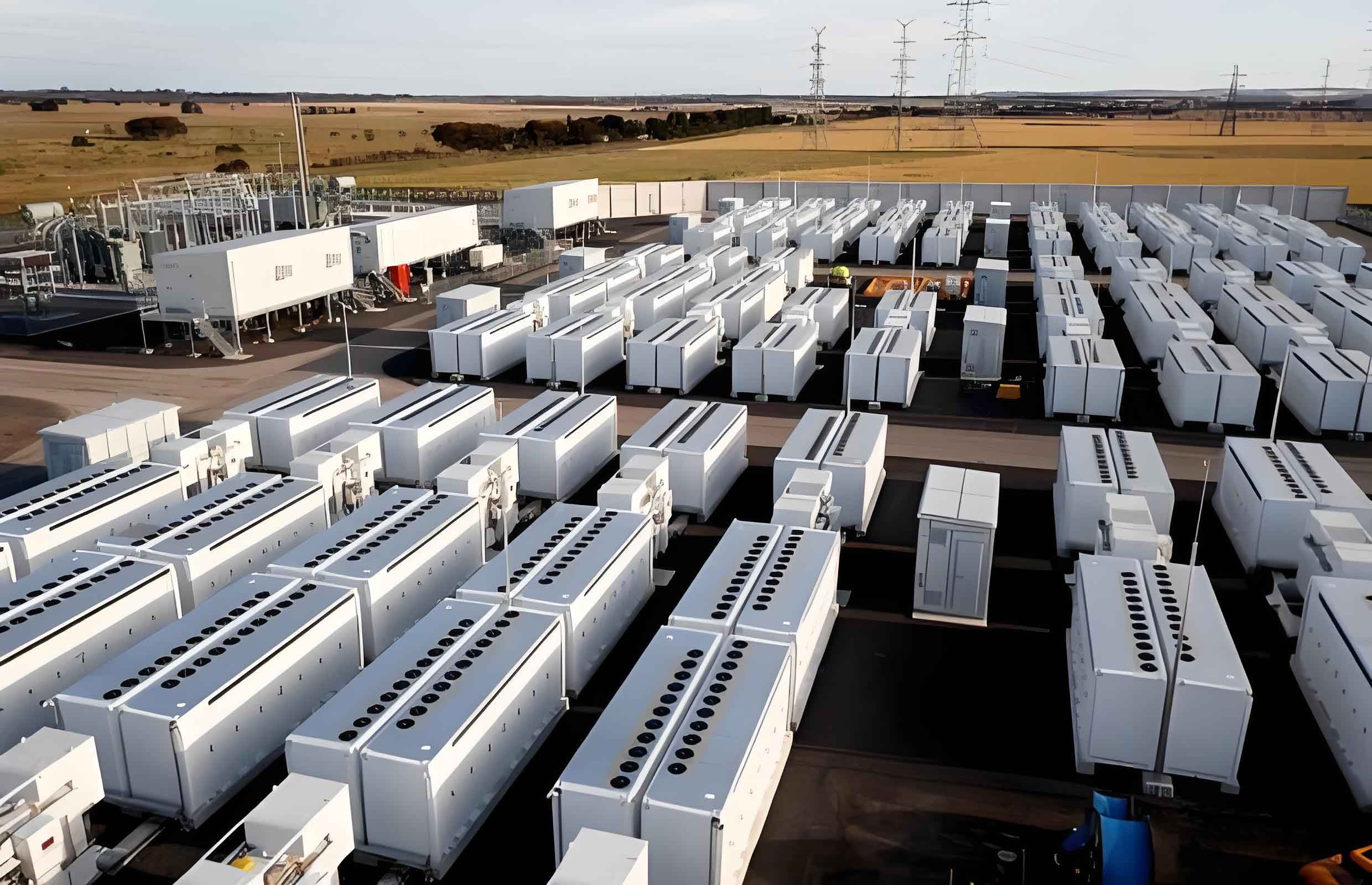
The lifespan of a cell energy storage system is directly linked to the electrochemical stress endured by its core components during operation. Strategies that intelligently manage charge and discharge profiles are essential for maximizing the return on investment for these critical grid assets.
2. Simulation Model and Comparative Strategies
To validate the proposed adaptive strategy, a simulation model was built in Matlab/Simulink using the actual operational data from a 330 MW thermal power unit paired with a 10 MW / 5 MWh lithium iron phosphate (LFP) battery energy storage system. The key simulation parameters are listed below:
| Parameter | Symbol | Value |
|---|---|---|
| Rated System Frequency | $f_n$ | 50 Hz |
| Generator Inertia Constant | $H_s$ | 5 s |
| Load Damping Coefficient | $D$ | 1.0 p.u./Hz |
| BESS Nominal Power | $P_{bess}^{rated}$ | 10 MW |
| BESS Capacity | $E_{bess}$ | 5 MWh |
| BESS Time Constant | $T_b$ | 0.1 s |
| Virtual Inertia Coefficient | $M_b$ | 2.0 p.u. |
| Virtual Droop Coefficient | $K_b$ | 1/3 p.u. |
| SOC Operating Window | $[SOC_{min}, SOC_{max}]$ | [0.23, 0.80] |
We compare the proposed Adaptive Strategy against two benchmark strategies:
- Fixed-K Strategy: This is a conventional method where the droop coefficient is constant ($K = K_b$). The cell energy storage system participates only when SOC is within [0.23, 0.80]; otherwise, it disconnects for self-recovery. It represents a typical, non-adaptive implementation.
- Variable-K Strategy: This strategy considers SOC for power scaling but not the grid frequency dynamics. The droop coefficient is modulated only by the SOC feedback: $K = \beta_2 \cdot K_b$. It is an intermediate strategy between Fixed-K and the full Adaptive method.
- Proposed Adaptive Strategy: The full strategy where $K = \alpha_2 \cdot \beta_2 \cdot K_b$ and $K’ = \alpha_1 \cdot \beta_1 \cdot M_b$, integrating both fuzzy logic-based mode blending and SOC feedback.
3. Performance Analysis and Results
3.1. Power Output and Tracking Performance
The power output of the cell energy storage system under the three strategies was analyzed against the desired AGC regulation command. The Fixed-K strategy showed accurate tracking but led to aggressive power commands, often pushing the system to its rated power limits, which increases stress. The Variable-K strategy provided smoother output by respecting SOC limits, effectively preventing over-charge/discharge. The Adaptive Strategy demonstrated superior performance: it maintained excellent tracking accuracy while producing the smoothest power output profile. It avoided unnecessary high-power transients by intelligently blending inertia and droop support, thereby reducing the rate of change of power imposed on the battery cells.
3.2. State of Charge (SOC) Analysis
The SOC trajectory is a direct indicator of operational stress and lifespan. The Fixed-K strategy caused the SOC to frequently hit the lower limit (0.23), triggering shutdowns and failing to utilize the full available capacity effectively. Both the Variable-K and Adaptive strategies maintained the SOC within the safe window. To quantify SOC management, we use a maintenance index $Q_{SOC}$:
$$Q_{SOC} = \frac{1}{n} \sum_{i=1}^{n} (Q_i – Q_{ref})^2$$
where $Q_i$ is the SOC at time $i$, and $Q_{ref}$ is the target optimal SOC (set to 0.55, the midpoint). A lower $Q_{SOC}$ indicates better SOC maintenance around the optimal point, reducing the average depth of discharge.
The Adaptive Strategy achieved the lowest $Q_{SOC}$, outperforming the Variable-K strategy by 5.91% to 7.78%. This demonstrates that the adaptive strategy not only keeps SOC within bounds but also actively regulates it closer to the optimal middle range, minimizing stress.
4. Lifespan Prediction Using Rain-Flow Counting Method
The ultimate metric for evaluating a control strategy for a cell energy storage system is its impact on lifespan. Battery aging is predominantly caused by charge-discharge cycling, with the depth of discharge (DOD) being a critical factor. We employ the rain-flow counting method, a well-established technique for analyzing complex, non-regular loading cycles, to translate the SOC time-series data into equivalent full-cycle stress profiles.
The method processes the SOC data by:
- Peak-Valley Extraction: Identifying all local maxima and minima in the SOC profile.
- Cycle Identification: Applying the rain-flow algorithm to pair these extremes into half-cycles and full cycles.
- Depth Calculation: For each identified cycle, calculating its depth $D_{DOD_i}$.
The total degradation is then estimated by mapping these cycles to the battery’s cycle-life model, typically provided by the manufacturer, which gives the number of equivalent full cycles (EFC) to end-of-life at a given DOD.
Applying this method to one day of simulated operation under each strategy yielded the following comparative results for the cell energy storage system:
| Strategy | SOC Operating Range (Day) | Key Lifespan Indicator | Estimated Avg. Service Life (Years)* |
|---|---|---|---|
| Fixed-K | [0.19, 0.80] (Violates limit) | High cycle count, but includes damaging deep discharges below 0.23. | 8.93 |
| Variable-K | [0.40, 0.78] | Reduced cycle depth, better SOC maintenance. | 10.08 |
| Proposed Adaptive | [0.40, 0.78] | Lowest stress cycles, optimal SOC maintenance ($Q_{SOC}$). | 12.34 |
| Plant’s Current (Fixed-K w/ limits) | [0.23, 0.80] (On/Off control) | Frequent disconnection, underutilization, stressful cycles when active. | 9.83 |
* Life estimation is extrapolated from one day’s rain-flow analysis and a cycle-life model, assuming similar daily operation.
The results are conclusive. The proposed Adaptive Strategy extends the predicted service life of the cell energy storage system by 25.53% compared to the plant’s current on/off limiting strategy. Furthermore, it shows a life increase of 38.19% over the basic Fixed-K method and 22.42% over the Variable-K method. This significant improvement stems from its dual-layer optimization: minimizing the number and depth of high-stress cycles through intelligent power blending ($\alpha$) and continuously modulating output to keep SOC near its healthiest level ($\beta$).
5. Conclusion
This study presents and validates a sophisticated adaptive control strategy for battery energy storage systems engaged in power plant frequency regulation. By integrating a fuzzy-logic-based input coefficient and an SOC-derived feedback coefficient, the strategy achieves an optimal, real-time balance between the virtual inertia and virtual droop control modes. This approach ensures superior frequency tracking performance while proactively managing the internal state of the cell energy storage system.
The critical contribution of this work is the quantitative demonstration of lifespan extension. Through simulation based on real operational data and rigorous analysis using the rain-flow counting method, the proposed strategy is proven to significantly reduce the electrochemical stress on the battery. The resulting 25.53% increase in predicted service life compared to conventional methods translates directly into enhanced economic viability and return on investment for battery energy storage projects. This makes the adaptive strategy a compelling solution for power plant operators seeking to leverage the fast-responding capabilities of a cell energy storage system for grid support in a sustainable and cost-effective manner.