
The ever-increasing global energy demand and pressing environmental concerns have made the development of efficient, low-cost, and sustainable electrochemical energy storage systems a paramount focus of scientific and industrial research. While lithium-ion batteries (LIBs) currently dominate the market for portable electronics and electric vehicles, concerns over lithium resource scarcity, geopolitical constraints, and rising costs have intensified the search for complementary alternatives. Sodium-ion batteries (SIBs) emerge as a highly promising candidate, leveraging the natural abundance, low cost, and favorable electrochemistry of sodium. Among the key components determining the performance and cost of a sodium-ion battery, the cathode material plays a decisive role. This review focuses on the Alluaudite-type sodium iron sulfate, Na2+2xFe2-x(SO4)3 (NFS), a polyanionic cathode material that stands out for its high operating voltage, structural stability, and exceptionally low raw material cost, positioning it as a frontrunner for next-generation, cost-effective sodium-ion battery technology.
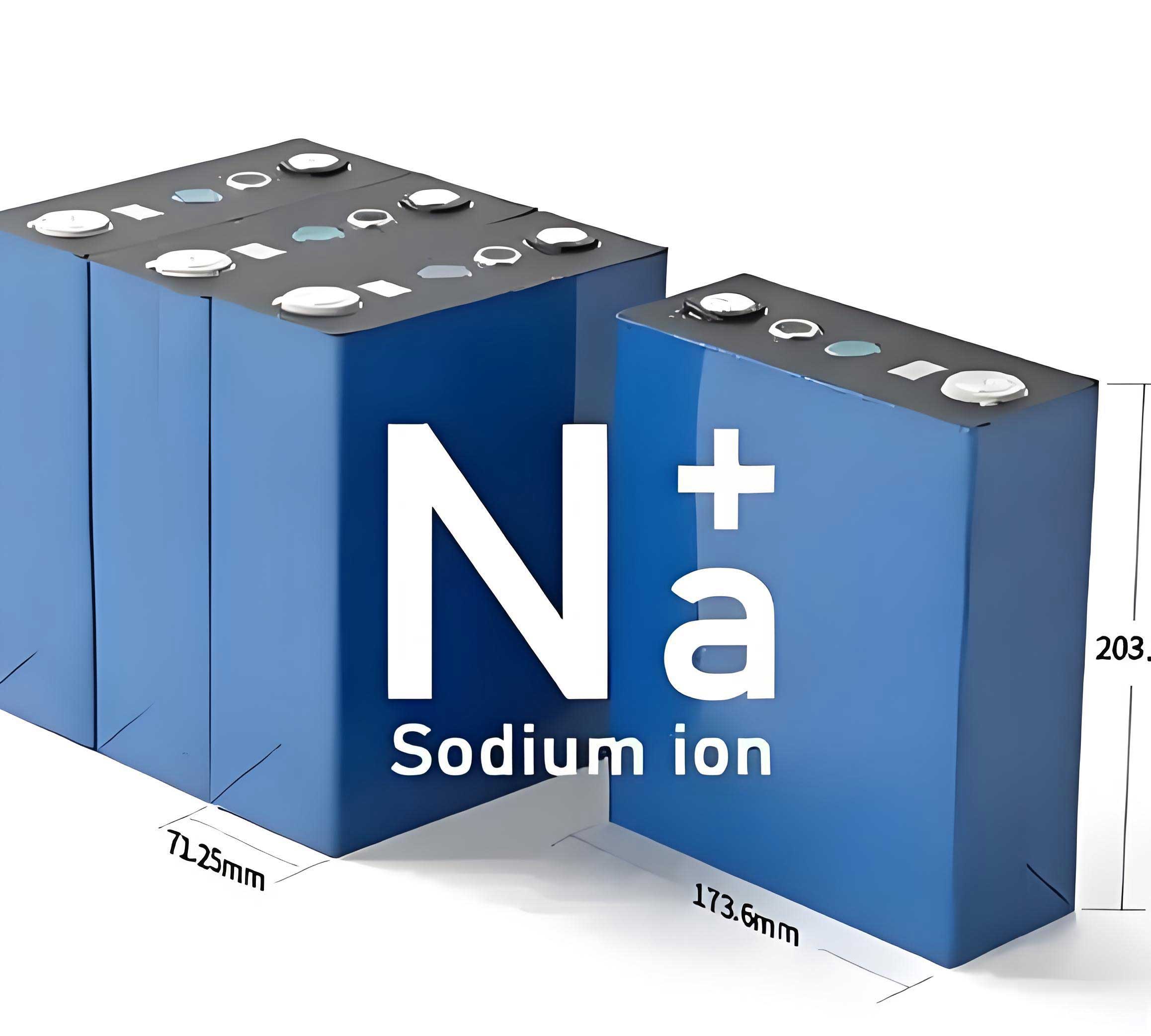
The fundamental appeal of polyanionic compounds like NFS lies in their robust three-dimensional framework, which facilitates reversible Na+ (de)intercalation with minimal volume change, ensuring excellent cycling stability. More importantly, the strong inductive effect of the polyanion group (SO42-) elevates the redox potential of the Fe3+/Fe2+ couple to approximately 3.8 V vs. Na/Na+. This high voltage, combined with a theoretical capacity of 120 mAh g-1, yields a competitive theoretical energy density of ~456 Wh kg-1. However, the practical deployment of NFS in commercial sodium-ion battery systems is hindered by several intrinsic and synthetic challenges: low electronic conductivity, poor interfacial stability leading to sensitivity to moisture and electrolyte decomposition, and difficulties in obtaining phase-pure materials during synthesis.
Crystal Structure and Sodium Storage Mechanism
NFS crystallizes in a monoclinic structure with the C2/c space group, belonging to the Alluaudite family with a general formula of AA’BM2(XO4)3. In NFS, A = Na(2), A’ = Na(3), B = Na(1), M = Fe2+, and X = S. The structure is built from corner-sharing FeO6 octahedra and SO4 tetrahedra. A distinctive feature is the formation of Fe2O10 dimers, where two FeO6 octahedra share an edge. The Fe-Fe distance within this dimer is remarkably short (~0.32 nm), contributing to the high Fe3+/Fe2+ redox potential. Sodium ions occupy three distinct crystallographic sites: Na(1) is fully occupied, while Na(2) and Na(3) are partially occupied. Bond valence sum maps and density functional theory (DFT) calculations reveal that Na+ diffusion occurs predominantly along one-dimensional channels parallel to the c-axis, primarily involving the Na(3) sites, with low migration barriers (~0.28 eV). This provides NFS with favorable Na+ transport kinetics despite its 3D framework.
The electrochemical (de)sodiation mechanism involves complex, partially irreversible structural rearrangements during the first charge. Upon initial charging to ~4.06 V, Na+ is extracted not only from the Na sites but also triggers the migration of Fe3+ from the Fe(1) site to a neighboring vacant Na(1) site. This irreversible Fe migration alleviates the strong Coulombic repulsion within the Fe2O10 dimer in the desodiated state. Subsequent cycles exhibit highly reversible Fe3+/Fe2+ redox activity with a minimal volume change of ~3.5%, underpinning the material’s excellent structural resilience. The typical voltage profile shows plateaus around 3.8 V and 4.06 V during charge, corresponding to the extraction of Na+ from different sites.
Critical Challenges for Practical Application
The path to commercializing NFS cathodes is obstructed by three major hurdles:
- Difficulty in Synthesizing Phase-Pure Material: The strong Coulombic repulsion between Fe2+ ions in the dimer often leads to the escape of Fe during high-temperature synthesis, resulting in impurity phases like α/β-FeSO4, Fe3O4, or Na6Fe(SO4)4. These impurities are electrochemically inactive or poorly conductive, drastically reducing the practical capacity. The material inherently tends to stabilize in a non-stoichiometric form, Na2+2xFe2-x(SO4)3 (0 < x < ~0.3), where excess Na+ occupies some Fe sites to mitigate the repulsive forces.
- Low Intrinsic Electronic Conductivity: Like many polyanionic materials, NFS suffers from poor electronic conductivity (on the order of 10-9 S cm-1) due to the separation of transition-metal centers by insulating SO42- polyanions. This severely limits rate capability and full capacity utilization.
- Poor Interfacial and Environmental Stability: The highly polarized SO42- groups create a surface with high electron density, making NFS prone to side reactions. It readily reacts with atmospheric moisture to form an inactive hydrated phase, Na2Fe(SO4)2·4H2O. Furthermore, at high operating voltages (>4.0 V vs. Na/Na+), it catalyzes electrolyte decomposition, leading to an unstable and thick cathode-electrolyte interphase (CEI) that increases impedance and causes continuous capacity fade.
Synthesis Methodologies
The synthesis of NFS is challenging due to its solubility in aqueous media and decomposition above ~450 °C. Various methods have been developed, each with pros and cons for scalability and material quality.
| Method | Process Description | Advantages | Disadvantages |
|---|---|---|---|
| Solid-State (Ball-Milling) | Mechanical mixing of precursors (e.g., Na2SO4, FeSO4·7H2O) followed by calcination at ~350-400°C. | Simple, scalable, easy carbon mixing. | Large/irregular particles, risk of impurities, requires pre-drying of FeSO4·7H2O. |
| Spray Drying | Atomization of aqueous precursor solution, drying to form intermediate hydrate, then calcination. | Good homogeneity, spherical particles, suitable for mass production. | Two-step process, careful control needed to prevent re-hydration. |
| Freeze Drying | Rapid freezing of precursor solution followed by sublimation under vacuum and calcination. | High purity, porous nanostructures, prevents aggregation. | Energy-intensive, time-consuming, high equipment cost. |
| Ionothermal | Reaction in high-boiling ionic liquid (e.g., [EMIm][TFSI]) under solvothermal conditions. | High purity, controlled nano-morphology. | Expensive solvents, complex process, not scalable. |
| High-Boiling Solvent Colloidal Synthesis | Reaction in organic solvents (e.g., oleic acid/oleylamine) to form nanoscale precursors, then sintering. | Ultra-small nanoparticles, uniform carbon coating in situ. | Complex organic chemistry, cost. |
Design and Modification Strategies
Significant research efforts have been directed toward overcoming the aforementioned challenges through strategic material design. These can be categorized into non-stoichiometric design, elemental doping, carbon engineering, and morphology control.
1. Non-Stoichiometric Design (Na2+2xFe2-x(SO4)3)
The intentional synthesis of Na-rich, Fe-deficient compositions is not merely a compromise but a necessary design principle. DFT calculations show that replacing Fe2+ with Na+ in the Fe2O10 dimer to form FeNaO10 significantly reduces the Coulombic repulsion, lowering the formation energy and enhancing structural stability. The optimal composition is found around x ≈ 0.25-0.3 (e.g., Na2.5Fe1.75(SO4)3). This non-stoichiometry minimizes the formation of electrochemically detrimental impurities like Fe3O4 and Na6Fe(SO4)4. The band gap of the pure phase is lower than that of the Na6Fe(SO4)4 impurity, favoring better electronic transport. The capacity can be empirically correlated with the non-stoichiometry parameter ‘x’ and impurity phase fraction φ:
$$ C_{obs} \approx C_{theo} \times (1 – \phi) \times f(x) $$
where \( f(x) \) accounts for the active Fe content in Na2+2xFe2-x(SO4)3.
2. Elemental Doping
Doping is employed to tailor electronic structure, ionic conductivity, and surface properties.
Cation Doping (Fe-site): Partial substitution of Fe with cations like Mg2+, Mn2+, or Ni2+ is effective.
- Mg Doping: Mg2+ has lower electronegativity and a smaller ionic radius than Fe2+. Its introduction modifies the local electronic structure, reduces the band gap (from ~2.32 eV to ~2.16 eV), and strengthens the M-O bond. It also lowers the surface charge density, reducing H2O adsorption energy and electrolyte decomposition, leading to a thinner, more stable CEI.
- Mn/Ni Doping: While Mn3+/Mn2+ and Ni3+/Ni2+ redox activities are not accessed within the typical voltage window, these dopants may activate anion (oxygen) redox activity, providing extra capacity.
Anion Doping (SO42--site): Partial substitution of SO42- with PO43- or F– aims to improve interfacial stability.
- PO43- Doping: The PO43- group has lower polarity than SO42-. Doping significantly weakens the material’s adsorption energy for water molecules (e.g., from -1.04 eV to -0.16 eV), dramatically enhancing air stability without sacrificing high voltage.
- F– Doping: Incorporation of F– influences charge distribution, promotes a more uniform CEI formation, and improves interfacial Na+ transport kinetics.
3. Carbon Engineering and Nanostructuring
Given the low carbonization temperature limit (~400°C) for NFS, conventional organic precursor coating is not feasible. Instead, direct compounding with conductive carbons is the primary strategy.
| Carbon Type | Role & Effect | Typical Performance Enhancement |
|---|---|---|
| Carbon Black (KB, SP) | Conductive filler, prevents particle agglomeration, increases electrolyte wetting. | Improves rate capability (e.g., 61.5 mAh g-1 at 5 A g-1). |
| Carbon Nanotubes (CNTs) | Forms 3D conductive network, wraps particles, inhibits growth. | Enhances electronic wiring; optimal at ~2 wt.% (95.9 mAh g-1 at 0.05C). |
| Graphene / rGO | 2D conductive wrapping, provides mechanical support, acts as a barrier against H2O/O2. | Enables high-rate cycling (45 mAh g-1 at 50C, 58% retention after 10k cycles). |
| Nitrogen-Doped Carbon | N-doping creates defects and active sites, further boosts electronic conductivity. | Higher conductivity than undoped carbon coating (1.17 vs. 0.19 S cm-1). |
| Biomass-Derived Carbon | Low-cost, sustainable source of porous carbon. | Provides competitive performance, e.g., 60 mAh g-1 at 5C. |
Advanced Architecture Design: Constructing sophisticated microstructures can push performance further.
- Self-Supporting Electrodes: Integrating NFS nanoparticles into free-standing porous carbon nanofiber films eliminates inert binders and current collectors, maximizing energy density and enabling flexibility.
- Multi-Scale Interface Engineering: Constructing a heterostructure with a secondary phase like Na6Fe(SO4)4, which has 3D Na+ diffusion channels, creates continuous, low-barrier ion transport pathways across the particle. This, combined with exposure of low-surface-energy crystal facets, promotes the formation of a stable, inorganic-rich CEI.
4. Electrolyte and Interphase Engineering
While not a modification of the active material itself, electrolyte formulation is critical for stabilizing NFS at high voltages. The use of fluorinated electrolytes, high-concentration salts, and additives like fluoroethylene carbonate (FEC) is essential to form a robust and ionically conductive CEI, suppressing continuous electrolyte oxidation and transition metal dissolution.
Performance Summary of Modified NFS Materials
The effectiveness of various strategies is consolidated in the table below, showcasing the state-of-the-art electrochemical performance achievable in NFS-based cathodes for sodium-ion batteries.
| Material (Strategy) | Synthesis | Capacity (Rate) | Cycle Life | Key Feature |
|---|---|---|---|---|
| Na2.4Fe1.6Mg0.02(SO4)3 (Mg doping) | Spray Drying | 96.2 mAh g-1 (0.1C) 62.7 mAh g-1 (20C) |
86% after 2000 cycles (5C) | Enhanced kinetics, stable CEI |
| Na2.9Fe1.7(SO4)2.7(PO4)0.3 (PO4 doping) | Solid-State | 100.4 mAh g-1 (0.1C) 86.7 mAh g-1 (30C) |
85.5% after 6000 cycles (30C) | Superior air/interface stability |
| NFS@rGO (Carbon composite) | Spray Drying | 100 mAh g-1 (0.05C) 45 mAh g-1 (50C) |
58% after 10,000 cycles (10C) | Ultralong cycling, 3D conduction |
| NFS@C@GO (Core-shell) | Freeze Drying | 107.9 mAh g-1 (0.1C) 75.1 mAh g-1 (10C) |
80.1% after 800 cycles (5C) | High capacity, dual carbon protection |
| NFS/SWNT (Muscle-like) | Electrospinning | 90.8 mAh g-1 (0.05C) 74.9 mAh g-1 (10C) |
92% after 100 cycles (5C) | Bio-inspired ion/electron highway |
| Heterostructure NFS/Na6Fe(SO4)4 | Freeze Drying | 101.3 mAh g-1 (6 mA g-1) 73.5 mAh g-1 (1200 mA g-1) |
80.69% after 1300 cycles (60 mA g-1) | Multi-scale ion channels, stable interface |
Industrialization Progress and Outlook
The transition of NFS from lab-scale research to commercial sodium-ion battery products is underway but faces significant scale-up challenges. Key industrial hurdles include developing cost-effective, humidity-controlled synthesis routes; implementing scalable carbon-coating processes; and ensuring long-term shelf-life through packaging or surface modification. Several companies, particularly in China, have announced plans for pilot or mass production of sulfate-based cathodes. Patent analysis reveals active development in areas like multi-cation doping, hydrophobic surface treatments, and composite structures with other polyanionic materials (e.g., Na4Fe3(PO4)2P2O7) to further enhance performance and stability.
For the future, several research directions are critical to unlock the full potential of NFS cathodes:
- Advanced Electrolytes: Developing new electrolyte systems (e.g., ionic liquids, solid-state electrolytes) specifically tailored for the high-voltage operation of sulfates is paramount for achieving long cycle life and safety.
- Integrated Multi-Modification: Combining non-stoichiometry, dual-ion doping (cation and anion), and advanced carbon architecture in a single material design.
- Fundamental Interface Science: Employing in-situ/operando techniques and computational modeling to gain atomic-level understanding of the CEI formation and degradation mechanisms on NFS surfaces.
- Green and Scalable Manufacturing: Innovating low-energy, water-based, or solvent-free synthesis routes that can produce high-performance NFS at a cost meeting the stringent targets for grid storage and electric mobility.
In conclusion, sodium iron sulfate represents a cornerstone material in the quest for low-cost, sustainable sodium-ion battery technology. Its high voltage and intrinsic stability are compelling advantages. While challenges related to conductivity, phase purity, and interfacial reactivity are significant, they are not insurmountable. Through rational material design encompassing non-stoichiometric chemistry, strategic doping, nanostructuring, and carbon compositing, the performance of NFS cathodes has been dramatically improved. Continued interdisciplinary efforts bridging fundamental science, advanced engineering, and scalable manufacturing are essential to translate this promising material from research laboratories into the broad commercial landscape of energy storage, ultimately contributing to a more sustainable energy future.