
The escalating demand for sustainable energy solutions has positioned electrochemical energy storage as a cornerstone of modern technology. While lithium-ion batteries (LIBs) have dominated this landscape, concerns regarding lithium resource scarcity, geographical concentration, and cost volatility have spurred intensive research into complementary or alternative chemistries. Among these, sodium-ion batteries (SIBs) have emerged as a highly promising candidate due to the natural abundance, low cost, and widespread distribution of sodium resources. However, the larger ionic radius (1.02 Å for Na+ vs. 0.76 Å for Li+) and higher standard electrode potential (-2.71 V for Na/Na+ vs. -3.04 V for Li/Li+) of sodium pose significant challenges, particularly for the anode material. Conventional graphite, the workhorse of LIB anodes, exhibits a meager capacity of around 30 mAh g-1 for sodium storage due to unfavorable thermodynamics and high diffusion barriers. Therefore, the development of high-performance, low-cost anode materials is pivotal for the commercialization of sodium-ion battery technology.
Carbonaceous materials, especially non-graphitic or amorphous carbons, are considered front-runners for SIB anodes. These are broadly categorized into soft carbons, which can be graphitized at high temperatures (>2800°C), and hard carbons, which resist graphitization. Their sodium storage behavior is distinctly different. Soft carbons typically exhibit a sloping voltage profile, while hard carbons display a composite profile with a sloping region (attributed to Na+ adsorption on defect sites and insertion into expanded carbon layers) and a low-voltage plateau (attributed to Na+ filling into nanopores or quasi-metallic cluster formation). The search for optimal carbon precursors has focused on biomass, resins, and fossil-fuel derivatives. Among these, pitch—a by-product from petroleum refining or coal tar processing—stands out due to its inherent advantages: high carbon content, high carbon yield, low cost, and vast availability. Yet, its direct pyrolysis often leads to highly graphitized, ordered structures with small interlayer spacing (<0.34 nm), resulting in unsatisfactory sodium storage capacity. I have observed that overcoming this inherent tendency toward graphitization is the central challenge in utilizing pitch for sodium-ion battery anodes. In recent years, significant progress has been made through various material engineering strategies. This article delves into these advanced preparation technologies, systematically analyzing their mechanisms and impacts on the electrochemical performance of pitch-derived carbon anodes for sodium-ion batteries.
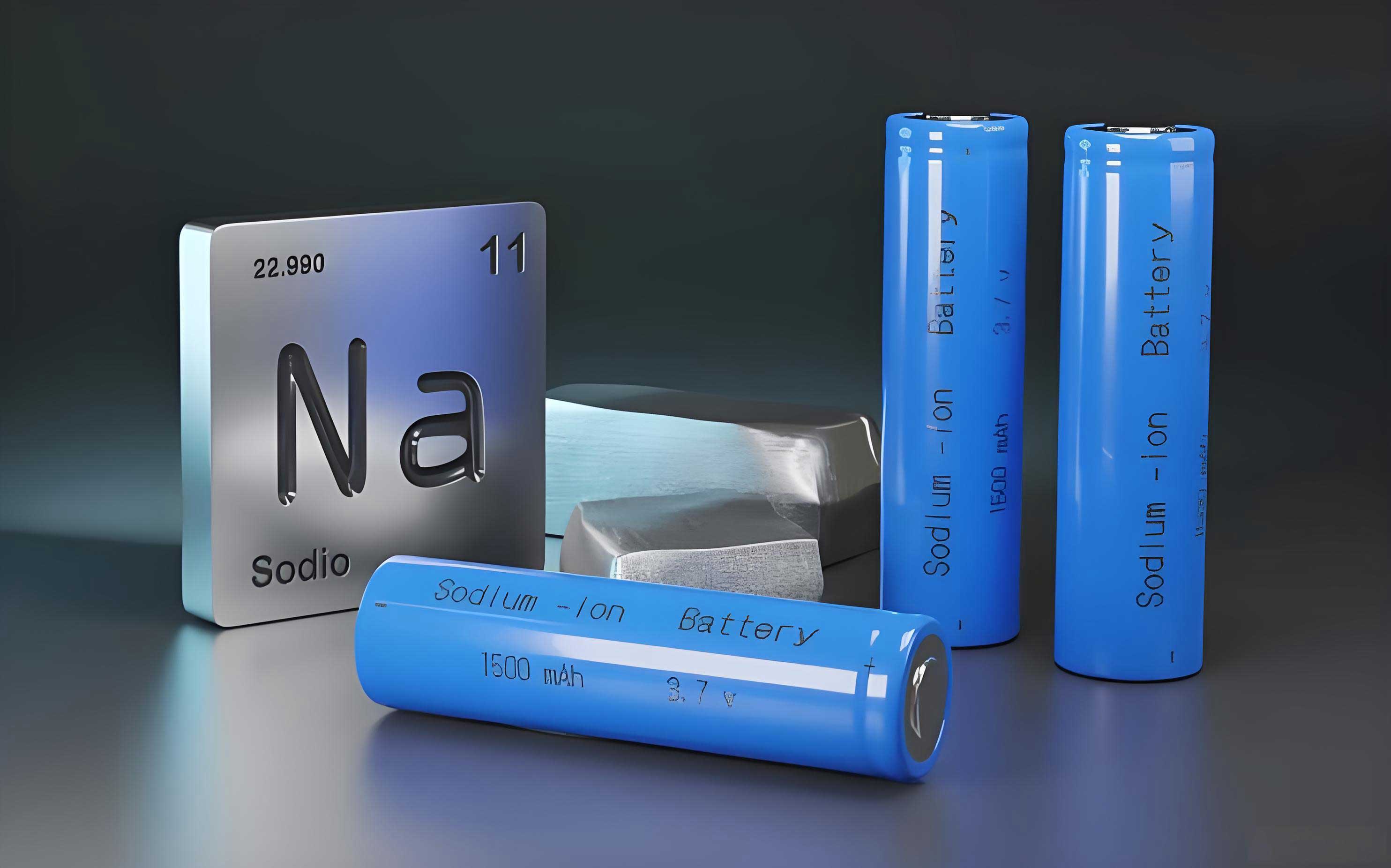
The Pitch Carbon Source: Challenges and Opportunities
Pitch is a complex mixture of polycyclic aromatic hydrocarbons (PAHs) with varying molecular weights, along with aliphatic side chains and heteroatoms (S, N, O). Its composition, which depends on the source and production process, directly influences the final carbon structure. The fundamental issue is its thermoplastic nature. Upon heating, pitch melts, and its planar aromatic molecules readily align due to strong π-π interactions, facilitating growth and stacking into ordered graphitic microcrystals during carbonization. This results in a material with low defect density, small d-spacing, and limited active sites for sodium ion interaction, which is detrimental for a high-performance sodium-ion battery anode. The key objective, therefore, is to disrupt this facile graphitization pathway and engineer a disordered, pseudo-graphitic structure with expanded interlayer distance, abundant defects, and a suitable pore architecture. The following sections detail the principal strategies developed to achieve this transformation.
Strategy 1: Pre-Oxidation Technology
Pre-oxidation is one of the most straightforward and effective methods to modify pitch. The process involves treating pitch with an oxidizing agent (air, O2, or oxidative solutions like HNO3) at moderate temperatures (250–400°C) before the high-temperature carbonization step. This treatment introduces oxygen-containing functional groups (e.g., carbonyl, hydroxyl, carboxyl, anhydride) into the aromatic system.
Mechanism: These oxygen functional groups initiate cross-linking reactions between adjacent pitch molecules. This transforms the pitch from a thermoplastic material into a thermosetting one. During subsequent carbonization, this cross-linked network prevents the melting and free flow of aromatic molecules, thereby inhibiting their rearrangement into ordered stacks. Furthermore, the thermal decomposition of these oxygen groups releases gases (CO, CO2, H2O), which create internal stress and promote the formation of disordered, bent carbon layers and closed pores. The degree of disorder (R value) can be qualitatively assessed by the intensity ratio of the D-band to G-band in Raman spectroscopy:
$$ R = \frac{I_D}{I_G} $$
A higher R value indicates a more disordered carbon structure, which is generally beneficial for sodium storage in a sodium-ion battery.
Impact on Performance: Research consistently shows that pre-oxidation converts pitch-derived soft carbon into hard carbon. The voltage profile evolves from a single sloping curve to the characteristic sloping-plus-plateau profile. The low-voltage plateau capacity, crucial for high energy density, increases significantly. For instance, studies report reversible capacities jumping from ~120 mAh g-1 for directly carbonized pitch to over 300 mAh g-1 for pre-oxidized derivatives, with initial Coulombic efficiency (ICE) often exceeding 80%. The choice of oxidant and parameters (temperature, time) is critical; oxygen gas typically leads to more thorough cross-linking than air but raises safety and cost considerations.
| Oxidant | Typical Conditions | Key Chemical Change | Resulting Carbon Structure | Typical Capacity Gain |
|---|---|---|---|---|
| Air | 300-360°C, several hours | Introduction of C=O, C-O-C; Milder cross-linking | Moderately disordered, some closed pores | ~150 → ~280 mAh g-1 |
| O2 Gas | 250-350°C, shorter time | Formation of anhydride (C(O)-O-C) groups; Extensive 3D cross-linking | Highly disordered, abundant closed pores | ~120 → ~310 mAh g-1 |
| HNO3 Solution | Solvothermal treatment | Nitration and oxidation; Increased molecular weight | Hard carbon with large d-spacing | ~120 → ~305 mAh g-1 |
Strategy 2: Molecular Cross-Linking Technology
This strategy employs chemical agents to deliberately create covalent bonds between pitch molecules, forming a rigid, cross-linked network that survives the carbonization process. Unlike pre-oxidation, which uses oxygen, cross-linkers can be other molecules like diols, aldehydes, or even inorganic salts.
Mechanism: Cross-linkers act as “molecular staples.” For example, diols can react with pitch molecules via cationic polymerization, while formaldehyde donors can form methylene bridges. Inorganic agents like Mg(NO3)2·6H2O decompose upon heating, releasing oxidizing gases that cross-link the pitch while leaving solid MgO particles that physically separate the carbonizing mass, preventing coalescence. This forced cross-linking raises the softening point of the pitch, ensuring solid-state carbonization and effectively suppressing graphitic ordering. The final structure is highly defective with a larger interlayer spacing (d002), which can be calculated from X-ray diffraction (XRD) using Bragg’s law:
$$ n\lambda = 2d_{002}\sin\theta $$
where a larger d002 (e.g., >0.36 nm vs. ~0.34 nm for graphite) facilitates Na+ intercalation.
Impact on Performance: Cross-linking agents can dramatically enhance the carbon yield (from ~60% to >90% in some cases) and the electrochemical performance. The produced carbons show a clear hard carbon behavior. A notable study using a zinc gluconate modifier reported a “dual-interfering” effect: gas evolution from decomposition consumed hydrogen to promote solid-phase pyrolysis, while residual ZnO particles provided physical isolation. The resulting turbostratic carbon delivered a high reversible capacity of 320 mAh g-1, with the plateau capacity doubled compared to the pristine pitch carbon.
Strategy 3: Template-Assisted Technology
Creating a designed porous architecture is an effective way to enhance ion transport kinetics and provide additional surface adsorption sites for sodium storage. Template-assisted synthesis involves mixing pitch with a sacrificial template, carbonizing the composite, and then removing the template.
Mechanism: Templates act as scaffolds around which the pitch carbonizes. Hard templates (e.g., SiO2, MgO, CaCO3) create replicas of their morphology, leading to ordered mesoporous structures. Salt templates (e.g., NaCl, KCl) are particularly attractive due to their water-soluble nature, avoiding harsh acid washing. During heat treatment, the molten salt can confine and shape the carbonization of pitch, resulting in three-dimensional porous networks, nanosheets, or interconnected frameworks. This nano-confinement also limits the growth of graphitic domains. The porosity can be described using absorption models like the Brunauer-Emmett-Teller (BET) theory for surface area and pore size distribution analysis.
Impact on Performance: Templated carbons excel in rate capability due to shortened ion diffusion paths and enhanced electrolyte infiltration. Reversible capacities can reach 330–350 mAh g-1. However, a common drawback is the increased specific surface area, which often leads to excessive solid electrolyte interphase (SEI) formation and consequently low ICE (frequently below 50%). The challenge is to balance porosity for kinetics with minimal surface area for high ICE. Advanced designs combine templating with other strategies (e.g., cross-linking) to better control the pore structure and carbon matrix ordering.
| Template Type | Examples | Removal Method | Resulting Morphology | Advantage/Disadvantage |
|---|---|---|---|---|
| Hard Template | SiO2, MgO, CaCO3> | HF or strong acid etching | Ordered mesopores, inverse opal | Precise control; Toxic waste generated |
| Salt Template | NaCl, KCl, ZnCl2 | Water washing | 3D porous networks, nanosheets | Eco-friendly, low-cost; Less precise control |
| Self-Template | Mg(NO3)2 (decomposes to MgO) | Acid etching | Porous carbon with embedded inhibition | In-situ generation; Combines cross-linking & templating |
Strategy 4: Heteroatom Doping Technology
Incorporating heteroatoms such as nitrogen (N), phosphorus (P), sulfur (S), or fluorine (F) into the carbon lattice is a powerful technique to modify the electronic structure, induce defects, and enhance surface reactivity.
Mechanism: Doping introduces active sites and expands the interlayer distance due to the different covalent radii of the dopants (e.g., P: 111 pm, S: 105 pm vs. C: 77 pm). More importantly, it alters the local electron density. For instance, N-doping, especially with pyrrolic-N and pyridinic-N configurations, creates electron-rich sites that strongly coordinate with Na+. P-doping, with its lower electronegativity, enhances the electron-donating ability of the carbon matrix, improving Na+ adsorption. The binding energy (Eb) between a dopant site and a Na atom/ion can be calculated via Density Functional Theory (DFT):
$$ E_b = E_{\text{(total system)}} – E_{\text{(carbon substrate)}} – E_{\text{(Na)}} $$
A more negative Eb indicates stronger adsorption, which is favorable for the sloping capacity region in a sodium-ion battery. S-doping can also involve reversible redox reactions (e.g., formation of Na2S), contributing to additional faradaic capacity.
Impact on Performance: Doping significantly boosts the reversible capacity, particularly in the high-voltage sloping region. N,S-co-doped carbons from sulfur-containing pitch have shown capacities as high as 480 mAh g-1. Fluorine doping has led to proposals of novel “cluster-mode” sodium storage. Doping also improves wettability and electronic conductivity, enhancing rate performance. However, excessive doping or certain dopant types can increase irreversible side reactions, potentially lowering ICE. Dual-element doping (e.g., N/P, N/S) is often pursued to synergistically combine benefits.
Strategy 5: Composite Carbon Technology
This approach aims to synergize the advantages of different carbon types by creating composites, most notably hard carbon/soft carbon hybrids. Pitch is an ideal soft carbon precursor, while resins (e.g., phenolic resin) or biomass are typical hard carbon precursors.
Mechanism: The composite is engineered at the precursor stage. One common method is coating a hard carbon precursor core (e.g., phenolic resin microsphere) with a pitch shell. During carbonization, the pitch forms a thin, partially ordered (soft) carbon layer on the surface of the highly disordered (hard) carbon core. This structure provides multiple benefits: the hard carbon core offers substantial capacity via its plateau region, the conductive soft carbon shell facilitates electron transport, and the interface between the two can provide additional active sites. The overall effective electronic conductivity (σeff) of such a composite can be modeled considering percolation pathways.
Impact on Performance: Composites can achieve an optimal balance between high capacity, good rate capability, and acceptable ICE. For example, pitch/phenolic resin composites have demonstrated capacities near 350 mAh g-1 with excellent cycling stability (94.5% capacity retention after 2500 cycles) and superior rate performance (145 mAh g-1 at 20 A g-1). Other composites, like pitch with g-C3N4 or graphene oxide, also show enhanced performance compared to individual components, validating the composite strategy for developing advanced sodium-ion battery anodes.
Summary, Challenges, and Future Perspectives
The pursuit of high-performance, low-cost anodes is central to the advancement of sodium-ion battery technology. Pitch, as a abundant and carbon-rich by-product, holds immense potential. The strategies discussed—pre-oxidation, molecular cross-linking, template assistance, heteroatom doping, and composite formation—have proven effective in transforming graphitization-prone pitch into disordered carbons with enhanced sodium storage capabilities. The key outcomes of these strategies are summarized in the table below, highlighting their primary mechanism and typical performance impact.
| Synthesis Strategy | Core Mechanism | Key Structural Outcome | Typical Performance Impact | Common Challenge |
|---|---|---|---|---|
| Pre-Oxidation | O2-induced cross-linking; Thermoplastic to thermoset transition | Disordered carbon, closed pores, larger d-spacing | High capacity (>300 mAh g-1), High ICE (>80%), Clear plateau | Process emissions, incomplete oxidation in bulk |
| Molecular Cross-Linking | Chemical agent-mediated covalent bonding; Solid-state carbonization | Highly defective, turbostratic structure, high carbon yield | High plateau capacity, good rate performance | Cost and optimal dosage of cross-linker |
| Template-Assisted | Nanoconfinement and morphological shaping | Designed porosity (3D network, nanosheets) | Excellent rate capability, high capacity | Low ICE due to high surface area; template removal |
| Heteroatom Doping | Electronic structure modulation, defect creation | Expanded d-spacing, surface functional groups | Enhanced sloping capacity, improved kinetics | Potential side reactions, control over doping type/level |
| Composite Carbon | Synergy of hard/soft carbon domains | Core-shell or intermixed hybrid structure | Balanced high capacity, rate performance, and cycling | Precise control of interface and domain distribution |
Despite significant progress, several critical challenges and research directions remain for pitch-derived carbon anodes in sodium-ion batteries:
1. Precursor Consistency and Structure-Property Relationship: The complex and variable composition of pitch from different sources necessitates establishing clearer correlations between precursor properties (molecular weight distribution, heteroatom content, aromaticity) and the final carbon’s structure and performance. Quality control and standardization of pitch feedstocks are essential for industrialization.
2. Deepening the Sodium Storage Mechanism: While the sloping-plateau model is widely accepted, the precise nature of sodium storage in closed pores (e.g., nanopore filling vs. quasi-metallic cluster formation) is still debated. Advanced in situ/operando characterization techniques (e.g., NMR, XRD, TEM) coupled with computational modeling are needed to unequivocally elucidate the mechanisms, especially for pitch-derived carbons with specific engineered structures.
3. Environmental and Economic Viability of Processes: Scale-up must address the emission of volatile organic compounds and tars during pyrolysis, as well as waste streams from template removal or acid washing. Developing cleaner, more energy-efficient processes, such as optimized molten salt or self-template methods, is crucial for sustainable manufacturing.
4. Performance Optimization for Specific Applications: The focus should not be solely on hard carbons. Engineered soft carbons from pitch with tailored porosity and doping may offer superior rate performance for high-power sodium-ion battery applications. Furthermore, the composite strategy combining low-cost pitch with other precursors deserves more exploration to achieve the best cost-performance ratio.
5. Bridging the Gap to Industrialization: Key performance metrics, especially the initial Coulombic efficiency and the rate capability of the plateau capacity, still require improvement to meet commercial application standards. Future work should integrate multiple strategies (e.g., pre-oxidation + mild templating + controlled doping) to precisely architect carbons with ideal hierarchical pore structures, optimal defect density, and stable interfaces, ultimately realizing the high-value utilization of pitch in next-generation energy storage systems.