
In recent years, the application of lithium-ion batteries has expanded rapidly across fields such as electric vehicles, consumer electronics, and energy storage systems, driving the demand for high-performance electrode materials. Among these, graphite anode materials, particularly those derived from synthetic sources, dominate the market due to their excellent cycling stability and safety. The precursor materials for these synthetic graphites, known as anode cokes, include needle coke, petroleum coke, and pitch coke. The quality of anode coke directly influences the electrochemical performance of the final lithium-ion battery, making reliable evaluation methods crucial. However, standardized protocols for assessing the electrochemical properties of anode coke are still lacking. In this study, we conducted a comprehensive experimental investigation to evaluate the electrochemical performance of anode coke specifically designed for lithium-ion batteries. We examined key parameters including particle size, graphitization temperature, slurry solid content, electrode compacted density, and battery sealing pressure, focusing on their effects on the first reversible specific capacity. Our goal is to establish optimized testing conditions and provide insights into the structure-property relationships that govern anode coke performance in lithium-ion batteries.
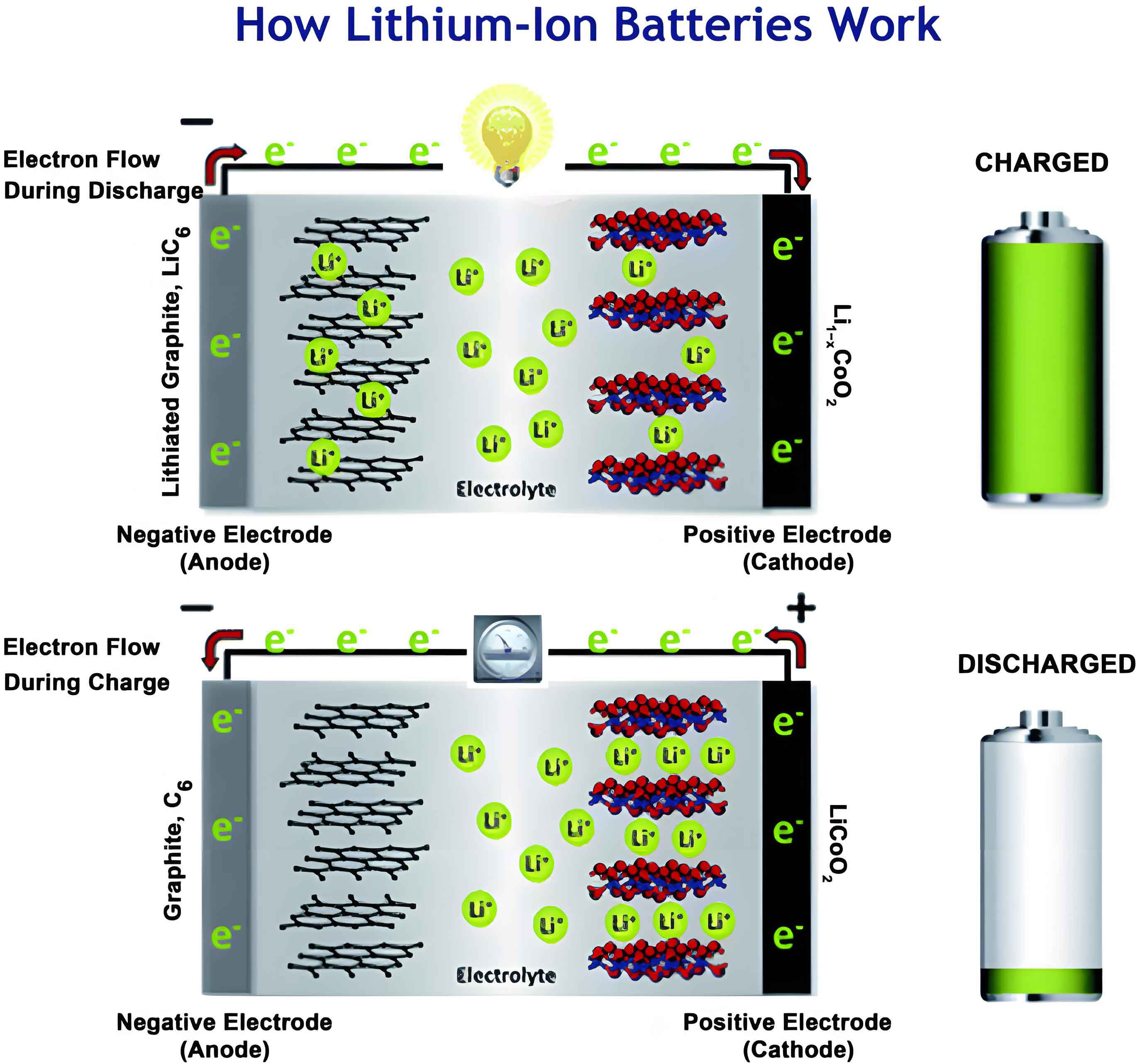
The anode coke used in this study was an imported material with a predominant fibrous structure and minimal mosaic components, as confirmed by polarized light microscopy. Its basic properties are summarized in Table 1. For anode coke, the Hardgrove Grindability Index (HGI) is a critical parameter, typically ranging from 70 to 110, indicating suitable grindability for electrode processing. The low impurity content, including sulfur and metals, is essential to prevent degradation in lithium-ion battery performance, such as reduced energy density and shortened lifespan. The electrochemical evaluation process for the anode coke involves multiple steps: crushing and milling to achieve desired particle sizes, high-temperature graphitization to develop a crystalline structure, slurry preparation with conductive additives and binders, coating onto copper foil, drying, rolling to control electrode density, and assembly into coin cells with lithium metal as the counter/reference electrode. The electrolyte consisted of 1 mol/L LiPF6 in a mixture of ethylene carbonate, ethyl methyl carbonate, and dimethyl carbonate (volume ratio 1:1:1) with 1 wt% vinylene carbonate. Galvanostatic charge-discharge tests were performed at a current density of 0.1 C rate within a voltage window of 2.000–0.005 V to obtain key metrics like specific capacity and Coulombic efficiency. Throughout this study, we systematically varied individual parameters while keeping others constant to isolate their effects on the first reversible specific capacity, which is a primary indicator of anode material quality for lithium-ion batteries.
| Property | Value |
|---|---|
| True Density (g/cm³) | 2.12 |
| Volatile Matter (%) | 3.9 |
| Water Content (%) | 7.1 |
| Hardgrove Grindability Index (HGI) | 74 |
| Ash Content (%) | 0.09 |
| Sulfur Content (wt%) | 0.40 |
| Sodium Content (μg/g) | 158.9 |
| Iron Content (μg/g) | 47.7 |
| Potassium Content (μg/g) | 35.3 |
The particle size of anode coke after milling significantly impacts the electrochemical performance of the resulting graphite anode in lithium-ion batteries. We processed the same anode coke to different particle size distributions and measured the first reversible specific capacity, as shown in Table 2. The data indicate that larger particle sizes lead to a decrease in specific capacity. This can be explained by the reduced specific surface area of larger particles, which hinders lithium-ion diffusion due to diminished surface effects. The relationship between specific surface area \( S \) and particle diameter \( d \) can be approximated by: $$ S = \frac{6}{\rho d} $$ where \( \rho \) is the material density. A smaller \( S \) for larger \( d \) results in poorer electrolyte wettability and limited access to active sites, ultimately reducing capacity. Additionally, larger particles may cause inadequate contact with conductive agents and binders, impairing electronic conductivity. For consistent electrochemical evaluation of anode coke in lithium-ion batteries, it is essential to maintain similar particle size distributions. Based on industry standards for anode materials, we recommend a D50 range of 11–24 μm and D100 not exceeding 75 μm.
| Sample | Particle Size (μm) | First Reversible Specific Capacity (mAh/g) | |||
|---|---|---|---|---|---|
| D10 | D50 | D90 | D100 | ||
| 1 | 7.37 | 11.92 | 19.54 | 45.84 | 355.4 |
| 2 | 8.23 | 22.35 | 46.39 | 130.60 | 353.7 |
| 3 | 11.10 | 28.04 | 54.85 | 139.20 | 352.3 |
Graphitization temperature is a critical parameter in transforming anode coke into a well-ordered graphite structure suitable for lithium-ion batteries. We subjected the milled anode coke to graphitization at 2500°C, 2700°C, and 2900°C, and the resulting first reversible specific capacities were 325.8 mAh/g, 348.5 mAh/g, and 358.3 mAh/g, respectively. This positive correlation between temperature and capacity can be attributed to enhanced crystallinity and structural ordering. The graphitization process involves the growth of graphite crystallites, alignment of crystal boundaries, formation of hexagonal carbon rings, and flattening of graphene layers. Higher temperatures promote these transformations, leading to increased graphitization degree, which improves electronic conductivity and facilitates lithium-ion intercalation/deintercalation. The Arrhenius-type relationship can be used to describe the temperature dependence of graphitization kinetics: $$ k = A e^{-\frac{E_a}{RT}} $$ where \( k \) is the rate constant, \( A \) is the pre-exponential factor, \( E_a \) is the activation energy, \( R \) is the gas constant, and \( T \) is the temperature. For electrochemical performance evaluation of anode coke, we recommend a graphitization temperature of at least 2900°C to achieve optimal capacity in lithium-ion batteries.
Slurry solid content during electrode preparation plays a vital role in determining the uniformity and stability of the coated layer, which directly affects the performance of lithium-ion batteries. We prepared slurries with varying solid contents using the graphitized anode material, conductive carbon black (SP), sodium carboxymethyl cellulose (CMC) as a thickener, and styrene-butadiene rubber (SBR) as a binder, with water as the solvent. The first reversible specific capacity as a function of slurry solid content is presented in Figure 2 (data summarized in a table below). The relationship exhibits a volcano-shaped curve, where capacity initially increases with solid content, peaks at an optimum, and then declines. Low solid content (e.g., 32%) results in low viscosity and poor slurry stability, leading to inhomogeneous coating and reduced electrochemical performance. Moderate solid content (36–44%) offers good fluidity and stability, enabling uniform electrode fabrication. However, high solid content (e.g., 48%) causes excessive viscosity, which impedes the dispersion of active materials and may lead to defects such as cracking or delamination during cycling. For reliable evaluation of anode coke in lithium-ion batteries, we recommend a slurry solid content of 40%, which balances processability and electrochemical outcomes.
| Slurry Solid Content (%) | First Reversible Specific Capacity (mAh/g) |
|---|---|
| 32 | 350.2 |
| 36 | 354.8 |
| 40 | 358.1 |
| 44 | 356.3 |
| 48 | 352.7 |
The compacted density of the electrode, achieved through rolling after drying, influences the porosity, electrolyte infiltration, and electronic contact within the lithium-ion battery. We varied the rolling pressure to produce electrodes with different compacted densities and measured the corresponding first reversible specific capacities, as shown in Table 4. As compacted density decreased from 1.4596 g/cm³ to 1.2376 g/cm³, the capacity increased from 352.9 mAh/g to 355.7 mAh/g. This improvement is due to higher porosity at lower densities, which enhances electrolyte wetting and reduces internal resistance, facilitating lithium-ion transport. The relationship between porosity \( \varepsilon \) and compacted density \( \rho_c \) can be expressed as: $$ \varepsilon = 1 – \frac{\rho_c}{\rho_t} $$ where \( \rho_t \) is the true density of the material. However, further reduction in compacted density below 1.1584 g/cm³ led to a decrease in capacity to 354.9 mAh/g and 354.3 mAh/g at 1.1168 g/cm³, attributed to poor electronic contact between active particles and conductive agents. Thus, an optimal compacted density range of 1.2–1.3 g/cm³ is recommended for electrochemical testing of anode coke in lithium-ion batteries, ensuring a balance between ionic and electronic conductivity.
| Compacted Density (g/cm³) | First Reversible Specific Capacity (mAh/g) |
|---|---|
| 1.4596 | 352.9 |
| 1.4032 | 353.3 |
| 1.3657 | 353.6 |
| 1.3206 | 354.4 |
| 1.3153 | 354.8 |
| 1.2950 | 355.5 |
| 1.2376 | 355.7 |
| 1.1584 | 354.9 |
| 1.1168 | 354.3 |
Battery sealing pressure during coin cell assembly affects both the seal integrity and safety of the lithium-ion battery. We adjusted the sealing pressure on an electric crimping machine and observed the impact on the first reversible specific capacity, as summarized in Table 5. Increasing sealing pressure from 800 kg to 1100 kg gradually raised the capacity from 354.1 mAh/g to 358.8 mAh/g, likely due to improved contact between electrodes and current collectors, reducing interfacial resistance. However, at 1100 kg, battery casing deformation occurred, posing a short-circuit risk. The sealing pressure should thus be optimized to ensure leak-proof assembly without compromising safety. For electrochemical evaluation of anode coke in lithium-ion batteries, we recommend a sealing pressure of 1000 kg, which provides reliable sealing while minimizing mechanical stress on the cell components.
| Sealing Pressure (kg) | First Reversible Specific Capacity (mAh/g) |
|---|---|
| 800 | 354.1 |
| 900 | 355.6 |
| 1000 | 357.9 |
| 1100 | 358.8 |
In summary, the electrochemical performance evaluation of anode coke for lithium-ion batteries requires meticulous control over multiple parameters to ensure accuracy and reproducibility. Our experimental findings highlight that particle size reduction enhances specific capacity by increasing surface area and improving lithium-ion diffusion. Graphitization at elevated temperatures, preferably ≥2900°C, promotes structural ordering and boosts capacity. Slurry solid content should be optimized around 40% to achieve uniform coating and stable electrode morphology. Electrode compacted density must be maintained within 1.2–1.3 g/cm³ to balance porosity and electronic contact. Battery sealing pressure should be set at 1000 kg to guarantee seal integrity without causing casing deformation. These guidelines form a robust framework for assessing anode coke quality, ultimately contributing to the development of high-performance lithium-ion batteries. Future work could explore additional factors such as binder types, conductive additive ratios, and cycling stability under varied conditions to further refine evaluation protocols for lithium-ion battery applications.
To generalize the relationships observed, we can propose empirical formulas that link key parameters to the first reversible specific capacity \( C \) in lithium-ion batteries. For instance, the effect of particle size \( d \) (represented by D50) can be modeled as: $$ C = C_0 – k_d \cdot d $$ where \( C_0 \) is a baseline capacity and \( k_d \) is a degradation constant. Similarly, the influence of graphitization temperature \( T_g \) can be expressed using an exponential growth model: $$ C = C_{\text{max}} \left(1 – e^{-\alpha (T_g – T_0)}\right) $$ where \( C_{\text{max}} \) is the maximum achievable capacity, \( \alpha \) is a fitting parameter, and \( T_0 \) is a reference temperature. For slurry solid content \( S_s \) and compacted density \( \rho_c \), polynomial fits may capture the optimal ranges: $$ C = a S_s^2 + b S_s + c $$ and $$ C = d \rho_c^2 + e \rho_c + f $$ where \( a, b, c, d, e, f \) are coefficients derived from experimental data. These mathematical representations aid in standardizing the evaluation process for anode coke in lithium-ion batteries, enabling predictive modeling and quality control in industrial settings.
The importance of anode coke in lithium-ion batteries cannot be overstated, as it serves as the foundational material for synthetic graphite anodes that power modern energy storage devices. Through systematic parameter optimization, we can enhance the consistency and performance of lithium-ion batteries, meeting the growing demands for longer lifespan, higher energy density, and improved safety. Our study underscores the need for standardized testing protocols that account for particle size, graphitization temperature, slurry formulation, electrode density, and assembly conditions. By adhering to these guidelines, researchers and manufacturers can better evaluate anode coke materials, accelerate innovation, and contribute to the advancement of lithium-ion battery technology for sustainable energy solutions.