
In the pursuit of sustainable energy storage solutions, sodium-ion batteries have emerged as a promising alternative to lithium-ion batteries, particularly for large-scale applications. The abundance and low cost of sodium resources, coupled with the demanding safety and reliability requirements of grid storage, drive the development of robust battery chemistries. Among various cathode materials, Prussian blue (PB) and its analogues stand out due to their open framework structure, resource-friendly composition, and inherent safety features. In this work, we delve into the abuse performance of pouch-type sodium-ion batteries employing a PB cathode paired with a hard carbon (HC) anode. Our investigation spans overdischarge, overcharge, short circuit, nail penetration, and heating tests, revealing exceptional tolerance and recovery capabilities. This article aims to provide a detailed analysis, supported by tabulated data and mathematical formulations, to underscore the viability of PB-based sodium-ion batteries for energy storage systems where safety and durability are paramount.
The urgency to integrate renewable energy sources like solar and wind into the grid necessitates advanced energy storage technologies. While lithium-ion batteries dominate, concerns over lithium scarcity and cost have accelerated research into sodium-ion batteries. These batteries leverage sodium’s natural abundance, potentially offering a more sustainable and economical path for stationary storage. However, for widespread adoption, sodium-ion batteries must demonstrate not only adequate energy density and cycle life but also resilience under abusive conditions. Abuse scenarios—such as overcharge, overdischarge, mechanical damage, or thermal exposure—can lead to catastrophic failures in conventional batteries, posing risks in large-scale installations. Hence, evaluating abuse performance is critical for assessing real-world applicability.
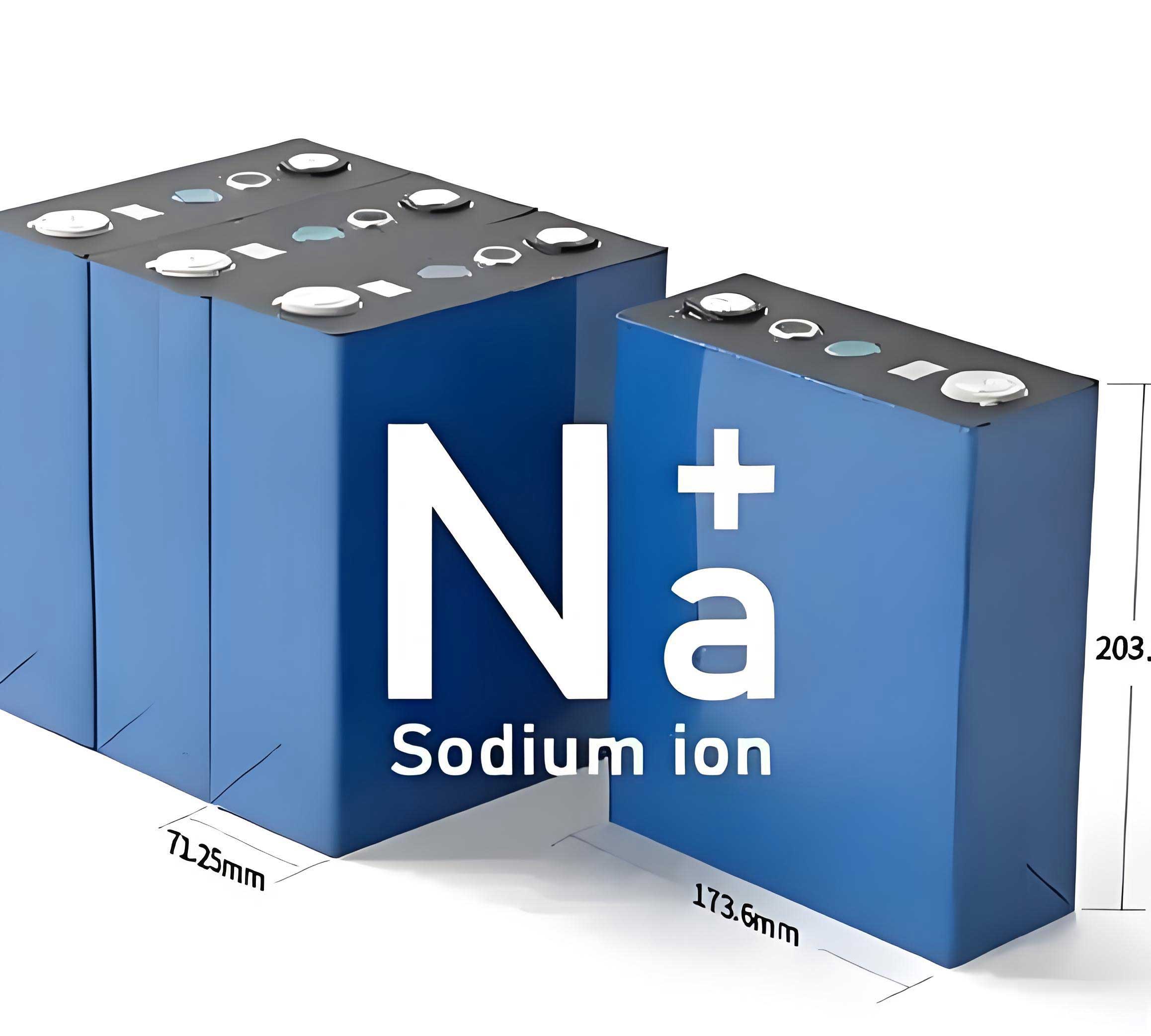
Prussian blue cathodes, with their general formula NaxM[Fe(CN)6]y·zH2O (where M is a transition metal like Fe, Mn, or Ni), exhibit a rigid cubic framework that facilitates rapid sodium ion insertion/extraction. Unlike layered oxide cathodes, PB materials lack strong metal-oxygen bonds, mitigating oxygen evolution at high voltages and enhancing thermal stability. These structural attributes suggest superior safety, but comprehensive abuse testing on full-cell configurations is limited. Herein, we fabricate pouch cells with a PB cathode and HC anode, systematically subjecting them to various abuse tests and monitoring electrochemical and physical responses. Our findings highlight the remarkable robustness of this sodium-ion battery chemistry, paving the way for safer energy storage solutions.
Experimental Methodology
To ensure consistency and relevance, we adopted a practical approach in cell fabrication and testing. The PB material was synthesized via a co-precipitation method, yielding a compound with a composition approximating Na1.78Mn0.65Fe0.16Ni0.19[Fe(CN)6]0.94□0.06·2.19H2O, as confirmed by inductively coupled plasma atomic emission spectroscopy (ICP-AES) and thermogravimetric analysis (TGA). The electrode fabrication involved coating aluminum current collectors with active materials: the cathode comprised PB, polyvinylidene fluoride (PVDF) binder, carbon nanotubes, and Super P carbon black, while the anode consisted of hard carbon, sodium alginate binder, and Super P. The electrolyte was 1 M NaPF6 in a mixture of propylene carbonate (PC) and ethyl methyl carbonate (EMC) (1:1 by volume) with 5% fluoroethylene carbonate (FEC) additive. Pouch cells (575166 type) with a nominal capacity of 200 mAh were assembled under controlled conditions.
Electrochemical characterization included galvanostatic cycling at various rates, with voltage windows tailored for full-cell operation (1.5–3.6 V). Abuse tests were conducted following standardized protocols, with key parameters summarized in Table 1. All tests were performed at ambient temperature (25°C) unless specified otherwise, and post-test analyses involved visual inspection, internal resistance measurement, and capacity recovery assessment.
| Test Type | Procedure | Key Parameters | Safety Criteria |
|---|---|---|---|
| Overdischarge | Discharge to 0 V or beyond at 0.2 C, then recovery charge/discharge | Current: 0.2 C (40 mA); Voltage limit: 0 V or -3.6 V | No fire, explosion; capacity recovery >90% |
| Overcharge | Charge beyond 100% state-of-charge at 0.5 C | Overcharge degrees: 20%, 30%, 40%; Voltage limit: 5 V | No thermal runaway; capacity retention after recovery |
| Short Circuit | External short with 60–100 mΩ resistor | Initial state: fully charged (3.6 V); Duration: until stabilization | Max temperature <150°C; no fire/explosion |
| Nail Penetration | Penetrate cell center with 3 mm steel nail | Penetration depth: full; Hold time: >10 min | No fire, explosion; stable voltage post-test |
| Heating | Heat in oven at 5°C/min to 130°C, hold 30 min | Temperature ramp: 5°C/min; Target: 130°C | No fire, explosion; minimal swelling |
The electrochemical performance metrics, such as capacity and internal resistance, were analyzed using fundamental equations. For instance, the capacity retention after abuse is defined as:
$$ \text{Capacity Retention} = \frac{C_{\text{recovery}}}{C_{\text{initial}}} \times 100\% $$
where \( C_{\text{initial}} \) is the discharge capacity before abuse, and \( C_{\text{recovery}} \) is the capacity after recovery cycling. Similarly, the internal resistance (\( R \)) was measured via direct current (DC) methods, and changes were computed as:
$$ \Delta R = R_{\text{post}} – R_{\text{pre}} $$
These quantitative assessments provide insights into the structural and electrochemical integrity of the sodium-ion battery under stress.
Overdischarge Performance and Recovery
Overdischarge is a common abuse scenario in battery packs due to cell imbalance, potentially leading to copper dissolution in lithium-ion systems or electrode degradation. For our PB/HC sodium-ion battery, we first examined mild overdischarge to 0 V. The cell was discharged at 0.2 C from the lower cut-off voltage of 1.5 V down to 0 V, followed by a recovery charge to 3.6 V and discharge to 1.5 V. Remarkably, the discharge curve post-recovery overlapped closely with the initial curve, indicating minimal perturbation to the electrode materials. The capacity recovery exceeded 100% in some cases, possibly due to activation effects, and the internal resistance change was negligible (under 10%). This suggests that discharging to 0 V does not induce significant side reactions or structural damage in the PB cathode.
To push the limits, we conducted deep overdischarge by continuing the discharge beyond 0 V to approximately -3.6 V (achieved by extending the discharge time at 0.2 C). Even under this extreme condition, the sodium-ion battery could be revived: upon recovery cycling, the discharge capacity remained comparable to the initial value, with a slight increase attributed to minor electrode modifications. Gas analysis revealed that the evolved gases comprised primarily CO2, CO, and H2, stemming from electrolyte decomposition and residual water reactions at low potentials. However, the gas volume was minimal, and no cell swelling was observed. Post-mortem analysis showed some powder detachment from the hard carbon anode, but the PB cathode appeared intact, underscoring its structural resilience.
Contrasting with lithium-ion batteries, where overdischarge often causes copper current collector dissolution and subsequent short circuits, the sodium-ion battery employs aluminum current collectors for both electrodes, eliminating this failure mode. To illustrate, we tested a commercial lithium iron phosphate/graphite (LFP/G) lithium-ion battery under identical overdischarge conditions. It failed irreversibly, with voltage dropping to -1.4 V and no capacity recovery due to internal shorting from copper migration. This comparison highlights a key safety advantage of sodium-ion batteries: the compatibility of aluminum in negative electrodes prevents metallic deposition and dendrite formation during deep discharge, enhancing reliability in series-connected packs.
The recovery mechanism can be modeled by considering the stability window of the PB framework. The open structure allows sodium ions to be reinserted without phase collapse, even after exhaustive extraction. The capacity recovery ratio \( \eta_{\text{recovery}} \) can be expressed as:
$$ \eta_{\text{recovery}} = 1 – \frac{Q_{\text{irrev}}}{Q_{\text{total}}} $$
where \( Q_{\text{irrev}} \) is the irreversible charge loss due to side reactions, and \( Q_{\text{total}} \) is the theoretical capacity. For PB, \( Q_{\text{irrev}} \) is small, leading to high \( \eta_{\text{recovery}} \). Table 2 summarizes the overdischarge test results, emphasizing the robust performance of the sodium-ion battery.
| Test Condition | Initial Capacity (mAh) | Recovery Capacity (mAh) | Capacity Retention (%) | Internal Resistance Change (mΩ) | Lowest Voltage (V) |
|---|---|---|---|---|---|
| Discharge to 0 V | 214.1 | 217.7 | 101.7 | -5.9 | 0.0 |
| Deep discharge to -3.6 V | 227.8 | 231.9 | 101.8 | +25.8 | -3.6 |
| LFP/G Li-ion battery (comparison) | 204.3 | 0 | 0 | +50.3 | -1.4 |
The data corroborate that PB-based sodium-ion batteries exhibit exceptional tolerance to overdischarge, a critical attribute for large-scale systems where cell balancing challenges are prevalent.
Overcharge Tolerance and Structural Stability
Overcharge poses severe risks, including electrolyte oxidation, gas generation, and thermal runaway. We evaluated the overcharge response by charging cells to 100% state-of-charge (SOC) and then applying additional charge corresponding to 20%, 30%, and 40% of the nominal capacity. The voltage was capped at 5 V to prevent excessive polarization. After each overcharge event, the cells underwent recovery discharge to assess capacity retention and internal resistance shifts.
For the 20% overcharge case, the sodium-ion battery demonstrated nearly full capacity recovery (97.9%), with a slight reduction in internal resistance. The discharge profile retained its shape, indicating no major alteration of the PB crystal structure. Scanning electron microscopy (SEM) revealed that overcharge induced minor surface fracturing of PB particles, increasing electrode surface area and potentially improving kinetics. This microstructural change might explain the lower resistance, as the effective contact area between active material and electrolyte expands. The cycle life after 20% overcharge was comparable to that of a pristine cell, with over 80% capacity retention after 490 cycles at 0.5 C/1 C rates, affirming the durability of the sodium-ion battery chemistry.
At higher overcharge degrees (30% and 40%), capacity recovery decreased to 91.6% and 88.6%, respectively, accompanied by moderate increases in internal resistance. Gas evolution became noticeable, particularly at 40% overcharge, but the cells did not vent or explode. The recovery of discharge curves suggests that the PB framework possesses a self-healing capability, where distorted regions can relax back to the original structure upon subsequent cycling. This behavior is likely rooted in the flexible coordination bonds in Prussian blue analogues, allowing reversible sodium insertion even after local overoxidation.
We can quantify the overcharge stress using a simple model for capacity fade. The lost capacity \( \Delta C \) due to overcharge is proportional to the overcharge extent \( \Delta SOC \):
$$ \Delta C = k \cdot (\Delta SOC)^n $$
where \( k \) is a degradation rate constant specific to the electrode materials, and \( n \) is an exponent reflecting the severity of side reactions. For our PB/HC sodium-ion battery, \( n \) is less than 1, indicating sub-linear degradation—that is, the battery tolerates overcharge well up to a point. The capacity retention after overcharge, \( R_{\text{OC}} \), can be expressed as:
$$ R_{\text{OC}} = 100\% – \Delta C \% $$
Table 3 compiles the overcharge test results, illustrating the gradual decline in performance with increasing overcharge.
| Overcharge Degree | Initial Capacity (mAh) | Recovery Capacity (mAh) | Capacity Retention (%) | Internal Resistance Pre/Post (mΩ) | Observation |
|---|---|---|---|---|---|
| 20% | 217.0 | 212.4 | 97.9 | 46.7 / 34.2 | No swelling, curve unchanged |
| 30% | 206.5 | 189.3 | 91.6 | 34.2 / 78.2 | Minor gas, slight polarization |
| 40% | 225.5 | 199.8 | 88.6 | 31.7 / 83.6 | Moderate swelling, recoverable |
The impressive overcharge tolerance reduces the need for precise battery management systems (BMS) in sodium-ion battery packs, potentially lowering costs and complexity for grid storage applications.
Safety Under Mechanical and Thermal Abuse
Safety is paramount for energy storage systems deployed in populated areas or sensitive environments. We subjected fully charged PB/HC sodium-ion batteries to three classic abuse tests: external short circuit, nail penetration, and heating. Each test was conducted in duplicate to ensure reproducibility, and parameters like temperature, voltage, and internal resistance were monitored.
Short Circuit Test: By connecting an external resistor (60–100 mΩ) across the cell terminals, we simulated a dead short. The sodium-ion battery responded with a moderate temperature rise, peaking at 58–79°C, well below the 150°C safety threshold. No fire or explosion occurred, and the cell casing remained intact. Post-test, the open-circuit voltage dropped to around 2.5 V, and internal resistance increased significantly due to electrode/electrolyte interface changes. However, the cell did not enter thermal runaway, attributed to the stable PB cathode and robust SEI layers on hard carbon. The heat generation during short circuit, \( Q_{\text{SC}} \), can be estimated by:
$$ Q_{\text{SC}} = I^2 R_{\text{int}} t $$
where \( I \) is the short-circuit current, \( R_{\text{int}} \) is the internal resistance, and \( t \) is the duration. For our sodium-ion battery, \( R_{\text{int}} \) is relatively high compared to some lithium-ion systems, limiting the current surge and thus the heat output.
Nail Penetration Test: This test simulates internal short circuits caused by mechanical intrusion. A steel nail (3 mm diameter) was driven through the cell center, creating a direct path between electrodes. The sodium-ion battery survived without ignition or explosion. The voltage decayed slowly, and the internal resistance rose moderately, indicating that the short was localized and did not propagate. The nail penetration test is particularly stringent, as it combines mechanical damage with electrical shorting; the fact that the PB/HC cell passed underscores its inherent safety.
Heating Test: To evaluate thermal stability, cells were heated in an oven at 5°C/min to 130°C and held for 30 minutes. While some swelling occurred due to gas evolution from electrolyte decomposition, there was no fire or rupture. The post-test voltage remained above 3 V, suggesting that the PB cathode does not release oxygen or undergo exothermic decomposition at this temperature. In contrast, many layered oxide cathodes for lithium-ion batteries exhibit hazardous reactions above 100°C. The thermal abuse tolerance of this sodium-ion battery aligns with the robust bonding in Prussian blue structures.
Table 4 summarizes the safety test outcomes, confirming that the PB/HC sodium-ion battery meets essential safety criteria for large-scale deployment.
| Test | Pre-test OCV (V) | Post-test OCV (V) | Internal Resistance Pre/Post (mΩ) | Max Temperature (°C) | Outcome (Fire/Explosion) |
|---|---|---|---|---|---|
| Short Circuit | 3.51 | 2.46–2.48 | 40.8–74.1 / 2517–912 | 58.1–78.8 | None |
| Nail Penetration | 3.50–3.51 | 3.43–3.47 | 44.1–48.7 / 123.9–130.8 | Ambient | None |
| Heating (130°C) | 3.50–3.51 | 3.12–3.29 | 41.3–49.2 / 23920–99170 | 130 (oven setpoint) | None |
These results collectively demonstrate that sodium-ion batteries with Prussian blue cathodes exhibit exceptional safety across multiple abuse scenarios, reducing risks in field applications.
Implications for Large-Scale Energy Storage
The abuse tolerance of PB-based sodium-ion batteries carries significant implications for grid storage and renewable integration. In large battery packs, cell-to-cell variations can lead to localized overcharge or overdischarge, especially after many cycles. The ability to recover from such events without catastrophic failure extends pack lifetime and reduces maintenance costs. Moreover, the reduced need for complex BMS architectures can lower overall system costs, enhancing the economic viability of sodium-ion battery technology.
From a materials perspective, the Prussian blue cathode offers a sustainable profile. Its synthesis from abundant precursors (e.g., sodium ferrocyanide, manganese sulfate) in aqueous solutions aligns with green chemistry principles. The elimination of cobalt and nickel further reduces environmental and ethical concerns. When combined with hard carbon derived from biomass, the entire sodium-ion battery becomes a low-carbon footprint solution for stationary storage.
We can project the long-term performance using degradation models. For instance, the capacity fade over cycles under abusive conditions might follow a semi-empirical law:
$$ C_{\text{cycle}} = C_0 \cdot e^{-\alpha N} $$
where \( C_0 \) is initial capacity, \( \alpha \) is the fade rate, and \( N \) is cycle number. For our sodium-ion battery, \( \alpha \) is low even after abuse, indicating slow degradation. This resilience translates to extended service life in real-world conditions.
Future work could focus on optimizing electrolyte formulations to further suppress gas generation during overcharge or deep discharge. Additionally, scaling up cell formats to ampere-hour levels and testing module-level abuse response will be crucial for commercialization. Nevertheless, the present findings provide a strong foundation for considering PB-based sodium-ion batteries as a safe and reliable choice for mega-watt-scale storage systems.
Conclusion
In this comprehensive study, we have evaluated the abuse performance of pouch-type sodium-ion batteries employing a Prussian blue cathode and hard carbon anode. The batteries demonstrated remarkable recovery after overdischarge to 0 V and even to -3.6 V, with minimal capacity loss and internal resistance changes. Overcharge tests up to 40% excess charge revealed high capacity retention (88.6–97.9%) and no thermal runaway. Safety tests—short circuit, nail penetration, and heating—were all passed without fire or explosion, confirming the inherent stability of this chemistry. The robust behavior stems from the structural integrity of the PB framework, the use of aluminum current collectors, and the compatible electrode-electrolyte interfaces. These attributes position sodium-ion batteries as a promising candidate for large-scale energy storage, where safety, cost, and sustainability are critical. As the world transitions to renewable energy, such abuse-tolerant batteries will play a pivotal role in ensuring grid stability and security.