
Accurately estimating the State of Charge (SOC) of a lithium-ion battery is a fundamental challenge in battery management systems. As the primary energy source for electric vehicles and portable electronics, the performance and safety of these systems are directly tied to precise knowledge of the battery’s remaining capacity. However, the SOC is an internal state that cannot be measured directly and is influenced by complex, nonlinear electrochemical dynamics, aging, temperature variations, and, critically, measurement noise. Traditional estimation filters often assume Gaussian noise distributions, but real-world sensor data from current and voltage measurements frequently contain impulsive or heavy-tailed non-Gaussian noise, leading to significant estimation errors and poor robustness.
To address this critical issue, we propose a novel filtering algorithm that significantly enhances estimation accuracy and robustness under challenging non-Gaussian noise conditions. Our approach integrates the Generalized Mixture Maximum Correntropy Criterion (GMMCC) with the well-established Extended Kalman Filter (EKF) framework. This fusion creates a powerful estimator, the GMMCC-EKF, which is specifically designed to handle the complex noise environments encountered in practical lithium-ion battery applications.
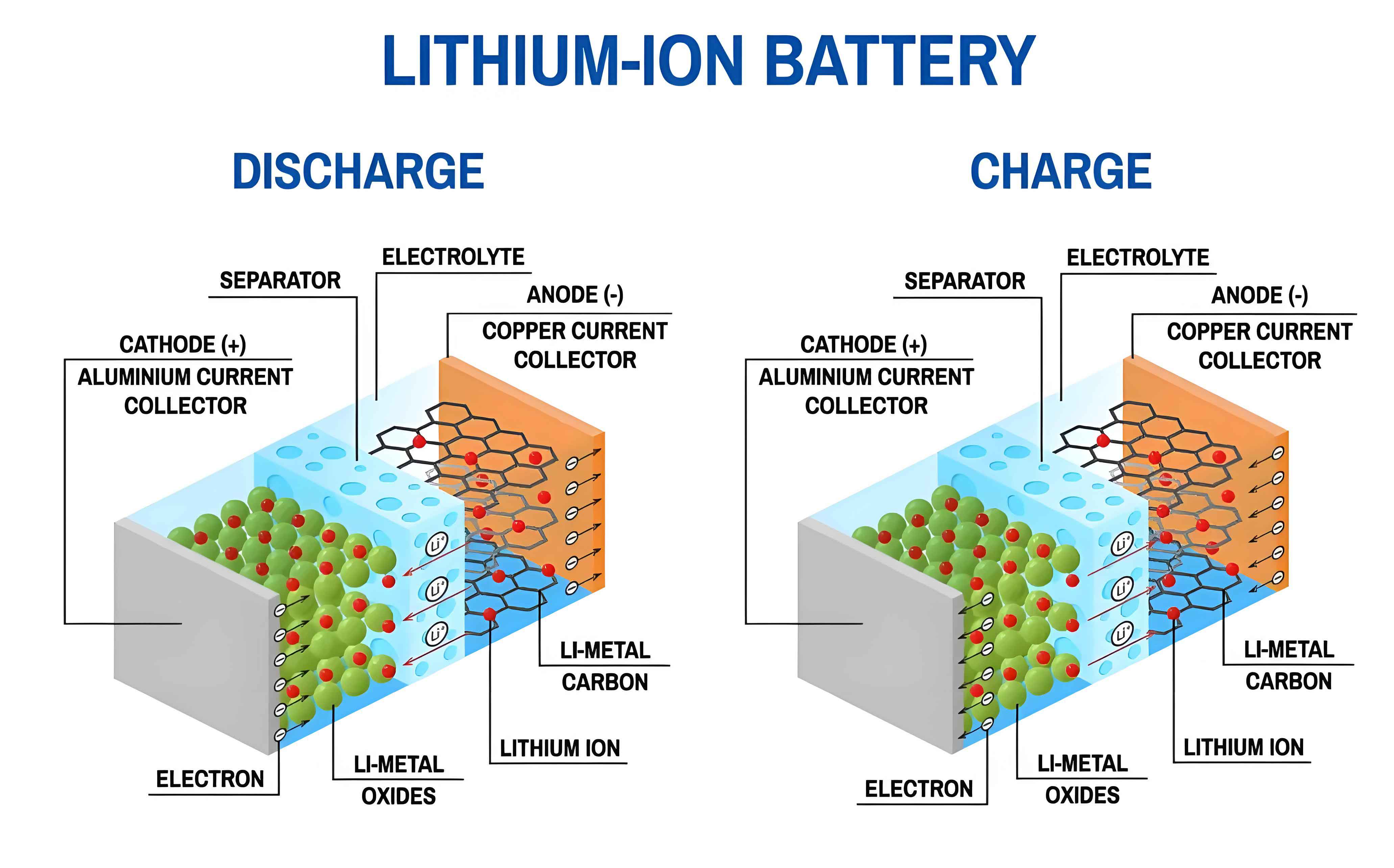
The core innovation lies in the cost function. While the standard Kalman filter minimizes a mean square error cost function optimal for Gaussian noise, and the Maximum Correntropy Criterion (MCC) uses a single Gaussian kernel to capture higher-order statistics, our GMMCC-EKF employs a more flexible and descriptive kernel. We construct a mixture correntropy loss function by combining two generalized Gaussian kernels. This “generalized” aspect allows the shape parameter of the kernel to be adjusted, while the “mixture” aspect enables the filter to model complex, multi-modal error distributions more effectively. By maximizing this generalized mixture correntropy, the algorithm becomes inherently robust to outliers and various types of non-Gaussian noise, which are common in data acquired from lithium-ion battery systems.
In this comprehensive analysis, we will detail the complete methodology, from the foundational battery model to the sophisticated algorithm derivation and its rigorous experimental validation. We demonstrate the superior performance of the GMMCC-EKF algorithm against traditional EKF and MCC-EKF methods across different battery types, operational profiles, temperature conditions, and noise types, conclusively establishing it as a highly accurate and robust solution for lithium-ion battery SOC estimation.
1. System Modeling and Algorithm Foundation
1.1 Equivalent Circuit Model for the Lithium-Ion Battery
To enable model-based estimation, an accurate yet computationally tractable representation of the lithium-ion battery is essential. We adopt the second-order RC equivalent circuit model (ECM), which provides an excellent balance between model fidelity and implementation simplicity for SOC estimation. This model effectively captures the major dynamic voltage behaviors of the lithium-ion battery.
The model structure consists of a voltage source representing the open-circuit voltage (OCV), an ohmic internal resistance ($$R_0$$), and two parallel RC networks. The first RC branch ($$R_1$$, $$C_1$$) typically models the short-term electrochemical polarization, while the second branch ($$R_2$$, $$C_2$$) represents the long-term concentration polarization. The terminal voltage $$U_t$$ is the measurable output.
The electrical behavior is governed by the following equations derived from Kirchhoff’s laws:
$$ U_t = U_{OC} – I R_0 – U_1 – U_2 $$
$$ \frac{dU_1}{dt} = -\frac{U_1}{R_1 C_1} + \frac{I}{C_1} $$
$$ \frac{dU_2}{dt} = -\frac{U_2}{R_2 C_2} + \frac{I}{C_2} $$
where $$I$$ is the load current (positive for discharge, negative for charge), and $$U_1$$ and $$U_2$$ are the voltages across the two RC networks.
By discretizing these equations with a sampling time $$\Delta t$$, we can derive the state-space model suitable for recursive filtering. We define the state vector $$x_k$$ at time step $$k$$ to include the polarization voltages and the SOC:
$$ x_k = [U_{1,k}, U_{2,k}, \xi_{SOC,k}]^T $$
where $$\xi_{SOC,k}$$ is the estimated SOC at time $$k$$. The discrete-time state-space equations are:
$$ x_{k+1} = A_k x_k + B_k I_k + w_k $$
$$ U_{t,k} = U_{OC}(\xi_{SOC,k}) – U_{1,k} – U_{2,k} – I_k R_0 + v_k $$
Here, $$w_k$$ and $$v_k$$ represent the process and measurement noise, respectively. The matrices are defined as:
$$ A_k = \begin{bmatrix} e^{-\Delta t / (R_1 C_1)} & 0 & 0 \\ 0 & e^{-\Delta t / (R_2 C_2)} & 0 \\ 0 & 0 & 1 \end{bmatrix}, \quad B_k = \begin{bmatrix} R_1(1 – e^{-\Delta t / (R_1 C_1)}) \\ R_2(1 – e^{-\Delta t / (R_2 C_2)}) \\ -\Delta t / \zeta \end{bmatrix} $$
where $$\zeta$$ is the battery’s nominal capacity in Ampere-hours.
The measurement equation is nonlinear due to the relationship $$U_{OC}(\xi_{SOC})$$. This OCV-SOC curve is a fundamental characteristic of the lithium-ion battery and is typically obtained experimentally and approximated by a polynomial function. For our studies, a 6th-order polynomial provided an accurate fit:
$$ U_{OC}(\xi_{SOC}) = a_0 + a_1 \xi_{SOC} + a_2 \xi_{SOC}^2 + a_3 \xi_{SOC}^3 + a_4 \xi_{SOC}^4 + a_5 \xi_{SOC}^5 + a_6 \xi_{SOC}^6 $$
The coefficients $$a_0…a_6$$ are unique to each specific lithium-ion battery chemistry and are determined through laboratory testing.
1.2 The Generalized Mixture Maximum Correntropy Criterion (GMMCC)
The cornerstone of our robust filter is the Generalized Mixture Maximum Correntropy Criterion. To understand GMMCC, we start with the concept of correntropy. For two random variables $$X$$ and $$Y$$, correntropy is a generalized similarity measure defined as:
$$ V(X,Y) = E[\kappa(X, Y)] = \iint \kappa(x, y) p(x,y) \, dx \, dy $$
where $$E[\cdot]$$ denotes the expectation operator, $$p(x,y)$$ is the joint probability density function, and $$\kappa(\cdot, \cdot)$$ is a positive-definite kernel function. In practice, with $$N$$ sample pairs $${(x_i, y_i)}_{i=1}^N$$, the correntropy can be estimated as:
$$ \hat{V}(X,Y) = \frac{1}{N} \sum_{i=1}^{N} \kappa(x_i, y_i) $$
The Maximum Correntropy Criterion (MCC) seeks to find an estimator that maximizes this quantity. When a Gaussian kernel is used, $$\kappa(x_i, y_i) = G_{\sigma}(e_i) = \exp(-\frac{e_i^2}{2\sigma^2})$$ where $$e_i = x_i – y_i$$, maximizing correntropy effectively minimizes a cost function that is related to the $$L_2$$ norm for small errors but is much less sensitive to large errors (outliers) due to the rapidly decaying tail of the Gaussian kernel.
We extend this concept in two significant ways to create the GMMCC:
- Generalization: Instead of a standard Gaussian kernel, we use the more flexible Generalized Gaussian Density (GGD) function as the kernel:
$$ \kappa_{\alpha, \beta}(e) = \tau \exp\left( -\frac{|e|^{\alpha}}{\beta^{\alpha}} \right) $$
where $$\alpha > 0$$ is the shape parameter, $$\beta > 0$$ is the scale parameter (kernel width), and $$\tau = \alpha / (2\beta \Gamma(1/\alpha))$$ is a normalization constant with $$\Gamma(\cdot)$$ being the Gamma function. By adjusting $$\alpha$$, the kernel shape can be varied from Laplacian ($$\alpha=1$$) to Gaussian ($$\alpha=2$$) and to more uniform-like shapes ($$\alpha > 2$$), providing great flexibility to match the actual error distribution. - Mixture: To model even more complex, potentially multi-modal error distributions common in real-world lithium-ion battery sensor data, we construct a kernel as a convex combination of two generalized Gaussian kernels:
$$ \kappa_{Mix}(e) = \theta_1 \kappa_{\alpha_1, \beta_1}(e) + \theta_2 \kappa_{\alpha_2, \beta_2}(e) $$
where $$0 < \theta_1, \theta_2 < 1$$ and $$\theta_1 + \theta_2 = 1$$. The mixture weights $$\theta_1$$ and $$\theta_2$$, along with the shape and scale parameters for each kernel, allow the criterion to adapt to a wide range of non-Gaussian noise characteristics.
Thus, the Generalized Mixture Correntropy for error samples $${e_i}$$ is:
$$ J_{GMMCC}({e_i}) = \frac{1}{N} \sum_{i=1}^{N} \left[ \theta_1 \tau_1 \exp\left( -\frac{|e_i|^{\alpha_1}}{\beta_1^{\alpha_1}} \right) + \theta_2 \tau_2 \exp\left( -\frac{|e_i|^{\alpha_2}}{\beta_2^{\alpha_2}} \right) \right] $$
The GMMCC estimator is the one that maximizes $$J_{GMMCC}$$, or equivalently, minimizes a cost function derived from it. This forms the robust foundation upon which we build our filtering algorithm for the lithium-ion battery.
2. Derivation of the GMMCC-EKF Algorithm
We now derive the robust State of Charge estimation algorithm by integrating the GMMCC into the Extended Kalman Filter framework. Consider the general nonlinear discrete-time system representing our lithium-ion battery model:
$$ x_k = f(x_{k-1}, u_{k-1}) + w_{k-1} $$
$$ y_k = h(x_k, u_k) + v_k $$
where $$x_k$$ is the state vector, $$u_k$$ is the input (current), $$y_k$$ is the measurement (voltage), and $$w_k$$ and $$v_k$$ are non-Gaussian process and measurement noises, respectively.
The standard EKF linearizes the nonlinear functions $$f$$ and $$h$$ around the current state estimate. Its update equations are sensitive to the Gaussian noise assumption. Our goal is to replace the implicit quadratic cost function of the EKF with the GMMCC cost function to gain robustness.
The derivation proceeds through statistical linearization and the fixed-point iteration method. First, we construct an augmented regression form. Let $$\hat{x}_{k|k-1}$$ be the prior state estimate and $$P_{k|k-1}$$ its error covariance. The measurement prediction is $$\hat{y}_{k|k-1} = h(\hat{x}_{k|k-1})$$. We define an augmented vector and its linearized relation:
$$ \begin{bmatrix} \hat{x}_{k|k-1} \\ y_k \end{bmatrix} = \begin{bmatrix} I \\ H_k \end{bmatrix} x_k + \begin{bmatrix} \hat{x}_{k|k-1} – x_k \\ y_k – H_k x_k \end{bmatrix} $$
where $$H_k$$ is the Jacobian of $$h(x)$$ evaluated at $$\hat{x}_{k|k-1}$$. The second term represents the combined prior state error and measurement innovation error. Denoting this error as $$\omega_k$$, its covariance is block-diagonal:
$$ E[\omega_k \omega_k^T] = \begin{bmatrix} P_{k|k-1} & 0 \\ 0 & R_k \end{bmatrix} \triangleq \Sigma_k $$
We perform a Cholesky decomposition $$\Sigma_k = F_k F_k^T$$. Multiplying the augmented equation by $$F_k^{-1}$$ yields a standard linear regression problem:
$$ D_k = Z_k x_k + E_k $$
where $$D_k = F_k^{-1} [\hat{x}_{k|k-1}^T, y_k^T]^T$$, $$Z_k = F_k^{-1} [I, H_k^T]^T$$, and $$E_k = F_k^{-1} \omega_k$$. The elements of $$E_k$$, denoted $$e_{i,k}$$, are approximately uncorrelated with unit variance under the Gaussian assumption. However, we now apply the GMMCC to handle their potentially non-Gaussian nature.
For the regression model $$d_{i,k} = z_{i,k} x_k + e_{i,k}$$, the GMMCC cost function to be maximized with respect to $$x_k$$ is:
$$ J_{GMMCC}(x_k) = \sum_{j=1}^{2} \sum_{i=1}^{n+m} \theta_j \tau_j \exp\left( -\frac{|d_{i,k} – z_{i,k} x_k|^{\alpha_j}}{\beta_j^{\alpha_j}} \right) $$
where $$n$$ is the state dimension and $$m$$ is the measurement dimension. To find the optimal $$\hat{x}_{k|k}$$, we set the derivative $$\partial J_{GMMCC} / \partial x_k = 0$$. This leads to the following fixed-point equation after some algebraic manipulation:
$$ \hat{x}_{k|k} = \left( \sum_{i=1}^{n+m} \Lambda_{i,k} z_{i,k}^T z_{i,k} \right)^{-1} \left( \sum_{i=1}^{n+m} \Lambda_{i,k} z_{i,k}^T d_{i,k} \right) $$
where the weight $$\Lambda_{i,k}$$ for the $$i$$-th error component is given by:
$$ \Lambda_{i,k} = \sum_{j=1}^{2} \theta_j \tau_j \frac{\alpha_j}{\beta_j^{\alpha_j}} \exp\left( -\frac{|e_{i,k}|^{\alpha_j}}{\beta_j^{\alpha_j}} \right) |e_{i,k}|^{\alpha_j – 2} $$
This can be written in compact matrix form. Let $$\Lambda_k$$ be a diagonal matrix with elements $$\Lambda_{i,k}$$. Then,
$$ \hat{x}_{k|k} = (Z_k^T \Lambda_k Z_k)^{-1} (Z_k^T \Lambda_k D_k) $$
This solution reveals that the GMMCC-EKF effectively applies a robust weighting matrix $$\Lambda_k$$ to the information contained in the regression. The weights are small for large errors (outliers), thereby suppressing their influence on the state estimate. This is the key mechanism for robustness in the lithium-ion battery SOC estimation.
The fixed-point equation is solved iteratively. The matrix $$\Lambda_k$$ depends on the error $$e_{i,k} = d_{i,k} – z_{i,k} x_k$$, which in turn depends on the state estimate $$x_k$$. We start with an initial guess (e.g., the standard EKF update) and iteratively recompute $$\Lambda_k$$ and $$\hat{x}_{k|k}$$ until convergence. In practice, a single iteration often suffices for good performance, maintaining computational efficiency.
Finally, we can interpret the weight matrix $$\Lambda_k$$ as modifying the effective noise covariances within the Kalman filter framework. The robustified prior covariance and measurement noise covariance become:
$$ \tilde{P}_{k|k-1} = F_{P,k} \Lambda_{P,k}^{-1} F_{P,k}^T $$
$$ \tilde{R}_k = F_{R,k} \Lambda_{R,k}^{-1} F_{R,k}^T $$
where $$\Lambda_{P,k}$$ and $$\Lambda_{R,k}$$ are the diagonal blocks of $$\Lambda_k$$ corresponding to the state and measurement errors, and $$F_{P,k}$$ and $$F_{R,k}$$ come from the block Cholesky decomposition of $$\Sigma_k$$. These robustified covariances are then used in the standard EKF update equations to compute the Kalman gain $$K_k$$ and the final posterior covariance $$P_{k|k}$$.
The complete GMMCC-EKF algorithm for lithium-ion battery SOC estimation is summarized in the following steps:
| Step | Operation | Equation |
|---|---|---|
| 1. Initialization | Set initial state and covariance. | $$\hat{x}_{0|0}, P_{0|0}$$ |
| 2. State Prediction | Predict state and covariance. | $$\hat{x}_{k|k-1}=A_k\hat{x}_{k-1|k-1}+B_k I_k$$ $$P_{k|k-1}=A_k P_{k-1|k-1} A_k^T + Q_{k-1}$$ |
| 3. Measurement Update (Robust) | Compute Jacobian $$H_k$$. Build augmented regression. Compute GMMCC weights $$\Lambda_k$$ via fixed-point iteration. Calculate robust Kalman gain and update. |
$$H_k = \frac{\partial h}{\partial x}|_{\hat{x}_{k|k-1}}$$ $$K_k = \tilde{P}_{k|k-1} H_k^T (H_k \tilde{P}_{k|k-1} H_k^T + \tilde{R}_k)^{-1}$$ $$\hat{x}_{k|k} = \hat{x}_{k|k-1} + K_k (y_k – h(\hat{x}_{k|k-1}, I_k))$$ $$P_{k|k} = (I – K_k H_k) \tilde{P}_{k|k-1}$$ |
This algorithm maintains the recursive, predictive-corrective structure of the Kalman filter while embedding the robust GMMCC core within the measurement update step, making it highly suitable for real-time lithium-ion battery management systems.
3. Experimental Setup and Validation
To rigorously validate the proposed GMMCC-EKF algorithm for lithium-ion battery SOC estimation, we conducted extensive tests using two different lithium-ion batteries under various dynamic profiles, temperature conditions, and noise types. The performance was compared against two benchmark algorithms: the standard Extended Kalman Filter (EKF) and the Maximum Correntropy Criterion EKF (MCC-EKF).
3.1 Battery Specifications and Test Profiles
Two distinct lithium-ion batteries were used to demonstrate the generalizability of the algorithm:
- Battery A (No.1): A LiMn2O4 (LMO) pouch cell with a nominal capacity of 35 Ah and a nominal voltage of 3.7V. Data was obtained from a public dataset.
- Battery B (No.2): An ICR18650 cylindrical cell with a nominal capacity of 1.5 Ah and a nominal voltage of 3.6V. Data was collected in-house using a battery test cycler.
The batteries were tested under standard drive cycles to simulate real-world operation:
- Dynamic Stress Test (DST): Applied to Battery A at a constant temperature of 25°C. This profile contains rapid current variations, stressing the estimator’s dynamic tracking capability.
- New European Driving Cycle (NEDC): Applied to Battery B at three different ambient temperatures: 10°C, 25°C, and 40°C. This tests the algorithm’s performance across a range of thermal conditions, which significantly affect the lithium-ion battery parameters and OCV relationship.
3.2 Noise Environment and Algorithm Parameters
A critical aspect of the validation is the introduction of realistic, non-Gaussian noise into the measured current signal, as sensor imperfections and electromagnetic interference often produce such noise. We investigated two specific types of additive noise:
- Uniform Mixture Noise: Generated from a uniform distribution, representing bounded, non-Gaussian disturbances.
- Laplacian Mixture Noise: Generated from a Laplacian distribution, characterized by a heavy-tailed nature that produces more frequent large-magnitude outliers compared to Gaussian noise.
These noise types challenge the traditional Gaussian-assumption filters and highlight the need for robustness.
The parameters for the GMMCC kernel were carefully selected. Based on empirical analysis and tuning, a mixture of a Gaussian-like kernel ($$\alpha_1=2$$) and a sharper, more Laplacian-like kernel ($$\alpha_2=1$$) was found to be effective. The scale parameters $$\beta_1, \beta_2$$ and mixture weights $$\theta_1, \theta_2$$ were tuned for optimal performance. The EKF and MCC-EKF were implemented with their standard formulations for a fair comparison. The key model parameters ($$R_0, R_1, C_1, R_2, C_2$$) for each lithium-ion battery were identified offline using a least-squares method with experimental data.
3.3 Performance Metrics
The estimation accuracy was quantitatively evaluated using two standard statistical metrics:
- Root Mean Square Error (RMSE): $$ RMSE = \sqrt{ \frac{1}{N} \sum_{k=1}^{N} (\xi_{SOC,k}^{true} – \hat{\xi}_{SOC,k})^2 } $$. This penalizes large errors quadratically and provides an overall measure of estimation precision.
- Mean Absolute Error (MAE): $$ MAE = \frac{1}{N} \sum_{k=1}^{N} | \xi_{SOC,k}^{true} – \hat{\xi}_{SOC,k} | $$. This provides a more linear measure of average estimation error.
Lower values of both RMSE and MAE indicate better estimation performance. Computational time was also recorded to assess the practical feasibility of the algorithm for a lithium-ion battery management system.
4. Results and Analysis
The following sections present a detailed analysis of the estimation results under various challenging scenarios. The tables and discussion conclusively demonstrate the superiority of the proposed GMMCC-EKF algorithm.
4.1 Performance under Uniform Mixture Noise
First, we examine the case with uniform mixture noise at a standard temperature of 25°C. The SOC estimation curves for Battery A under the DST profile are visually compelling. The EKF estimate shows significant deviations and oscillations from the true SOC, clearly struggling with the non-Gaussian noise. The MCC-EKF shows a marked improvement, smoothing out many of the large deviations. However, the GMMCC-EKF estimate is virtually indistinguishable from the true SOC reference line, demonstrating exceptional accuracy and smoothness.
The quantitative results for Battery A under this condition are summarized below:
| Algorithm | Computation Time (s) | MAE | RMSE |
|---|---|---|---|
| Standard EKF | 0.782 | 0.1219 | 0.1480 |
| MCC-EKF | 1.033 | 0.0846 | 0.0914 |
| GMMCC-EKF | 1.092 | 0.0118 | 0.0147 |
The GMMCC-EKF achieves an RMSE of 0.0147, which represents a 90.1% reduction compared to the EKF (0.1480) and an 83.9% reduction compared to the MCC-EKF (0.0914). While the computational time is slightly higher due to the iterative weight calculation, the dramatic gain in accuracy is well justified for the critical task of lithium-ion battery SOC estimation.
We further validated the algorithm’s adaptability to different temperatures using Battery B under the NEDC profile. The results at low (10°C) and high (40°C) temperatures are summarized:
| Temperature | Algorithm | Computation Time (s) | MAE | RMSE |
|---|---|---|---|---|
| 10°C | EKF | 0.537 | 0.1265 | 0.1569 |
| MCC-EKF | 0.652 | 0.0972 | 0.1119 | |
| GMMCC-EKF | 0.712 | 0.0299 | 0.0356 | |
| 40°C | EKF | 0.628 | 0.1129 | 0.1403 |
| MCC-EKF | 0.723 | 0.1004 | 0.1143 | |
| GMMCC-EKF | 0.766 | 0.0415 | 0.0478 |
The GMMCC-EKF consistently delivers the lowest errors across temperatures. At 10°C, its RMSE is 77.4% and 68.2% lower than EKF and MCC-EKF, respectively. At 40°C, the improvements are 70.5% and 58.2%. This confirms that the robustness of the GMMCC-EKF is not compromised by the changing dynamics of the lithium-ion battery induced by temperature variations.
4.2 Performance under Laplacian Mixture Noise
Laplacian noise presents a greater challenge due to its heavier tails. The results for both batteries at 25°C under this noise condition are shown below. The GMMCC-EKF again maintains a clear advantage.
| Battery | Algorithm | Computation Time (s) | MAE | RMSE |
|---|---|---|---|---|
| A (No.1) | EKF | 0.736 | 0.0861 | 0.1088 |
| MCC-EKF | 1.082 | 0.0496 | 0.0541 | |
| GMMCC-EKF | 1.101 | 0.0176 | 0.0227 | |
| B (No.2) | EKF | 0.574 | 0.0878 | 0.1124 |
| MCC-EKF | 0.701 | 0.0733 | 0.0791 | |
| GMMCC-EKF | 0.767 | 0.0379 | 0.0479 |
For Battery A, the GMMCC-EKF reduces the RMSE by 79.2% over the EKF and 58.1% over the MCC-EKF. For Battery B, the reductions are 66.3% and 39.1%, respectively. This experiment under a more severe noise type solidifies the claim that the GMMCC-EKF provides superior robustness for lithium-ion battery SOC estimation in harsh, non-Gaussian environments.
4.3 Robustness to Initial SOC Error
A practical estimator must converge quickly even if the initial SOC guess is incorrect. We tested this by initializing the filters with erroneous SOC values ranging from 0.6 to 1.0 (true initial SOC was 1.0 for the test segment) for Battery A under uniform noise. The convergence behavior was analyzed. The following table shows the final RMSE for each algorithm starting from different initial values:
| Initial SOC | EKF RMSE | MCC-EKF RMSE | GMMCC-EKF RMSE |
|---|---|---|---|
| 1.0 (Correct) | 0.1480 | 0.0914 | 0.0147 |
| 0.9 | 0.1521 | 0.0950 | 0.0189 |
| 0.8 | 0.1603 | 0.1021 | 0.0252 |
| 0.7 | 0.1725 | 0.1128 | 0.0320 |
| 0.6 | 0.1889 | 0.1274 | 0.0365 |
While all algorithms see an increase in error as the initial error grows, the GMMCC-EKF consistently maintains the lowest RMSE. More importantly, its estimation curves show rapid convergence to the true SOC within a few time steps, regardless of the large initial error. For example, with an initial SOC of 0.6, the GMMCC-EKF RMSE is 0.0365, which is 78.6% lower than the EKF’s 0.1889 and 52.9% lower than the MCC-EKF’s 0.1274. This demonstrates the strong convergence property and robustness to initial conditions of the proposed algorithm, a crucial feature for real-world lithium-ion battery management systems where the initial SOC may not be known precisely.
5. Conclusion and Future Work
This paper has presented a novel and highly robust algorithm for estimating the State of Charge of lithium-ion batteries. The proposed Generalized Mixture Maximum Correntropy Criterion Extended Kalman Filter (GMMCC-EKF) successfully addresses the critical challenge of non-Gaussian noise, which severely degrades the performance of traditional Gaussian-assumption filters. By constructing a flexible cost function from a mixture of two generalized Gaussian kernels, the algorithm can effectively suppress the influence of outliers and heavy-tailed noise, leading to remarkably accurate and stable SOC estimates.
Through comprehensive experimental validation on two different lithium-ion batteries under dynamic stress test and new European driving cycle profiles, across multiple temperatures, and under two distinct types of non-Gaussian noise (uniform and Laplacian mixture), the GMMCC-EKF consistently outperformed both the standard EKF and the MCC-EKF. Key achievements include:
- Dramatic error reduction (often exceeding 70-90% in RMSE compared to EKF) under non-Gaussian noise.
- Superior performance maintained across a wide temperature range (10°C to 40°C), demonstrating adaptability to changing battery dynamics.
- Excellent robustness to large errors in the initial SOC guess, with fast convergence to the true state.
- Maintenance of a computationally feasible, recursive filter structure suitable for real-time implementation in battery management systems.
The GMMCC-EKF algorithm provides a powerful and effective solution for achieving high-precision, robust SOC estimation, enhancing the safety, reliability, and longevity of systems powered by lithium-ion batteries. Future work will focus on extending this methodology to more complex scenarios. A primary direction is the application of the GMMCC-EKF for SOC estimation at the battery pack level, where cell-to-cell variations and unbalanced conditions present additional estimation challenges. Furthermore, exploring the integration of this robust filtering framework with online parameter identification and state-of-health estimation for the lithium-ion battery will be a valuable path toward developing a comprehensive, adaptive, and resilient battery management strategy.