
The accurate prediction of the Remaining Useful Life (RUL) of lithium-ion batteries is critical for ensuring the safety and reliability of a wide range of applications, from portable electronics to electric vehicles and grid-scale energy storage. As lithium-ion batteries cycle, their capacity irreversibly degrades. A battery is typically considered to have reached its end-of-life (EOL) when its available capacity fades to 80% of its nominal value. Predicting when this threshold will be crossed—the RUL—is essential for proactive maintenance and system management.
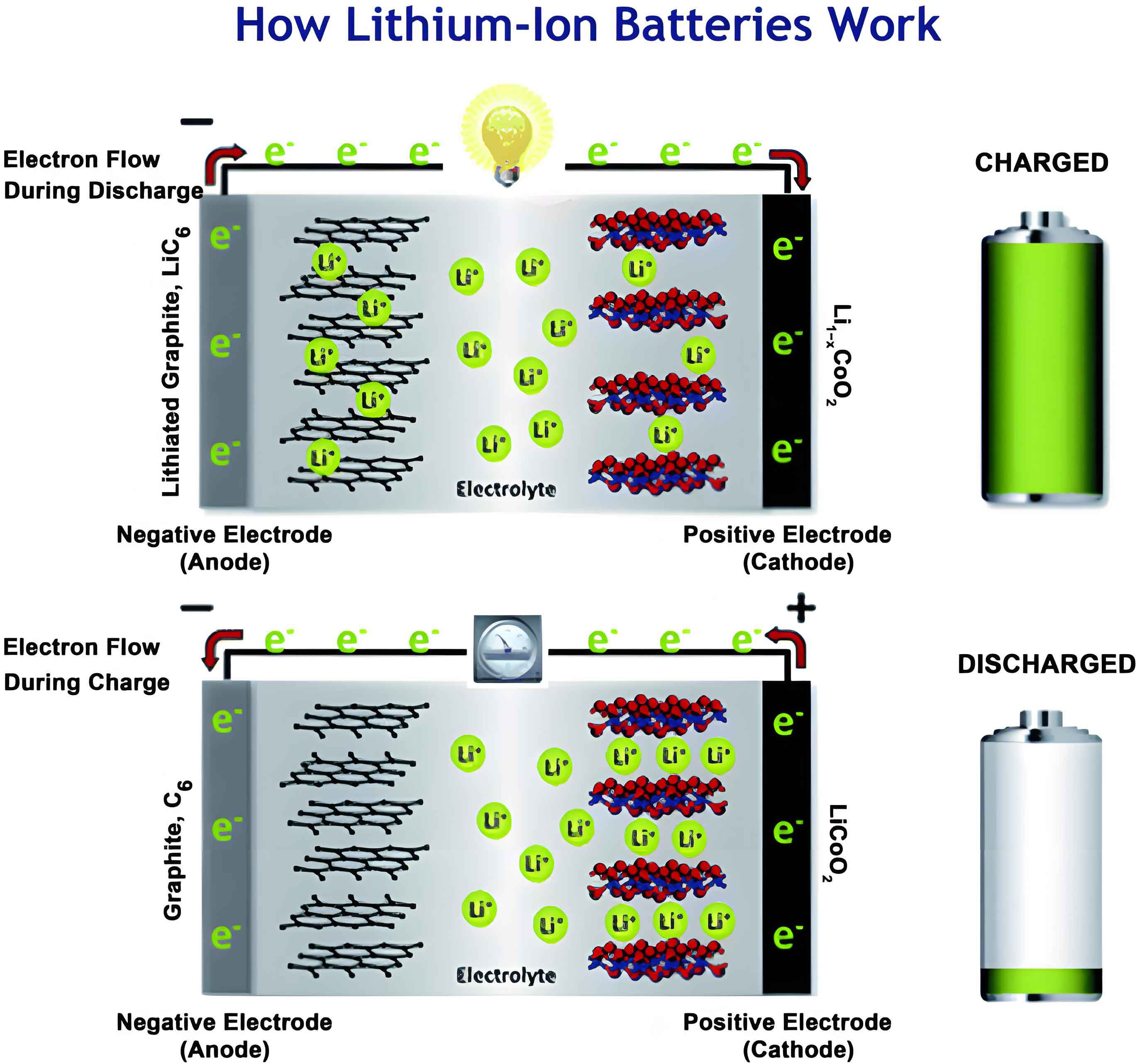
Traditional RUL prediction methods often face three key challenges: (1) real-time or online prediction capability is insufficient, (2) early-life prediction is unreliable due to limited data, and (3) multi-step forecasting that tracks long-term degradation trends is difficult. Many data-driven models, including standard neural networks, struggle with the small-sample learning problem at the beginning of a battery’s life. To address these issues, we propose a novel hybrid framework that fuses a Generalized Regression Neural Network (GRNN) with a Gravitational Search Algorithm-optimized Extreme Learning Machine (GSA-ELM) for multi-step online RUL prediction of lithium-ion batteries.
The core of our approach lies in constructing a suitable Health Indicator (HI) and developing a two-stage, adaptive prediction strategy. Directly using capacity as the HI is ideal but often not feasible for online monitoring. Instead, we extract an indirect HI from readily available operational data. For a constant-current discharge phase, we define the equal voltage drop discharge time as:
$$ T_i = T_i^H – T_i^L $$
where \( T_i^H \) is the time when the discharge voltage is at 4.0V, and \( T_i^L \) is the time when it drops to 3.0V, for the \( i \)-th cycle. This metric correlates strongly with capacity fade. However, this measurement is often discrete. To create a continuous, smooth HI sequence more suitable for model training, we apply an interpolation method to reconstruct and expand the data. The correlation between this continuous HI and the actual capacity is remarkably high, as shown in the analysis below, validating its effectiveness.
| Variable Pair | Correlation Coefficient |
|---|---|
| HI vs. Capacity (Battery CS2-35) | 0.990 |
| Continuous HI vs. Capacity (Battery CS2-35) | 0.987 |
| HI vs. Capacity (Battery CS2-36) | 0.990 |
| Continuous HI vs. Capacity (Battery CS2-36) | 0.992 |
| HI vs. Capacity (Battery CS2-37) | 0.992 |
| Continuous HI vs. Capacity (Battery CS2-37) | 0.996 |
| HI vs. Capacity (Battery CS2-38) | 0.964 |
| Continuous HI vs. Capacity (Battery CS2-38) | 0.984 |
Our prediction framework operates in two distinct phases to overcome the data availability problem. In the early life of the lithium-ion battery (cycles 1-150), where operational data is scarce, we employ a Generalized Regression Neural Network (GRNN). The GRNN is a powerful tool for small-sample learning and provides a robust probabilistic foundation for regression. Given an input vector \( \mathbf{X} \), the GRNN output \( Y \) for a scalar case is derived from Parzen’s density estimator:
$$ Y(\mathbf{X}) = \frac{\sum_{i=1}^{n} y_i \exp\left(-\frac{D_i^2}{2\sigma^2}\right)}{\sum_{i=1}^{n} \exp\left(-\frac{D_i^2}{2\sigma^2}\right)} $$
where \( D_i^2 = (\mathbf{X} – \mathbf{X}_i)^T (\mathbf{X} – \mathbf{X}_i) \), \( \mathbf{X}_i \) and \( y_i \) are the \( i \)-th sample input and output, \( n \) is the number of samples, and \( \sigma \) is the smoothing parameter. This structure allows the GRNN to effectively capture the initial degradation trend of the lithium-ion battery with minimal data.
For the mid-to-late life prediction (after cycle 150), we switch to an optimized Extreme Learning Machine (ELM). A standard single-hidden-layer feedforward ELM model with \( L \) hidden nodes is expressed as:
$$ \mathbf{Y} = \sum_{i=1}^{L} \boldsymbol{\beta}_i g(\mathbf{w}_i \cdot \mathbf{X} + b_i) $$
where \( g(\cdot) \) is the activation function, \( \mathbf{w}_i \) and \( b_i \) are the randomly assigned input weights and biases, and \( \boldsymbol{\beta}_i \) are the output weights solved via the Moore-Penrose generalized inverse. The random assignment of \( \mathbf{w}_i \) and \( b_i \) can lead to unstable predictions. To enhance robustness, we optimize these parameters using the Gravitational Search Algorithm (GSA). In GSA, a population of agents (solutions) interact based on the laws of gravity and motion. The mass of each agent is calculated from its fitness (e.g., prediction error), and its acceleration \( \mathbf{a}_i^d(t) \) in dimension \( d \) at time \( t \) is governed by:
$$ \mathbf{a}_i^d(t) = \frac{\mathbf{F}_i^d(t)}{\mathbf{M}_{ii}(t)} = G(t) \sum_{j=1, j\neq i}^{N} \text{rand}_j \frac{\mathbf{M}_{pj}(t) \times \mathbf{M}_{ai}(t)}{R_{ij}(t) + \epsilon} (x_j^d(t) – x_i^d(t)) $$
where \( G(t) \) is a decreasing gravitational constant, \( \mathbf{M}_{ai}, \mathbf{M}_{pi}, \mathbf{M}_{ii} \) are active, passive, and inertial masses, \( R_{ij} \) is the Euclidean distance, and \( \text{rand}_j \) is a random number. The agents’ positions, representing the ELM’s input weights and biases, are iteratively updated towards an optimum, leading to a stable and accurate GSA-ELM model for the lithium-ion battery’s non-linear degradation.
The final innovation is a rolling-update, multi-step prediction mechanism. When the GSA-ELM model is active, it is not used statically. Instead, we implement a strategy where the model predicts the capacity for the next 5 cycles. After every 5 actual cycles, the newly acquired data is used to update the training set, and the GSA-ELM model is retrained. This continuous adaptation allows the model to track the evolving degradation dynamics of the lithium-ion battery closely, enabling accurate long-horizon, multi-step RUL forecasts.
We validated our proposed GRNN-GSA-ELM framework using the publicly available CS2-35, CS2-36, CS2-37, and CS2-38 lithium-ion battery datasets from the Maryland Advanced Life Cycle Engineering Center. The batteries were cycled under constant current-constant voltage (CC-CV) charge and constant current (CC) discharge protocols until failure. The prediction started at cycle 31. The early phase (cycles 31-150) was handled by GRNN, and the mid-to-late phase used the rolling-update GSA-ELM model. For comparison, we also tested a standard GSA-ELM model trained on fixed, larger segments of data (200, 400, 600 cycles).
The results demonstrate the superiority of our hybrid, adaptive approach. The GRNN-GSA-ELM model seamlessly tracked the capacity fade trajectory across the entire lifespan of the lithium-ion battery. In contrast, the standard GSA-ELM model’s performance was highly dependent on the amount of training data; too little data led to poor generalization and significant RUL prediction errors. The following table summarizes the RUL prediction performance for battery CS2-35, whose true RUL from cycle 30 was 646 cycles.
| Model | Training Data (from start) | Predicted RUL (cycles) | Absolute Error (AE) | Relative Error (RE %) | RMSE |
|---|---|---|---|---|---|
| Proposed GRNN-GSA-ELM | Rolling Update from Cycle 30 | 663 | 17 | 2.63 | 0.0214 |
| Standard GSA-ELM | First 200 cycles | 539 | 107 | 16.56 | 0.0784 |
| Standard GSA-ELM | First 400 cycles | 683 | 37 | 5.73 | 0.0696 |
| Standard GSA-ELM | First 600 cycles | 669 | 23 | 3.56 | 0.1176 |
The proposed method consistently achieved low prediction errors across all four test lithium-ion batteries. To further benchmark our method, we compared it with other advanced techniques reported in the literature, such as Ant Lion Optimized Support Vector Machine (ALO-SVM) and a physics-informed model. The comparison, shown below, confirms that our method requires significantly less initial training data (only 30 cycles) while maintaining competitive or superior accuracy in terms of Absolute Error (AE) and Root Mean Square Error (RMSE) for the lithium-ion battery RUL prediction task.
| Dataset | Method | Training Data Size | AE (cycles) | RE (%) | RMSE |
|---|---|---|---|---|---|
| CS2-35 | Proposed Method | 30 | 17 | 2.63 | 0.0214 |
| ALO-SVM | 309 | 22 | 3.41 | 0.0264 | |
| Physics-informed Model | 295 | 26 | 4.02 | — | |
| CS2-36 | Proposed Method | 30 | 15 | 2.38 | 0.0140 |
| ALO-SVM | 367 | 8 | 1.27 | 0.0217 | |
| Physics-informed Model | 275 | 20 | 3.17 | — |
Finally, we tested the generalizability of our model on a lithium-ion battery (CS2-7) operating under a more realistic, variable discharge cutoff voltage regimen, and on a different battery type (NASA B0005). The model successfully tracked the capacity degradation in both cases, with AE of 12 cycles (RE 1.61%) for CS2-7 and AE of 1 cycle (RE 0.8%) for B0005. This demonstrates the strong adaptability and robustness of the proposed GRNN-GSA-ELM framework for online RUL prediction of diverse lithium-ion batteries.
In conclusion, we have developed and validated an effective framework for the multi-step online prediction of lithium-ion battery remaining useful life. The method addresses key challenges by: 1) constructing a continuous, high-correlation Health Indicator from operational data, 2) employing a GRNN for stable early-life prediction with minimal data, and 3) utilizing a GSA-optimized ELM with a rolling-update mechanism for accurate and adaptive mid-to-late life multi-step forecasting. Experimental results on multiple battery datasets confirm that this hybrid approach achieves high prediction accuracy and exhibits excellent robustness and generalizability compared to standalone and other advanced models. This work provides a practical and reliable solution for real-time health management of systems powered by lithium-ion batteries.