
In recent years, the rapid development of energy storage systems has become pivotal for integrating renewable energy sources like wind and solar into the grid. As a key component, lithium iron phosphate (LiFePO4) batteries are widely adopted due to their stability and safety profile. However, fire incidents in energy storage stations have raised significant concerns, prompting extensive research into fire suppression technologies. In my study, I aimed to evaluate the effectiveness of various fire extinguishing agents on LiFePO4 battery module fires, focusing on their ability to suppress flames and prevent re-ignition. The experiments were conducted in a simulated prefabricated cabin environment, reflecting real-world scenarios. This comprehensive analysis delves into the灭火 mechanisms, temperature dynamics, and practical implications for designing safer energy storage systems.
The importance of LiFePO4 batteries in energy storage cannot be overstated. These batteries offer high thermal stability and longer cycle life, making them suitable for large-scale applications. Nonetheless, under abusive conditions such as overcharging, LiFePO4 battery modules can undergo thermal runaway, leading to fires characterized by rapid flame propagation and toxic gas emissions. My investigation builds upon previous research that highlighted the challenges in extinguishing such fires, where cooling capacity is as critical as flame suppression. By comparing heptafluoropropane, perfluorohexanone, hot aerosol, and water mist systems, I sought to identify the most effective approach for mitigating risks associated with LiFePO4 battery modules.
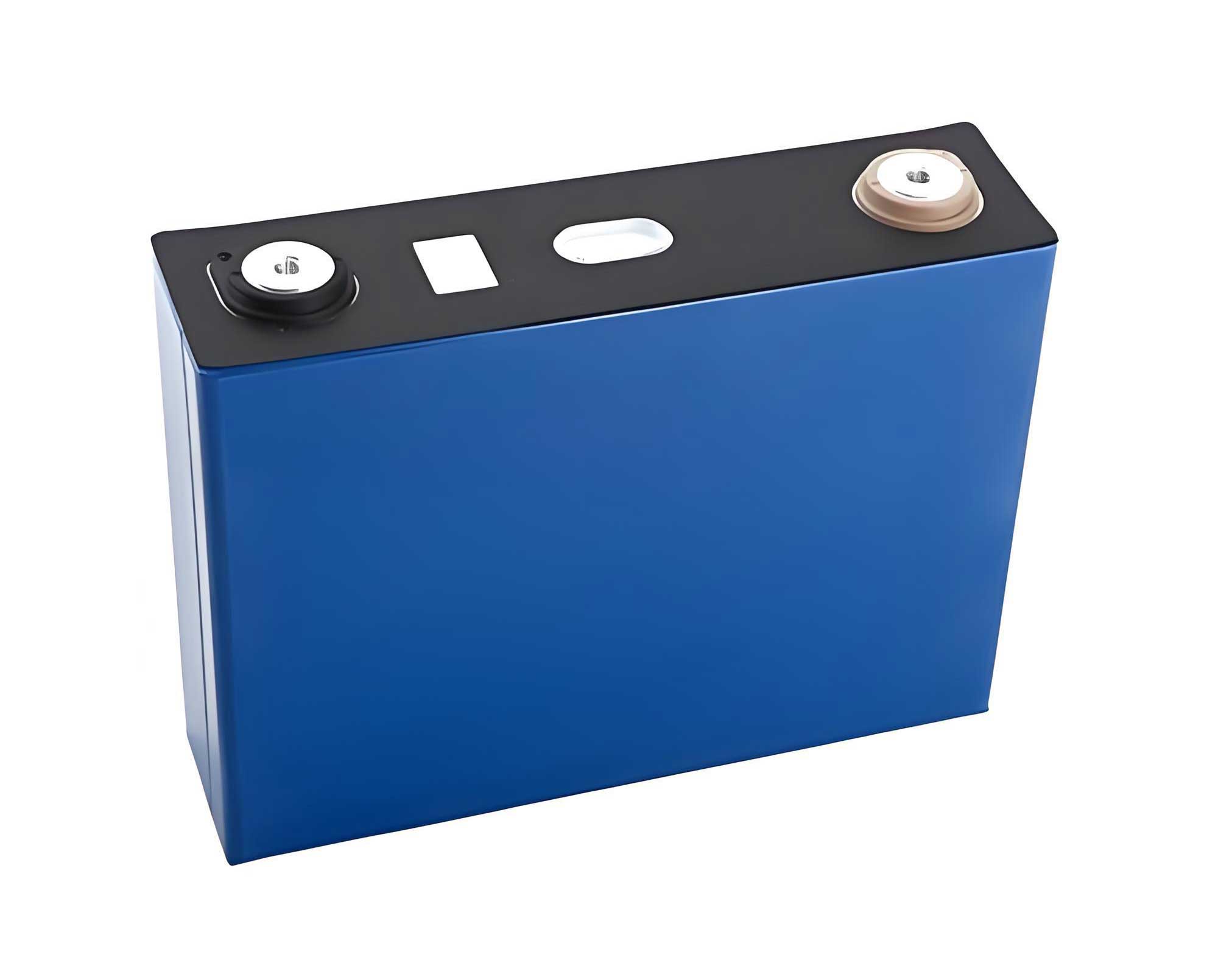
My experimental setup involved a full-scale prefabricated cabin measuring 12 m in length, 2.4 m in width, and 2.6 m in height, equipped with observation windows and pressure relief valves. This design mimicked actual energy storage installations, ensuring that the results are transferable to real-world conditions. The test subject was a LiFePO4 battery module with a nominal voltage of 25.6 V and capacity of 2752 Ah, composed of 32 cells in a 4P8S configuration. To simulate a battery management system (BMS) failure, I removed the BMS and induced thermal runaway via constant-current overcharging at 172 A (0.5 C rate). The fire was allowed to burn for 30 seconds before activating the extinguishing systems, a protocol designed to assess their response to初期 fires.
The selection of fire extinguishing agents was based on their prevalence in industrial applications and prior studies on LiFePO4 battery fires. Each system was installed according to standard guidelines, with adjustments for the specific challenges posed by LiFePO4 battery modules. For instance, the heptafluoropropane system used a total flooding method, while the water mist system employed local application with nozzles positioned close to the battery surface. To provide a clear overview, I have summarized the key parameters of each extinguishing agent in Table 1.
| Agent | Mechanism | Dosage/Concentration | Application Method | Pressure/Flow Rate |
|---|---|---|---|---|
| Heptafluoropropane | Chemical inhibition, cooling | 75 kg, 10.4% vol. | Total flooding | 2.5 MPa |
| Perfluorohexanone | Cooling, oxygen dilution | 72 kg, 6% vol. | Localized spraying | N/A |
| Hot Aerosol | Chemical inhibition,窒息 | 9.6 kg total, 124.68 g/m³ | Distributed units | N/A |
| Water Mist | Cooling, oxygen displacement | 3 L/min | Local application | 10 MPa |
The fire dynamics of LiFePO4 battery modules are complex, involving exothermic reactions that release heat and flammable gases. The heat release rate (HRR) is a critical parameter, which can be modeled using the following equation derived from energy balance principles: $$ \frac{dQ}{dt} = \dot{m} \Delta H_c + k A (T_s – T_\infty) $$ where \( \frac{dQ}{dt} \) is the HRR, \( \dot{m} \) is the mass loss rate, \( \Delta H_c \) is the heat of combustion, \( k \) is the heat transfer coefficient, \( A \) is the surface area, \( T_s \) is the surface temperature, and \( T_\infty \) is the ambient temperature. For LiFePO4 battery modules, the internal reactions continue even after external flames are extinguished, leading to potential re-ignition. This underscores the need for agents that not only suppress flames but also provide sustained cooling.
In the heptafluoropropane tests, the LiFePO4 battery module exhibited initial explosion at 27.8 minutes of overcharging, followed by flame development. Upon agent discharge, visible flames were extinguished within 10 seconds, but white smoke continued to emanate from the module. After 6.5 minutes, re-ignition occurred, accompanied by a pressure surge that opened a safety door. Temperature data, as shown in Table 2, revealed a rapid spike to 240°C during the initial爆燃, a brief drop post-discharge, and a subsequent rise to 850°C before manual intervention. This behavior highlights the limitations of heptafluoropropane in interrupting internal chemical reactions within LiFePO4 battery modules.
| Time Segment | Event | Temperature at Left Wall (°C) | Observations |
|---|---|---|---|
| Pre-ignition | Safety valve opening | 35 | Smoke emission |
| Ignition | Initial explosion | 240 | Flame appearance |
| Post-discharge | Agent activation | 100 (min) | Flame suppression |
| Re-ignition | Secondary explosion | 850 | Smoke accumulation |
The perfluorohexanone system demonstrated similar outcomes. The LiFePO4 battery module ignited after 32.2 minutes of overcharging, and flames were suppressed within 10 seconds of agent release. However, re-ignition occurred 3.8 minutes later, necessitating manual灭火. Temperature measurements, summarized in Table 3, showed a peak of 220°C during combustion, a reduction to 100°C after extinguishment, and a swift climb upon re-ignition. The cooling effect of perfluorohexanone was notable, but insufficient to halt the ongoing reactions in the LiFePO4 battery module. The heat transfer during this process can be approximated by Fourier’s law: $$ q = -k \nabla T $$ where \( q \) is the heat flux, \( k \) is the thermal conductivity, and \( \nabla T \) is the temperature gradient. The inability to dissipate heat from the core of the LiFePO4 battery module contributed to re-ignition.
| Time (s) | Module Front Center (°C) | Module Left Wall (°C) | Module Internal Center (°C) | Event |
|---|---|---|---|---|
| 0-1000 | 50-100 | 30-80 | 60-120 | Pre-ignition phase |
| 1000-2000 | 200-300 | 150-220 | 250-350 | Flame development |
| 2000-3000 | 100-150 | 80-120 | 110-180 | Agent discharge |
| 3000-4000 | 300-400 | 250-320 | 350-450 | Re-ignition |
Hot aerosol proved less effective against LiFePO4 battery module fires. Upon activation after 49 minutes of overcharging, flames were partially suppressed for 3 seconds but re-emerged after 20 seconds. The agent failed to achieve complete灭火, with surface temperatures dropping only from 372°C to 312°C. This aligns with the灭火 mechanism of hot aerosols, which primarily rely on chemical radical scavenging and oxygen dilution, offering minimal cooling. For LiFePO4 battery modules, where thermal management is crucial, this deficiency is critical. The mass loss rate (MLR) during combustion can be expressed as: $$ \dot{m} = \frac{A p_v \sqrt{M}}{R T_s} $$ where \( A \) is the area, \( p_v \) is the vapor pressure, \( M \) is the molar mass, \( R \) is the gas constant, and \( T_s \) is the surface temperature. The persistent mass loss in LiFePO4 battery modules indicates continuous fuel generation, exacerbating fire risks.
In contrast, the water mist system showed promising results for LiFePO4 battery module fires. After ignition at 19.5 minutes, flames were extinguished within 2.5 minutes of agent application, and no re-ignition was observed over 12 hours of monitoring. Temperature data, presented in Table 4, indicated a rapid decline to below 50°C at most locations, except the bottom which remained under 100°C. The cooling efficacy of water mist stems from its high heat capacity and latent heat of vaporization, described by: $$ Q = m c_p \Delta T + m L_v $$ where \( Q \) is the heat absorbed, \( m \) is the mass of water, \( c_p \) is the specific heat, \( \Delta T \) is the temperature change, and \( L_v \) is the latent heat. By penetrating the module interior, the mist disrupted the heat feedback loop essential for sustaining reactions in LiFePO4 battery modules.
| Location on Module | Peak Temperature During Fire (°C) | Temperature After 5 min of Cooling (°C) | Stabilized Temperature (°C) |
|---|---|---|---|
| Left Side | 400 | 40 | 30 |
| Internal Center | 500 | 45 | 35 |
| Bottom | 450 | 90 | 80 |
| Upper Center | 480 | 35 | 25 |
To quantify the fire risk associated with LiFePO4 battery modules, I calculated the fire performance index (FPI) and fire growth index (FGI) based on cone calorimeter data from ancillary studies. The FPI is defined as the ratio of time to ignition (TTI) to peak HRR: $$ \text{FPI} = \frac{\text{TTI}}{\text{pHRR}} $$ while the FGI represents the ratio of peak HRR to time to peak HRR: $$ \text{FGI} = \frac{\text{pHRR}}{t_{\text{pHRR}}} $$ For LiFePO4 battery modules, at radiation powers of 25 kW/m², 35 kW/m², and 50 kW/m², the FPI increased by 44.4% and 176.5%, respectively, and the FGI by 30.4% and 83.0%. This indicates heightened fire hazard with elevated thermal exposure, emphasizing the need for robust suppression systems.
Further analysis using critical radiant flux theory revealed that the LiFePO4 battery module has a critical辐射 power of 3.61 kW/m², below which ignition is unlikely. The zero-radiation average HRR was 36.5 kW/m², suggesting a baseline fire propensity. These values inform safety thresholds for designing protection systems around LiFePO4 battery modules. The energy release during thermal runaway can be modeled with an Arrhenius equation: $$ k = A e^{-E_a / (R T)} $$ where \( k \) is the reaction rate constant, \( A \) is the pre-exponential factor, \( E_a \) is the activation energy, \( R \) is the universal gas constant, and \( T \) is the absolute temperature. For LiFePO4 battery modules, the high \( E_a \) contributes to stability but once exceeded, rapid decomposition ensues.
The灭火 mechanisms differ among agents. Heptafluoropropane and perfluorohexanone act through physical cooling and chemical interference with combustion chains, but their transient presence limits effectiveness against deep-seated fires in LiFePO4 battery modules. Hot aerosol lacks cooling capacity, rendering it unsuitable. Water mist excels by combining cooling, oxygen displacement, and wetting, which quenches reactions at their source. However, for LiFePO4 battery modules in prefabricated cabins, electrical safety mandates断电 before water-based suppression to prevent short circuits. This sequential action—detection, power cutoff, then agent release—is vital for system integrity.
My experiments also considered the economic and environmental aspects of these agents. Heptafluoropropane and perfluorohexanone are synthetic halocarbons with global warming potential, whereas water mist is eco-friendly but requires infrastructure for high-pressure delivery. For widespread deployment in LiFePO4 battery energy storage systems, a life-cycle assessment might favor water mist, provided safety protocols are adhered to. The total cost of ownership includes installation, maintenance, and potential damage from re-ignition; thus, the superior performance of water mist against LiFePO4 battery module fires could offset higher upfront costs.
In terms of scalability, the findings suggest that for LiFePO4 battery modules arranged in clusters within cabins, localized water mist nozzles integrated into each module may offer optimal protection. This contrasts with conventional ceiling-mounted systems, which may not achieve sufficient penetration. Future designs could incorporate thermosensitive materials that activate mist generation upon detecting thermal runaway in LiFePO4 battery modules, enhancing autonomy and response speed.
To further elucidate the heat transfer phenomena, I derived a dimensionless number, the Biot number (Bi), which compares internal to external thermal resistance: $$ \text{Bi} = \frac{h L}{k} $$ where \( h \) is the convective heat transfer coefficient, \( L \) is the characteristic length, and \( k \) is the thermal conductivity of the LiFePO4 battery module. For Bi >> 1, internal conduction limits cooling, explaining why surface-applied agents like heptafluoropropane struggle to mitigate core temperatures in LiFePO4 battery modules.
The role of gas emissions during LiFePO4 battery module fires cannot be overlooked. Combustion yields hydrogen, carbon monoxide, and fluoride compounds, which pose health hazards and complicate灭火. Agents that dilute these gases, such as water mist through steam expansion, add a layer of protection. The ideal extinguisher for LiFePO4 battery modules would thus marry rapid flame knockdown with prolonged cooling and gas management.
In conclusion, my comprehensive evaluation underscores that灭火 effectiveness for LiFePO4 battery module fires hinges on both flame suppression and cooling capacity. Among the tested agents, water mist demonstrated superior performance in preventing re-ignition, attributed to its direct application and heat absorption capabilities. Heptafluoropropane and perfluorohexanone offered initial flame control but failed to sustain it due to ongoing internal reactions in LiFePO4 battery modules. Hot aerosol proved inadequate. These insights should guide the development of fire safety standards for energy storage systems, prioritizing technologies that address the unique challenges of LiFePO4 battery modules. As the world transitions to renewable energy, ensuring the safety of LiFePO4 battery-based storage will be paramount, and continued research into advanced灭火 systems is essential.