
In recent years, perovskite solar cells have emerged as a transformative technology in photovoltaics due to their exceptional power conversion efficiency, low-cost fabrication, minimal material usage, and compatibility with flexible processing. Among these, flexible perovskite solar cells represent a significant advancement, offering advantages such as lightweight design, bendability, and high efficiency, which broaden their application potential in wearable electronics, building-integrated photovoltaics, and portable power sources. This article comprehensively reviews the progress in flexible perovskite solar cells, focusing on material innovations, fabrication techniques, and performance enhancements. We address key challenges, including limited mechanical durability under bending, low-temperature processing requirements, and scalability issues, while highlighting strategies to improve efficiency and stability. Through detailed analysis of core components like perovskite absorbers, charge transport layers, substrates, and electrodes, we aim to provide insights into the future development of high-performance flexible perovskite solar cells.
The rapid evolution of perovskite solar cells has been driven by their outstanding optoelectronic properties, such as high absorption coefficients, tunable bandgaps, and long charge carrier diffusion lengths. For instance, the power conversion efficiency (PCE) of perovskite solar cells has soared from initial reports of around 3% to certified values exceeding 25%, rivaling traditional silicon-based technologies. The theoretical efficiency limit for single-junction perovskite solar cells is estimated at approximately 31%, underscoring their potential for further improvement. Flexible perovskite solar cells build upon these attributes by incorporating pliable substrates and electrodes, enabling conformal integration into various surfaces. However, the transition from rigid to flexible configurations introduces unique hurdles, such as interfacial stress during bending, crack propagation in functional layers, and the need for low-temperature processing to avoid substrate damage. In this context, we explore recent breakthroughs in material science and engineering that have propelled flexible perovskite solar cells toward practical applications.
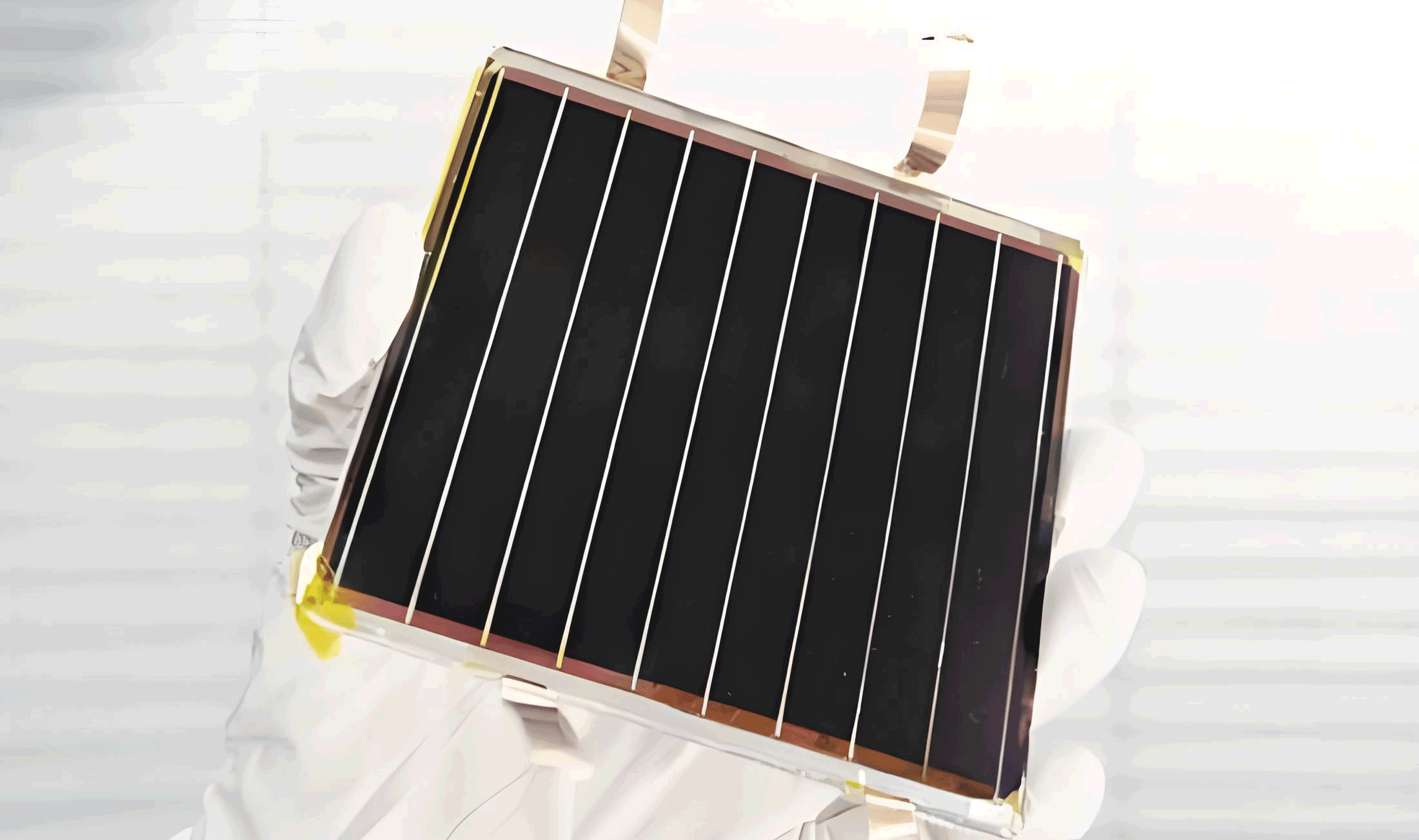
The performance of flexible perovskite solar cells is often evaluated using the standard photovoltaic parameters, including short-circuit current density ($J_{sc}$), open-circuit voltage ($V_{oc}$), fill factor (FF), and overall PCE. The efficiency can be expressed as:
$$ \text{PCE} = \frac{J_{sc} \times V_{oc} \times \text{FF}}{P_{\text{in}}} $$
where $P_{\text{in}}$ is the incident light power density. For flexible perovskite solar cells, maintaining these parameters under mechanical deformation is critical. Research has shown that optimizing the perovskite crystal structure and interface engineering can significantly enhance both efficiency and bending stability. For example, incorporating additives into the perovskite precursor solution has been demonstrated to enlarge grain sizes and reduce defect densities, leading to improved charge carrier lifetimes and reduced non-radiative recombination. The defect density ($N_t$) in perovskite films can be correlated with the recombination rate ($R$) through the Shockley-Read-Hall model:
$$ R = \frac{v_{\text{th}} \sigma N_t n p}{n + p + 2n_i \cosh\left(\frac{E_t – E_i}{kT}\right)} $$
where $v_{\text{th}}$ is the thermal velocity, $\sigma$ is the capture cross-section, $n$ and $p$ are electron and hole concentrations, $n_i$ is the intrinsic carrier density, $E_t$ is the trap energy level, $E_i$ is the intrinsic Fermi level, $k$ is Boltzmann’s constant, and $T$ is temperature. By minimizing $N_t$, the performance of flexible perovskite solar cells under strain can be enhanced.
To illustrate the historical progress in flexible perovskite solar cells, Table 1 summarizes key milestones in PCE development, highlighting the evolution from initial demonstrations to recent high-efficiency devices.
| Year | Key Innovation | PCE (%) | Reference |
|---|---|---|---|
| 2013 | First report on flexible perovskite solar cells | 2.26 | Initial study |
| 2014 | Use of PEDOT:PSS and PCBM as charge transport layers | 9.2 | Follow-up work |
| 2015 | Interface layer with 2D perovskite for enhanced performance | 13.8 | Advanced research |
| 2016 | Solid-state ionic liquid as electron transport layer | 16.09 | Innovative approach |
| 2017 | Graphene as transparent electrode | 17.3 | Material breakthrough |
| 2018 | Additive optimization for crystallization | 18.4 | Process improvement |
| 2019 | Electron transport layer dimension control | 19.51 | Structural refinement |
| 2020 | Passivation of perovskite/electron transport layer interface | 19.87 | Interface engineering |
| 2021 | Metal halide layer modification | 21.0 | Chemical tuning |
| 2022 | Additive-driven crystallization optimization | 23.6 | State-of-the-art |
One of the primary challenges in flexible perovskite solar cells is the mechanical stability under repeated bending cycles. The bending strain ($\epsilon$) experienced by a device can be approximated by:
$$ \epsilon = \frac{d}{2R} $$
where $d$ is the total thickness of the device and $R$ is the bending radius. For instance, with a typical device thickness of 1 μm and a bending radius of 5 mm, the strain is about 0.1%, which can induce microcracks in brittle layers if not properly addressed. To mitigate this, researchers have focused on enhancing the flexibility of the perovskite absorber layer through compositional engineering and additive incorporation. Additives such as dimethyl sulfide (DS), polyurethane (PU), and ammonium chloride (NH₄Cl) have been shown to improve crystallinity and mechanical robustness. For example, DS forms chelates with lead ions, slowing down crystallization and resulting in larger grains with fewer defects. Similarly, PU integrates into the perovskite matrix, creating an elastic network that dissipates stress during bending. The effect of additives on grain growth can be described by the classical nucleation theory, where the critical nucleus radius ($r^*$) is given by:
$$ r^* = \frac{2\gamma}{\Delta G_v} $$
where $\gamma$ is the surface energy and $\Delta G_v$ is the volumetric free energy change. Additives that reduce $\gamma$ or alter $\Delta G_v$ can promote the formation of larger grains, thereby enhancing the mechanical integrity of flexible perovskite solar cells.
Table 2 provides a comparative overview of common additives used in flexible perovskite solar cells, their functions, and the resulting improvements in performance and stability.
| Additive | Function | Impact on PCE | Mechanical Stability |
|---|---|---|---|
| Dimethyl Sulfide (DS) | Chelates Pb²⁺, slows crystallization | Increase to 18.4% | Stable after 5,000 bends at 4 mm radius |
| Polyurethane (PU) | Forms elastic network, releases stress | Reach 18.7% | Improved flexibility |
| Ammonium Chloride (NH₄Cl) | Reduces trap density, enhances crystallinity | Achieve 19.72% | Better bending endurance |
| Poly(ethylene glycol) dimethacrylate (PEGDMA) | Cross-links at grain boundaries, reduces defects | 21.41% | Retains 86% efficiency after 5,000 bends |
| Self-polymerizing methyl methacrylate (sMMA) | Provides nucleation sites, passivates grain boundaries | 20.12% | 72% retention after 5,000 cycles |
In addition to additive engineering, compositional tuning of the perovskite material plays a crucial role in optimizing the performance of flexible perovskite solar cells. Mixed-cation and mixed-halide formulations, such as MA₀.₁₅FA₀.₈₅PbI₂.₈₅Br₀.₁₅, have been developed to improve stability and efficiency. The bandgap ($E_g$) of these perovskites can be tailored by adjusting the halide ratio, as described by Vegard’s law for alloys:
$$ E_g(x) = x E_{g,\text{A}} + (1-x) E_{g,\text{B}} – b x (1-x) $$
where $x$ is the composition fraction, $E_{g,\text{A}}$ and $E_{g,\text{B}}$ are the bandgaps of the end members, and $b$ is the bowing parameter. For instance, incorporating cesium (Cs) or rubidium (Rb) into formamidinium (FA)-based perovskites can lower the crystallization temperature and enhance thermal stability, making them suitable for flexible substrates with low thermal tolerance. Moreover, interface passivation strategies, such as the use of two-dimensional (2D) perovskites or molecular modifiers, have been employed to reduce recombination at grain boundaries and interfaces. The open-circuit voltage in a perovskite solar cell is influenced by the interface quality and can be expressed as:
$$ V_{oc} = \frac{E_g}{q} – \frac{kT}{q} \ln\left(\frac{J_{00}}{J_{sc}}\right) $$
where $q$ is the electron charge, $J_{00}$ is the reverse saturation current density, and $E_g$ is the bandgap. By passifying defects, $J_{00}$ is reduced, leading to higher $V_{oc}$ and overall efficiency in flexible perovskite solar cells.
Charge transport layers are another critical component in flexible perovskite solar cells, as they facilitate the extraction and transport of photogenerated carriers while influencing mechanical flexibility. Inorganic materials like SnO₂ and NiOₓ are commonly used for electron and hole transport, respectively, but their brittle nature often limits bending durability. To address this, researchers have developed low-temperature deposition methods, such as plasma-enhanced atomic layer deposition (PEALD), which enables the formation of compact, flexible films at temperatures below 150°C. The conductivity ($\sigma$) of these layers can be enhanced through doping, as described by the Drude model:
$$ \sigma = n e \mu $$
where $n$ is the carrier concentration, $e$ is the electron charge, and $\mu$ is the mobility. For example, lithium-doped SnO₂ exhibits improved electron mobility, reducing series resistance and enhancing fill factor in flexible perovskite solar cells. Organic charge transport materials, such as PCBM for electrons and Spiro-OMeTAD or PEDOT:PSS for holes, offer better flexibility but may suffer from lower stability. Modifications with polymers or cross-linkers have been shown to improve their mechanical and environmental resilience. Table 3 compares the properties of typical charge transport layers used in flexible perovskite solar cells.
| Material Type | Examples | Advantages | Disadvantages | Typical PCE Impact |
|---|---|---|---|---|
| Inorganic ETL | SnO₂, TiO₂, ZnO | High stability, good conductivity | Brittle, high processing temperature | Up to 20% |
| Organic ETL | PCBM, ICBA | Flexible, low-temperature processable | Lower stability, prone to degradation | 15-18% |
| Inorganic HTL | NiOₓ, CuI | Excellent hole extraction, stable | Rigid, requires optimization | 18-21% |
| Organic HTL | Spiro-OMeTAD, PTAA | High flexibility, tunable properties | Costly, hygroscopic | 17-20% |
The choice of substrate and transparent conductive electrode is pivotal for the performance and durability of flexible perovskite solar cells. Common flexible substrates include polyethylene terephthalate (PET), polyethylene naphthalate (PEN), and polyimide (PI), which offer transparency, mechanical strength, and thermal stability. The water vapor transmission rate (WVTR) of these substrates is a key factor in determining the environmental stability of the device, as moisture ingress can degrade the perovskite layer. For electrodes, indium tin oxide (ITO) is widely used but suffers from brittleness; alternatives such as silver nanowires (Ag NWs), conductive polymers (e.g., PEDOT:PSS), and carbon nanomaterials (e.g., graphene) provide superior flexibility. The sheet resistance ($R_s$) of these electrodes affects the series resistance of the solar cell, and it can be minimized by optimizing the electrode thickness and morphology. The total series resistance ($R_s,\text{total}$) in a perovskite solar cell includes contributions from the electrodes, transport layers, and interfaces:
$$ R_s,\text{total} = R_s,\text{electrode} + R_s,\text{ETL} + R_s,\text{HTL} + R_s,\text{interface} $$
Reducing $R_s,\text{total}$ is essential for achieving high fill factors and efficiency in flexible perovskite solar cells. For instance, graphene electrodes have demonstrated low sheet resistance (e.g., 30 Ω/sq) and excellent bending stability, maintaining performance after thousands of bending cycles.
Looking ahead, the scalability of flexible perovskite solar cells remains a significant challenge. Large-area modules often exhibit efficiency losses due to non-uniform film formation, increased resistive losses, and interconnection issues. The efficiency of a module ($\eta_{\text{module}}$) can be related to the cell efficiency ($\eta_{\text{cell}}$) by:
$$ \eta_{\text{module}} = \eta_{\text{cell}} \times (1 – \text{losses}) $$
where losses include resistive, shading, and mismatch losses. Advanced deposition techniques, such as slot-die coating and roll-to-roll processing, are being developed to enable uniform, large-scale fabrication of flexible perovskite solar cells. Additionally, encapsulation methods using barrier layers and adhesives are crucial for protecting devices from moisture and oxygen, thereby extending their operational lifetime. Future research should focus on integrating novel materials, such as low-dimensional perovskites and composite electrodes, to further enhance the efficiency, flexibility, and stability of perovskite solar cells.
In conclusion, flexible perovskite solar cells represent a promising direction for next-generation photovoltaics, with rapid progress in efficiency and mechanical durability. Through continuous innovation in material design and processing, we anticipate that these devices will soon achieve the reliability required for commercial applications, contributing to the global transition toward sustainable energy solutions. The ongoing development of perovskite solar cells, particularly in flexible formats, holds the potential to revolutionize energy harvesting in diverse fields, from consumer electronics to aerospace.