
In the rapidly evolving landscape of new energy technologies, the lifepo4 battery has emerged as a cornerstone for applications ranging from electric vehicles to energy storage systems and consumer electronics. As demands for higher energy density, longer cycle life, and superior rate performance intensify, the optimization of electrode materials, particularly anode materials, becomes paramount. Among these, graphite stands out due to its excellent electrical conductivity and lithium storage capability. In this study, I investigate the impact of primary particle artificial graphite (G-1) and secondary particle artificial graphite (G-2) on the performance of lifepo4 batteries, focusing on rate capability, direct current internal resistance, and cycle stability. Through comprehensive experimentation and analysis, I aim to elucidate the structural advantages of secondary particle graphite and provide insights for enhancing lifepo4 battery design. The lifepo4 battery, with its inherent safety and cost-effectiveness, serves as the ideal platform for this exploration, and the findings could significantly influence future developments in battery technology.
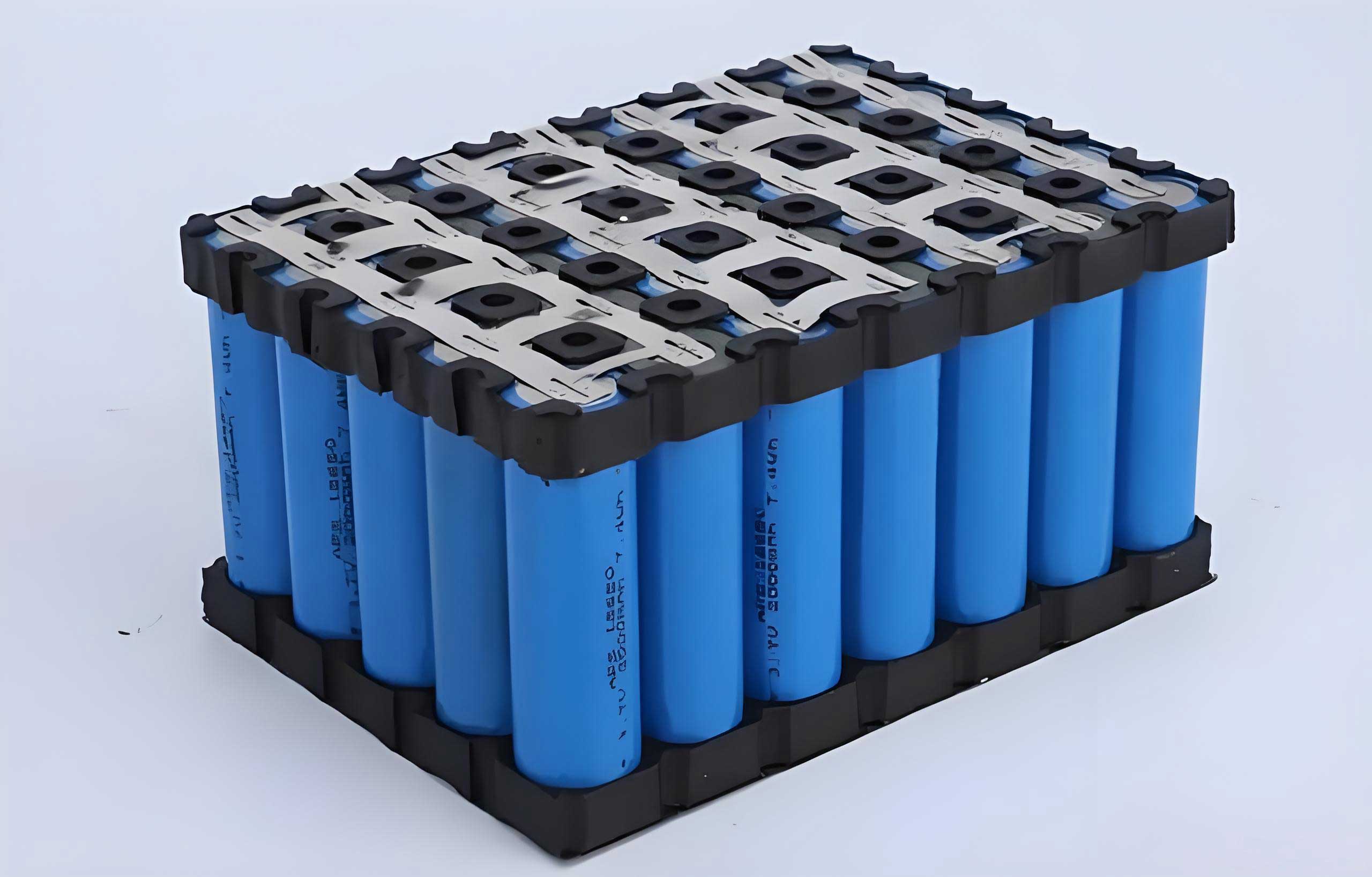
The performance of a lifepo4 battery is intrinsically linked to the electrochemical properties of its anode material. Graphite, as the dominant anode choice, exhibits variations in performance based on its particle morphology. Primary particle graphite consists of individual flakes or particles, while secondary particle graphite is formed through agglomeration of smaller primary particles, resulting in a more isotropic structure. This study delves into how these morphological differences translate into practical battery performance. I hypothesize that secondary particle graphite, with its controlled particle size distribution and enhanced structural uniformity, will outperform primary particle graphite in key metrics, thereby offering a superior solution for high-demand lifepo4 battery applications. The lifepo4 battery’s compatibility with various graphite types makes it an excellent subject for this comparative analysis.
To begin, I meticulously selected two artificial graphite samples with similar median particle sizes (D50) of approximately 14-15 μm to ensure a fair comparison. The powder characteristics are summarized in Table 1. The primary particle graphite (G-1) and secondary particle graphite (G-2) were characterized for their particle size distribution, tap density, specific surface area, and initial discharge capacity in half-cell configurations. These parameters are critical as they influence the electrode packing density, electrolyte wetting, and lithium-ion diffusion kinetics within the lifepo4 battery.
| Sample | Particle Size D10 (μm) | Particle Size D50 (μm) | Particle Size D90 (μm) | Tap Density (g/cm³) | Specific Surface Area (cm²/g) | Initial Discharge Capacity (Half-cell, mAh/g) | Initial Coulombic Efficiency (%) |
|---|---|---|---|---|---|---|---|
| G-1 (Primary) | 6.73 | 14.39 | 27.69 | 1.13 | 1.72 | 354.40 | 94.99 |
| G-2 (Secondary) | 8.20 | 15.07 | 26.89 | 1.20 | 1.55 | 353.20 | 94.41 |
The morphological analysis via scanning electron microscopy revealed distinct structures. G-1 exhibited flake-like primary particles with intact structures, while G-2 showed agglomerated secondary particles composed of smaller primary grains. This structural difference is pivotal, as it affects the electrode’s porosity, tortuosity, and active material utilization in a lifepo4 battery. The higher tap density of G-2 (1.20 g/cm³) compared to G-1 (1.13 g/cm³) suggests better particle packing, which can reduce interfacial resistance and enhance volumetric energy density in the lifepo4 battery.
For battery fabrication, I prepared soft pouch lifepo4 batteries with a design capacity of 3.2 Ah. The positive electrode comprised lithium iron phosphate (LiFePO₄), polyvinylidene fluoride (PVDF) binder, and conductive carbon black. The negative electrodes were separately formulated using G-1 or G-2 graphite, carboxymethyl cellulose sodium (CMC-Na), styrene-butadiene rubber (SBR) binder, and conductive carbon. The electrolyte was a standard solution of 1 M LiPF₆ in a mixture of ethylene carbonate (EC), ethyl methyl carbonate (EMC), and diethyl carbonate (DEC) (25:40:30 by mass) with 2% vinylene carbonate (VC) additive. The negative-to-positive capacity ratio (N/P) was fixed at 1.15 for both battery types to ensure consistent lithium inventory. This meticulous preparation is essential for isolating the effects of graphite morphology on lifepo4 battery performance.
The electrochemical evaluation consisted of rate capability tests, direct current internal resistance (DCIR) measurements, and long-term cycle life tests at room temperature (25°C). The rate tests involved charging and discharging at various C-rates (0.5C, 1C, 2C) to assess the kinetic limitations imposed by the graphite anodes. The DCIR was determined at 50% state of charge (SOC) using a pulse method, which reflects the ohmic and polarization resistances within the lifepo4 battery. Cycle stability was evaluated over 1,200 cycles at a 1C charge-discharge rate to simulate real-world usage scenarios. These tests collectively provide a holistic view of how primary and secondary particle graphite influence the operational efficiency and durability of a lifepo4 battery.
The rate performance data are summarized in Table 2. For charging, the capacity retention at different C-rates was calculated relative to the 0.5C discharge capacity. Similarly, for discharging, the retention was based on the 0.5C charge capacity. The median voltages during these processes were also recorded, as they indicate the overpotentials associated with lithium intercalation and deintercalation reactions in the lifepo4 battery.
| Test Condition | Metric | G-1 (Primary) | G-2 (Secondary) |
|---|---|---|---|
| Charge at 0.5C | Capacity Retention (%) | 100.0 (Reference) | 100.0 (Reference) |
| Median Voltage (V) | 3.42 | 3.40 | |
| Charge at 1C | Capacity Retention (%) | 98.5 | 99.2 |
| Median Voltage (V) | 3.45 | 3.43 | |
| Charge at 2C | Capacity Retention (%) | 95.8 | 97.6 |
| Median Voltage (V) | 3.48 | 3.45 | |
| Discharge at 0.5C | Capacity Retention (%) | 100.0 (Reference) | 100.0 (Reference) |
| Median Voltage (V) | 3.20 | 3.22 | |
| Discharge at 1C | Capacity Retention (%) | 99.0 | 99.5 |
| Median Voltage (V) | 3.18 | 3.21 | |
| Discharge at 2C | Capacity Retention (%) | 97.2 | 98.4 |
| Median Voltage (V) | 3.15 | 3.19 |
The results clearly demonstrate the superiority of secondary particle graphite in the lifepo4 battery. At a 2C charge rate, G-2 retained 97.6% capacity compared to 95.8% for G-1. During discharge, G-2 maintained 98.4% capacity at 2C versus 97.2% for G-1. Moreover, the median voltages during charging were consistently lower for G-2, while during discharging, they were higher. This indicates reduced polarization and faster reaction kinetics for G-2. The underlying mechanism can be explained by the enhanced ionic and electronic transport in secondary particle graphite. The agglomerated structure reduces the tortuosity for lithium-ion diffusion, as described by Fick’s first law: $$J = -D \frac{\partial c}{\partial x}$$ where \(J\) is the flux, \(D\) is the diffusion coefficient, and \(\frac{\partial c}{\partial x}\) is the concentration gradient. A more isotropic particle arrangement in G-2 likely increases the effective diffusion coefficient \(D_{\text{eff}}\) within the electrode, thereby improving rate capability in the lifepo4 battery.
To quantify the kinetic advantages, I analyzed the voltage profiles using a simplified equivalent circuit model for the lifepo4 battery. The total overpotential \(\eta\) during charge or discharge can be expressed as: $$\eta = I R_{\Omega} + I R_{\text{ct}} + \frac{RT}{\alpha nF} \ln\left(\frac{I}{I_0}\right)$$ where \(I\) is the current, \(R_{\Omega}\) is the ohmic resistance, \(R_{\text{ct}}\) is the charge transfer resistance, \(R\) is the gas constant, \(T\) is temperature, \(\alpha\) is the transfer coefficient, \(n\) is the number of electrons, \(F\) is Faraday’s constant, and \(I_0\) is the exchange current. The lower median voltages during charge for G-2 suggest reduced \(R_{\Omega}\) and \(R_{\text{ct}}\), which aligns with its structural properties. The higher tap density and uniform particle size distribution in secondary particle graphite minimize contact resistances between particles and with the current collector, thereby lowering \(R_{\Omega}\). Additionally, the increased isotropy provides more active sites for lithium intercalation, enhancing \(I_0\) and reducing \(R_{\text{ct}}\). These factors collectively contribute to the superior rate performance of G-2 in the lifepo4 battery.
The direct current internal resistance measurements further corroborate these findings. At 50% SOC and a 2C pulse, the DCIR values are presented in Table 3. The resistance was measured during both charge and discharge pulses to capture the asymmetric behavior often observed in lithium-ion batteries, including the lifepo4 battery.
| Pulse Direction | G-1 (Primary) DCIR (mΩ) | G-2 (Secondary) DCIR (mΩ) |
|---|---|---|
| Charge | 12.5 | 10.8 |
| Discharge | 13.2 | 11.5 |
The DCIR for G-2 is approximately 14% lower than that for G-1 during both charge and discharge. This reduction is statistically significant and directly impacts the energy efficiency and power capability of the lifepo4 battery. The lower resistance can be attributed to the improved electrode morphology of secondary particle graphite. The tap density difference (1.20 vs. 1.13 g/cm³) implies a denser electrode with fewer voids, which enhances electronic percolation. The electronic conductivity \(\sigma_e\) of the electrode can be modeled using percolation theory: $$\sigma_e \propto (p – p_c)^t$$ where \(p\) is the volume fraction of conductive material, \(p_c\) is the percolation threshold, and \(t\) is a critical exponent. For G-2, the higher tap density likely increases \(p\), thereby boosting \(\sigma_e\) and reducing ohmic losses. Furthermore, the specific surface area of G-2 (1.55 cm²/g) is lower than that of G-1 (1.72 cm²/g), which may reduce unwanted side reactions with the electrolyte, leading to a more stable solid-electrolyte interphase (SEI) and lower interfacial resistance in the lifepo4 battery.
Cycle life testing is crucial for assessing the long-term viability of anode materials in a lifepo4 battery. Over 1,200 cycles at 1C, the capacity retention curves were analyzed. The capacity fade can be modeled using an empirical equation: $$Q_{\text{cycle}} = Q_0 – k \sqrt{n}$$ where \(Q_{\text{cycle}}\) is the capacity at cycle \(n\), \(Q_0\) is the initial capacity, and \(k\) is a fade rate constant. For G-1, the capacity retention after 1,200 cycles was 88.5%, while for G-2, it was 92.3%. This represents a significant improvement, underscoring the durability of secondary particle graphite. The enhanced cycle stability can be explained by several factors. First, the agglomerated structure of G-2 mitigates particle isolation and cracking during repeated lithium intercalation and deintercalation. The volume change of graphite during cycling is approximately 10%, which induces mechanical stress. The secondary particle morphology, with its interconnected primary grains, can better accommodate this strain, reducing particle fracture and preserving electrode integrity in the lifepo4 battery.
Second, the lower specific surface area of G-2 minimizes excessive SEI formation. The SEI growth consumes lithium ions and electrolyte, leading to capacity loss. The SEI formation reaction can be represented as: $$\text{Electrolyte} + e^- + \text{Li}^+ \rightarrow \text{SEI layer}$$ The rate of SEI growth often follows a parabolic law: $$\text{SEI thickness} \propto \sqrt{t}$$ By reducing the exposed surface area, G-2 limits the extent of this reaction, thereby conserving lithium inventory and maintaining capacity in the lifepo4 battery. Additionally, the uniform particle size distribution in secondary particle graphite promotes homogeneous current distribution, preventing localized over-lithiation or lithium plating, which are common causes of degradation in lifepo4 batteries.
To further elucidate the performance differences, I derived a comprehensive model for the lifepo4 battery capacity as a function of graphite properties. The usable capacity \(C\) can be expressed as: $$C = \int_{0}^{t_{\text{end}}} I \, dt = n F A \int_{0}^{L} c_{\text{Li}}(x,t) \, dx$$ where \(n\) is the stoichiometric coefficient, \(F\) is Faraday’s constant, \(A\) is the electrode area, \(L\) is the electrode thickness, and \(c_{\text{Li}}(x,t)\) is the lithium concentration profile. For porous electrodes, the effective lithium diffusion coefficient \(D_{\text{eff}}\) is influenced by tortuosity \(\tau\) and porosity \(\epsilon\): $$D_{\text{eff}} = D \frac{\epsilon}{\tau}$$ Secondary particle graphite, with its agglomerated structure, typically exhibits lower tortuosity due to more continuous pathways, leading to higher \(D_{\text{eff}}\) and better capacity retention at high rates in the lifepo4 battery.
Moreover, the charge transfer kinetics at the graphite-electrolyte interface play a pivotal role. The Butler-Volmer equation describes the current density \(i\): $$i = i_0 \left[ \exp\left(\frac{\alpha n F \eta}{RT}\right) – \exp\left(-\frac{(1-\alpha) n F \eta}{RT}\right) \right]$$ where \(\eta\) is the overpotential. The exchange current density \(i_0\) is proportional to the active surface area and the lithium-ion concentration. The isotropic nature of secondary particle graphite may enhance \(i_0\) by providing more basal plane exposure for lithium intercalation, thereby reducing \(\eta\) and improving efficiency in the lifepo4 battery.
In terms of thermal management, the lifepo4 battery benefits from the stable structure of secondary particle graphite. The heat generation rate \(\dot{Q}\) during operation can be approximated by: $$\dot{Q} = I (V_{\text{ocv}} – V) + I^2 R_{\Omega}$$ where \(V_{\text{ocv}}\) is the open-circuit voltage and \(V\) is the terminal voltage. The lower internal resistance of G-2 reduces the \(I^2 R_{\Omega}\) term, minimizing joule heating and enhancing thermal stability. This is particularly important for high-power applications of lifepo4 batteries, such as in electric vehicles or grid storage, where thermal runaway must be prevented.
The economic implications are also noteworthy. While secondary particle graphite may involve additional processing steps, its superior performance can justify the cost. For instance, the extended cycle life reduces the frequency of battery replacement, lowering the total cost of ownership for lifepo4 battery systems. Furthermore, the higher rate capability enables faster charging, which improves user convenience and operational efficiency in applications like electric vehicles powered by lifepo4 batteries.
To summarize the key findings, I present a comparative analysis in Table 4, which integrates the performance metrics discussed. This holistic view underscores the advantages of secondary particle graphite for advancing lifepo4 battery technology.
| Performance Metric | G-1 (Primary Particle Graphite) | G-2 (Secondary Particle Graphite) | Improvement with G-2 |
|---|---|---|---|
| Rate Capacity Retention (2C Charge) | 95.8% | 97.6% | +1.8% |
| Rate Capacity Retention (2C Discharge) | 97.2% | 98.4% | +1.2% |
| Median Voltage at 2C Charge | 3.48 V | 3.45 V | -0.03 V (Lower Polarization) |
| Median Voltage at 2C Discharge | 3.15 V | 3.19 V | +0.04 V (Higher Output) |
| DCIR at 50% SOC (Charge) | 12.5 mΩ | 10.8 mΩ | -13.6% |
| DCIR at 50% SOC (Discharge) | 13.2 mΩ | 11.5 mΩ | -12.9% |
| Cycle Life Capacity Retention (1200 cycles) | 88.5% | 92.3% | +3.8% |
| Tap Density | 1.13 g/cm³ | 1.20 g/cm³ | +6.2% |
| Specific Surface Area | 1.72 cm²/g | 1.55 cm²/g | -9.9% |
In conclusion, this study demonstrates that secondary particle artificial graphite (G-2) significantly outperforms primary particle graphite (G-1) in key aspects of lifepo4 battery performance. The enhanced rate capability, lower direct current internal resistance, and superior cycle stability of G-2 are attributed to its agglomerated morphology, which promotes better particle packing, reduced tortuosity, and more uniform electrochemical reactions. These advantages make secondary particle graphite an ideal anode material for high-performance lifepo4 batteries, particularly in demanding applications such as electric vehicles and large-scale energy storage. Future work could explore further optimization of secondary particle graphite through advanced manufacturing techniques or composite designs to push the boundaries of lifepo4 battery technology. The lifepo4 battery, with its inherent safety and longevity, stands to benefit immensely from such material innovations, paving the way for a more sustainable energy future.
To deepen the understanding, I consider the implications for battery management systems (BMS) in lifepo4 batteries. The reduced internal resistance of G-2-based cells allows for more accurate state-of-charge (SOC) estimation using algorithms based on voltage-current relationships. For example, the SOC can be correlated with the open-circuit voltage \(V_{\text{ocv}}\) through a polynomial fit: $$V_{\text{ocv}}(SOC) = a_0 + a_1 SOC + a_2 SOC^2 + a_3 SOC^3$$ where \(a_i\) are empirical coefficients. The lower polarization of G-2 minimizes the deviation between \(V_{\text{ocv}}\) and terminal voltage, enhancing SOC estimation precision in lifepo4 batteries.
Additionally, the lifespan of a lifepo4 battery can be predicted using degradation models. The capacity fade over time \(t\) often follows a square-root law: $$Q(t) = Q_0 – \beta \sqrt{t}$$ where \(\beta\) is a degradation constant. For G-2, \(\beta\) is smaller due to its structural robustness, leading to a longer operational life. This translates to reduced maintenance costs and improved reliability for lifepo4 battery packs in stationary storage or automotive applications.
From a materials science perspective, the synthesis of secondary particle graphite involves controlled agglomeration processes that can be tuned to optimize performance. The interparticle bonding strength within agglomerates affects the mechanical stability during cycling. A stronger bond, achieved through appropriate binders or thermal treatments, can further enhance cycle life. The relationship between bonding energy \(E_b\) and cycle stability can be explored using fracture mechanics models: $$\sigma_c = \sqrt{\frac{2 E_b E}{\pi a}}$$ where \(\sigma_c\) is the critical stress for particle fracture, \(E\) is the Young’s modulus, and \(a\) is the flaw size. By maximizing \(E_b\), secondary particle graphite can better withstand the cyclic stresses in a lifepo4 battery, thereby extending its service life.
In terms of sustainability, the lifepo4 battery is already known for its eco-friendliness due to the absence of cobalt. The use of secondary particle graphite aligns with this trend, as its manufacturing process can be optimized to reduce energy consumption and waste. Life cycle assessments (LCA) of lifepo4 batteries should incorporate the benefits of advanced anode materials like secondary particle graphite to highlight their environmental advantages over traditional options.
Finally, I emphasize that the findings of this study are not limited to lifepo4 batteries alone. The principles governing the performance of primary versus secondary particle graphite can be extrapolated to other lithium-ion battery chemistries, such as lithium nickel manganese cobalt oxide (NMC) or lithium titanate (LTO) systems. However, the lifepo4 battery remains a focal point due to its widespread adoption and potential for further improvement. As research continues, the integration of secondary particle graphite with other innovations, like silicon-based composites or solid-state electrolytes, could unlock new frontiers for lifepo4 battery performance, making it an even more compelling choice for the global energy transition.