
The relentless pursuit of higher energy density in the realm of electrochemical energy storage has firmly established high-nickel layered oxide cathodes, such as LiNi0.8Co0.1Mn0.1O2 (NCM811) and LiNi0.6Co0.2Mn0.2O2 (NCM622), as pivotal materials for powering electric vehicles and large-scale energy storage systems. The superior specific capacity of these nickel-rich li ion battery cathodes directly translates to extended driving ranges and enhanced storage capabilities. However, this performance advantage is intrinsically coupled with a significant challenge: compromised thermal stability. The structural and chemical degradation of these cathodes at elevated temperatures or high states of charge lowers the thermal runaway initiation threshold, posing severe safety risks. When a single li ion battery cell undergoes thermal runaway—an uncontrollable, self-heating exothermic reaction—it releases immense heat and flammable gases. In a densely packed battery module or pack, this event can act as an ignition source, potentially triggering a cascading failure known as thermal runaway propagation, leading to fire or explosion. Therefore, a fundamental and quantitative understanding of the thermal runaway induction mechanisms under various abuse conditions and its subsequent propagation dynamics is paramount for designing safer battery systems.
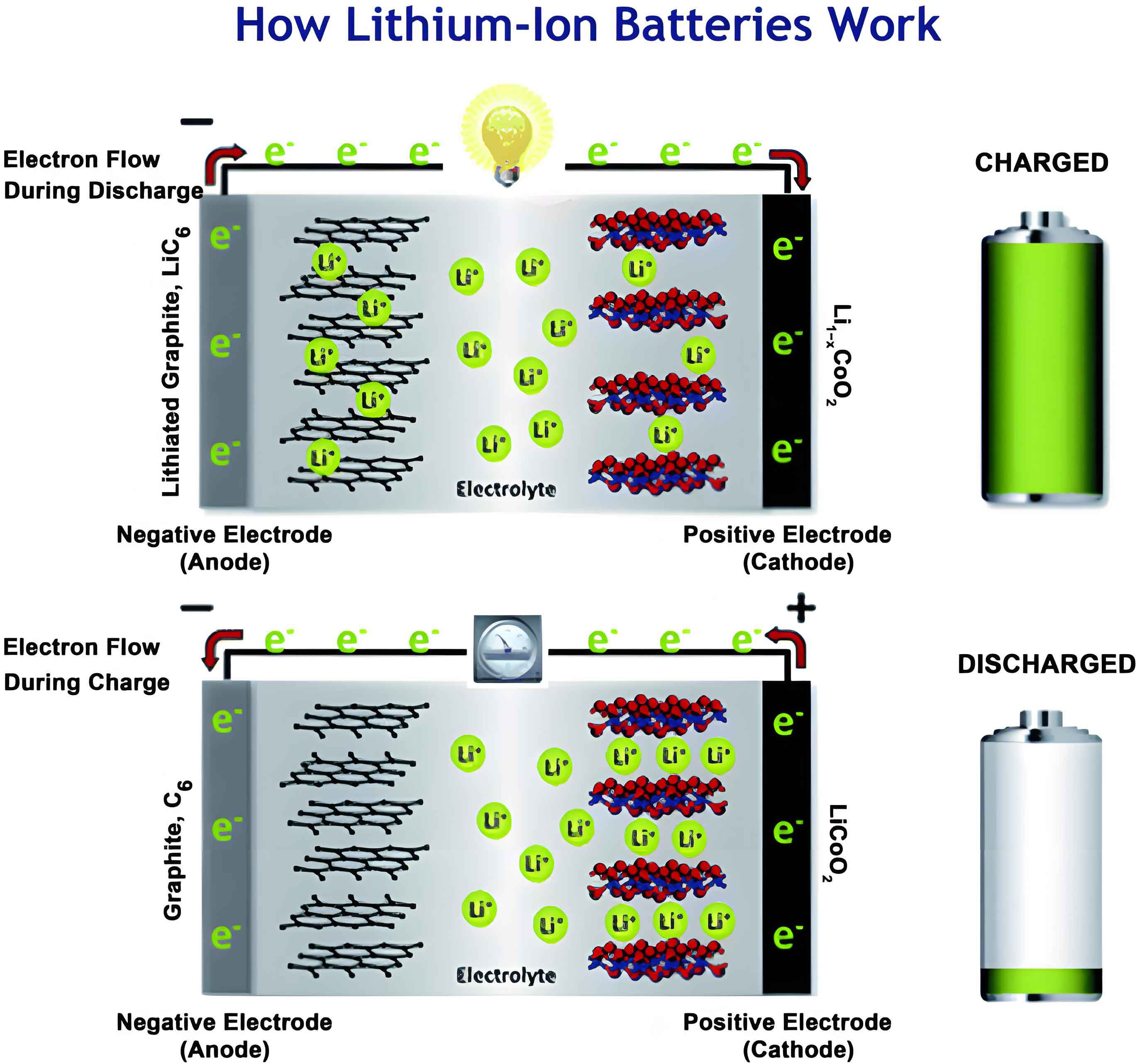
In this study, we systematically investigate the thermal runaway characteristics of a commercial high-nickel NCM622/graphite li ion battery. Our experimental approach focuses on two primary external abuse conditions: external heating and overcharging. We examine how varying the intensity of these triggers—specifically, the heating power and the overcharge current rate—affects the initiation timing, severity, and spatial propagation of thermal runaway in both single cells and a three-cell module. The core of our analysis relies on synchronized operational data (voltage, current, temperature) captured during the abuse tests. To complement and extend the experimental findings, we develop a computational fluid dynamics (CFD) model to simulate the complex heat transfer and gas flow processes during these events. The integration of empirical data and simulation insights provides a comprehensive perspective on the failure mechanisms, offering valuable guidelines for improving the safety design of high-energy-density li ion battery systems.
The li ion battery cells used in this work have a nominal capacity of 48 Ah and employ LiNi0.6Mn0.2Co0.2O2 as the cathode active material and graphite as the anode. The electrolyte is a 1 mol/L solution of LiPF6 in a mixture of ethylene carbonate (EC), ethyl methyl carbonate (EMC), and dimethyl carbonate (DMC). Key thermophysical properties of the cell, essential for both experimental interpretation and simulation, are listed below:
$$ \rho = 2300 \text{ kg/m}^3, \quad C_p = 1026 \text{ J/(kg·K)} $$
The anisotropic thermal conductivity is defined as:
$$ k_{\text{thickness}} = 0.42 \text{ W/(m·K)}, \quad k_{\text{length}} = k_{\text{height}} = 19.38 \text{ W/(m·K)} $$
For module-level tests, a simple series configuration of three identical cells was assembled, with the central cell designated as the target for thermal runaway trigger.
Our experimental protocols were designed to probe different initiation pathways. For single-cell thermal runaway induced by external heating, cells were first charged to 120% State of Charge (SOC). A flat heating plate was then placed in direct contact with one of the large surface areas of the cell and activated at its maximum power. We tested three distinct power levels: 400 W, 600 W, and 900 W. Temperature sensors were strategically placed on both the heated side and the opposite side of the cell to monitor the thermal response. The test continued until thermal runaway was confirmed or the monitored temperature reached 300°C. For module-level thermal runaway propagation tests, the trigger method was switched to overcharging. The central cell of the three-cell module was subjected to constant-current overcharge at different rates (0.3 C, 0.5 C, and 1 C, corresponding to approximately 14.4 A, 24 A, and 48 A, respectively) until it either underwent thermal runaway or reached 200% SOC. Voltage and temperature of all three cells were meticulously recorded to assess whether the failure of the central cell would propagate to its neighbors.
The判定 of thermal runaway follows specific criteria: a sudden voltage drop combined with a temperature rise rate exceeding 1 °C/s, or the monitored temperature reaching the cell’s specified limit. Propagation within a module is confirmed when a cell adjacent to the triggered cell itself meets the thermal runaway criteria.
The experimental data reveals a nuanced relationship between external heating power and the resulting thermal runaway behavior of the single li ion battery cell. As intuitively expected, higher heating power delivers energy to the cell at a faster rate, leading to a quicker onset of thermal runaway. The time-to-trigger decreased significantly from 816 seconds at 400 W to 586 seconds at 900 W. However, a more complex trend was observed regarding the peak temperature during the runaway event. Contrary to a simple assumption that more aggressive heating leads to a more violent reaction, the maximum recorded temperature actually decreased with increasing heating power: 669.2°C at 400 W, 536.6°C at 600 W, and 430.4°C at 900 W. This counter-intuitive result can be attributed to the dynamics of internal reactions. A slower heating rate (e.g., 400 W) allows more time for pre-runaway reactions, like solid electrolyte interphase (SEI) decomposition and localized reactions between the anode and electrolyte, to progressively heat the cell interior before the main cathodic decomposition and electrolyte combustion occur. This “pre-conditioning” may lead to a more synchronized and intense final exothermic reaction. In contrast, a very rapid heat influx (900 W) might cause the outer layers and critical components (like the current collectors or the casing) to reach failure points or vent opening pressure so quickly that the internal chemical energy is released in a less coordinated, perhaps more ejecta-dominated manner, resulting in a lower measured peak surface temperature. The energy released during the runaway event, calculated based on the initial electrical energy and the mass loss associated with venting, showed a slight variation but no definitive correlation with heating power, as summarized in Table 1.
| Heating Power (W) | Time to TR (s) | Peak Temperature (°C) | Total Energy Released (J) | Max. Temp. Rise Rate (°C/s) |
|---|---|---|---|---|
| 400 | 816 | 669.2 | ~515,700 | >100 |
| 600 | 645 | 536.6 | ~532,300 | >80 |
| 900 | 586 | 430.4 | ~546,200 | >60 |
The overcharge tests on the li ion battery module yielded critical insights into propagation risks. At low overcharge rates of 0.3 C and 0.5 C, the central cell did not undergo thermal runaway even when charged to 200% SOC. The maximum temperatures reached were only 77.0°C and 76.3°C, respectively, which subsided after charging stopped. This indicates that at these rates, the ohmic heat generation ($P = I^2R$) and any parasitic side reactions were insufficient to push the cell past its thermal runaway threshold. The situation changed dramatically at the 1 C overcharge rate. The central cell entered thermal runaway after 2087 seconds of overcharge, with a violent temperature spike reaching 1174.8°C. Despite this extreme event in the center, the adjacent cells did not experience thermal runaway. Their temperatures rose due to heat transfer from the failing neighbor but quickly stabilized and decreased after the event, never approaching their own thermal runaway thresholds. This is a crucial finding: it demonstrates that a single-cell thermal runaway event within a simple module does not guarantee propagation. The outcome depends on the heat transfer path, the thermal mass of adjacent cells, the venting direction, and the total energy released by the trigger cell. In this specific configuration, the heat flux to the neighbors was apparently below the critical level required to initiate their own self-sustaining exothermic reactions. The key results are consolidated in Table 2.
| Overcharge Rate (C-rate) | TR in Center Cell? | Peak Temp. of Center Cell (°C) | Thermal Runaway Propagation? | Peak Temp. in Adjacent Cell after TR (°C) |
|---|---|---|---|---|
| 0.3 C | No | 77.0 | No | < 50 |
| 0.5 C | No | 76.3 | No | < 50 |
| 1 C | Yes | 1174.8 | No | ~200-250 |
To gain a deeper, spatially resolved understanding of the heat transfer processes, we developed a three-dimensional CFD model using the commercial software Fluent. The model geometry replicated the exact dimensions of the single cell and the three-cell module. The cell was treated as a solid anisotropic block with the thermophysical properties defined earlier. The surrounding air domain was modeled as an ideal gas to account for density variations with temperature, governed by the equation of state:
$$ p = \rho R_{\text{specific}} T $$
Turbulent natural convection flow, driven by the intense heating from the li ion battery, was simulated using the standard k-ε turbulence model. The transport equations for turbulent kinetic energy (k) and its dissipation rate (ε) are:
$$ \frac{\partial (\rho k)}{\partial t} + \frac{\partial (\rho u_j k)}{\partial x_j} = \frac{\partial}{\partial x_j}\left[\left(\mu + \frac{\mu_t}{\sigma_k}\right) \frac{\partial k}{\partial x_j}\right] + \tau_{ij}^t S_{ij} – \rho \epsilon + \phi_k $$
$$ \frac{\partial (\rho \epsilon)}{\partial t} + \frac{\partial (\rho u_j \epsilon)}{\partial x_j} = \frac{\partial}{\partial x_j}\left[\left(\mu + \frac{\mu_t}{\sigma_\epsilon}\right) \frac{\partial \epsilon}{\partial x_j}\right] + C_{\epsilon 1} \frac{\epsilon}{k} \tau_{ij}^t S_{ij} – C_{\epsilon 2} f_2 \rho \frac{\epsilon^2}{k} + \phi_\epsilon $$
where $\mu_t = C_\mu f_\mu \rho k^2 / \epsilon$ is the turbulent viscosity.
For the heating tests, the boundary condition on the cell surface was set as a constant heat flux corresponding to the experimental heating power (400, 600, 900 W). The thermal runaway event itself was modeled as a short, intense pulse of internal heat generation within the cell volume. The total energy of the pulse $Q_{TR}$ was estimated from experimental data:
$$ Q_{TR} = Q_{\text{electrical}} – c \cdot \Delta m \cdot T_{\text{vent}} $$
where $Q_{\text{electrical}}$ is the electrical energy stored in the cell at 120% SOC, $c$ is the specific heat of the electrolyte, $\Delta m$ is the mass loss during venting, and $T_{\text{vent}}$ is the venting temperature. This total energy was released over a brief period (modeled as 1.2 seconds) to simulate the rapid exothermic reaction.
The simulation results for the single-cell heating tests showed good qualitative agreement with experiments. The model successfully captured the accelerated temperature rise with higher heating power. More importantly, it predicted the trend of decreasing peak surface temperature with increasing heating power: approximately 583.5°C for 400 W, 494.4°C for 600 W, and 481.8°C for 900 W, one second after runaway initiation. This supports the hypothesis that faster heating alters the internal reaction sequence and heat release profile, leading to different external thermal signatures.
The module overcharge simulation provided a clear visualization of the heat propagation limits. In the 0.3 C and 0.5 C scenarios, the model showed moderate heating of the central cell and mild temperature increase in adjacent cells, with no thermal runaway. For the 1 C case, the simulation of the central cell’s thermal runaway predicted a peak temperature of about 540°C (note: simulating the exact experimental jet flame temperature is highly complex). The subsequent heat transfer to the neighboring cells, as visualized in the model, was significant but transient. The temperature of the adjacent cells rose sharply but began to decay once the short runaway pulse ended and natural convection cooled the module, consistent with the experimental observation of no propagation. The heat flux from the failing cell was substantial but its duration was too short to deposit enough energy to drive the neighbors past their own critical temperature for internal reaction cascade.
The comprehensive experimental and simulation analysis of this high-nickel NCM622 li ion battery system leads to several important conclusions regarding thermal runaway safety:
1. The triggering condition profoundly influences the manifestation of thermal runaway in a single li ion battery cell. While higher external heating power unsurprisingly reduces the time to failure, it can paradoxically result in a lower measured peak temperature during the event. This underscores the complexity of the internal chemical kinetics and underscores that the severity of a runaway event cannot be simplistically inferred from the intensity of the trigger alone.
2. Overcharge-induced thermal runaway in a module does not automatically equate to catastrophic propagation. Our tests show that a lower overcharge current rate (≤0.5 C for this cell type and configuration) may not even initiate thermal runaway. Even when a high-rate overcharge (1 C) successfully triggers a violent failure in one cell, the resulting heat transfer to immediately adjacent cells may be insufficient to cause propagation, depending on module design, spacing, and thermal management. This is a critical point for li ion battery pack safety design: mitigation strategies can focus on preventing propagation even if a single-point failure occurs.
3. CFD modeling, when calibrated with key experimental data (like total released energy and venting time), serves as a powerful tool to simulate the thermal dynamics of li ion battery failure. It can predict trends in temperature response and visualize heat propagation pathways, providing insights that are difficult to obtain from experiments alone. The agreement between the simulated trend of decreasing peak temperature with higher heating power and the experimental data validates the utility of this approach.
4. Fundamentally, these findings highlight that managing the heat generation rate and the heat dissipation pathways is crucial for enhancing the safety of high-energy-density li ion battery systems. Strategies such as using moderate charging currents, implementing robust thermal management systems to remove heat effectively, and incorporating thermally insulating barriers between cells can all be informed by the mechanisms elucidated here.
In summary, this work provides a detailed mechanistic study on the induction and diffusion of thermal runaway in a high-nickel li ion battery. By correlating experimental voltage-temperature signatures with simulation-based thermal field analysis under varying abuse conditions, we contribute to a more predictive understanding of li ion battery failure. This knowledge is essential for advancing the safety engineering of next-generation lithium-ion batteries, enabling their reliable use in demanding applications from electric transportation to grid-scale energy storage.