
The rapid global deployment of electrochemical energy storage, predominantly powered by lithium-ion batteries, stands as a cornerstone for integrating renewable energy and achieving decarbonization goals. However, this accelerated growth is shadowed by persistent safety concerns, with fire incidents posing a significant threat to project viability, grid stability, and public safety. The core of the challenge lies in the unique and severe fire behavior of lithium-ion batteries within a cell energy storage system, which defies conventional firefighting paradigms. This article systematically examines the fire characteristics of battery cabins, analyzes the consequent challenges for fire protection systems, reviews the current landscape of standard development, and proposes actionable pathways for enhancing standardization to ensure the safe and sustainable scaling of cell energy storage system infrastructure.
The Unique Fire Hazard: Thermal Runaway and Chain-Reaction Disaster
The fire risk in a cell energy storage system is intrinsically linked to the phenomenon of thermal runaway within lithium-ion cells. This is a self-accelerating exothermic process, often triggered by internal short circuits, overcharging, or mechanical damage. Unlike traditional combustible materials, a lithium-ion battery fire is a complex, multi-physics chain reaction involving electrochemical, thermal, and gas-phase coupling.
The thermal runaway process follows a catastrophic sequence:
- Onset and Decomposition: The solid-electrolyte interphase (SEI) layer decomposes, generating heat.
- Electrolyte Reaction: The organic electrolyte reacts with the anode, releasing significant heat and flammable gases (e.g., H2, CO, C2H4).
- Cathode Breakdown: The metal-oxide cathode decomposes, releasing oxygen that intensifies combustion.
- Propagation: The intense heat from a single failing cell transfers to neighboring cells via conduction, convection, and radiation, leading to cascading thermal runaway across a module or the entire cabinet.
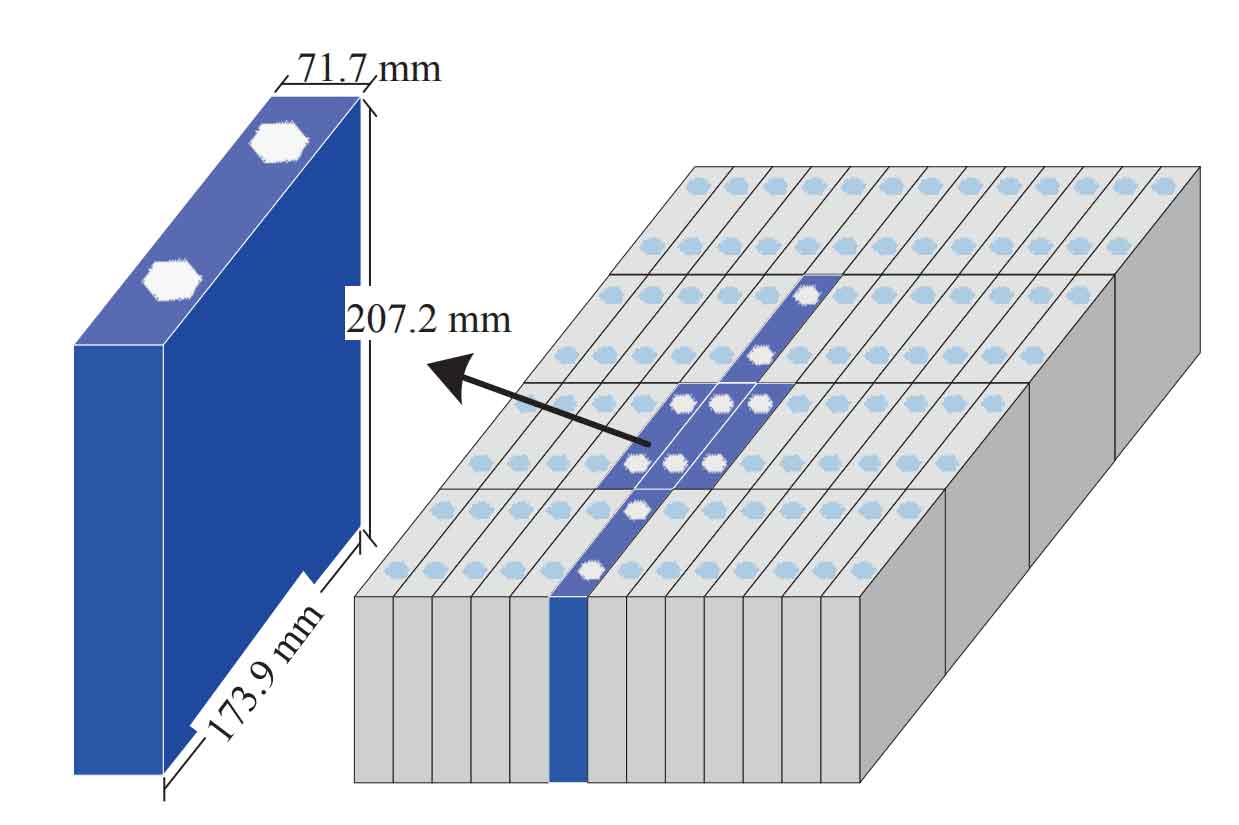
This propagation dynamic within a densely packed cell energy storage system leads to a fire with three critical, compounded characteristics:
| Characteristic | Description | Implication for Firefighting |
|---|---|---|
| Deep-Seated Fire | The internal chain reaction sustains high temperatures (often >800°C) without requiring external oxygen. | Traditional oxygen-depletion (smothering) extinguishing methods (e.g., CO2, inert gases) are largely ineffective. |
| High Re-ignition Risk | Residual heat within damaged cells can cause new thermal runaway events long after visible flames are suppressed. | Fire suppression must include prolonged cooling to prevent flare-ups. |
| Explosive Gas Risk | Accumulation of flammable vent gases within a semi-enclosed container can create an explosive atmosphere, leading to deflagration or even detonation. | Creates a secondary, violent hazard for responders and can compromise structural integrity of the cell energy storage system enclosure. |
The thermal kinetics can be described by an Arrhenius-type relationship for the self-heating rate:
$$ \frac{dT}{dt} = A \cdot e^{-\frac{E_a}{R T}} \cdot f(SOC, \text{Chemistry}) $$
where $ \frac{dT}{dt} $ is the self-heating rate, $ A $ is the pre-exponential factor, $ E_a $ is the activation energy, $ R $ is the universal gas constant, $ T $ is the absolute temperature, and $ f(SOC, \text{Chemistry}) $ is a function of the state of charge and cell chemistry. The heat transfer leading to propagation can be modeled as:
$$ Q_{\text{net, neighbor}} = Q_{\text{rad}} + Q_{\text{conv}} + Q_{\text{cond}} – Q_{\text{loss}} $$
where $ Q_{\text{net, neighbor}} $ must exceed the critical heat flux to initiate thermal runaway in the adjacent cell. The explosion risk is governed by the Lower Explosive Limit (LEL) of the gas mixture:
$$ \text{Explosion Hazard Exists if: } \sum_{i} \frac{C_i}{LEL_i} \geq 1 $$
where $ C_i $ is the concentration of flammable gas component $ i $.
Systemic Challenges for Fire Protection System Design
The aforementioned fire characteristics create fundamental mismatches with traditional fire safety engineering, presenting three core conflicts for protecting a cell energy storage system.
1. The Conflict Between Early Warning and Weak Signal-to-Noise
Early intervention is crucial but technologically difficult. Pre-thermal runaway signals are subtle:
- Gas Emissions: Early release of H2 and CO occurs at very low concentrations (ppm level), challenging the sensitivity and selectivity of standard gas sensors.
- Temperature: Internal cell temperature rises significantly before surface temperature, creating a detection lag. Surface measurements on a large cell energy storage system module may miss localized hot spots.
- Voltage/Impedance: Small voltage drops or impedance changes can indicate internal short circuits but are often masked by normal system operational noise.
- Acoustic Signals: Minor internal pressures or structural changes produce faint sounds drowned out by cooling fans and power conversion equipment.
This conflict necessitates multi-parameter, fusion-based detection algorithms rather than reliance on a single signal.
2. The Mismatch Between Extinguishing Agent Performance and Fire Persistence
No single agent perfectly addresses the triad of extinguishing, cooling, and inerting for a cell energy storage system fire. Each class of agent has significant trade-offs.
| Agent Class | Examples | Advantages | Disadvantages for Li-ion Fires |
|---|---|---|---|
| Gaseous Agents | Halon, HFC-227ea (FM-200), CO2, FKC (Novec 1230) | Clean, non-conductive, good spatial distribution. | Poor cooling capability (high re-ignition risk). CO2 can form corrosive acids. May not penetrate module interiors. |
| Dry Powder / Aerosols | ABC powder, K-Class powder, condensed aerosol | Rapid flame knockdown, some are non-conductive. | Very poor cooling. Causes severe contamination, damaging electronics. Obscures vision for responders. |
| Water-Based Agents | Water mist, fog, additives (wetting agents, salts) | Excellent cooling capacity (high heat of vaporization). Environmentally benign. Can absorb toxic fumes. | Conducts electricity (risk of short circuit on live systems). Requires large volumes/weight. May not effectively penetrate dense modules. |
| Emerging/ Hybrid | Two-phase fluids, gelled inhibitors, intumescent coatings | Potential for targeted application, combined cooling/inerting. | Immature technology, lack of large-scale validation and standards. |
The fundamental challenge is quantified by the cooling requirement. The energy needed to cool a single thermally runaway cell and its neighbors is substantial:
$$ Q_{\text{cool}} = m_{\text{batt}} \cdot c_{\text{batt}} \cdot \Delta T + m_{\text{agent}} \cdot \left( c_{\text{agent}} \cdot \Delta T_{\text{agent}} + L_v \right) $$
where $ Q_{\text{cool}} $ is the total cooling energy required, $ m_{\text{batt}} $ and $ c_{\text{batt}} $ are the mass and specific heat of the battery, $ \Delta T $ is the temperature reduction needed (e.g., from 400°C to 80°C), $ m_{\text{agent}} $ is the mass of suppression agent, and $ L_v $ is its latent heat of vaporization (for water). The required agent mass for water, for instance, can reach tonnage levels for a single large module.
3. The Lack of Integrated System Efficacy Validation
Current engineering practice often adopts a “component-based” approach, combining detectors, control panels, and suppression devices. However, the overall safety performance of a cell energy storage system depends on the integrated, time-synchronized response of the entire system—from first fault detection to final suppression and post-fire hold-time. Key gaps include:
- Compartment-Scale Testing: Full-scale fire tests simulating an entire container are prohibitively expensive and rare, leaving a void in validated design parameters for nozzle placement, agent concentration, and ventilation interaction.
- Scenario-Specific Validation: Most component tests are conducted under ideal conditions. Real-world scenarios involving partial state of charge, aged batteries, or different cabinet layouts are not standardized.
- Performance Metrics: Standards often prescribe “what” to install but lack rigorous, quantitative “how well” it must perform metrics for the integrated system, such as maximum temperature rise in adjacent modules, time to extinguish, or guaranteed hold time without re-ignition.
This leads to a disconnect between certified components and a certified, safe cell energy storage system.
Current Landscape of Fire Safety Standardization
The standardization framework for cell energy storage system fire safety is evolving rapidly but remains fragmented, involving multiple governmental and industry bodies with overlapping scopes.
National Standard System in Key Markets
In China, standardization is managed by several committees:
- Housing and Urban-Rural Development: Oversees plant design codes (e.g., GB 51048).
- Ministry of Industry and Information Technology (MIIT): Oversees battery cell and pack safety standards (e.g., GB 40165).
- SAC/TC 550 (Power Storage): Oversees system-level standards for the power industry (e.g., GB/T 42288, GB/T 44026).
- SAC/TC 113 (Fire Protection): Develops standards for fire detection and suppression (e.g., under-development standard on fire monitoring and alarm for electrochemical storage stations).
Key standards like GB/T 42288-2022 mandate automatic fire suppression within the battery compartment with the “smallest protection unit preferably being the battery module,” and require the agent to have good insulation and cooling performance. However, it references older design codes, creating a lag in technical specifics.
Local Standards as Pioneering Pilots
Provincial and municipal standards have emerged to address national gaps with more stringent and specific requirements, effectively acting as testbeds for future national code revisions. Examples include:
- Jiangsu Province (DB32/T 4682-2024): Explicitly requires fixed automatic suppression systems to be validated through module-level real-fire tests conducted by qualified institutions.
- Qinghai Province (DB63/T 2286-2024): Similarly mandates that system technical parameters be validated via module-level entity fire simulation tests.
- Beijing (DB11/T 1893-2021): Reclassified the fire hazard of lithium battery rooms from a lower to a higher risk category (“Class A/B”), triggering stricter building and ventilation requirements.
- Fujian & Shenzhen: Developed risk assessment specifications, focusing on evaluating the entire lifecycle safety management of the cell energy storage system.
International Standards and Guidelines
Internationally, standards are also under active development by bodies like IEC (TC 120, TC 21), UL (9540, 9540A), NFPA (855), and IEEE. UL 9540A, in particular, has become a critical test method for evaluating thermal runaway fire propagation within an energy storage system unit, informing installation permits in North America.
| Standardization Level | Focus Area | Example Requirements/Content |
|---|---|---|
| Cell & Pack | Essence Safety | No fire, no explosion under abuse conditions (crush, overcharge, thermal abuse). |
| Module / Rack | Propagation Inhibition | No thermal runaway propagation between cells/modules under test conditions (e.g., UL 9540A). |
| Cabin / Container | Detection & Suppression | Mandatory automatic systems, agent performance (cooling, insulation), detector types and placement. |
| Power Plant / Installation | Siting, Spacing, Emergency Response | Safety distances between units, access for firefighters, emergency response plans, ventilation. |
| Lifecycle Management | Risk Assessment & Maintenance | Regular inspection, testing, and maintenance of fire protection systems; decommissioning procedures. |
Proposed Pathways for Enhancing Standardization
To transition from generic provisions to actionable, scenario-based technical细则 (details), the standardization framework for cell energy storage system fire safety must evolve along three interconnected pathways.
Pathway 1: Accelerate the Codification of New Energy Fire Safety Technologies
Standards must rapidly integrate proven technological innovations. This requires:
- Developing Granular Test Models: Creating standardized test protocols that reflect real-world diversity—different lithium chemistries (LFP, NMC), system ages, ambient conditions, and failure triggers. Performance benchmarks should be set for each scenario.
- Standardizing Multi-Parameter Detection: Establishing performance criteria for detection systems that fuse gas, temperature, voltage, and acoustic signals. Standards should define response time thresholds for different warning levels (e.g., pre-alert, alarm, critical).
- Defining Agent Performance Metrics: Moving beyond generic descriptions. Standards should specify minimum required cooling capacity (J/kg of protected battery), maximum re-ignition hold time, and conductivity limits for agents used in live cell energy storage system environments.
Pathway 2: Build a Comprehensive, Tiered Fire Test Verification System
A hierarchical testing regime is essential to bridge the component-to-system gap.
- Component/Agent Level: Standard tests for extinguishing and cooling efficacy on single cells or small modules.
- Module/Unit Level (e.g., UL 9540A): Mandatory test to prove propagation can be halted within a single cabinet or unit. This should become a cornerstone certification for any cell energy storage system product.
- Integrated System Level: Develop more accessible, standardized medium-scale test methods that validate the coordinated performance of the entire fire protection system (detection, control, suppression, ventilation) for a representative segment of an installation.
- Performance-Based Validation: Standards should define key system-level performance indicators (KPIs), such as:
$$ \text{Maximum Adjacent Module Temperature} < T_{\text{safe}} $$
$$ \text{Time to Extinguish (from detection)} < t_{\text{max}} $$
$$ \text{System Availability (after event)} > A_{\text{min}} $$
These KPIs would form the basis for system certification.
Pathway 3: Implement a Full Lifecycle Safety Management Framework
Fire safety must be governed from cradle to grave.
- Design Phase: Mandate quantitative fire risk assessment (FRA) as part of the permitting process. The FRA should model thermal runaway propagation probability, gas dispersion, and explosion risks.
- Construction & Commissioning: Enforce rigorous acceptance testing of the installed fire protection system against design specifications and performance KPIs.
- Operation & Maintenance (O&M): Develop detailed O&M standards specifying inspection frequencies, functional testing procedures for detectors and suppression systems, and battery health monitoring thresholds (e.g., capacity divergence, impedance rise) linked to fire risk.
- Emergency Response & Decommissioning: Standardize emergency shutdown sequences, responder tactics for cell energy storage system fires, and safe procedures for handling damaged or end-of-life systems, which may retain latent energy and hazard.
| Lifecycle Phase | Standardization Focus | Key Output/Deliverable |
|---|---|---|
| Design & Approval | Risk-Informed Engineering | Certified Fire Risk Assessment (FRA) report; Performance-based design specification. |
| Manufacturing & Integration | Product Safety & System Integration | Unit-level fire propagation test certificate (e.g., UL 9540A report); Integrated control logic certification. |
| Installation & Commissioning | Validation of Installed Performance | Commissioning test report verifying detection thresholds, agent distribution, and system response times. |
| Operation & Maintenance | Continuous Safety Assurance | Standardized O&M manual; Digital log of system tests and battery health trends. |
| Incident & End-of-Life | Safe Management of Hazard | Standard operating procedures for emergency response; Decommissioning and recycling safety protocol. |
Conclusion
The secure and sustainable expansion of global electrochemical energy storage capacity is inextricably linked to solving its unique fire safety challenge. The complex, chain-reaction nature of lithium-ion battery fires within a cell energy storage system renders traditional firefighting approaches inadequate, demanding a fundamental rethinking of protection strategies. While significant progress has been made in standard development—from national codes to innovative local regulations—the ecosystem remains fragmented, often lagging behind technological reality and lacking rigorous, system-level performance validation.
The path forward requires a concerted, multi-stakeholder effort to evolve standards from prescriptive checklists into dynamic, performance-driven frameworks. This entails accelerating the adoption of advanced detection and suppression technologies into codified practice, establishing a robust hierarchy of testing to validate integrated system efficacy, and enforcing safety management throughout the entire lifecycle of the cell energy storage system. By prioritizing these standardization pathways, the industry can build the essential trust and technical foundation needed to support the safe, at-scale deployment of energy storage, thereby securing its critical role in the clean energy transition.