
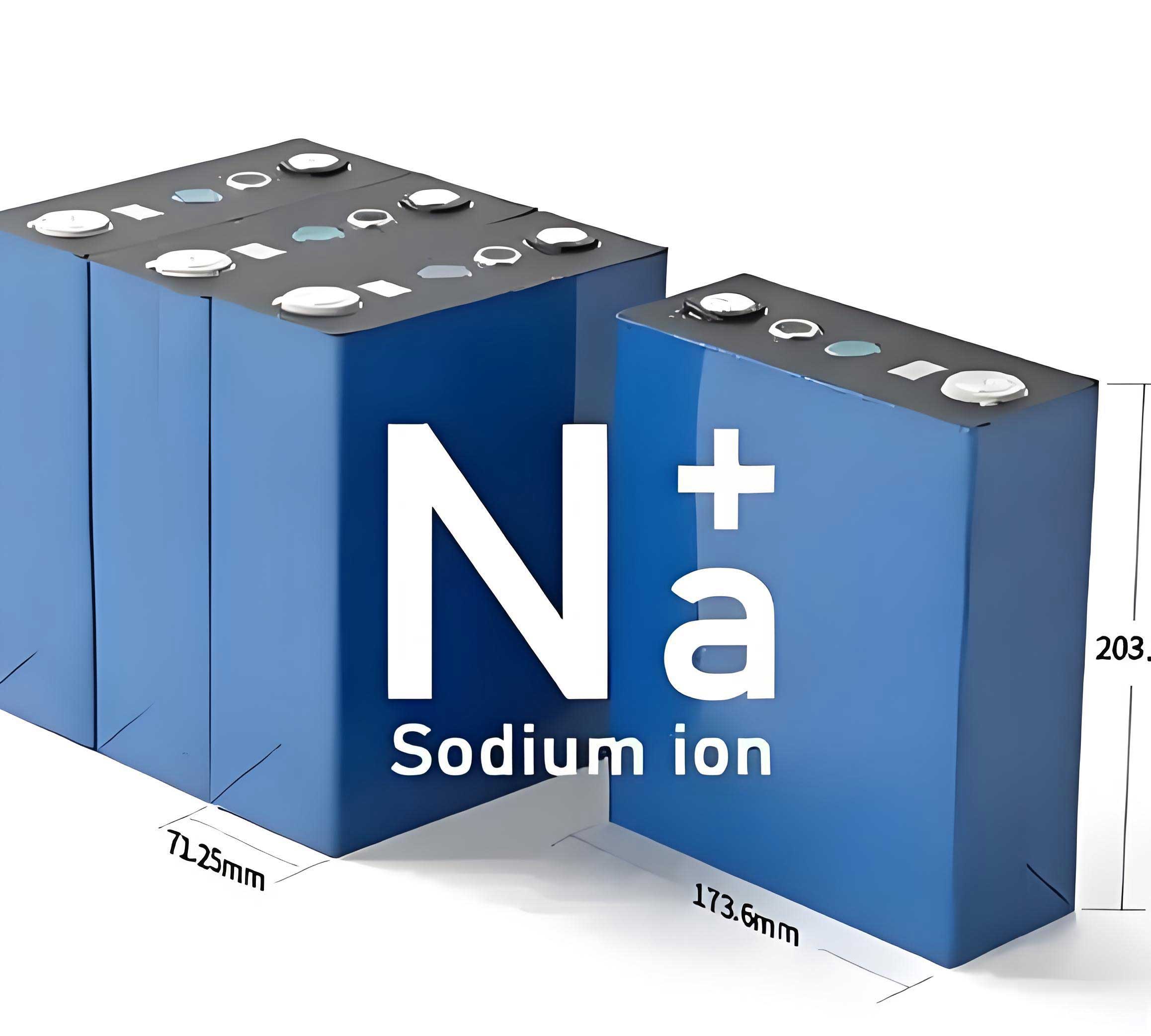
The quest for sustainable and cost-effective energy storage solutions has positioned the sodium-ion battery as a pivotal technology. Leveraging the natural abundance of sodium and its electrochemical similarities to lithium, the sodium-ion battery presents a compelling alternative for grid-scale storage and specific mobility applications. The performance of a sodium-ion battery is intrinsically linked to its electrode materials, with the cathode being a primary determinant of energy density, cycle life, and cost. Among various candidates, transition metal oxides (TMOs) of the general formula NaxMO2 (0 < x ≤ 1, M = transition metal) have emerged as a dominant class due to their high theoretical capacities and relatively straightforward synthesis. This article delves into the structural intricacies, electrochemical behaviors, and recent advancements in TMO cathodes for sodium-ion batteries, summarizing key strategies to overcome prevailing challenges.
1. Structural Classifications of Layered Oxides
The crystal structure of NaxMO2 is primarily dictated by the sodium content (x) and the stacking sequence of MO2 slabs composed of edge-sharing MO6 octahedra. For x > 0.5, layered structures are prevalent, classified mainly into O3, P3, O2, and P2 types. The letter denotes the alkali-ion site (O for octahedral, P for prismatic), and the number indicates the number of MO2 layers in the smallest stacking repeat unit.
The structural stability and Na+ diffusion kinetics are profoundly influenced by this classification. P2-type structures (e.g., Na0.67MO2) typically offer higher ionic conductivity due to larger interlayer spacing and favorable Na+ migration paths between adjacent prismatic sites. However, they often suffer from limited Na content. O3-type structures (e.g., NaMO2) possess higher initial sodium content, promising higher capacity, but usually exhibit more complex and detrimental phase transitions during (de)intercalation, leading to rapid capacity fade.
A critical issue in layered oxides for sodium-ion battery applications is the irreversible phase transition, particularly the P2-to-O2 transformation at high voltages, which involves a gliding of MO2 slabs and a reduction in interlayer spacing, hindering Na+ mobility and causing structural degradation. The general sequence for an O3 material upon desodiation can be summarized as:
$$ \text{O3} \rightarrow (\text{O3} + \text{O}′\text{3}) \rightarrow \text{P3} \rightarrow \text{P}′\text{3} \rightarrow (\text{P}′\text{3} + \text{P}3′) \rightarrow \text{P}3′ $$
where prime symbols indicate distortion of the hexagonal lattice.
2. Monometallic Oxide Systems
Fundamental studies on single-metal oxides provide essential insights into the role of each transition metal, forming the basis for designing complex systems.
2.1 Manganese-Based Oxides
NaxMnO2 is highly attractive due to manganese’s low cost and eco-friendliness. Its electrochemistry is heavily influenced by the Jahn-Teller distortion associated with Mn3+ (t2g3eg1), which induces structural strain and instability. O’3-type α-NaMnO2 delivers a high initial capacity (~185 mAh/g) but suffers from rapid decay due to multi-step phase transitions. P2-type Na0.7MnO2 shows improved performance but still undergoes structural contraction upon cycling.
Tunnel-type oxides like orthorhombic Na0.44MnO2 (or Na4Mn9O18), with interconnected S-shaped and pentagonal tunnels, offer exceptional structural robustness. Their open framework allows for highly reversible (de)sodiation with minimal strain, leading to outstanding cyclability. However, the low sodium content limits the practical capacity, often below 130 mAh/g. The tunnel structure can be represented by its characteristic unit cell, where Na ions occupy specific sites within the robust Mn-O framework.
2.2 Iron-Based Oxides
O3-type α-NaFeO2, isostructural with LiCoO2, operates on the Fe3+/Fe4+ redox couple. Its main limitation is irreversible structural changes when charged beyond ~3.5 V vs. Na/Na+, where over-extraction of Na+ leads to Fe migration and phase decomposition. Consequently, its usable capacity is restricted. Doping with elements like Mn or Ni is crucial to stabilize the structure and improve performance for use in a practical sodium-ion battery.
2.3 Nickel-Based Oxides
O’3-NaNiO2 exhibits high redox potentials from Ni3+/Ni4+ but is plagued by Jahn-Teller active Ni3+ and a complex cascade of phase transitions during cycling, as revealed by in situ XRD. Substitution of Ni with Mn or Ti is a common strategy to suppress distortion and improve cycling stability in nickel-based cathodes for sodium-ion batteries.
3. Binary Metal Oxide Systems
Combining two transition metals allows for synergy, balancing capacity, voltage, stability, and cost. Key systems are summarized in the table below.
| System | Example Composition | Key Features & Challenges | Typical Capacity |
|---|---|---|---|
| Mn/Ni-based | P2-Na2/3Ni1/3Mn2/3O2 | High capacity, high voltage (Ni redox). Suffers from P2-O2 phase transition at high voltage (>4.2V). | ~160-190 mAh/g |
| Mn/Co-based | P2-Na2/3Mn0.9Co0.1O2 | Co doping suppresses Jahn-Teller distortion and Na+/vacancy ordering, enhancing stability. | ~140-160 mAh/g |
| Mn/Fe-based | P2-Na2/3Fe1/2Mn1/2O2 | Cost-effective, high capacity. Issues include voltage hysteresis, Fe migration, and Mn dissolution. | ~190 mAh/g |
| Cu/Fe-based | P2-Na7/9Cu2/9Fe1/9Mn2/3O2 | Excellent air stability, suppressed phase transitions. Utilizes Cu2+/Cu3+ high-voltage redox. | ~100-120 mAh/g |
| Li/Mn-based | P2-Na0.72[Li0.24Mn0.76]O2 | Triggers reversible anionic (O2-/On–) redox, enabling ultra-high capacity. | ~270 mAh/g |
The capacity of a layered oxide can be approximated by:
$$ Q = \frac{xF}{3.6 M} $$
where \( Q \) is the specific capacity in mAh/g, \( x \) is the number of exchanged Na+ ions per formula unit, \( F \) is Faraday’s constant (96485 C/mol), and \( M \) is the molar mass of the charged compound in g/mol.
4. Ternary and Polynary Metal Oxide Systems
Incorporating a third or more metal ions enables fine-tuning of structural and electrochemical properties. The primary goals are to pin the MO2 slabs, suppress phase transitions, and optimize the redox activity.
4.1 Cation Doping for Structural Stabilization
Electrochemically inert “pillar” ions like Mg2+, Li+, Zn2+, and Al3+ are strategically doped into the transition metal layer. For instance, Mg doping in P2-Na0.67Mn0.65Ni0.2Co0.15-xMgxO2 stabilizes the P2 structure even at 4.3 V. The stabilizing effect can be understood through the collective suppression of slab gliding and the mitigation of abrupt lattice parameter changes. The change in the lattice parameter \(c\) during cycling is a critical indicator of stability; minimal variation suggests a solid-solution reaction mechanism.
4.2 Anionic Redox Activity
Doping with Li+ is particularly effective in activating reversible oxygen redox (O2- → On-, n<2). This process provides extra capacity beyond the transition metal redox limit. In compounds like P2-Na0.72[Li0.24Mn0.76]O2, oxygen orbitals participate in the redox process, which can be described by changes in the density of states near the Fermi level. However, uncontrolled anionic redox can lead to oxygen loss, surface degradation, and voltage hysteresis. Co-doping with redox-inactive ions like Ti4+ (e.g., P2-Na0.66Li0.22Ti0.15Mn0.63O2) helps stabilize the oxygen lattice and suppress irreversible oxygen evolution, making it a key strategy for high-energy sodium-ion battery cathodes.
4.3 Compositionally Graded and High-Entropy Oxides
Advanced synthesis techniques enable the creation of particles with radially graded composition (e.g., Na[Ni0.61Co0.12Mn0.27O2]), where the Ni-rich core ensures high capacity and the Mn-rich surface improves stability against electrolyte corrosion. This design minimizes deleterious surface reactions while maintaining high energy density.
High-entropy oxides (HEOs) represent a novel paradigm. These materials incorporate five or more principal metal cations in near-equimolar ratios into a single crystal structure (e.g., O3-NaNi0.12Cu0.12Mg0.12Fe0.15Co0.15Mn0.1Ti0.1Sn0.1Sb0.04O2). The high configurational entropy stabilizes the crystal structure, often leading to exceptional cycling stability and rate capability due to reduced phase segregation and enhanced cation disorder that may lower diffusion barriers.
5. Performance Enhancement Strategies: Beyond Bulk Doping
Optimizing the bulk structure is necessary but not sufficient. Interface engineering and morphology control are equally critical for developing a high-performance sodium-ion battery cathode.
| Strategy | Method | Purpose & Mechanism | Outcome |
|---|---|---|---|
| Surface Coating | Applying thin layers of carbon, Al2O3, polyimide, or carbonized polydopamine (C-PDA). | Shields active material from electrolyte side reactions; suppresses surface degradation and transition metal dissolution (especially Mn); facilitates stable cathode-electrolyte interphase (CEI) formation. | Enhanced cycle life, improved rate capability, better high-voltage stability. |
| Morphology Design | Synthesizing nanoflowers, hierarchical nanofibers, porous nanoplates, or microspheres composed of aligned nanorods. | Shortens Na+ diffusion pathlengths; increases contact area with electrolyte; accommodates volume strain more effectively; improves particle mechanical integrity. | Superior rate performance, higher tap density, longer cycling stability. |
| Air Stability Improvement | Cu/Ti co-doping; creating hydrophobic surface coatings. | Prevents spontaneous Na+/H+ exchange and formation of surface Na2CO3/NaOH when exposed to ambient moisture and CO2. | Easier material handling and storage, reduced pre-treatment cost, more consistent electrochemical performance. |
The Na+ chemical diffusion coefficient (\(D_{Na}\)) is a key parameter influenced by morphology and structure, often measured by Galvanostatic Intermittent Titration Technique (GITT) and calculated using:
$$ D_{Na} = \frac{4}{\pi} \left( \frac{V_m}{zFA} \right)^2 \left( \frac{\Delta E_s}{\tau (dE_\tau/d\sqrt{\tau})} \right)^2 $$
where \(V_m\) is molar volume, \(A\) is electrode area, \(\Delta E_s\) is steady-state voltage change, and \(\tau\) is pulse duration. Nanostructuring and pillar-ion doping are proven to increase \(D_{Na}\).
6. Summary and Future Perspectives
The development of transition metal oxide cathodes for sodium-ion batteries has progressed remarkably from simple monometallic compounds to sophisticated multi-element, structurally engineered materials. The core challenges of irreversible phase transitions, moderate capacity, surface instability, and reliance on costly Co/Ni are being systematically addressed. Key solutions include strategic cation doping to act as structural pillars and suppress phase changes, leveraging anionic redox for extra capacity, designing protective surface layers, and exploring novel material classes like high-entropy oxides. Morphological control and interface engineering are indispensable for realizing the full potential of these materials.
Looking forward, research must bridge the gap between half-cell studies (vs. Na metal) and practical full-cell configurations with hard carbon or alloy anodes. A holistic design approach, coupling high-performance TMO cathodes with compatible electrolytes and stable anodes, is essential to achieve the long cycle life, high safety, and competitive cost required for the large-scale commercialization of sodium-ion battery technology. Deeper fundamental understanding of anionic redox mechanisms, cation migration pathways, and degradation processes at interfaces will continue to guide the rational design of next-generation cathode materials.