
Accurate State of Charge (SOC) estimation remains critical for ensuring operational safety & efficiency in energy storage battery clusters. This paper presents a Cell Memory and Cluster Feature Fusion Network (CMCF) addressing multi-cell SOC estimation challenges through dual-perspective inputs and adaptive feature learning.
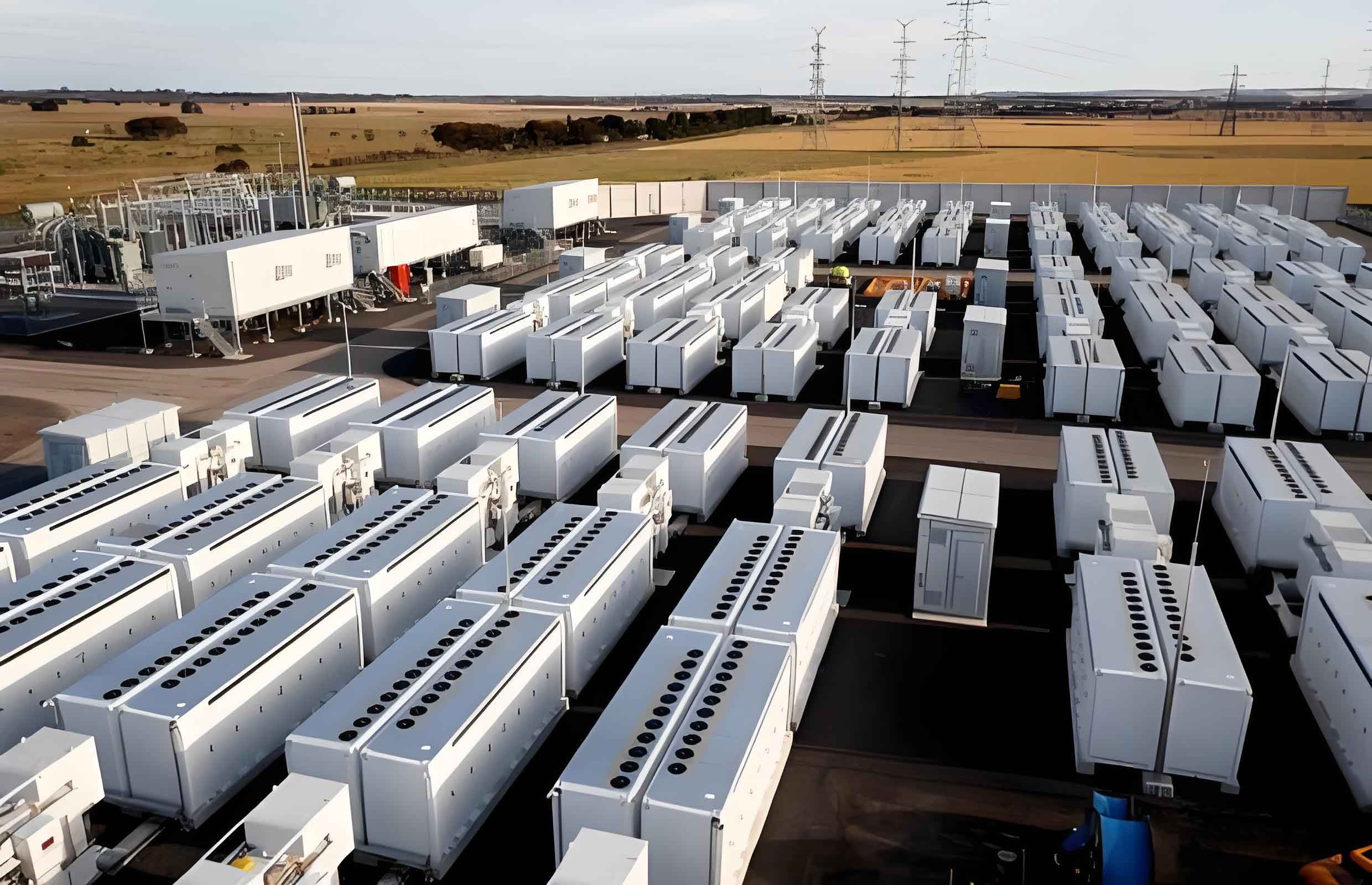
1. Technical Framework
The CMCF architecture integrates three core components:
$$ \text{CMCF}(X) = \Psi(\Gamma(\Phi_c(X_c) \oplus \Phi_g(X_g) \oplus M(\Phi_c(X_c))) $$
Where:
– $\Phi_c$: Cell-shared encoder
– $\Phi_g$: Cluster encoder
– $M$: Memory module
– $\Gamma$: Feature fusion operator
– $\Psi$: SOC estimator
2. Feature Engineering
Dual-input structure combines cell-level measurements and cluster statistics:
| Feature Type | Dimensions | Components |
|---|---|---|
| Cell Features | 3×32 | Voltage, Temperature, Current |
| Cluster Features | 11×32 | Statistical moments, Peak values |
Cluster feature extraction formulas:
$$ \mu_v = \frac{1}{N}\sum_{i=1}^N v_i $$
$$ \sigma_v^2 = \frac{1}{N}\sum_{i=1}^N (v_i – \mu_v)^2 $$
$$ \gamma_v = \frac{1}{N\sigma_v^3}\sum_{i=1}^N (v_i – \mu_v)^3 $$
3. Memory-Augmented Learning
The memory module stores $M$ prototype patterns through:
$$ w_{k,m} = \frac{\exp(p_m^T q_k)}{\sum_{m’=1}^M \exp(p_{m’}^T q_k)} $$
$$ p’_k = \sum_{m=1}^M w_{k,m}p_m $$
Update mechanism maintains dynamic pattern representation:
$$ p_m^{(t+1)} = \text{L2Norm}(p_m^{(t)} + \eta \sum_{k \in U_m} v’_{k,m}q_k) $$
4. Multi-Scale Feature Fusion
Cluster attention mechanism:
$$ A = \text{softmax}\left(\frac{QK^T}{\sqrt{d_k}}\right)V $$
$$ Q = W_q z_g, K = W_k z_m, V = W_v z_c $$
| Module | Layers | Parameters |
|---|---|---|
| Cell Encoder | 3 residual MLP | 96 hidden units |
| Cluster Encoder | 2 residual MLP | 96→32 mapping |
| Memory Bank | 3 prototypes | 32D each |
5. Experimental Validation
Performance metrics on 224-cell LFP battery cluster:
$$ \epsilon_{\text{MSE}} = 1.52 \times 10^{-4} $$
$$ \epsilon_{\text{MAPE}} = 1.72\% $$
$$ \epsilon_{\text{MAX}} = 3.70 \times 10^{-3} $$
| Method | MSE | Improvement |
|---|---|---|
| SVR | 6.61e-3 | 76.9%↓ |
| MLP | 1.10e-3 | 71.3%↓ |
| LSTM | 5.31e-4 | 71.4%↓ |
6. Thermal-Electrochemical Coupling
Extended model for thermal management integration:
$$ \frac{\partial T}{\partial t} = \alpha \nabla^2 T + \frac{I^2R}{C_p} $$
$$ R = R_0 + k_{\text{deg}}(1 – SOC) $$
This energy storage battery-oriented framework demonstrates superior performance in large-scale cluster management through its hybrid architecture combining physical insights with deep learning advancements.