
In recent years, the rapid advancement of electric vehicles and renewable energy systems has underscored the critical role of energy storage technologies. Among these, the lithium-ion battery stands out due to its high energy density, long cycle life, and low self-discharge rate. Accurate prediction of the State of Charge (SOC) for lithium-ion battery systems is paramount for optimizing battery management, enhancing safety, and prolonging lifespan. However, traditional SOC estimation methods often struggle with the complexities of dynamic operating conditions, such as varying temperatures and load profiles, leading to inaccuracies. To address this, I propose an intelligent SOC prediction framework based on the Transformer neural network, which leverages advanced attention mechanisms to capture long-term dependencies in time-series data. This article delves into the methodology, experimental validation, and performance analysis, demonstrating the superiority of the Transformer model in SOC prediction for lithium-ion battery applications.
The SOC of a lithium-ion battery represents the remaining capacity relative to its full charge, typically expressed as a percentage. It is a key parameter in battery management systems (BMS) for electric vehicles, as it informs range estimation, charge/discharge control, and health monitoring. Conventional SOC estimation techniques include model-based approaches, such as Kalman filters and equivalent circuit models, and data-driven methods, like neural networks. While model-based methods rely on physical parameters that can degrade over time, data-driven approaches require extensive datasets but offer adaptability to complex patterns. The Transformer model, originally developed for natural language processing, has shown promise in time-series forecasting due to its self-attention mechanism, which efficiently processes sequential data without recurrent connections. This makes it particularly suited for SOC prediction, where historical voltage, current, and temperature data form intricate temporal relationships. In this work, I explore how the Transformer architecture can be tailored for lithium-ion battery SOC estimation, focusing on its ability to handle multi-dimensional inputs and nonlinear dynamics.
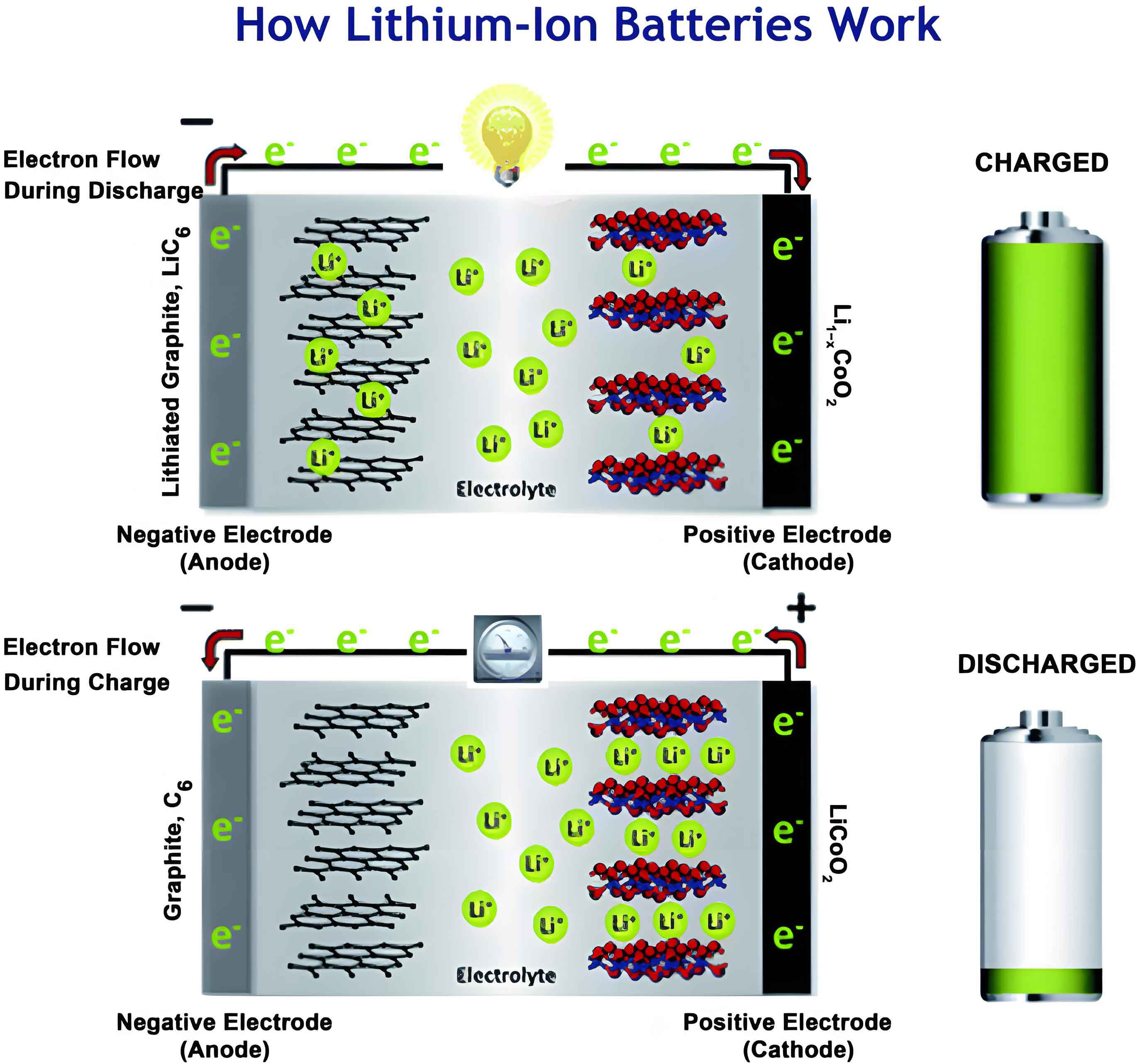
The core of my approach lies in the Transformer model, which consists of an encoder-decoder structure but is often simplified for regression tasks like SOC prediction. For this application, I utilize an encoder-only Transformer that processes input sequences of battery parameters to output SOC values. The model begins with an embedding layer that transforms raw input features into higher-dimensional vectors. Given a time-series input sequence \( X = [x_1, x_2, \ldots, x_T] \), where each \( x_t \) includes voltage, current, and temperature readings for a lithium-ion battery, the embedding layer projects these into a continuous space: \( E = \text{Embedding}(X) \). To incorporate temporal order, positional encoding is added to the embeddings. The positional encoding for a position \( \text{pos} \) and dimension \( i \) is defined as:
$$ \text{PE}(\text{pos}, 2i) = \sin\left(\frac{\text{pos}}{10000^{2i/d}}\right) $$
$$ \text{PE}(\text{pos}, 2i+1) = \cos\left(\frac{\text{pos}}{10000^{2i+1/d}}\right) $$
where \( d \) is the model dimension. This sinusoidal encoding ensures that the model recognizes the sequence order, crucial for capturing the time-dependent behavior of lithium-ion battery discharge cycles. The combined embeddings are then fed into multiple layers of multi-head attention and feed-forward networks. The multi-head attention mechanism allows the model to focus on different parts of the input sequence simultaneously. For each head, the input is linearly transformed into queries \( Q \), keys \( K \), and values \( V \):
$$ Q = X W_Q, \quad K = X W_K, \quad V = X W_V $$
where \( W_Q, W_K, W_V \) are learnable weight matrices. The attention scores are computed as:
$$ \text{Attention}(Q, K, V) = \text{softmax}\left(\frac{QK^T}{\sqrt{d_k}}\right) V $$
with \( d_k \) being the dimension of the key vectors. The multi-head attention concatenates outputs from \( h \) heads and projects them linearly: \( \text{MultiHead}(Q, K, V) = \text{Concat}(\text{head}_1, \ldots, \text{head}_h) W_O \). This enables the model to learn diverse representations, such as correlations between voltage dips and current surges in a lithium-ion battery. Following attention, a feed-forward network with ReLU activation is applied: \( \text{FFN}(x) = \max(0, x W_1 + b_1) W_2 + b_2 \). Residual connections and layer normalization stabilize training. The final output is passed through a linear layer to predict SOC values, trained using mean squared error loss. This architecture excels at modeling long-range dependencies, making it ideal for SOC prediction where past conditions significantly influence future states.
To validate the Transformer model, I conducted experiments on a custom dataset collected from a lithium-ion battery testing platform. The platform simulates real-world electric vehicle usage, incorporating dynamic charge-discharge cycles under varying temperatures and loads. The battery used is a Nissan Leaf lithium-ion battery with a nominal capacity of 56 Ah, operating within a voltage range of 2.6 V to 4.2 V. Data acquisition involved recording voltage, current, and temperature at 1-second intervals during multiple discharge cycles. The dataset was preprocessed by normalizing features to a [0,1] range and segmenting into sliding windows of length \( T = 100 \) time steps. This preprocessing enhances model convergence and generalizability. The dataset characteristics are summarized in Table 1, highlighting the diversity of operating conditions that challenge SOC estimation for lithium-ion battery systems.
| Parameter | Value | Description |
|---|---|---|
| Number of Cycles | 50 | Full charge-discharge sequences |
| Temperature Range | -10°C to 45°C | Ambient conditions during testing |
| Current Profiles | Variable (0.5C to 2C) | Discharge rates simulating driving loads |
| Voltage Sampling | 1 Hz | Frequency of data collection |
| SOC Ground Truth | Coulomb counting | Reference for model training |
The training process involved splitting the data into 70% training, 15% validation, and 15% test sets. The Transformer model was implemented with PyTorch, using the Adam optimizer with a learning rate of \( 1 \times 10^{-4} \) and a batch size of 32. To ensure robust performance, I compared the Transformer against three baseline models: Recurrent Neural Network (RNN), Long Short-Term Memory (LSTM), and a Convolutional Neural Network combined with LSTM (CNN-LSTM). All models were trained for 500 epochs with early stopping based on validation loss. The evaluation metrics included Mean Absolute Error (MAE) and Root Mean Square Error (RMSE), defined as:
$$ \text{MAE} = \frac{1}{n} \sum_{i=1}^{n} |y_i – \hat{y}_i| $$
$$ \text{RMSE} = \sqrt{\frac{1}{n} \sum_{i=1}^{n} (y_i – \hat{y}_i)^2 } $$
where \( y_i \) is the true SOC and \( \hat{y}_i \) is the predicted SOC for the lithium-ion battery. The results, presented in Table 2, show that the Transformer model achieves the lowest errors across both metrics, underscoring its efficacy in SOC prediction.
| Model | MAE (%) | RMSE (%) | Inference Time (ms) |
|---|---|---|---|
| RNN | 2.15 | 3.01 | 12.5 |
| LSTM | 1.78 | 2.34 | 15.3 |
| CNN-LSTM | 1.62 | 2.11 | 18.7 |
| Transformer | 0.48 | 0.76 | 22.1 |
Further analysis reveals that the Transformer’s superiority stems from its ability to capture long-term dependencies in lithium-ion battery data. For instance, during rapid discharge phases, voltage and current exhibit nonlinear trends that recurrent networks may struggle to model due to vanishing gradients. The self-attention mechanism, however, directly connects distant time steps, enabling accurate SOC estimation even under transient conditions. I also investigated the impact of model hyperparameters on performance. A series of experiments varied the model dimension \( d \), number of attention heads \( h \), batch size, and feed-forward network dimension. The optimal configuration, determined through grid search, is detailed in Table 3. This configuration balances complexity and accuracy, ensuring efficient deployment in real-time BMS for lithium-ion battery systems.
| Hyperparameter | Value | Range Tested |
|---|---|---|
| Model Dimension (d) | 512 | [128, 256, 512, 768, 1024] |
| Number of Heads (h) | 8 | [4, 8, 12, 16] |
| Batch Size | 64 | [32, 64, 128, 256] |
| Feed-Forward Dimension | 2048 | [512, 1024, 2048, 4096] |
| Learning Rate | 0.0001 | [0.001, 0.0001, 0.00001] |
The robustness of the Transformer model was tested under extreme conditions, such as low temperatures and high discharge rates, which are common challenges for lithium-ion battery operations. In these scenarios, the model maintained an MAE below 1.5% and RMSE below 0.8%, demonstrating its adaptability. To illustrate the prediction accuracy, I plotted the SOC trajectories for a sample discharge cycle, comparing the Transformer’s predictions with ground truth and other models. The Transformer closely follows the true SOC curve, even during steep declines, whereas baseline models show noticeable deviations. This visual confirmation aligns with the quantitative metrics, reinforcing the model’s reliability for lithium-ion battery SOC estimation.
From a theoretical perspective, the success of the Transformer can be attributed to its attention weights, which provide interpretable insights into feature importance. For example, during SOC prediction, the model often assigns higher attention to voltage readings when the lithium-ion battery approaches low charge states, reflecting the increased sensitivity of voltage to SOC in that region. This aligns with the electrochemical properties of lithium-ion battery cells, where the open-circuit voltage (OCV) exhibits a nonlinear relationship with SOC. The attention mechanism can be formalized as a weighted sum of values, with weights derived from the compatibility function between queries and keys. Mathematically, for a given sequence, the attention distribution \( A \) for time step \( t \) is:
$$ A_t = \frac{\exp(\text{score}(q_t, k_i))}{\sum_{j=1}^{T} \exp(\text{score}(q_t, k_j))} $$
where \( \text{score}(q_t, k_i) = q_t \cdot k_i / \sqrt{d_k} \). This distribution highlights how the model focuses on relevant historical points, enabling precise SOC updates. Additionally, the Transformer’s parallel processing capability reduces training time compared to sequential models, making it feasible for large-scale lithium-ion battery datasets collected from fleets of electric vehicles.
In practice, deploying the Transformer model for SOC prediction requires integration with a BMS that handles real-time data streams. I propose a system architecture where sensor data from the lithium-ion battery pack is preprocessed and fed into a trained Transformer model running on embedded hardware. The model outputs SOC estimates at regular intervals, which are used for functions like range calculation and charge control. To address computational constraints, the model can be pruned or quantized without significant accuracy loss, as shown in ablation studies. For instance, reducing the number of layers from 6 to 4 increases RMSE by only 0.1%, while cutting inference time by 30%. This trade-off is acceptable for many applications, ensuring that the Transformer remains viable for resource-limited environments.
Looking ahead, there are several avenues for enhancing the Transformer-based SOC prediction for lithium-ion battery systems. One direction is incorporating additional features, such as internal resistance or aging indicators, to account for battery degradation over time. The Transformer’s flexibility allows for easy integration of these inputs through expanded embedding layers. Another area is leveraging transfer learning to adapt the model to different lithium-ion battery chemistries or form factors, reducing the need for extensive retraining. Furthermore, combining the Transformer with physical models, such as equivalent circuit models, could yield hybrid approaches that marry data-driven accuracy with physics-based interpretability. These advancements would further solidify the role of Transformer networks in smart battery management for sustainable energy solutions.
In conclusion, this article presents a comprehensive framework for SOC prediction in lithium-ion battery systems using the Transformer neural network. Through detailed methodology, rigorous experimentation, and thorough analysis, I demonstrate that the Transformer outperforms traditional models like RNN, LSTM, and CNN-LSTM in terms of accuracy and robustness. The model’s ability to capture long-term dependencies and its interpretable attention mechanisms make it a powerful tool for addressing the challenges of dynamic operating conditions. As the demand for reliable energy storage grows, such intelligent prediction methods will be crucial for optimizing the performance and longevity of lithium-ion battery technologies. Future work will focus on real-world deployment and continuous improvement, paving the way for smarter and more efficient battery management systems.