
Perovskite solar cells have emerged as a promising photovoltaic technology due to their high power conversion efficiencies, low-cost fabrication, and tunable optoelectronic properties. The performance of these devices heavily relies on the hole transport materials (HTMs), which facilitate the extraction and transport of photogenerated holes from the perovskite layer to the electrode. Among various HTMs, spiro-type small molecules, characterized by their orthogonal molecular conformation, have gained significant attention for their excellent film-forming ability, high glass transition temperatures, and uniform charge transport characteristics. In this article, I will discuss the recent advancements in spiro-type HTMs, focusing on molecular design strategies such as terminal group optimization and core structure modulation. I will also explore how these modifications influence the photophysical, electrochemical, and thermal properties of the materials, ultimately affecting the performance and stability of perovskite solar cells.
The unique structure of spiro-type molecules, exemplified by Spiro-OMeTAD, enables isotropic charge transport and prevents crystallization, leading to stable amorphous films. However, the inherent limitations of Spiro-OMeTAD, such as low hole mobility and reliance on hygroscopic dopants, have prompted researchers to develop novel spiro-based HTMs. Through systematic molecular engineering, it is possible to enhance key parameters like HOMO energy levels, hole mobility, and thermal stability, thereby improving the overall efficiency of perovskite solar cells. In the following sections, I will delve into specific design approaches and their impact on device performance, supported by tables and theoretical formulations.
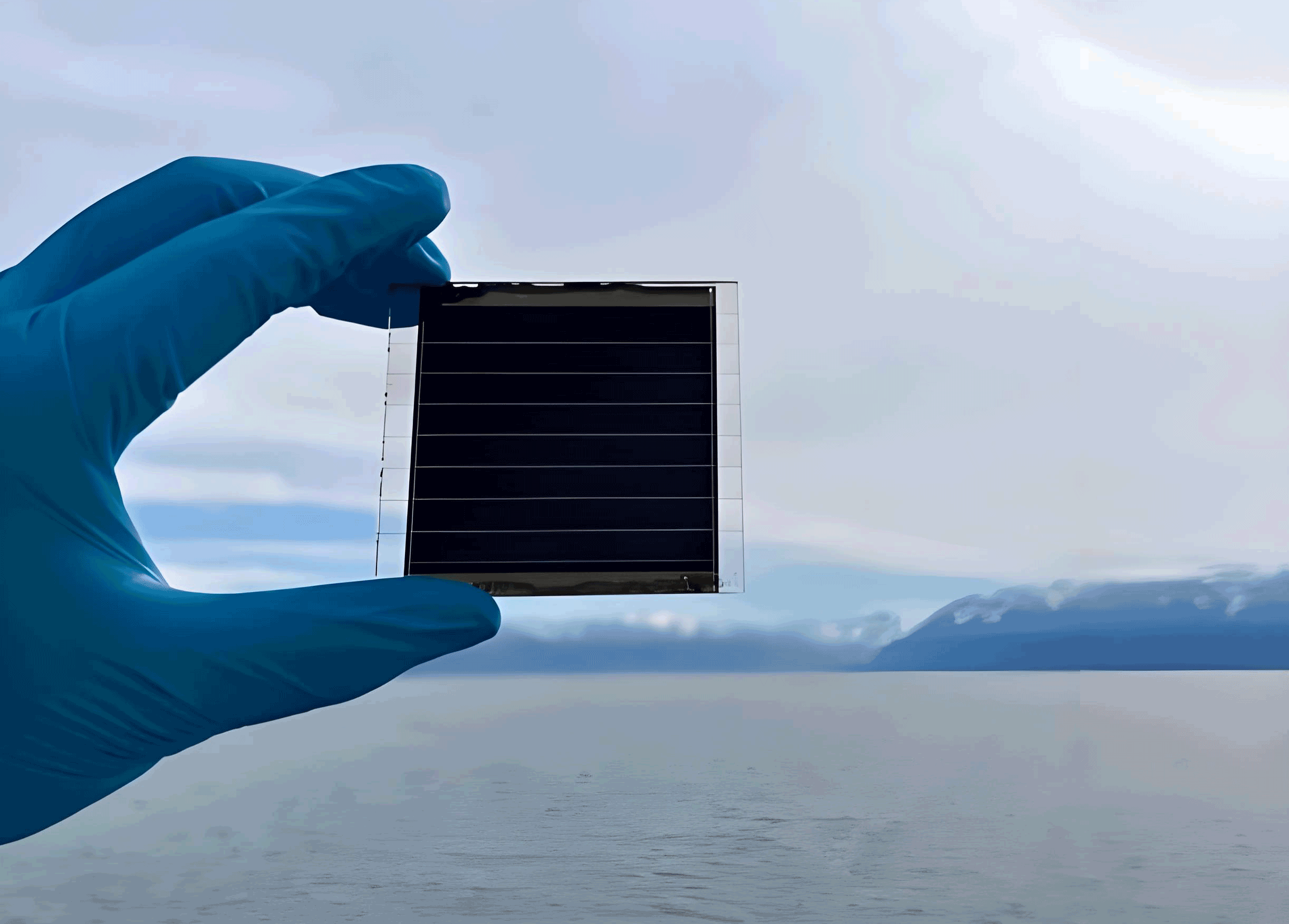
The fundamental operation of a perovskite solar cell involves the generation of electron-hole pairs in the perovskite layer upon light absorption. The HTM must efficiently extract holes from the perovskite and transport them to the counter electrode while blocking electrons to minimize recombination. The energy level alignment between the HTM’s HOMO and the perovskite’s valence band is critical for minimizing voltage losses. The ideal HTM should have a HOMO level slightly higher than the perovskite’s valence band to ensure ohmic contact. The hole mobility ($\mu_h$) of the HTM determines the rate of hole transport and is often described by the formula:
$$ \mu_h = \frac{J}{q \cdot n \cdot E} $$
where $J$ is the current density, $q$ is the electron charge, $n$ is the charge carrier density, and $E$ is the electric field. Enhancing $\mu_h$ is essential for reducing series resistance and improving fill factor in perovskite solar cells.
In spiro-type HTMs, the orthogonal structure reduces intermolecular interactions, which can limit charge transport. To address this, researchers have employed various strategies, including the introduction of electron-donating or withdrawing groups, extension of π-conjugation, and incorporation of heteroatoms. These modifications not only adjust the HOMO and LUMO levels but also influence the molecular packing and film morphology. For instance, the HOMO energy can be estimated using electrochemical methods and related to the oxidation potential ($E_{ox}$) by:
$$ \text{HOMO} = – (E_{ox} + 4.8) \, \text{eV} $$
where $E_{ox}$ is measured versus a reference electrode. This relationship helps in designing HTMs with optimal energy levels for specific perovskite compositions.
Another important parameter is the glass transition temperature ($T_g$), which indicates the thermal stability of the HTM. A higher $T_g$ prevents molecular reorganization and crystallization at elevated temperatures, ensuring long-term device stability. The $T_g$ can be enhanced by introducing bulky substituents or asymmetric structures that increase molecular rigidity. In the context of perovskite solar cells, thermal stability is crucial for operational longevity, especially under continuous illumination and heating.
To quantitatively compare the performance of various spiro-type HTMs, I have compiled key parameters in the following tables. These include HOMO levels, hole mobilities, and photovoltaic parameters such as open-circuit voltage ($V_{oc}$), short-circuit current density ($J_{sc}$), fill factor (FF), and power conversion efficiency (PCE). The data highlight the impact of molecular design on device performance and provide insights for future optimization.
| HTM | Perovskite Composition | HOMO (eV) | $\mu_h$ (×10$^{-4}$ cm²·V$^{-1}$·s$^{-1}$) | $V_{oc}$ (V) | $J_{sc}$ (mA·cm$^{-2}$) | FF (%) | PCE (%) |
|---|---|---|---|---|---|---|---|
| po-spiro-OMeTAD | MAPbI$_3$ | -5.22 | N/A | 1.02 | 21.2 | 77.6 | 16.7 |
| spiro-cyclOMe | Cs$_{0.05}$FA$_{0.95}$PbI$_3$ | -5.09 | 22.5 | 1.18 | 24.86 | 79 | 23.10 |
| spiro-S | MAPbI$_3$ | -4.92 | 0.126 | 1.06 | 19.15 | 78 | 15.92 |
| SF48 | Cs$_{0.05}$(FA$_{0.85}$MA$_{0.15}$)$_{0.95}$Pb(I$_{0.89}$Br$_{0.11}$)$_3$ | -4.83 | 0.17 | 1.09 | 22.6 | 76 | 18.7 |
| spiro-mF | FAPbI$_3$ | -5.19 | 74.7 | 1.16 | 26.35 | 80.9 | 24.82 |
| DP | Cs$_{0.05}$MA$_{0.05}$FA$_{0.9}$PbI$_3$ | -5.18 | 51.9 | 1.138 | 26.13 | 84.9 | 25.24 |
The table above demonstrates that terminal group modifications can significantly alter the HOMO levels and hole mobilities of spiro-type HTMs. For example, the introduction of electron-withdrawing groups like fluorine in spiro-mF lowers the HOMO level, leading to a higher $V_{oc}$. Similarly, extending the π-conjugation with biphenyl groups in DP enhances hole mobility and overall PCE. These findings underscore the importance of molecular tailoring in optimizing HTM performance for perovskite solar cells.
In addition to terminal groups, the core structure of spiro-type molecules plays a pivotal role in determining their properties. Replacing the conventional spirobifluorene core with alternative螺环 structures can reduce synthesis costs and improve material characteristics. One prominent example is the spiro[fluorene-9,9′-xanthene] (SFX) core, which offers a simpler synthesis route and comparable performance. The general synthesis of SFX-based HTMs involves a one-pot Buchwald-Hartwig coupling reaction, which is more efficient and cost-effective than the multi-step synthesis of Spiro-OMeTAD.
The molecular design of SFX-based HTMs often involves attaching various aryl amine groups to the core to tune the HOMO levels and hole transport properties. The hole mobility in these materials can be described by the Gaussian disorder model, where the mobility depends on the energetic disorder ($\sigma$) and the positional disorder ($\Sigma$):
$$ \mu_h = \mu_0 \exp\left[ -\left( \frac{2\sigma}{3kT} \right)^2 \right] \exp\left[ C (\sigma^2 – \Sigma^2) \sqrt{E} \right] $$
where $\mu_0$ is the prefactor mobility, $k$ is Boltzmann’s constant, $T$ is temperature, and $C$ is a constant. This model highlights how molecular structure influences charge transport through disorder parameters.
I have summarized the performance of SFX-based HTMs in the following table, which includes key parameters for several representative compounds. These HTMs exhibit HOMO levels ranging from -5.28 to -4.94 eV and hole mobilities up to 80.84 × 10$^{-4}$ cm²·V$^{-1}$·s$^{-1}$, leading to PCEs exceeding 22% in some cases. The data illustrate the effectiveness of core modulation in enhancing the properties of spiro-type HTMs for perovskite solar cells.
| HTM | Perovskite Composition | HOMO (eV) | $\mu_h$ (×10$^{-4}$ cm²·V$^{-1}$·s$^{-1}$) | $V_{oc}$ (V) | $J_{sc}$ (mA·cm$^{-2}$) | FF (%) | PCE (%) |
|---|---|---|---|---|---|---|---|
| X59 | (FAPbI$_3$)$_{1-x}$(MAPbBr$_3$)$_x$ | -5.15 | 0.55 | 1.13 | 23.4 | 73 | 19.8 |
| X55 | FA$_{0.85}$MA$_{0.15}$Pb(I$_{0.85}$Br$_{0.15}$)$_3$ | -5.23 | 6.81 | 1.15 | 23.4 | 77 | 20.8 |
| SFX-3 | FAPbI$_3$ | -5.28 | 4.86 | 1.16 | 25.64 | 75.51 | 22.42 |
| M6-F | MA$_{0.16}$FA$_{0.84}$PbI$_3$ | -4.99 | 2.1 | 1.154 | 24.45 | 78.56 | 22.17 |
| mCl-SFXDA | Cs$_{0.05}$FA$_{0.75}$MA$_{0.20}$Pb(I$_{0.96}$Br$_{0.04}$)$_3$ | -5.18 | 1.6 | 1.14 | 25.25 | 75.21 | 21.34 |
Beyond SFX, other novel spiro cores have been explored, such as those incorporating thiophene or carbonyl groups. These cores often exhibit donor-acceptor-donor (D-A-D) characteristics, which can enhance intramolecular charge transfer and improve hole mobility. For instance, HTMs with a spiro[fluorene-9,9′-phenanthren-10′-one] core demonstrate reduced symmetry and increased dipole moments, facilitating better interaction with the perovskite layer. The dipole moment ($\mu$) can be calculated using:
$$ \mu = q \cdot d $$
where $q$ is the charge and $d$ is the distance between charges. A higher dipole moment often correlates with improved adsorption on the perovskite surface and more efficient hole extraction.
The following table provides an overview of HTMs with alternative spiro cores, highlighting their structural diversity and performance in perovskite solar cells. These materials showcase the potential of core engineering in achieving high PCEs and stability, with some devices surpassing 22% efficiency.
| HTM | Perovskite Composition | HOMO (eV) | $\mu_h$ (×10$^{-4}$ cm²·V$^{-1}$·s$^{-1}$) | $V_{oc}$ (V) | $J_{sc}$ (mA·cm$^{-2}$) | FF (%) | PCE (%) |
|---|---|---|---|---|---|---|---|
| FDT | (FAPbI$_3$)$_{1-x}$(MAPbBr$_3$)$_x$ | -5.16 | N/A | 1.148 | 22.7 | 76 | 20.2 |
| HTM-1 | (CsI)$_{0.05}$(FAPbI$_3$)$_{0.90}$(MAPbBr$_3$)$_{0.10}$ | -5.01 | 4.5 | 1.10 | 24.7 | 77 | 21.0 |
| spiro-1 | Cs$_{0.05}$MA$_{0.2}$FA$_{0.75}$Pb(Br$_{0.05}$I$_{0.95}$)$_3$ | -5.25 | 8.93 | 1.10 | 24.91 | 79.1 | 21.67 |
| spiro-BC-OMe | FA$_{1-x}$MA$_x$PbI$_{3-y}$Br$_y$ | -5.13 | 4.13 | 1.11 | 24.98 | 80.11 | 22.15 |
| Si-Spiro-MeOTAD | FAPbI$_3$ | -4.88 | 1.86 | 1.12 | 25.9 | 77.1 | 22.5 |
The development of spiro-type HTMs is not limited to structural modifications; it also involves understanding the underlying charge transport mechanisms. In doped spiro-OMeTAD, the addition of Li-TFSI and TBP enhances conductivity but compromises stability. The conductivity ($\sigma$) can be expressed as:
$$ \sigma = n \cdot q \cdot \mu_h $$
where $n$ is the charge carrier density. Dopants increase $n$ but also introduce hygroscopic species that accelerate perovskite degradation. Therefore, recent efforts have focused on developing dopant-free spiro-type HTMs with inherent high mobility and stability. For example, asymmetric molecular designs and the incorporation of hydrophobic groups have shown promise in reducing dopant reliance while maintaining performance.
In conclusion, the optimization of spiro-type small molecule HTMs through terminal group functionalization and core structure modulation has significantly advanced the performance of perovskite solar cells. Key parameters such as HOMO levels, hole mobility, and thermal stability can be precisely tuned by molecular design, leading to devices with higher efficiencies and improved longevity. The integration of theoretical models and experimental data provides a robust framework for future material development. As research progresses, the focus will likely shift toward multifunctional HTMs that combine efficient hole transport with defect passivation, ultimately enabling the commercialization of perovskite solar cells. The continuous innovation in spiro-type HTMs underscores their critical role in the evolution of perovskite photovoltaics, and I anticipate further breakthroughs that will push the boundaries of this technology.