
The global energy landscape is undergoing a profound transformation, driven by the imperative to integrate high penetrations of variable renewable energy sources like solar and wind. Within this new paradigm, lithium-ion battery energy storage systems (BESS) have emerged as a critical technological enabler, serving as the indispensable “energy traffic hubs” for modern power grids. Their ability to provide services such as frequency regulation, peak shaving, and renewable energy firming has led to their exponential deployment worldwide. However, the very feature that makes lithium-ion batteries so valuable—their high energy density—also presents a significant safety challenge: the risk of thermal runaway.
Thermal runaway is a chain reaction of exothermic processes within a lithium-ion battery cell that leads to uncontrollable self-heating, potentially resulting in fire, explosion, and the propagation of failure to adjacent cells. Incidents involving grid-scale lithium-ion battery storage, though statistically rare compared to their deployment volume, have had severe consequences, causing substantial property damage, environmental harm, and posing risks to personnel. These events underscore that safety is not merely a technical specification but the fundamental cornerstone for the sustainable and trustworthy growth of the energy storage industry. This article provides a comprehensive review, from a first-person engineering and research perspective, of the mechanisms behind thermal runaway in large-scale lithium-ion battery systems, the evolving landscape of early warning technologies, and the current strategies for fire suppression and propagation mitigation. We synthesize findings from recent experimental studies and field applications, discuss persistent challenges, and offer a perspective on future technological trajectories essential for ensuring the safe integration of lithium-ion battery storage into our energy infrastructure.
1. Root Causes and Mechanisms of Thermal Runaway in Stationary Storage
The propensity for a lithium-ion battery energy storage system to experience a safety incident stems from a confluence of factors, ranging from the intrinsic electrochemical properties of the cells to system-level design and operational practices. A holistic understanding requires examining these causes at multiple levels.
1.1 Intrinsic Cell Chemistry and Abuse Triggers
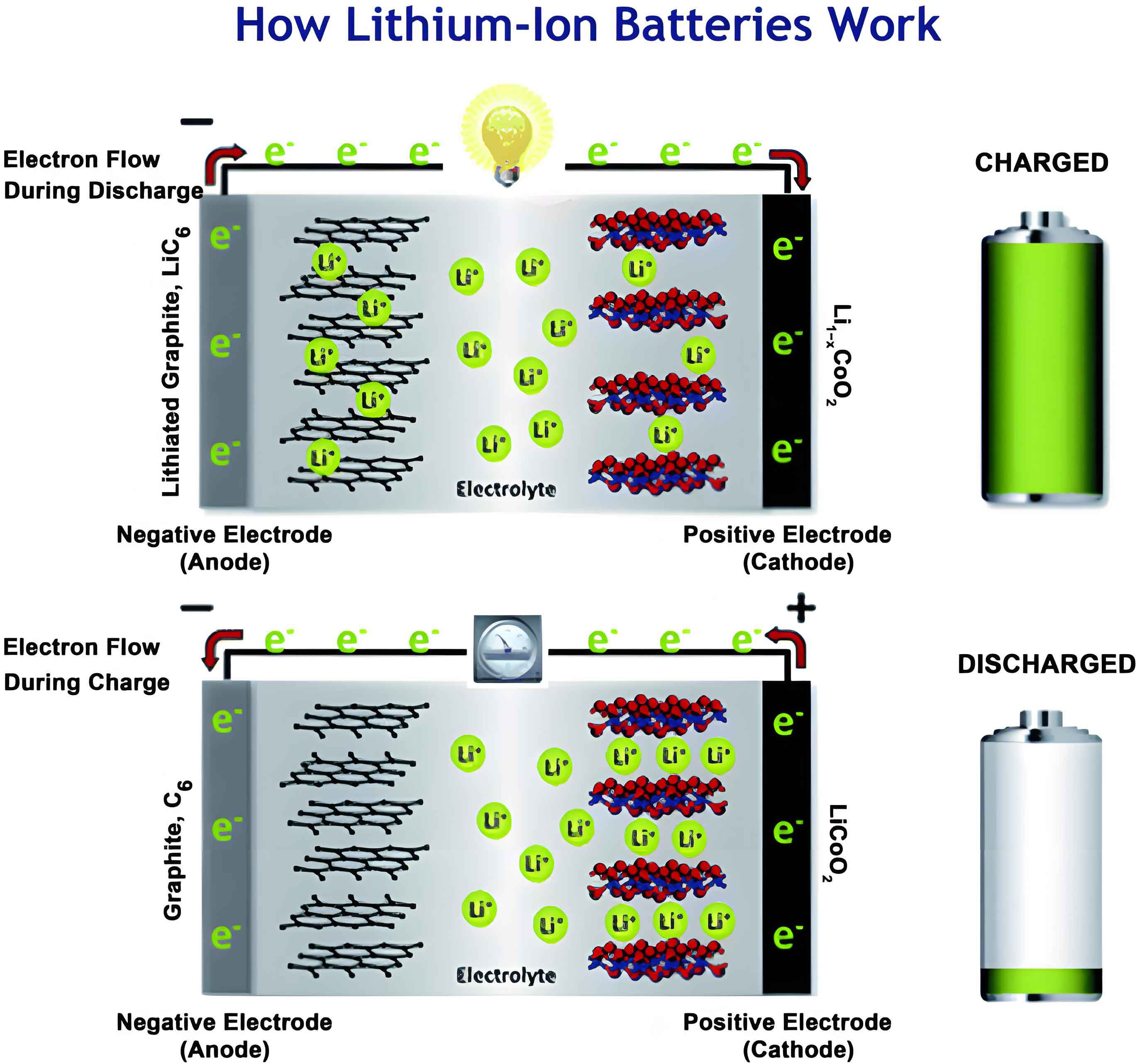
At its core, a commercial lithium-ion battery is a carefully balanced yet metastable system. The high-energy electrode materials (e.g., lithium metal oxides, graphite) are in close contact with a flammable organic electrolyte, typically a mixture of cyclic and linear carbonates (e.g., ethylene carbonate, dimethyl carbonate) with lithium salts (e.g., LiPF6). This fundamental architecture implies an inherent fire risk. Thermal runaway can be initiated by three primary abuse conditions:
- Thermal Abuse: External heating raising the cell temperature beyond its stability window.
- Electrical Abuse: Includes overcharge, over-discharge, and external/internal short circuits.
- Mechanical Abuse: Crush, penetration, or deformation damaging internal components.
The thermal runaway process itself is a complex, staged sequence of irreversible exothermic reactions. The progression can be modeled as a series of coupled reactions, each with its own activation energy and heat release rate. A simplified kinetic model for the heat generation rate ($\dot{Q}_{gen}$) during runaway can be expressed as the sum of contributions from key reactions:
$$ \dot{Q}_{gen} = \sum_i A_i \exp\left(-\frac{E_{a,i}}{RT}\right) f_i(\alpha) + I(U_{ocv} – U) – I T \frac{dU_{ocv}}{dT} $$
Where $A_i$ is the pre-exponential factor, $E_{a,i}$ is the activation energy, and $f_i(\alpha)$ represents the extent of reaction for the i-th process (e.g., SEI decomposition, anode-electrolyte reaction, cathode decomposition, electrolyte decomposition). The last two terms account for Joule heating and reversible reaction heat, respectively.
The critical sequence often begins with the breakdown of the Solid Electrolyte Interphase (SEI) layer on the graphite anode at temperatures around 80-120°C, releasing flammable gases like CO, CH4, C2H4, and H2. As temperature rises further, the exposed lithiated anode reacts violently with the electrolyte. Concurrently, the cathode material (e.g., LiFePO4, NMC) may decompose, releasing oxygen, which fuels combustion. The separator meltdown (typically 130-160°C) leads to a massive internal short circuit, dumping the cell’s stored electrical energy as heat almost instantaneously, causing a temperature spike often exceeding 500°C and the violent ejection of gases and ejecta.
1.2 System-Level Design and Monitoring Gaps
While cell chemistry sets the stage, system-level factors often determine whether an incipient fault escalates into a catastrophic event.
Battery Management System (BMS) Limitations: Conventional BMS for large-scale lithium-ion battery installations primarily monitor voltage, current, and module surface temperature. While critical, these are often lagging indicators of internal cell faults. Early-stage internal short circuits, lithium plating, or localized hot spots may not manifest in these global parameters until the runaway process is already advanced. The lack of direct internal state sensing (e.g., internal temperature, pressure, impedance) creates a blind spot.
Thermal Management System (TMS) Inadequacies: Ineffective thermal management, especially in high-density, air-cooled containerized systems, can lead to significant temperature gradients across a battery rack. These gradients accelerate cell aging divergence, reducing overall system reliability. More critically, if a cell enters thermal runaway, an insufficient TMS cannot remove heat fast enough to prevent propagation to neighboring cells. The heat transfer from a failing cell can be approximated by:
$$ \dot{Q}_{prop} = h A (T_{failing} – T_{neighbor}) $$
Where $h$ is the effective heat transfer coefficient and $A$ is the area. If $\dot{Q}_{prop}$ exceeds the cooling capacity, the neighbor’s temperature rises, initiating its own runaway sequence.
High-Energy Density Packing and Confinement: Prefabricated containers (prefab cabins) house thousands of cells in close proximity to maximize energy density. This design, while space-efficient, turns the enclosure into a pressure vessel during a thermal runaway event. Venting flammable gases can quickly create explosive atmospheres. Furthermore, physical barriers between modules or racks to isolate fire and slow propagation are sometimes insufficient or absent.
1.3 External Factors: Standards, Practices, and Market Dynamics
The rapid scale-up of the lithium-ion battery energy storage industry has, in some cases, outpaced the development of robust ecosystem safeguards.
- Evolving Standards and Testing Protocols: While international (e.g., UL, IEC) and national standards exist, they are continuously evolving. Full-scale system-level fire testing standards that accurately replicate real-field failure propagation dynamics are still under development. There can be a gap between cell-level certification and system-level safety performance.
- Integration and Commissioning Complexity: A grid-scale BESS is a complex cyber-physical system integrating power conversion systems (PCS), BMS, TMS, fire protection, and grid controls. Inadequate system integration testing, software bugs, or calibration errors during commissioning can leave latent faults.
- Supply Chain and Quality Variance: Intense market competition can sometimes lead to cost pressures that might compromise on quality control, cell screening, or system design margins. Inconsistent cell quality from suppliers increases the probability of an internal defect initiating failure.
2. Early Warning Technologies: Detecting the Precursors
The most effective strategy for managing lithium-ion battery safety is to prevent thermal runaway from occurring. When prevention fails, the next line of defense is early detection—identifying the fault during its incipient phase, well before violent cell venting or open flame. We categorize and analyze the leading early warning paradigms.
2.1 Enhanced BMS and Algorithmic Detection
Advancements are moving beyond basic voltage/temperature monitoring towards “smart BMS” capable of inferring internal states.
- Internal State Estimation (ISE): Algorithms like Kalman Filters or observers are used to estimate core temperature, state of charge (SOC), and state of health (SOH) from surface measurements and electrical models. A sudden divergence between estimated core and surface temperature can indicate an internal thermal event.
$$ T_{core,k} = T_{core,k-1} + \frac{\Delta t}{C} \left( I^2 R + \dot{Q}_{rxn} – \frac{T_{core,k-1} – T_{surf,k-1}}{R_{th}} \right) $$ - Abnormal Parameter Detection: Machine learning models trained on historical operational data can detect subtle anomalies in voltage curves, incremental capacity (dQ/dV), or electrochemical impedance spectroscopy (EIS) signatures that precede failure.
- Voltage Sag and Correlation Analysis: An internal short circuit creates a micro-short path, leading to a gradual, self-discharge-induced voltage drop in the affected cell relative to its peers in parallel. Advanced BMS algorithms monitor for abnormal inter-cell voltage divergence and self-discharge rates.
Limitations: These methods rely on electrical signatures, which may appear only after certain internal damage has occurred. They can also be susceptible to false alarms from normal cell aging or balancing currents.
2.2 Gas Sensing and Analysis
As detailed in Section 1.1, gas generation is an early and definitive sign of lithium-ion battery decomposition. Deploying gas sensors within the battery enclosure provides a direct, non-invasive detection method.
| Target Gas | Source Reaction | Typical Detection Threshold (ppm) | Advantages | Challenges |
|---|---|---|---|---|
| Carbon Monoxide (CO) | Electrolyte reduction, SEI decomposition | 10-50 | Clear early marker, low background in air, good sensor availability. | Can be produced by other electrical faults (e.g., smoldering insulation). |
| Hydrogen (H2) | Electrolyte/Anode reaction, PVDF binder reaction | 50-100 | Very early generation, high diffusivity. | Explosive, requires careful sensor placement and ventilation management. |
| Hydrogen Fluoride (HF) | Decomposition of LiPF6 salt | 1-5 | Highly specific to LiPF6 electrolyte failure, very toxic. | Extremely corrosive, damages sensors and equipment, requires specialized sensors. |
| Volatile Organic Compounds (VOCs) | Evaporation/decomposition of electrolyte solvents (EC, DMC, EMC) | Varies | Very early warning, can detect minor leaks. | Non-specific, background from other materials, sensor drift. |
Modern systems employ multi-gas sensor arrays (e.g., CO, H2, VOC) and use data fusion algorithms to improve reliability. The detection of a specific gas ratio (e.g., CO/H2) or a rate-of-rise alarm can provide higher confidence than a single-gas threshold.
2.3 Acoustic Emission (AE) Monitoring
When internal pressure builds up and forces the current interrupt device (CID) or vent to open, it generates a distinct acoustic signature—a sharp “pop” or “click.” Piezoelectric AE sensors mounted on the module frame or enclosure can detect this high-frequency stress wave. The key advantage is speed; the acoustic signal propagates almost instantaneously through solid structures, offering detection within milliseconds of venting, which is often earlier than gas can diffuse to a wall-mounted sensor. Challenges include distinguishing venting sounds from other operational noises (relays, cooling fans) and the fact that detection occurs at the venting stage, which is later than initial gas generation.
2.4 Aerosol/Ejecta Detection via Laser Scattering
Following venting, the lithium-ion battery ejects a plume containing liquid electrolyte droplets (aerosol) and solid particles. Traditional smoke detectors (photoelectric or ionization) may respond too slowly or be unsuitable for the specific aerosol size distribution. Dedicated aerosol detection systems use laser scattering principles. A laser beam is projected across the protected space; when ejecta particles pass through the beam, they scatter light to a photodetector. This method can provide extremely fast detection (sub-second) of the venting plume. Its effectiveness can be reduced in highly ventilated spaces or if the plume path is obstructed.
2.5 Pressure Rise Detection
In tightly sealed or minimally ventilated containers (common in liquid-cooled systems), the sudden release of gas from a single venting lithium-ion battery cell causes a rapid increase in enclosure internal pressure. Monitoring this pressure with differential pressure sensors offers a very reliable and fast detection method, as it is a direct bulk measurement of the event. The pressure rise rate ($\frac{dP}{dt}$) can be a strong alarm criterion. This method is less effective in well-ventilated containers where pressure cannot build up.
| Warning Technology | Detected Phenomenon | Typical Lead Time Before Fire | Key Advantage | Primary Limitation |
|---|---|---|---|---|
| Enhanced BMS (Voltage/Temp Anomaly) | Electrical/thermal parameter deviation | Minutes to Hours | Uses existing hardware, can predict internal faults. | Can be lagging, prone to false positives from aging. |
| Gas Detection (CO, H2) | Gas generation from internal reactions | Minutes | Direct chemical evidence, good lead time. | Gas diffusion delay, sensor poisoning/lifetime. |
| Acoustic Emission | Sound of CID/vent opening | Seconds to Minutes | Extremely fast through solids, definitive event marker. | Detects venting (later stage), background noise interference. |
| Aerosol/Laser Detection | Ejecta plume from venting | Seconds | Very fast, specific to ejection event. | Requires line-of-sight, affected by ventilation. |
| Pressure Rise | Enclosure pressure increase | Seconds | Very reliable, fast, simple metric. | Only works in sealed/semi-sealed environments. |
The most robust early warning strategy for a lithium-ion battery energy storage system involves a multi-parameter, layered approach. For example, combining gas sensing (for earliest chemical warning) with pressure or aerosol detection (for fast confirmation of venting) and BMS anomaly detection creates a system with high sensitivity, redundancy, and reduced false alarm rates.
3. Mitigation and Fire Suppression Strategies
When early warning fails to prevent a cell from entering thermal runaway, the objective shifts to: 1) Suppressing any resulting fire, 2) Cooling adjacent cells to prevent propagation, and 3) Managing toxic and flammable gases. The unique nature of lithium-ion battery fires—deep-seated chemical heat generation, reignition risk, and potential for explosion—makes this exceptionally challenging.
3.1 Suppressant Agents: Mechanisms and Comparison
No single agent is perfect for all scenarios. The choice depends on the system design, cell chemistry, and risk assessment.
| Suppressant | Primary Mechanism(s) | Application Method | Pros for Lithium-ion Battery Fire | Cons for Lithium-ion Battery Fire |
|---|---|---|---|---|
| Water (Fine Spray/Mist) | Cooling (High latent heat), Oxygen dilution (steam), Inerting (steam). | In-cabinet spray heads, Deluge systems. | Excellent cooling, cheap, abundant, effective on most fires. Can penetrate pack structure. | Conducts electricity (risk pre-de-energization), water damage to equipment, may not stop internal reactions. |
| Heptafluoropropane (HFC-227ea, FM-200®) | Chemical inhibition (interrupts flame chain reactions). | Total flooding of enclosure. | Clean agent, no residue, good for electrical equipment, fast discharge. | Poor cooling, may not prevent re-ignition or stop thermal runaway, high GWP. |
| Perfluorohexanone (C6F12O, Novec™ 1230) | Cooling (high heat capacity), Chemical inhibition, Oxygen dilution. | Total flooding, local application. | Excellent cooling for a gas, clean, very low GWP, non-conductive. | Higher cost, may decompose into corrosive HF at very high temps. |
| Aerosols (Potassium-based S-type) | Chemical inhibition (K radicals interrupt reactions), Partial oxygen dilution. | Canister-based, total flooding. | Compact, no piping required, effective on deep-seated fires. | Produces fine particulate residue (can damage electronics), minimal cooling, hot discharge. |
| Inert Gases (Argonite® IG-55, Inergen®) | Oxygen dilution (reduce O2 below ~12-15%). | Total flooding of enclosure. | Clean, environmentally neutral, no decomposition products. | Very poor cooling, requires large volume/ high pressure, high discharge forces. |
The heat absorption capacity of an agent is critical for stopping propagation. Water’s superiority is clear from its latent heat of vaporization (~2260 kJ/kg). The cooling power ($\dot{Q}_{cool}$) of a water spray can be estimated as:
$$ \dot{Q}_{cool} = \dot{m}_w \left[ c_{p,w} \Delta T + L_v \right] $$
where $\dot{m}_w$ is the water mass flow rate, $c_{p,w}$ is specific heat, $\Delta T$ is temperature rise, and $L_v$ is latent heat. Synthetic agents primarily rely on their vapor-phase heat capacity, which is orders of magnitude lower.
3.2 System-Level Protection Architectures
Effective protection requires an integrated system design, not just the choice of agent.
- Compartmentalization and Barriers: Designing modules and racks with intrinsic fire barriers (e.g., ceramic blankets, intumescent materials) to slow down heat and flame transfer between lithium-ion battery cells. The concept is to increase the thermal resistance ($R_{th,barrier}$) in the heat transfer path.
- Two-Tiered or Multi-Stage Suppression:
- First Response (Within Rack/Module): Upon early warning (e.g., gas detection), a clean agent like perfluorohexanone or an aerosol is discharged directly into the affected module to extinguish incipient flames and cool the immediate area.
- Second Response (Enclosure Level): If the event escalates (confirmed by heat/ flame detectors), a deluge water spray system activates to provide massive cooling for the entire container, prevent propagation, and protect the structure.
- Venting and Gas Management: Designing pressure relief vents or panels that direct toxic and flammable gases to a safe exterior location, often through a scrubber or flame arrestor, to prevent explosive gas accumulation.
- Integration with Controls: The fire protection system must be integrated with the BMS and site controls. A critical first step upon any confirmed alarm is to command the PCS to shut down and open breakers to isolate the lithium-ion battery system from the grid, eliminating the electrical energy source and reducing shock hazard before water-based suppression is activated.
3.3 Material-Level Safety: Electrolyte Additives
An inherently safer cell is the ultimate solution. Research into non-flammable electrolytes (e.g., solid-state, ionic liquids) is promising but not yet mainstream for grid storage. A more near-term approach is the use of flame-retardant (FR) additives in conventional liquid electrolytes. These are typically phosphorus or fluorine-containing compounds (e.g., trimethyl phosphate, fluorinated carbonates) that decompose under high heat to release radical scavengers, interrupting combustion. While effective in reducing flammability, they often trade off against electrochemical performance, increasing impedance or reducing cycle life—a key optimization challenge for lithium-ion battery chemists.
4. Conclusions, Persistent Challenges, and Future Outlook
The safety of grid-scale lithium-ion battery energy storage is a multi-dimensional challenge spanning materials science, electrochemistry, thermal engineering, detection algorithms, and system integration. Significant progress has been made in understanding thermal runaway mechanisms and developing early warning technologies like multi-gas detection and acoustic monitoring. Similarly, protection strategies have evolved from simple total-flooding gas systems to integrated, multi-stage approaches combining clean agents with water-based cooling.
However, several critical challenges persist:
- The “Detection Gap”: Truly early detection—at the inception of an internal short circuit or during initial lithium plating—remains elusive. Most current methods detect consequences (gas, heat, venting) rather than the root cause.
- Propagation Guarantees: No current commercial suppression system can guarantee the stopping of propagation in a high-energy, densely packed lithium-ion battery rack once a single cell has entered full thermal runaway. Cooling is the only proven method, and achieving sufficient cooling power in all scenarios is difficult.
- Standardization and Testing: The industry lacks universally accepted, large-scale system-level fire testing protocols that accurately simulate real-world failure modes and propagation to validate protection systems.
- Lifecycle Considerations: Safety strategies must account for the entire lifecycle of the lithium-ion battery, including aging effects. An aged cell may have different gas generation profiles, venting pressures, and thermal stability, potentially altering the effectiveness of detection and suppression parameters tuned for new cells.
Future Outlook: The path forward requires concerted effort across several fronts:
- Advanced Sensing: Development of embedded micro-sensors for internal temperature, pressure, and impedance within large-format lithium-ion battery cells, enabled by new manufacturing techniques.
- AI-Powered Prognostics: Leveraging digital twin models and machine learning on operational data to shift from failure detection to failure prediction, identifying cells at high risk of failure during normal operation.
- Inherently Safe Designs: Accelerated commercialization of cell chemistries and designs with higher intrinsic thermal stability (e.g., LFP cathodes, silicon-based anodes with advanced binders, solid-state electrolytes).
- System Design Philosophy: Moving towards system architectures that inherently limit propagation, even at the cost of some energy density. This includes mandatory fire walls, larger inter-cell spacing, and passive thermal barriers integrated into module design.
- Robust Regulations: Development of performance-based safety standards that mandate rigorous, full-scale propagation testing for system certification, driving the industry towards higher, demonstrable safety benchmarks.
In conclusion, ensuring the safety of lithium-ion battery energy storage is not a solved problem but a dynamic field of engineering and research. It requires a defense-in-depth philosophy, combining continuous improvements in lithium-ion battery cell safety, sophisticated multi-parameter early warning, and robust, staged physical protection. By prioritizing these investments and collaborations, the industry can build the essential trust needed for lithium-ion battery technology to fulfill its critical role in the global transition to a sustainable and resilient energy future.