
The proliferation of electric and hybrid-electric vehicles has positioned lithium-ion battery technology at the forefront of modern energy storage solutions. Among the various cathode chemistries available, the lithium iron phosphate (LiFePO4) battery is often highlighted for its superior intrinsic safety profile. This enhanced safety is attributed to the stable P–O covalent bonds and the robust olivine crystal structure of the LiFePO4 cathode material. Consequently, LiFePO4 batteries exhibit a higher thermal runaway onset temperature, lower heat release, and reduced gas generation compared to other common lithium-ion chemistries like NMC or LCO. These properties make the LiFePO4 battery a preferred choice for applications where safety is paramount, such as in electric vehicles and large-scale energy storage systems.
However, no electrochemical system is entirely immune to failure. LiFePO4 batteries can still undergo thermal runaway—a dangerous, self-sustaining increase in temperature—when subjected to abusive conditions. These conditions are broadly categorized into mechanical abuse (e.g., penetration, crush), electrical abuse (e.g., overcharge, external short circuit), and thermal abuse (e.g., external heating). When the rate of internal heat generation surpasses the rate of heat dissipation, the battery temperature rises, triggering exothermic side reactions that can lead to fire or explosion.
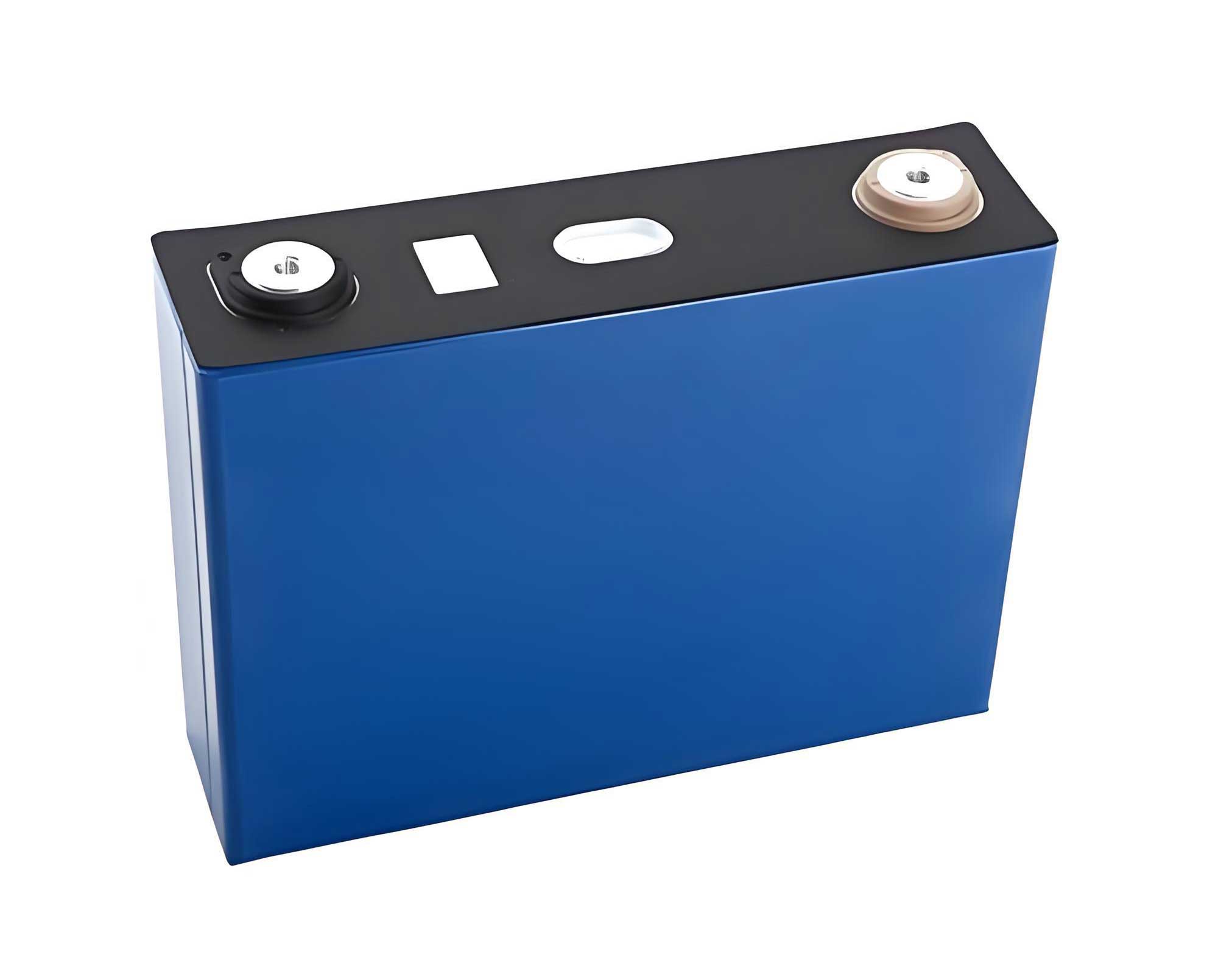
While significant research has focused on understanding the fundamental reaction mechanisms, improving material stability, and evaluating the hazards of LiFePO4 battery failure, there is a critical gap in the systematic study of the post-failure residues. In the context of fire investigation, the physical evidence left behind by a failed LiFePO4 battery is crucial for determining the origin, cause, and progression of a fire. This work aims to bridge that gap. Through controlled abuse testing, we investigate the thermal runaway behavior of commercial electric vehicle LiFePO4 batteries under various conditions and conduct a detailed forensic analysis of their residual traces. The goal is to establish a reference framework for identifying characteristic signatures that can help fire investigators determine if a LiFePO4 battery acted as an ignition source or as a fuel load within a fire scene.
Experimental Methodology and Subject
The test subject was a commercial prismatic LiFePO4 battery cell designed for electric vehicle applications. Key specifications are summarized below:
| Parameter | Specification |
|---|---|
| Cathode Chemistry | Lithium Iron Phosphate (LiFePO4) |
| Nominal Capacity | 32 Ah |
| Nominal Voltage | 3.2 V |
| Charge Limit Voltage | 3.65 V |
| Discharge Cut-off Voltage | 2.5 V |
| Packaging | Aluminum-laminated pouch cell |
| Assembly Process | Stacked (Z-fold) electrode design |
To evaluate the influence of stored energy, batteries were prepared at two distinct States of Charge (SOC): 100% SOC (fully charged) and 0% SOC (fully discharged). The actual capacity was first determined using a cycle life tester. For the 100% SOC condition, the LiFePO4 battery was charged at a 1C rate (32 A) in constant current mode until reaching the upper voltage limit, followed by a constant voltage step until the current tapered. For the 0% SOC condition, the LiFePO4 battery was discharged at a 1C rate to the cut-off voltage of 2.5 V. All abuse tests were conducted with real-time monitoring of voltage and surface temperature using a data acquisition system.
Fundamental Mechanisms of Thermal Runaway in LiFePO4 Batteries
Understanding the forensic traces requires a brief overview of the underlying failure mechanisms. Thermal runaway in a LiFePO4 battery is a complex process initiated when the cell temperature exceeds a critical threshold, typically due to abuse. The sequence of events, while generally milder than in layered oxide cathodes, follows a predictable chain of reactions.
The overall process is governed by the heat balance equation:
$$ \rho C_p \frac{\partial T}{\partial t} = \nabla \cdot (k \nabla T) + \dot{q}_{gen} – \dot{q}_{loss} $$
where $\rho$ is density, $C_p$ is heat capacity, $k$ is thermal conductivity, $T$ is temperature, $t$ is time, $\dot{q}_{gen}$ is the volumetric heat generation rate, and $\dot{q}_{loss}$ is the heat loss rate. Thermal runaway occurs when $\dot{q}_{gen} > \dot{q}_{loss}$ for a sustained period.
For a LiFePO4 battery, the main exothermic reactions contributing to $\dot{q}_{gen}$ include:
- Solid Electrolyte Interphase (SEI) Decomposition: This occurs at temperatures around 80-120°C. The metastable SEI layer on the graphite anode decomposes, releasing heat and allowing fresh anode material to react with the electrolyte.
$$ \text{SEI} \rightarrow \text{products} + \text{heat} $$ - Anode-Electrolyte Reaction: After SEI breakdown, the intercalated lithium in the graphite reacts exothermically with the organic electrolyte (e.g., LiPF6 in carbonate solvents).
$$ \text{Li}_x\text{C}_6 + \text{Electrolyte} \rightarrow \text{products} + \text{heat} $$ - Electrolyte Decomposition and Combustion: At higher temperatures, the electrolyte solvents and salt decompose, producing flammable gases (CO, H2, CH4, C2H4, etc.). If oxygen is present and the temperature is sufficient, these gases can ignite.
$$ \text{LiPF}_6 + \text{Solvents} \rightarrow \text{PF}_5 + \text{LiF} + \text{organic fragments} + \text{heat} $$ - Cathode Decomposition and Reaction: The LiFePO4 cathode itself is relatively stable. However, in a charged state (delithiated FePO4), it can release oxygen at very high temperatures (>250°C), which can accelerate the combustion of electrolyte gases and other components.
$$ \text{FePO}_4 \rightarrow \text{FePO}_4 (\text{oxygen-deficient}) + \frac{1}{2}\text{O}_2 $$ - Internal Short Circuit (ISC): Abusive conditions often cause the separator to melt or shrink (PE/PP separators melt at ~135°C/165°C), leading to a direct internal short between the anode and cathode. This results in rapid joule heating, described by:
$$ \dot{q}_{Joule} = I_{short}^2 \cdot R_{short} $$
where $I_{short}$ is the short circuit current and $R_{short}$ is the internal short resistance.
The specific trajectory and violence of the thermal runaway event in a LiFePO4 battery are highly dependent on the SOC and the nature of the abuse, which directly influence the reaction kinetics and available fuel for combustion. This dependence manifests distinctly in the post-event forensic signatures.
Mechanical Abuse: Penetration and Crush
1. Nail Penetration
Penetration simulates an internal short circuit caused by a foreign object piercing the battery. A standardized steel nail (Φ5 mm, 45-60° tip) was driven through the geometric center of the LiFePO4 battery at a speed of 20 mm/s.
Results for 100% SOC LiFePO4 Battery: The fully charged LiFePO4 battery did not enter full thermal runaway but exhibited a significant response. The voltage plummeted to 0 V within 1 minute due to the massive internal short created by the nail. Copious white smoke with a pungent odor was released. A temperature rise was observed with a delay of approximately 1 minute after penetration, climbing from an ambient 30°C to a peak of 78°C over 268 seconds. This temperature is insufficient to trigger self-sustaining reactions in a LiFePO4 battery, and the cell eventually cooled down.
Results for 0% SOC LiFePO4 Battery: The discharged LiFePO4 battery showed a negligible thermal response. The voltage dropped, but no significant smoke generation or temperature rise was recorded.
Forensic Signatures: The primary trace is the clear, mechanically formed puncture hole. For the 100% SOC cell, localized blackening and charring of the electrode materials are visible around the puncture site on the internal jellyroll. The separator and electrodes may be sintered together at the point of contact with the nail. For the 0% SOC cell, only the physical breach is evident, with minimal to no thermal damage to the internal components. The lack of sustained fire or extreme heating leaves the overall pouch structure mostly intact aside from the penetration point.
2. Flat Plate Crush
Crush abuse was performed using a semi-cylindrical indenter (150 mm diameter) applying force perpendicular to the cell face until a load of 13 kN was reached, which was then held for 1 minute.
Results for 100% SOC LiFePO4 Battery: The fully charged LiFePO4 battery experienced violent thermal runaway. The voltage dropped to zero as the structure was compromised. Approximately 30 seconds after voltage failure, intense white smoke emission began, culminating in open flame combustion. The surface temperature skyrocketed to a peak of 344°C.
Results for 0% SOC LiFePO4 Battery: The discharged LiFePO4 battery showed a mild response. The voltage dropped to zero under force, but only a very slight temperature increase (within 5-8°C of ambient) was recorded. No smoke or flame was observed.
| Condition | Voltage Response | Peak Temperature | Observable Phenomena |
|---|---|---|---|
| Crush, 100% SOC | Rapid drop to 0 V | 344 °C | Intense smoke, open flame, audible venting |
| Crush, 0% SOC | Drop to 0 V | ~30 °C | Mechanical deformation only |
Forensic Signatures: The crushing force causes a distinct, often撕裂 (tearing) deformation of the aluminum pouch. For the 100% SOC LiFePO4 battery, severe thermal damage is localized to the crush zone. The internal electrodes are pushed apart, creating increased spacing. A clear gradient of charring is present: heavy black carbonization at the point of worst compression, transitioning to brown and yellow discolorations radiating outward, mapping the spread of flame and hot gases. The electrodes and separator are heavily sintered and powdered in the crushed region. In contrast, the crushed 0% SOC LiFePO4 battery shows only physical deformation—the electrodes remain clean, distinct, and separable, with no thermal degradation gradients.
Electrical Abuse: Overcharge
Overcharge forces excess lithium ions into the anode and drives the cathode to a highly delithiated, unstable state. The test was performed by charging the LiFePO4 battery at a 1C rate (32 A) beyond its voltage limit until failure.
Results for the LiFePO4 Battery: Surprisingly, even under this aggressive regime (charging to nearly 5 times the nominal voltage), the LiFePO4 battery did not go into thermal runaway. The voltage evolution followed four stages: a rapid jump to ~4.64 V, a steady climb to ~9.84 V over 10 minutes, a sharp rise to the tester’s 15 V limit, and finally a collapse to ~1.8 V after 38 minutes, indicating severe internal shorting and failure. Throughout this process, the cell experienced noticeable swelling (“gassing”) and mild warmth, but no open flame, significant smoke, or rapid temperature escalation occurred.
Forensic Signatures: The overcharged LiFePO4 battery exhibits significant, uniform swelling of the pouch due to gas generation from electrolyte decomposition. The safety vent (if present) or a seam may rupture to release pressure. Internally, the most critical signature is found at the current collectors (tabs). The tabs and the adjacent region of the internal windings often show severe localized melting, burn marks, or holes due to the high current density and resultant Joule heating at the point of external connection. The electrode stack may show general expansion, and metallic lithium plating may be evident on the anode surfaces. The overall absence of widespread, high-temperature charring is a key indicator distinguishing overcharge from other abuse modes for a LiFePO4 battery.
Thermal Abuse: External Heating
This test simulates exposure to an external fire or hot environment. The LiFePO4 battery was placed in a sealed chamber heated at 5 °C/min to 200 °C, which was then maintained for 30 minutes.
Results for 100% SOC LiFePO4 Battery: The fully charged cell underwent explosive thermal runaway approximately 37 minutes into the test. The surface temperature, as inferred from the chamber conditions and event violence, exceeded 730°C. The event involved violent rupture, jetting of electrolyte, and sustained flaming combustion.
Results for 0% SOC LiFePO4 Battery: The discharged cell did not experience thermal runaway. It underwent progressive swelling and eventually ruptured along the seams due to internal gas pressure, but no fire was initiated. The maximum internal temperature was estimated around 210°C.
| SOC | Thermal Runaway | Approx. Peak Temp. | Phenomena |
|---|---|---|---|
| 100% | Yes (at ~37 min) | >730 °C | Explosion, fire, intense smoke, electrolyte jetting |
| 0% | No | ~210 °C | Swelling, rupture, smoke (from decomposing components) |
Forensic Signatures: External heating leads to the most uniform and widespread damage. The pouch of the LiFePO4 battery often ruptures in a star-like or扇形 pattern from the point of greatest pressure release. A key signature is the presence of a uniform, yellowish or brownish stain on the pouch material, caused by the leaching and wicking of decomposed electrolyte. For a 100% SOC cell that has combusted, the internal jellyroll is severely disrupted—electrodes are curled, fractured, and covered in soot. The separator is almost entirely consumed, leaving only faint, white ceramic or glass fiber residues (if applicable) adhering to the electrode surfaces. Metallic current collector foils may be oxidized or melted into small, spherical beads. For a 0% SOC cell, the jellyroll, while swollen and separated, often remains surprisingly intact and recognizable, with electrodes showing minimal charring. The damage is primarily from pressure and decomposition rather than combustion.
Comprehensive Analysis of Forensic Trace Characteristics
Synthesizing the observations from all abuse tests, the forensic signatures of a failed LiFePO4 battery can be systematically categorized. The most critical factor influencing the trace morphology is the State of Charge (SOC) at the time of failure. The abuse mode then superimposes specific characteristic features onto this SOC-dependent baseline.
The general SOC-dependent trends for a LiFePO4 battery are summarized by the following relationship for damage severity ($D$):
$$ D \propto \text{SOC} \cdot \int \dot{q}_{gen}(T, \text{SOC}, t) \, dt $$
Higher SOC leads to: greater pouch deformation/rupture; richer color variation (black charring, brown/ yellow stains); more pronounced wrinkling and curling of electrodes; more severe tab melt-out or burn-through; increased surface deposits of carbonized material; and near-complete consumption of the separator.
The abuse-specific signatures allow an investigator to infer the initiating condition. The table below provides a comparative forensic guide for a fully charged LiFePO4 battery.
| Abuse Mode | Pouch Integrity & Deformation | Color & Surface Traces | Internal Jellyroll Morphology | Key Diagnostic Features |
|---|---|---|---|---|
| Penetration | Clean puncture hole; minimal global deformation. | Localized black charring radiating from puncture. | Electrodes pierced; local sintering at nail path. | Clear mechanical breach point. LiFePO4 battery may not propagate to full thermal runaway. |
| Crush | Tearing at crush point; asymmetric swelling. | Char gradient (black→brown→yellow) from crush epicenter. | Electrode spacing increased at crush zone; severe local sintering/powdering. | Damage and char gradient are localized and directional, pointing to the mechanical impact site. |
| Overcharge | Severe, uniform swelling; vent rupture. | Possible tab discoloration; less overall charring. | General electrode expansion; possible Li plating; tab/collector fusion. | Major damage at tabs/current collectors. Pouch failed by pressure, not high-temperature burn-through. |
| External Fire | Star-like rupture; often multiple breaches. | Uniform electrolyte staining (yellow/brown) on pouch. | Electrodes curled, sooted; separator vanished; small Al/Cu beads possible. | Most uniform damage. Electrolyte stain on pouch is a hallmark. Jellyroll is often fully consumed/disrupted. |
Furthermore, the temperature history experienced by the LiFePO4 battery components can sometimes be inferred from material changes. For instance, the melting of aluminum (660°C) or copper (1085°C) current collectors indicates extreme local temperatures. The shrinkage temperature of common polyolefin separators (~135-165°C) marks the onset of internal short circuit risk.
Conclusion
This investigation into the abuse response and resulting forensic signatures of commercial LiFePO4 batteries reveals a consistent and interpretable pattern of failure. The single most influential factor is the battery’s State of Charge (SOC). A high SOC LiFePO4 battery possesses significant chemical energy, leading to more violent thermal runaway, higher peak temperatures, and consequently, more severe and characteristic damage to all components—from the aluminum pouch to the internal electrodes and separator.
While the LiFePO4 chemistry is demonstrably safer, particularly in resisting cascading failure from penetration and showing remarkable tolerance to overcharge, it remains a potent fuel and potential ignition source when abused while fully charged. The forensic traces it leaves are directly linked to the abuse mechanism: directional damage from crushing, localized piercing from penetration, tab-focused melting from overcharge, and uniform electrolyte staining and global consumption from an external fire.
For fire investigators, these findings provide a foundational framework. By systematically examining a recovered LiFePO4 battery residue—assessing pouch deformation patterns, color gradients, internal electrode condition, tab integrity, and separator presence—one can make informed judgments about its SOC at failure and the likely nature of the abuse it suffered. This analysis is crucial for determining whether the LiFePO4 battery was the primary cause of a fire or a victim of an external thermal event, thereby playing a critical role in accurate fire origin and cause determination.